

Published: October 28, 2026
Dateline: MIAMI & BRASÍLIA
Executive Overview
In a dramatic development that has sent shockwaves through Latin American diplomacy and domestic Brazilian politics, defeated presidential candidate and sitting Senator Flávio Bolsonaro fled his home country on Tuesday, touching down at Miami-Opa Locka Executive Airport alongside members of his family. The high-stakes departure follows a bruising election cycle that saw incumbent President Luiz Inácio Lula da Silva secure a decisive reelection victory by a margin of more than 4 million votes on October 25.
Rather than facing mounting legal pressure in Brazil—where his passports were ordered seized by the judiciary amid ongoing corruption and money laundering investigations—Bolsonaro executed a carefully coordinated cross-border escape. Traveling covertly through Argentina and Ecuador with the active assistance of right-wing regional allies, the senator secured expedited entry into the United States. The Trump administration swiftly greenlit emergency visas for Bolsonaro and his family, a move confirmed by a senior U.S. State Department official.
The incident marks a profound escalation in political tensions between Brasília and Washington. Brazilian President Luiz Inácio Lula da Silva did not mince words, condemning the senator’s flight outside the presidential residence in Brasília. "This act of leaving Brazil is shameful," Lula declared, adding that the right-wing politician should have stayed to clear his name rather than run from justice.
As legal experts weigh the possibility of future extradition requests, the saga draws uncomfortable parallels to the flight of Flávio’s father, former President Jair Bolsonaro, who similarly escaped to Florida on the eve of Lula’s inauguration in December 2022. With the Bolsonaro family once again using Florida as a political sanctuary, the unfolding geopolitical drama threatens to fundamentally reshape diplomatic relations across the Western Hemisphere.
Detailed Chronology: From Electoral Defeat to International Flight
The sequence of events leading to Flávio Bolsonaro’s arrival in Miami unfolded with cinematic speed over a chaotic 72-hour window following the decisive October 25 runoff election.
The October 25 Runoff and Electoral Defeat
The definitive clash at the ballot box pitted incumbent leftist President Lula da Silva against right-wing challenger Flávio Bolsonaro, son of the imprisoned former president. Despite a hard-fought campaign characterized by fierce ideological polarization, Lula emerged victorious, outpacing Bolsonaro by over 4 million votes. While initial fears of post-electoral violence hung heavy over the country, Bolsonaro initially signaled a brief period of quiet concession before ideological allies stepped in to orchestrate a dramatic exit strategy.
The Passport Seizure and Judicial Standoff
Sensing the imminent closure of borders as federal investigators intensified multiple inquiries into his financial dealings, Brazil’s Supreme Court ordered the immediate seizure of Flávio Bolsonaro’s passports. Anticipating the judicial directive, the senator refused to surrender the travel documents. Instead, he initiated an unauthorized international transit through South America, evading domestic law enforcement agencies.
The Underground Route: Argentina and Ecuador
Bolsonaro’s escape route relied heavily on an axis of sympathetic right-wing governance in South America. Escaping domestic airspace, the senator transited through Argentina—where he publicly expressed gratitude to Argentine President Javier Milei for logistical and political assistance—before making a secondary stopover in Ecuador. Throughout the journey, Bolsonaro maintained communication with international allies, including U.S. President Donald Trump, who coordinated with the State Department to ensure a welcoming reception upon arrival.
Arrival in Miami and Social Media Reversals
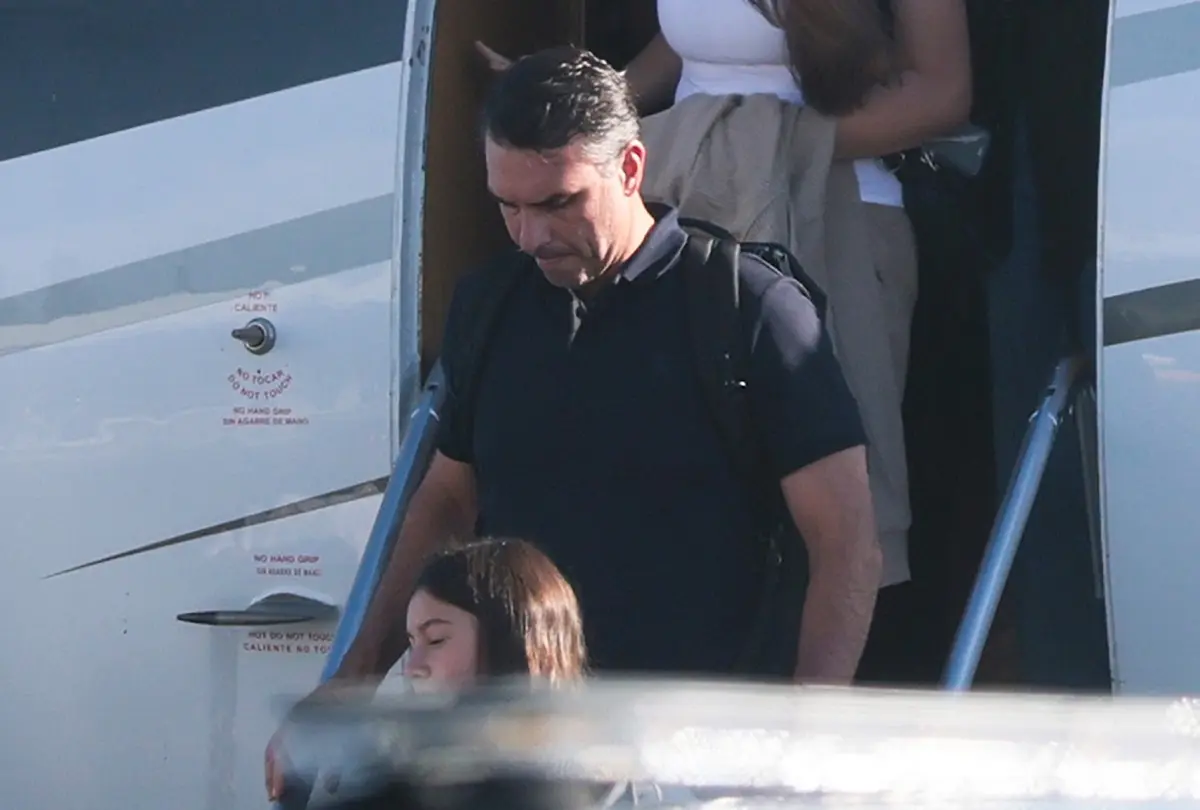
On Tuesday, October 28, a private aircraft carrying Flávio Bolsonaro and his immediate family touched down at Miami-Opa Locka Executive Airport. Seeking to frame his departure through a lens of political martyrdom, Bolsonaro immediately took to the social media platform X (formerly Twitter). In a now-deleted post, he audaciously declared himself "the elected president" of Brazil.
The post was swiftly scrubbed and replaced by a formal letter asserting that he remains the rightful "leader" of Brazil and casting himself as a political refugee fleeing an illegitimate judicial witch hunt orchestrated by the current administration.
Supporting Context & Metrics: Legal Jeopardy and the Bolsonaro Dynasty
To fully grasp the magnitude of Flávio Bolsonaro’s flight, one must examine the dense web of legal troubles, family history, and macroeconomic voting data underpinning the current crisis in Brazil.
Financial Crimes and Supreme Court Scrutiny
Unlike his father, who was convicted of attempting to stage a coup, Flávio Bolsonaro has not yet been formally charged with a crime. However, he is the primary target of extensive investigations by Brazil’s Supreme Court regarding allegations of:
- Money Laundering: Centered around real estate acquisitions and systemic cash flows during his tenure in regional and national legislative bodies.
- Corruption: Investigating potential kickback schemes tied to legislative staff and public resource allocation.
- Tax Evasion: Scrutiny over discrepancies between declared personal assets and lifestyle expenditures.
Legal analysts note that while fleeing to the United States provides immediate physical safety, it severely damages his legal standing inside Brazil. Under Brazilian jurisprudence, fleeing from judicial orders—such as the refusal to surrender passports—can be used by prosecutors to justify preventive detention orders, should he ever return. Furthermore, it opens the door for federal prosecutors to formally request an international red notice via Interpol and pursue a formal extradition treaty with the United States.
The Shadow of Jair Bolsonaro
The playbook utilized by Flávio is nearly identical to that executed by his father, former President Jair Bolsonaro, four years prior. Jair Bolsonaro is currently serving a staggering 27-year prison sentence for his role in orchestrating a failed coup d’état in 2023. Due to ongoing health complications, the elder Bolsonaro has been permitted to serve his sentence under house arrest.
On December 30, 2022—just 48 hours before Lula took the oath of office for his third presidential term—Jair Bolsonaro boarded a flight to Orlando, Florida, effectively bypassing the transition of power and escaping immediate legal accountability. The establishment of a second-generation Bolsonaro stronghold in South Florida cements the state’s status as a safe haven for Latin American right-wing figures facing domestic prosecution.
Electoral Metrics
- Election Date: October 25, 2026 (Second-round runoff).
- Margin of Victory: Over 4 million votes in favor of Luiz Inácio Lula da Silva.
- Father’s Prison Sentence: 27 years (currently under house arrest for health reasons).
- Geographic Route: Brasília ➔ Buenos Aires, Argentina ➔ Guayaquil/Quito, Ecuador ➔ Miami, Florida.
Official Statements and Diplomatic Fallout
The international response to Bolsonaro’s relocation has exposed deep fractures in hemispheric diplomacy, testing the limits of bilateral cooperation between Washington and Brasília.
President Lula’s Condemnation
Speaking to a crowd of supportive citizens gathered outside the Palácio da Alvorada, the presidential residence in Brasília, President Lula pulled no punches. Clearly frustrated by the circumvention of national sovereignty, Lula emphasized that true innocence stands its ground within the justice system.
"I regret that he left Brazil, because he could have stayed here and proven that the accusations are not true," Lula told the cheering crowd. "This act of leaving Brazil is shameful."
Lula’s administration is currently weighing its diplomatic and legal options. While the Brazilian Foreign Ministry has yet to issue a formal call for extradition, sources within the Ministry of Justice indicate that legal dossiers are being rapidly compiled to test the bounds of the U.S.–Brazil extradition treaty in light of the Trump administration’s intervention.
The White House and State Department Stance
The decision by the Trump administration to issue emergency visas to a foreign politician actively evading domestic passport restrictions has drawn sharp criticism from international law experts. A senior U.S. State Department official confirmed to The Washington Post that the visas were fast-tracked following direct appeals from allied political operatives.
By welcoming Flávio Bolsonaro, the White House has signaled a muscular return to right-wing solidarity in the Americas, even at the cost of diplomatic friction with Latin America’s largest democracy. The move underscores an ongoing ideological battle for influence in South America, where Washington’s traditional diplomatic channels are increasingly strained by ideological realignments.
Future Outlook: Extradition Prospects and Geopolitical Ramifications
As the dust settles over Miami-Opa Locka Executive Airport, political scientists and legal scholars are racing to model the long-term consequences of this unprecedented political exile.
The Extradition Battleground
Whether Flávio Bolsonaro can remain safely ensconced in Florida depends heavily on the evolution of the legal proceedings in Brasília. If Brazil’s Supreme Court formally indicts him on charges of money laundering and corruption, the Attorney General’s office will almost certainly trigger the bilateral extradition treaty signed between the U.S. and Brazil.
While the extradition process is notoriously protracted—often taking years as defendants exhaust appeals in U.S. federal courts—the political complexion of the White House will play a decisive role. An administration sympathetic to the Bolsonaro family may drag out administrative reviews or ultimately rule that the charges are "politically motivated," thereby shielding him from return. Conversely, a future administration or intense bipartisan pressure in Congress could complicate his prolonged residency.
Domestic Politics in Brazil
Back in Brasília, Flávio Bolsonaro’s flight is likely to be weaponized by the Lula administration to reinforce narratives of accountability and rule of law. By painting the Bolsonaro family as fugitives who lack the courage to face independent Brazilian courts, the ruling coalition hopes to diminish the remaining institutional clout of the radical right ahead of upcoming mid-term legislative battles.
However, for the fervent base of Bolsonaro supporters, his exile to the United States will only deepen their martyrdom narrative. Cast as a "political refugee" persecuted by a leftist judiciary, Bolsonaro retains a powerful digital megaphone from American soil, ensuring that his polarizing influence will continue to haunt Brazilian politics from afar.
Ultimately, the flight of Flávio Bolsonaro is more than just a personal escape from criminal investigation; it is a stress test for international law, a humiliation for Brazilian judicial sovereignty, and a stark reminder of how easily national borders can be bypassed when powerful international alliances are brought into play.