

Executive Overview
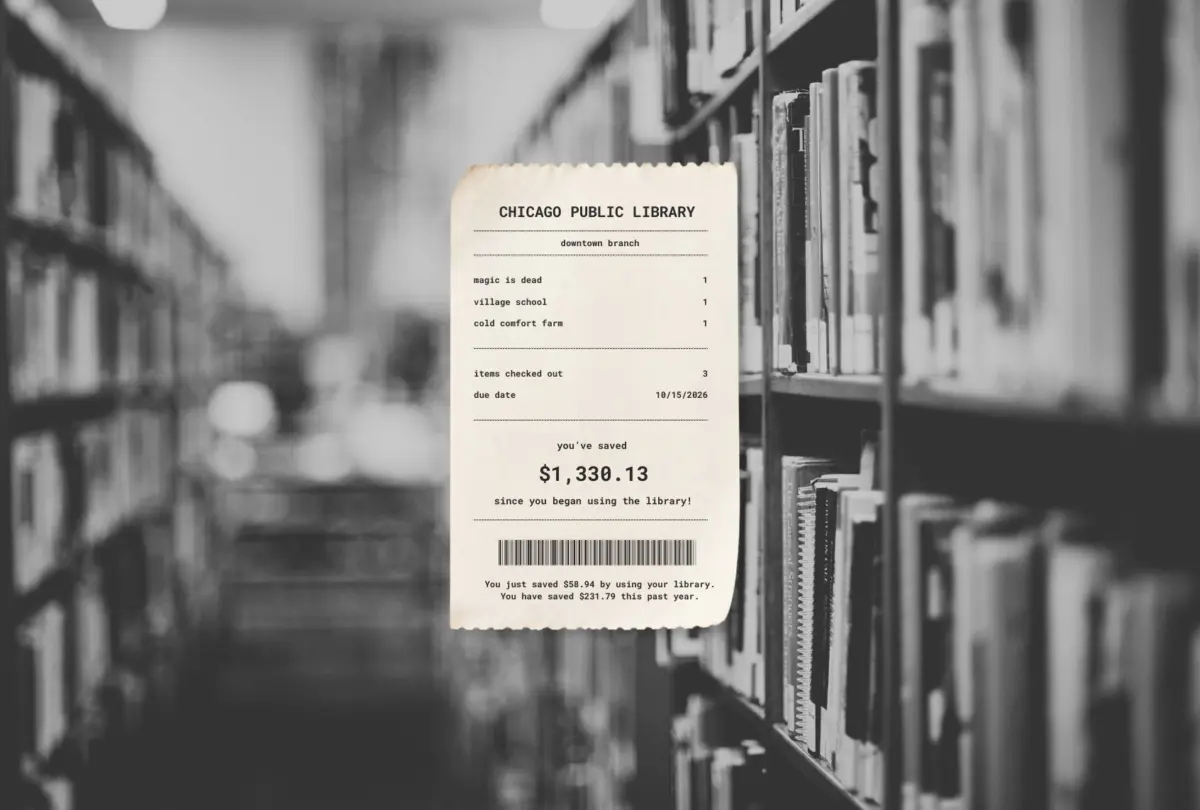
In an era defined by hyper-monetization, subscription fatigue, and the relentless commercialization of everyday life, a quiet revolution is taking place within the municipal administrative tracking systems of the Midwest. The Chicago Public Library (CPL) has inadvertently tapped into a powerful psychological loop by introducing an unassuming feature to its patron notifications: a running total of the retail value saved with every book, film, and media item checked out.
What began in 2025 as a casual experiment by a staff data analyst—who stumbled upon the capability while exploring the library’s internal software tools—has metastasized into a cultural phenomenon. Patrons are no longer just passive consumers of literature; they are active participants in a gamified civic ecosystem. By translating the intangible, ambient worth of a public service into the familiar, transactional language of a grocery store receipt—complete with session savings, year-to-date totals, and lifetime accumulated value—the library has achieved the seemingly paradoxical. It has made users feel a profound sense of ownership over an institution whose core premise is that you do not need to own anything at all.
This article explores the mechanics, psychology, and broader cultural implications of this data-driven civic transparency. Through interviews with library administrators, statistical breakdowns, and psychological analysis, we examine how slapping a price tag on a free service has paradoxically liberated users from consumerist compulsions—all while turning the humble act of returning a DVD on time into a competitive sport.
Detailed Chronology: From Accidental Algorithm to Viral Movement
The genesis of the Chicago Public Library’s savings counter is a testament to the serendipitous nature of bureaucratic innovation. It did not spring from a multimillion-dollar marketing consultancy or a comprehensive public relations summit. Instead, it was born out of routine administrative curiosity.
The Origin Story (2025)
In the spring of 2025, a data analyst working within the CPL technological infrastructure began testing various backend metrics available in the library’s cataloging software. By correlating the initial retail acquisition cost of physical assets—books, Blu-rays, audiobooks, and CDs—with the circulation logs of individual library cards, the system could automatically generate a real-time ledger of monetary value retained by the patron.
After running the algorithm on his own account and watching his personal savings tally climb into the hundreds of dollars in a matter of weeks, the analyst brought the feature to an internal team meeting. The reaction was immediate and unanimous: the metrics were too compelling to remain hidden behind administrative dashboards.
Public Rollout and the Digital Discovery
By late 2025, the feature was quietly integrated into standard automated emails that notify patrons of their newly checked-out materials and upcoming due dates. At first, the addition sat humbly beneath the administrative clutter of barcodes and expiration schedules.
However, it did not take long for users to notice. The turning point arrived via social media, when a CPL patron uploaded a screenshot of their library receipt to Reddit, revealing an astonishing lifetime savings total exceeding $118,000. The post went viral, prompting the library’s digital media team to share it on Instagram. Almost overnight, the comments section transformed into an impromptu, organic leaderboard where Chicagoans from every neighborhood began flexing their municipal savings.
As word spread, the numbers escalated. While the average regular user comfortably racks up thousands of dollars in lifetime savings, CPL officials soon began noticing anomalies at the extreme end of the distribution curve: power-users whose lifelong interaction with the library system approached $50,000, $80,000, and, in rare, legendary instances, upwards of $1.5 million.
Supporting Context & Metrics: The Mechanics of Civic Accounting
To understand why the CPL’s counter is so psychologically potent, one must examine the mechanics of how the system calculates value and the broader economic framework of the modern public library.
The Mathematics of "Free"
The calculation engine is disarmingly literal. When the CPL purchases inventory—whether it is a blockbuster new release, an out-of-print academic monograph, or a box set of vintage television dramas—its internal catalog logs the manufacturer’s suggested retail price (MSRP) or purchase cost. The moment a registered patron checks that item out, that exact figure is logged and appended to their cumulative ledger.
Consider a typical seasonal haul from the stacks:
- Magic Is Dead: My Journey Into the World’s Most Secretive Society of Magicians (Hardcover nonfiction)
- Village School (Classic fiction reprint)
- Cold Comfort Farm (Trade paperback)
- A selection of sourdough baking manuals and boutique Blu-ray film imports
To a casual observer, this eclectic stack represents an afternoon of curious browsing. To the CPL’s accounting script, it represents an immediate injection of roughly $58.94 into the patron’s financial ledger. Over the course of a year, an active reader checking out a few items bi-weekly easily clears $400 to $500 in calculated savings.
The Consumerist Paradox
Critics might argue that these figures are illusory. After all, a user who checks out a $40 art book or an expensive box set would rarely have purchased that item at full retail price in the open market. The savings are theoretical, predicated on a baseline of acquisition that would likely never occur in the absence of the library.
Yet, this criticism misses the point. The psychological brilliance of the counter does not lie in accurate personal accounting; it lies in price legibility.
Modern consumer capitalism has trained citizens to process value exclusively through financial transactions. We understand the world through price points, discounts, loyalty punches, and promotional codes. By borrowing the familiar visual grammar of a retail shopping receipt—YOU SAVED $X—the Chicago Public Library bridges the gap between public infrastructure and consumer consciousness. It transforms an ambient, easily overlooked public good into an explicit, quantifiable asset.
Official Statements: Cultivating a "Sense of Ownership"
The institutional philosophy behind the savings counter is rooted in a desire to deepen community engagement and counteract the creeping privatization of public spaces.
In an interview regarding the feature’s deployment, Brent Lipinski, the Chicago Public Library’s assistant commissioner for patron experience, shed light on the administration’s primary motivations.
"We hoped that providing data around how much someone saves using a public service would give patrons a sense of ownership to utilize their local library," Lipinski explained.
This phrasing—a sense of ownership—presents a fascinating philosophical paradox. Libraries are, by definition, socialist institutions built on the premise of collective stewardship and shared access rather than private property. To "own" something in the capitalist sense is to exclude others from its use. Yet, Lipinski’s deployment of the term speaks to a deeper emotional connection: the feeling of entitlement to a public resource that belongs to you by virtue of your citizenship or residency.
When a patron watches their lifetime savings tick upward toward the thousands, the library ceases to feel like a sterile municipal building or a charitable handout. It becomes an extension of one’s own financial agency.
"When patrons see how much money they’ve saved," Lipinski noted, "we hope they are inspired to keep coming back and saving even more!"
This administrative encouragement has successfully reframed library usage away from a chore and toward an empowering enterprise. For many users, browsing the catalog has shifted from a utilitarian errand into an engaging, low-stakes optimization game.
Future Outlook: The Gamification of the Public Commons
As the success of the Chicago Public Library’s savings tracker reverberates across municipal library systems nationwide—with patrons in California, Texas, Georgia, and beyond flooding social media with requests for similar features in their local jurisdictions—a larger cultural question emerges: Where else can this model be applied?
The Spread of Value Visibility
The psychological trick deployed by the CPL exposes a structural vulnerability in how society values public infrastructure. Parks, community pools, public transit networks, tool-lending libraries, and repair fairs often struggle with funding and civic engagement precisely because their worth is ambient. When a service is entirely free and frictionless, it generates no data trail that registers in the modern consumer’s brain. It simply is.
By making the invisible visible—whether through a dollar-amount receipt for library books, an estimated carbon-offset counter for public transit, or a mental ledger of repair-fair savings for household appliances—institutions can re-anchor public goods in the consciousness of a population raised on retail metrics.
The Double-Edged Sword of Commodification
There is, of course, a minor irony in using the language of consumerism to validate spaces that exist precisely to escape consumerism. Critics may rightly caution against translating every human enrichment activity into fiat currency. An afternoon spent birdwatching at a nature sanctuary or sitting quietly with a volume of poetry resists quantification; putting a dollar value on a warbler sighting or a stanza would cheapen the experience.
However, the genius of the CPL’s implementation is that it does not commodify the experience of reading; it commodifies the barrier to entry. It weaponizes the machinery of capitalism against itself. The financial metrics do not alter the quiet reverence of the reading room or the tactile pleasure of turning a physical page; instead, they clear away the financial anxiety that prevents modern citizens from exploring unfamiliar intellectual territory.
The Next Level
Back in Chicago, patrons continue to watch their tallies climb. For the writer tracking their progress through the stacks, the journey to the next arbitrary milestone—whether it is clearing the $2,000 threshold or matching the legendary figures of elite municipal savers—serves as a gentle, brilliant reminder of what is possible when a city decides to invest in its people unconditionally.
The library card remains free. The stacks remain open. And as the receipts continue to roll into email inboxes across the city, Chicagoans are learning a new kind of arithmetic: one where the more you take away, the richer you become.