

Executive Overview
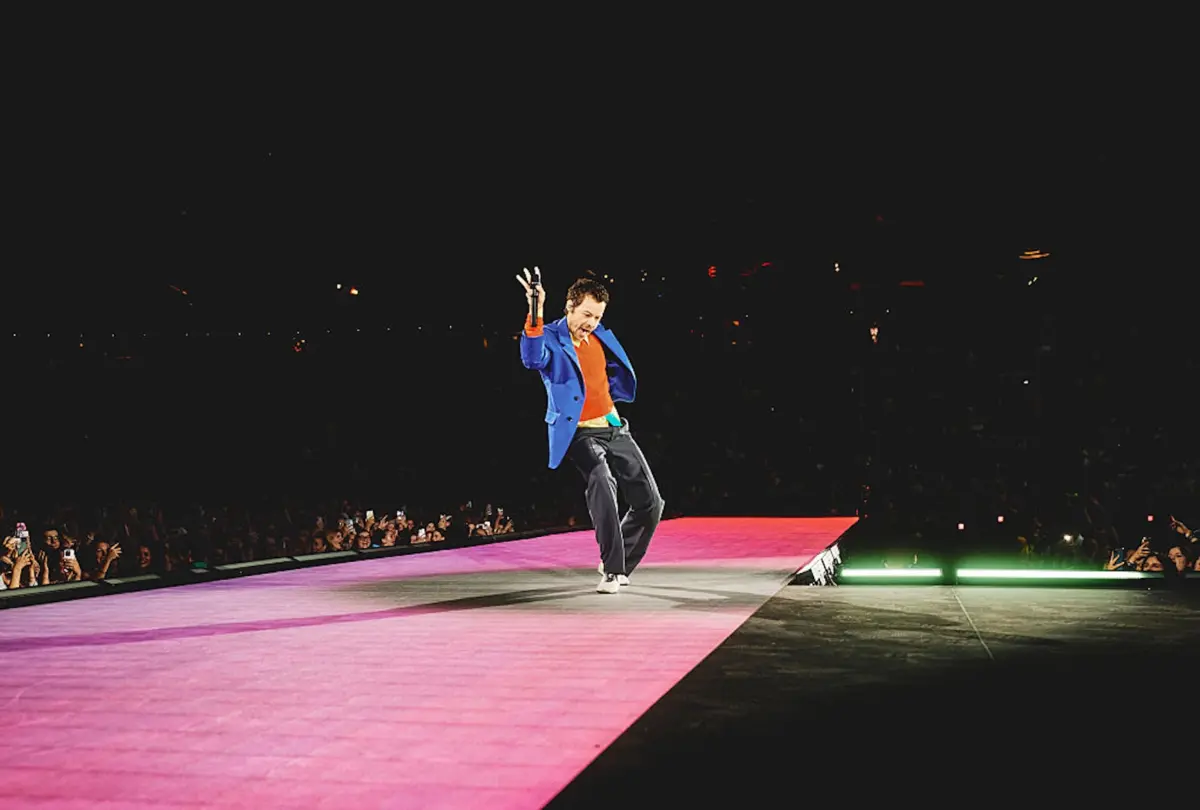
In the heart of Manhattan, inside the storied rafters of Madison Square Garden, a cultural transformation is quietly—yet vibrantly—taking place. British pop star Harry Styles has claimed the iconic arena for a historic 30-night residency spanning from late August through October 2026. Billed as the "Together, Together" tour, this unprecedented run is not merely a commercial triumph or a routine pop spectacle; it is a profound socio-cultural phenomenon.
For two decades, New York City’s queer nightlife landscape has undergone a heartbreaking contraction. Historic institutions like Chelsea’s Splash and Rawhide have been shuttered, victims of unchecked gentrification, skyrocketing rents, and hostile municipal policies. Yet, as Styles fills the Garden night after night with 20,000 congregants draped in sequins, mesh, and feather boas, a lost sanctuary has been temporarily resurrected on a monumental scale.
More importantly, this queer takeover of America’s most famous arena offers a direct, living counter-narrative to the rigid, hyper-aggressive paradigms of masculinity currently being popularized by political figures and digital spaces. By embracing vulnerability, tenderness, and fluid self-expression, Styles is redefining what it means to be a man in the public eye—delivering a potent rebuke to the "counterfeit masculinity" championed by the MAGA movement and the UFC culture that frequently occupies the very same floor.
Detailed Chronology: The Evolution of New York’s Nightlife and the Rise of the Arena Sanctuary
To understand the weight of Harry Styles’ current Madison Square Garden residency, one must trace the winding, often tragic trajectory of New York City’s queer spaces over the last thirty-five years.
- 1991: The opening of Splash in Chelsea marks the dawn of a golden era for New York’s gay nightlife. Serving as an inclusive, vibrant cultural anchor for over two decades, it welcomes thousands of marginalized individuals seeking community and self-expression.
- Late 1990s: Mayor Rudy Giuliani’s aggressive war on Manhattan nightlife sets a precedent for municipal hostility toward countercultural spaces, prioritizing sanitization and commercial development over community hubs.
- 2013: After 22 years of operation, Splash closes its doors. Simultaneously, Rawhide—a legendary 34-year-old staple of queer nightlife—goes dark. The domino effect of gentrification, quadrupled rents, zoning laws favoring luxury condos, and the rise of digital dating apps like Grindr systematically dismantles Chelsea’s club ecosystem.
- 2015–2020: The queer community drifts northward toward Hell’s Kitchen, but a distinct, intimate infrastructural architecture is permanently lost. The physical "rooms" that offered unconditional permission to exist outside daylight hierarchies vanish, replaced by boutique gyms and high-end cafes.
- 2022: Harry Styles signals a shift by executing 15 sold-out nights at Madison Square Garden, cementing a permanent banner in the venue’s rafters and establishing a blueprint for communal residency.
- November 2024: Just days after a major national election victory, Donald Trump is paraded into Madison Square Garden for a UFC card, hailed by figures like Dana White and Joe Rogan. The event solidifies the venue as a temporary temple for a hyper-masculine, dominant, and grievance-fueled political aesthetic.
- August – October 2026: Styles returns to Madison Square Garden for an unprecedented 30-night residency—the largest single-engagement run in the arena’s history. The space transforms into a massive, 20,000-person queer congregation, effectively reclaiming the iconic venue from the grips of toxic masculinity.
Supporting Context & Metrics: The Scale of the "Together, Together" Phenomenon
The sheer magnitude of Styles’ 2026 residency cannot be overstated. Operating as the exclusive United States stop on his current tour cycle, the engagement brings an estimated 600,000 attendees through the turnstiles of Madison Square Garden across 30 nights. With Jamie xx serving as the consistent supporting act, the residency generates unprecedented economic activity for Midtown Manhattan while breaking longstanding box-office records.
| Metric / Dimension | Historical Context (1990s–2010s Clubs) | Current Reality (MSG Residency, 2026) |
|---|---|---|
| Capacity | 300 to 1,500 patrons per venue | 20,000 attendees per night |
| Duration | Nightly operations spanning decades | 30 consecutive nights (August – October 2026) |
| Inclusivity Model | Underground, localized, countercultural | Mainstream, stadium-scale, highly visible |
| Aesthetic Paradigm | Gritty, improvisational, protective | Theatrical, polished, celebratory |
| Financial Footprint | Localized bar and door revenue | Multi-million dollar arena ecosystem |
However, this transition from intimate underground clubs to mega-arenas represents a complex cultural trade-off. Cultural critics and veteran nightlife participants note that while the energy remains electric—marked by high socks, short shorts, pearls, and mutual affection—the intimate, organic grit of old-school spaces has been replaced by corporate-sponsored grandeur. Tickets cost more, security is tighter, and the architectural intimacy of a 500-person dance floor is swallowed by the cavernous echoes of the Garden.
Yet, as veteran observers point out, the underlying psychological and social need for community has not evaporated; it has simply scaled upward to survive in an increasingly hostile real estate market.
Official Statements and Cultural Commentary
The ideological battle lines drawn over Madison Square Garden have not gone unnoticed by cultural critics, political analysts, and public figures. The stark contrast between the venue hosting hyper-masculine political spectacles and later transforming into a sanctuary for queer joy has sparked vital national conversations about gender presentation in the 2020s.
Sen. Cory Booker memorably diagnosed the contemporary cultural obsession with hyper-aggression as "counterfeit masculinity"—a performative toughness designed to mask deep insecurity and emotional deficits. This manufactured toughness, heavily broadcast through the UFC’s caged octagon and amplified by a digital ecosystem of podcasts and political rallies, stands in direct opposition to the archetype presented by artists like Styles.
Cultural commentators have noted:
"The masculinity being pressed on us now, from the cage and from the podium and from 10,000 podcasts, is masculinity as dominance, as grievance, as a permanent clenched fist… [Styles] offers a masculinity with actual range, one that can be soft and adored and unafraid to be looked at, one that treats femininity as a color to wear rather than a threat to survive."
This shift challenges the foundational pillars of traditional patriarchal norms. By walking onto the floor of America’s most famous arena wearing pearls, feather boas, and singing transparently about tenderness and emotional flux, Styles bypasses the culture wars entirely. He does not attempt to "out-tough" the prevailing political paradigm; instead, he renders it obsolete through sheer, unbridled joy and vulnerability.
Future Outlook: Where Does the Culture Go From Here?
As the final nights of the "Together, Together" residency draw to a close in late October 2026, questions linger regarding the future of queer physical spaces in American metropolitan centers.
The closure of historic institutions like Splash and Rawhide initially signaled a bleak future, suggesting that digital applications and hyper-gentrification would permanently atomize the LGBTQ+ community. However, the resounding success of Styles’ 30-night takeover proves that the physical congregation remains an essential human requirement. People still yearn to gather in the dark, bathed in rhythm and colored lights, to celebrate their authentic selves without fear of recrimination.
Key Trajectories for the Future:
- The Decentralization of Community: While mega-arenas can host massive temporary congregations, grassroots organizers are increasingly looking toward pop-up collectives, warehouse spaces, and outer-borough venues (such as in Brooklyn and Queens) to rebuild the intimate, underground grit that institutional arenas lack.
- The Evolution of Pop Stardom: Artists are increasingly expected to serve as cultural anchors rather than mere entertainers. The blueprint established by Styles demonstrates that commercial viability and unapologetic queer advocacy are no longer mutually exclusive in mainstream pop music.
- Redefining American Manhood: The cultural dialogue sparked by the juxtaposition of political rallies and pop residencies at Madison Square Garden will likely influence how younger generations view gender roles. As toxic frameworks face growing fatigue, soft, emotionally expansive models of manhood are poised to gain wider cultural legitimacy.
Ultimately, the story of Manhattan’s nightlife and its migration to the rafters of Madison Square Garden is not a tragedy of erasure, but a testament to adaptation. As veteran nightlife participants have observed across decades: the room always migrates. When one door closes, the community finds a way to build another—proving that the desire for radical inclusion, joy, and freedom cannot be permanently priced out or legislated away.