

Executive Overview
The political landscape of the United States experienced a seismic shift on November 3, 2026. What pundits and political strategists had cautiously whispered about for months crystallized into an undeniable reality as polls closed across the nation: a historic blue wave transformed into an unprecedented political avalanche. For nearly a decade, the Republican Party operated under the magnetic, often ruthless gravitational pull of Donald Trump and the MAGA movement. But on this fateful Tuesday, voters delivered a definitive verdict, treating the midterm elections as a direct referendum on a second Trump term defined by economic strain, social division, and legislative overreach.
The warning signs for the GOP had been flashing for months, ignored by party leadership drunk on the victories of the 2024 electoral cycle. By late Tuesday evening, monumental upsets had shattered long-standing partisan fortresses. From the deep-red swamps of the South to the sprawling suburbs of Texas and the Rust Belt battlegrounds of Ohio and Michigan, Democratic candidates defied conventional wisdom. They did so not by retreating to the political center, but by embracing a fiery, populist defense of working-class interests, healthcare access, and civil rights.
The consequences of this election extend far beyond individual congressional seats or gubernatorial mansions; they mark the definitive end of an era of unchallenged MAGA dominance. As the dust settles on a night that upended decades of electoral mathematics, the monumental defeat of the Republican party offers both a devastating critique of Trump’s governance and a stark, sobering lesson for a triumphant Democratic Party.
Detailed Chronology: How the Blue Avalanche Unfolded
The evening of November 3, 2026, began with an early tremor that quickly escalated into a national earthquake.
The First Dominoes: Kentucky and Georgia
Just thirty minutes after the polls closed at 6:00 p.m. in Kentucky’s 6th Congressional District, early returns from rural counties began to trickle in. Historically a competitive district before being aggressively gerrymandered by the GOP to favor Republicans, the seat was expected to easily stay in conservative hands under nominee Ralph Alvarado, who was running to succeed the retiring Mitch McConnell’s influence network.
However, the real story was hidden in the margins. Alvarado underperformed previous Republican benchmarks by an astonishing 20 percentage points. A massive wave of conservative voters chose to stay home or cross party lines to support Democrat Zach Dembo. By 9:15 p.m., Alvarado conceded, signaling that the suburban and rural discontent was far more widespread than anticipated.
Simultaneously, further south in Georgia, an extraordinarily early call secured a decisive victory for incumbent Democratic Senator Jon Ossoff. Ossoff’s swift and decisive win injected immediate adrenaline into Democratic war rooms nationwide. It was swiftly followed by a monumental pickup in the North Carolina Senate race, where former Governor Roy Cooper defeated former Republican National Committee Chairman Michael Whatley. Even ruby-red Florida saw competitive statewide races, with Democratic gubernatorial nominee David Jolly and democratic socialist Senate candidate Angie Nixon running neck-and-neck with their conservative opponents well into the evening.
The Palmetto State Shocker and the Rust Belt Sweep
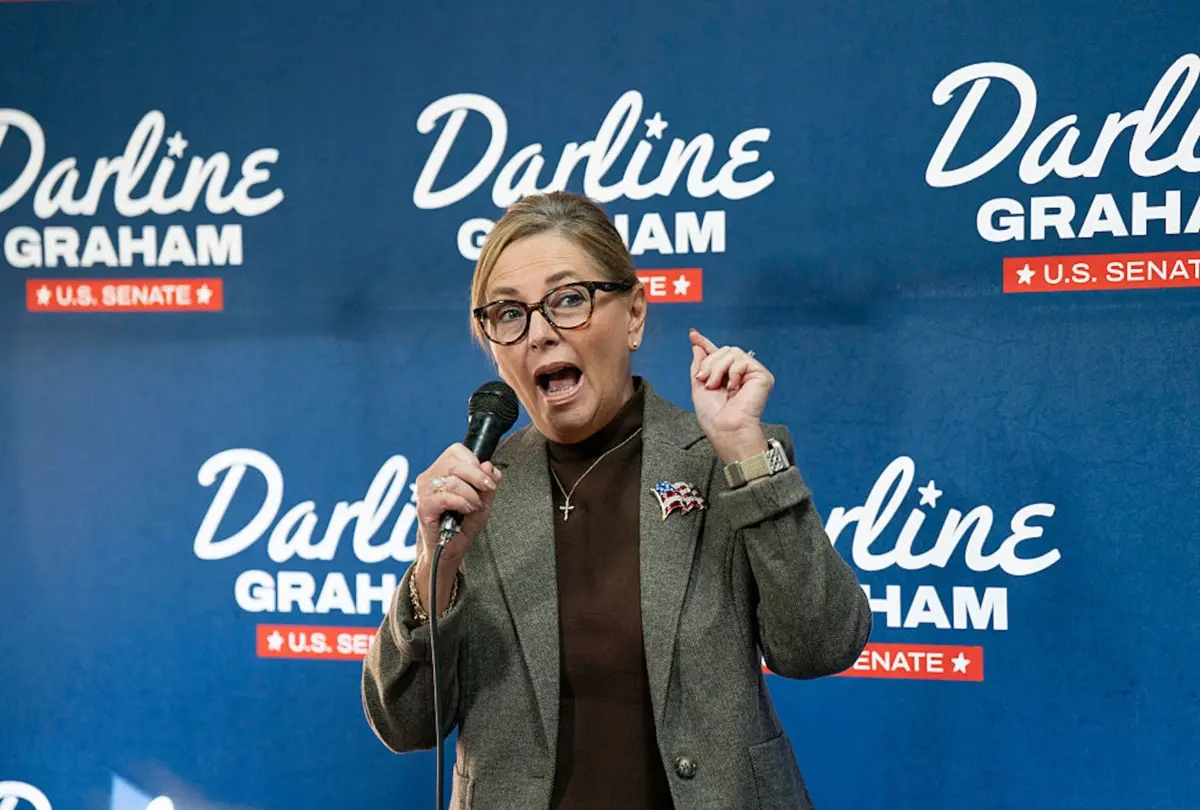
Perhaps the most symbolic defeat of the night occurred in South Carolina. Following the death of long-serving Senator Lindsey Graham, Donald Trump had personally foisted Graham’s sister, Darline Graham, upon the state’s Republican apparatus. Palmetto State voters soundly rejected the dynastic maneuver, handing Dr. Annie Andrews a historic, earth-shattering victory. It marked the first time a Democrat had been elected to the U.S. Senate from South Carolina since 1998.
Meanwhile, in the industrial Midwest, Ohio’s Democratic gubernatorial nominee Amy Acton routed her opponent, Vivek Ramaswamy, following a campaign defined by outrage over Ramaswamy’s controversial and widely condemned attack ads. In Michigan, progressive candidates capitalized on economic frustrations, securing critical victories that signaled a complete rejection of nationalized MAGA politics.
The Crown Jewel: Texas Turns
The ultimate symbol of the night’s tectonic shift, however, took place deep in the heart of Texas. Despite millions of dollars poured into the state by billionaire allies and national conservative super PACs, Texas fell firmly into the Democratic column. James Talarico secured a stunning victory over scandal-plagued Attorney General Ken Paxton, while Gina Hinojosa ousted incumbent Governor Greg Abbott from the governor’s mansion. Paxton’s frequent campaign refrain—“If we lose Texas, we lose America”—was put to the ultimate test. Texas fell, but America, resilient and radically realigned, kept moving forward.
Supporting Context & Metrics: Decoding the Collapse of the Trump Coalition
To understand how the Republican Party suffered such catastrophic losses, one must examine the systematic unravelling of the very coalition that propelled Donald Trump back to the White House in 2024.
During the 2024 presidential cycle, Trump successfully expanded his base by making unprecedented inroads with demographic groups historically skeptical of the GOP: Black men, Hispanic voters, and young adults. This fragile coalition was built on promises of economic prosperity, populist reform, and cultural grievance. However, the subsequent 22 months exposed the hollow core of those promises.
| Demographic Group | 2024 Shift Toward Trump | 2026 Midterm Voting Trend | Primary Catalysts for Shift |
|---|---|---|---|
| Black Voters | Moderate Gains | Overwhelming Democratic Turnout | Voter suppression laws, attacks on Black history, gutting of Voting Rights Act |
| Latino Voters | Significant Growth | En Masse Defection to Democrats | Aggressive ICE raids, mass deportations, threats against naturalized citizens |
| Young Voters | Key Expansion | Heavy Progressive Alignment | Attacks on civil rights, social safety net erosion, student debt pressures |
Splintering the Base
Emboldened by his return to executive power, Trump systematically alienated the very communities that had secured his victory. The administration’s aggressive push for aggressive immigration enforcement—marked by relentless ICE raids, mass deportations, and xenophobic rhetoric targeting naturalized citizens—triggered a massive backlash among Hispanic voters. In states like Texas, this demographic swung en masse toward Democratic candidates, serving as the decisive margin in races like Talarico’s.
Concurrently, the federal government’s systematic assault on civil rights, compounded by the Supreme Court’s controversial decision earlier in the year to effectively gut the remaining protections of the Voting Rights Act (dubbed by critics as "Jim Crow 2.0"), galvanized minority turnout. Black voters headed to the polls in numbers reminiscent of historic presidential turnouts, completely neutralizing the GOP’s national gerrymandering strategies.
Furthermore, economic conditions over the previous two years—exacerbated by chaotic governance, protracted government shutdowns, and rising consumer costs—shattered the illusion of working-class prosperity under the MAGA banner. Trump’s fixation on cultural grievance politics ultimately failed to mask the daily economic anxiety felt by millions of American families.
Official Statements and Political Reactions
The morning after the election, Washington and state capitals hummed with disbelief, recrimination, and cautious optimism.
Speaking from campaign headquarters in Austin, newly elected Texas Governor Gina Hinojosa addressed a roaring crowd of supporters:
"Tonight, the myth of the untouchable machine has been shattered. The people of Texas—and the people of the United States—have sent a message that echoes from the Rio Grande to the Canadian border. They are exhausted by division, exhausted by corruption, and desperately hungry for leaders who wake up every single day fighting for their pocketbooks, their families, and their fundamental freedoms."
Conversely, the mood within Republican circles was one of panic and public finger-pointing. Conservative strategists scrambled to distance themselves from the candidates hand-picked and anointed by Donald Trump, quietly admitting that the former president’s personal vendettas and insistence on loyalty-above-all criteria had saddled the party with unviable, deeply polarizing nominees.
Democratic leadership, while publicly celebrating what party chairpersons termed "a night of generational redemption," issued immediate internal cautions. National committee briefings emphasized that the 2026 results were not a blank check, but rather a conditional lease on power granted by exhausted voters demanding immediate material relief.
Future Outlook: The Mandate and the Peril Ahead
As the political establishment processes the wreckage of the 2026 midterms, both major political parties face a starkly transformed reality.
For the Republican Party, an existential reckoning is no longer on the horizon—it has arrived. The GOP must decide whether it will remain structurally shackled to an aging, grievance-driven populist brand that continuously repels suburban, minority, and young voters, or whether it will undergo a painful, necessary modernization to appeal to a changing nation. The myth that Trumpian politics are an infallible recipe for sweeping national victory has been definitively debunked.
For the Democratic Party, the evening’s triumphs come with an equally profound warning. The blue wave was not born out of blind affection for the party’s establishment, but out of a desperate desire for tangible change. Voters made it clear that they want economic fighters—leaders like Jon Ossoff, who staked his political life on protecting Affordable Care Act subsidies during record-long government shutdowns, and local candidates who unapologetically tied corporate price-gouging and healthcare access to kitchen-table realities.
The wind is currently at the Democrats’ backs, but the proverbial banana peel remains positioned directly around the corner. If the newly empowered legislative majorities fail to deliver on economic affordability, healthcare expansion, and the protection of democratic institutions, the electorate will be just as swift and merciless in stripping them of power come 2028. For now, however, the message of November 3 rings clear: the era of unchecked MAGA dominance has run its course, and an awakened American electorate has reclaimed its voice.
