

Executive Overview
In an era saturated with hyper-curated digital identities and commodified expertise, the act of food criticism has evolved—or perhaps devolved—into an exercise of sheer audacity. When a commentator evaluates a film or a Michelin-starred restaurant, they are engaging with a deliberately manufactured human construct. But what happens when that critical lens is turned away from the culinary arts and aimed directly at nature?
This investigative review examines the contentious pomological phenomenon known as the Ambrosia apple. Hailing from the orchards of British Columbia, Canada, this varietal has achieved cult-like status among modern fruit consumers, frequently touted by enthusiasts as a supreme triumph of modern agriculture. However, a rigorous sensory audit reveals a far more complex reality.
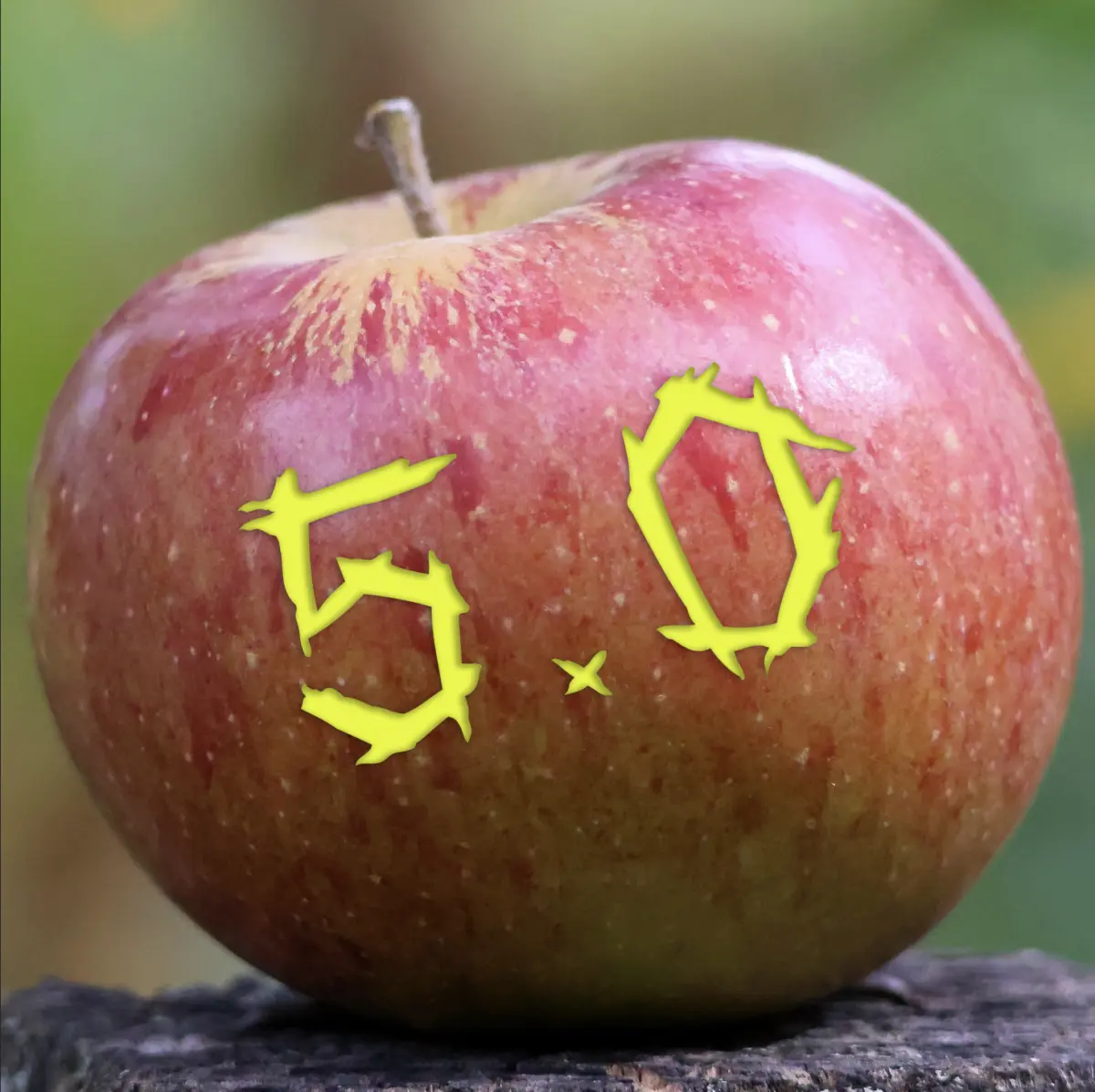
Far from being a universally adored masterpiece of agronomy, the Ambrosia apple occupies a strange, divisive middle ground in the pantheon of modern pomology. By analyzing its unexpected origins, its aggressively juvenile flavor profile, and its near-perfect textural execution, this report unpacks why the Ambrosia serves as the ultimate litmus test for contemporary fruit snobbery. Earning a definitive, immovable 5.0 out of 10, the Ambrosia is crowned the undisputed monarch of the "mid"—a fruit that challenges our very definitions of what an apple ought to be.
Detailed Chronology: The Accidental Genesis of a Canadian Icon
To understand the Ambrosia apple, one must trace its lineage back to its surprisingly unpretentious beginnings in the orchards of British Columbia. Unlike meticulously bred corporate cultivars engineered in high-tech agricultural laboratories under strict intellectual property safeguards, the Ambrosia’s origin story reads like horticultural folklore.
Phase One: The Accidental Seedling
Sometime in the early 1990s, an unexpected mutation or chance seedling—a spontaneous gift from Mother Gaia, springing forth unbidden from the soil—was discovered on the Mennonite-owned Telford Farm in Cawston, British Columbia. The tree produced fruit of such striking color, aromatic sweetness, and resilience that the orchardists recognized they had stumbled upon something extraordinary.
Phase Two: Commercialization and Branding
Rather than fading into obscurity, scions from the original chance seedling were propagated. The varietal was christened "Ambrosia," a nod to the mythological food of the Greek gods granting immortality. Yet, as the fruit achieved commercial dominance across North America, the machinery of modern marketing took hold.
In a move that continues to baffle branding experts, producers eventually introduced a "premium" tier known as the Ambrosia Gold. Despite the elevated nomenclature and marketing fanfare, a rigorous functional analysis reveals that the Ambrosia Gold is, structurally and gustatorily, identical to its predecessor. It boasts no upgraded firmware, features no haptic feedback, and receives no satellite radio integration. It is simply an apple, demonstrating the bizarre lengths to which modern food branding will go to gild an already polished fruit.
Supporting Context & Metrics: The Anatomy of a "Child’s Apple"
Evaluating an apple requires confronting a fundamental philosophical dilemma familiar to all critics: the trap of the misdirected desire. Much like a disgruntled consumer who purchases a duck expecting it to behave like a guard dog—only to complain that the avian subject refuses to play fetch or cuddle—apple critics often fall into the trap of evaluating a fruit based on what they wanted it to be, rather than what it inherently is.
Keeping this bias in check, a multi-dimensional sensory analysis was conducted on a fresh specimen of the Ambrosia varietal.
+-------------------------------------------------------------+
|               AMBROSIA APPLE SENSORY METRICS                |
+------------------------------+------------------------------+
| Metric                       | Evaluated Score / Status     |
+------------------------------+------------------------------+
| Structural Texture           | 9.0 / 10 (Crisp, Airy, Juicy)|
| Acidity / Tartness           | Negligible / Absent          |
| Sugarcraft Profile           | Bubblegum / Cherry-Synthetic |
| Target Demographic Index     | Second to Third Grader       |
| Overall Pomological Rating   | 5.0 / 10 (The Pinnacle of Mid)|
+------------------------------+------------------------------+
The Texture: A Masterclass in Consumption
Where the Ambrosia truly shines—and where even its harshest critics must concede defeat—is its physical architecture. The fruit possesses a near-perfect texture. It avoids the mealy tragedy of overripe storage apples while steering clear of the aggressive, jaw-fatiguing crunch of certain overly dense cultivars.
The crunch is light, almost airy. Biting into an Ambrosia feels like encountering a fruit that actively wants to be consumed. It offers minimal structural resistance to the assault of human teeth and stomach acid, dissolving rapidly into a burst of juice. It is an exceptionally easy, frictionless eating experience.

The Flavor Profile: The "Chicken Nugget" of Pomology
Unfortunately, the flavor trajectory diverges sharply from its structural elegance. The Ambrosia is overwhelmingly, unapologetically sweet. True tartness is virtually nonexistent.
Upon mastication, the palate is greeted not by the complex, wine-like tannins of heritage European cider apples or the bracing malic bite of a classic Granny Smith, but by an uncanny valley of confectionary nostalgia. It tastes unmistakably of bubblegum—specifically, cherry-flavored bubblegum.
This leads to the central thesis of this sensory audit: The Ambrosia is a child’s apple.
- Grades 1–3: Ideal for the elementary school lunchbox. Children, whose palates have not yet evolved to appreciate bitter or complex secondary notes, will find its straightforward, candy-like sweetness comforting and accessible.
- Grades 4–5 and Beyond: By the time a developing mind reaches the upper primary grades, a greater degree of culinary discernment is expected. Just as a child eventually outgrows the simplistic comfort of processed chicken nuggets in favor of a roasted chicken or coq au vin, the mature fruit lover yearns for complexity, balance, and existential resistance in their food. The Ambrosia, by contrast, offers no such depth.
Official Statements and Comparative Analysis
In the broader context of pomological evaluations, the Ambrosia sits within a sprawling continuum of seasonal reviews. To date, extensive comparative profiling has been conducted on dozens of historic and contemporary varietals, ranging from the legendary Honeycrisp and the polarizing Cosmic Crisp to obscure heritage finds like the Knobbed Russet and the D’arcy Spice.
When placed against this historical backdrop, industry experts note a widening philosophical schlock in modern apple breeding:
- The Sweetness Arms Race: Modern commercial breeding programs heavily favor high-sugar, low-acid cultivars because consumer data consistently shows that mass-market buyers prioritize immediate gratification over balanced acidity.
- The Traditionalist Backlash: Heritage apple purists argue that this trend strips apples of their character, reducing a venerable orchard fruit into a high-fructose snack item designed for the least common denominator.
While official comments from mainstream agricultural boards praise the Ambrosia for its reliable yields, storage longevity, and universal kid-friendly appeal, independent critics remain steadfast in their assessment that mass-market palates are being led down a monochromatic path of unchallenging sugar.
Future Outlook: Where Does the Ambrosia Belong?
As we look toward the future of orchard management and consumer trends, what is the ultimate destiny of the Ambrosia apple?
It is entirely clear that the Ambrosia is not a malicious fruit. Its existence does not offend the cosmos in the manner of a truly rotten harvest. The sweetness is pleasant enough; it does not cause physical revulsion. However, for the discerning epicurean navigating the vast world of pomology, it ultimately registers as profoundly average.
[Consumer Expectation] ---> ( Seeking Complexity / Acidic Balance )
                                      |
                                      v
[The Reality Check]   ---> ( Encounters Ambrosia Bubblegum Profile )
                                      |
                                      v
[Final Resolution]    ---> ( Relegated to Highly-Citrused Applesauce )
The Culinary Prescription
For those unfortunate souls who find themselves in possession of a surplus of Ambrosia apples—perhaps gifted by well-meaning relatives who fell victim to the hype—there is still a path forward. The fruit is exceptional when utilized in processed applications, specifically applesauce. However, to rescue the dish from terminal banality, one must aggressively zhuzh up the batch with a heavy-handed injection of fresh citrus to restore the missing tartness and inject a pulse of life into an otherwise flat flavor profile.
Final Verdict
The Ambrosia apple receives a permanent, immovable rating of 5.0 out of 10. It cannot sink lower, for its texture is a genuine marvel of modern agriculture. Yet it cannot rise higher, trapped forever by its juvenile, bubblegum-infused soul.
Ambrosia: Officially endorsed for fans of Paw Patrol, and nobody else.
