

EXECUTIVE OVERVIEW
What began as a digital bazaar for discounted lip liners, phone cases, and fast-fashion items has quietly mutated into something far more intoxicating: a high-stakes, 24/7 subterranean marketplace for precious stones. TikTok Shop—the platform’s integrated e-commerce engine—has inadvertently birthed the digital age’s answer to home shopping networks, combining the breathless pitch of midnight television infomercials with the gamified mechanics of mobile gaming.
At the center of this cultural pivot are live-auction streams where independent vendors peddle everything from dainty, 0.03-carat lab-grown chips to blinding 14-carat monoliths. Pulsing with club remixes and driven by hyper-caffeinated hosts running frantic 10-to-30-second countdowns, these spaces are drawing hundreds of thousands of casual scrollers into spontaneous, high-dollar purchases.
For many, it starts with an errant tap. For others, it quickly spirals into a full-blown collecting obsession. Described by participants as “Gen Z’s QVC,” these digital auctions are rewriting how everyday consumers acquire luxury. Powered by the proliferation of affordable lab-grown diamonds and a frictionless checkout ecosystem, TikTok’s gem trade is transforming thousands of ordinary scrollers into self-styled jewelry moguls—raising fresh questions about impulse spending, digital storefront accountability, and the gamification of modern commerce.
DETAILED CHRONOLOGY: FROM ACCIDENTAL TAPS TO DIGITAL HOARDING
The First Strike: How Accidental Bids Sparked a Movement
The path to becoming a gemstone collector is rarely premeditated. For Ryan Roth, the descent began with a moment of digital happenstance. While mindlessly scrolling through his For You Page, Roth was pulled into one of TikTok’s algorithmic live-auctions. A seller in an otherwise empty room was showcasing an impressive lab-grown diamond, encouraging the floating stream of chat commentators to throw their hats into the ring.
“I clicked the button by accident, and it just went through,” Roth recalls. “Then all of a sudden, I see the Amex charge, and I’m like, ‘Oh my God, I own this now!’ I just spent $700 on TikTok Shop, which is a crazy amount of money to spend on TikTok Shop.”
The barrier to entry on TikTok Shop is intentionally razor-thin—a single tap of a biometric login or saved credit card is all it takes to complete a transaction. For Roth, the novelty didn’t wear off; it amplified. Shortly after his first inadvertent acquisition, he found himself in the back of an Uber on the way to a party, slightly tipsy, and drifting back into another live auction. This time, a diamond was being aggressively auctioned off for $94. Another reflex-driven click made him its owner.
Within a fortnight, Roth’s accidental purchases had metastasized into a dedicated hobby. He estimates he has roughly ten more gems currently in transit to his doorstep. “This isn’t actual gambling, as much as it does feel like it,” Roth reasons, “because you’re getting something in return. You’re not just throwing money to the house.”
When Roth posted a video detailing his accidental diamond addiction, asking if anyone else was experiencing the same phenomenon, his comment section exploded. Within hours, more than a thousand replies flooded in from users across the country, each confessing to their own secret jewelry hoarding habits funded by late-night app sessions.
The Anatomy of a TikTok Live Gem Auction
To understand how ordinary consumers are routinely dropping hundreds—and sometimes thousands—of dollars on digital livestreams, one must examine the carefully engineered environment of a TikTok Shop auction.
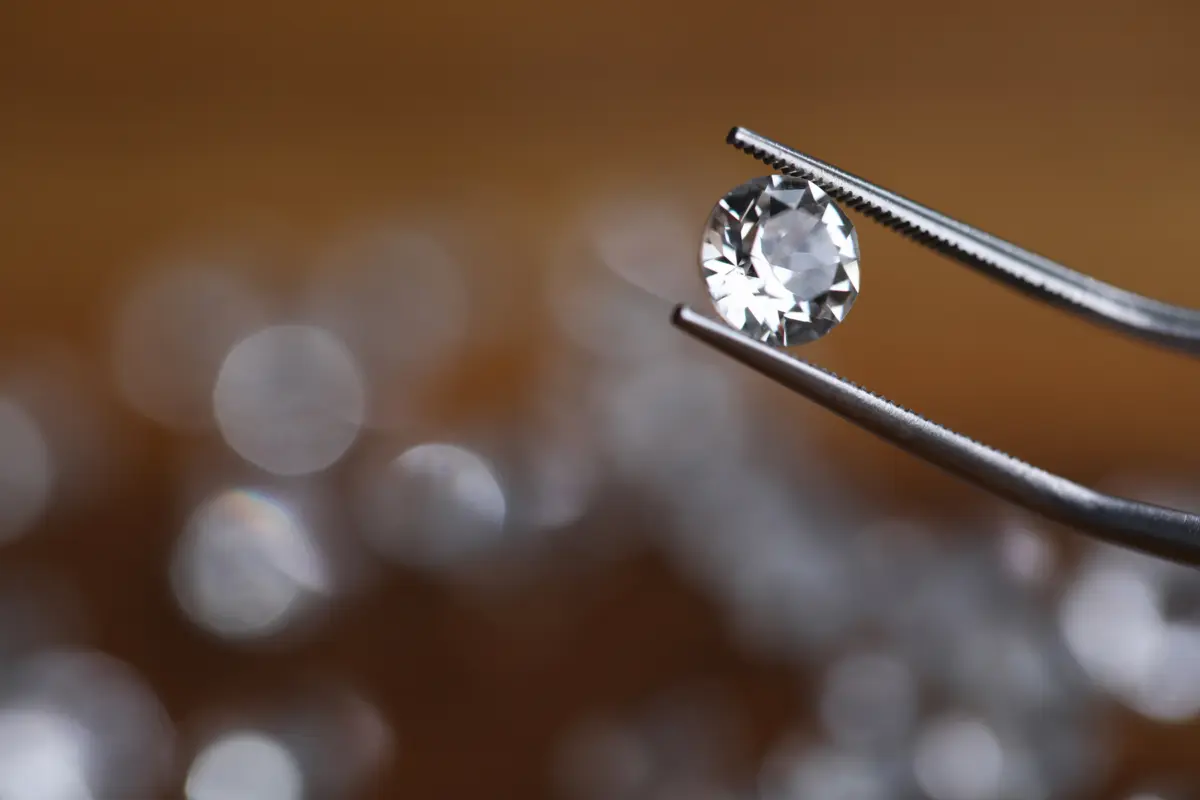
When a user clicks into a live-streaming jewelry storefront, they are immediately hit with a sensory cocktail. High-energy electronic remixes blare in the background, setting a frantic pace. A chipper, charismatic host—often operating under an aesthetic of forced intimacy or high-energy salesmanship—swirls a sparkling stone beneath professional ring lights, highlighting its refractive qualities while driving a breathless 10-to-30-second countdown.
The psychological pressure is immense. The chat scrolls by at lightning speed, populated by automated prompts, cheering emojis, and competing bids. The host acts as both ringmaster and friend. Some adopt a clinical, professional approach, reading off exact stone specifications, clarity ratings, and estimated retail values. Others lean heavily into parasocial warmth.
“I want all my besties to win!” exclaims one host dressed entirely in pink, holding up a one-carat diamond cross necklace to the camera.
Not all sales tactics are wrapped in sweetness. Other storefronts rely on aggressive urgency. A seller marketing a set of murky topaz earrings leans close to the microphone, practically begging her audience to act. “C’mon guys, hit that button,” she urges, her voice tight with performative panic. “Go. Go. Go. Go. Don’t let me down. Come on, go.”
SUPPORTING CONTEXT & METRICS: THE ECONOMICS OF SYNTHETIC LUXURY
The Rise of the Lab-Grown Revolution
The viability of TikTok’s gem economy rests entirely on a seismic shift within the broader jewelry industry: the normalization and mass production of lab-grown diamonds. Historically, natural precious stones commanded astronomical prices due to supply chain monopolies, ethical extraction costs, and the perceived rarity of mined carbon.
However, technological advancements have made it possible to replicate the intense heat and pressure of the Earth’s mantle inside controlled laboratory environments. The resulting lab-grown diamonds are chemically, physically, and optically identical to mined stones—yet they fraction of the cost.
This pricing flexibility is what fuels the chaotic, unpredictable market on TikTok Shop:
- Entry-Level Bids: Some auctions start as low as $1 for small, promotional moissanite pieces or micro-carat synthetic chips.
- The Sweet Spot: The vast majority of standard transactions hover comfortably between $100 and $500, making luxury feel accessible to middle-income earners.
- High-End Limits: Larger, premium-grade lab-grown diamonds—ranging from three to five carats—frequently command bids north of $1,000 to $2,000, which still represents a staggering 70% to 80% discount compared to traditional retail prices.
The "Gen Z QVC" and the Dopamine Loop
Larissa Rolim, a podiatrist from Dallas who has become a regular fixture in these digital auction rooms, refers to the trend succinctly: “Gen Z’s QVC.”
Over the span of two months, Rolim has accumulated five distinct diamonds with plans to fashion them into matching necklaces for herself and her sister. But she is acutely aware of the psychological trap underpinning the experience.
“It’s very addicting,” she laughs, noting the frictionless nature of the application interface. “I feel like some folks could get in trouble because it’s so easy to just click, click, click, click, click.”
For frequent bidder Tiffany, the comparison to casino gaming is literal. Over the course of a month, she has amassed roughly 50 different lab-grown and natural diamonds, sapphires, rubies, and amethysts. She budgets approximately $100 a week strictly to fund her auction habit.
“It’s affordable, honestly,” Tiffany explains. “It’s fun and it gets your adrenaline pumping because you feel like you’re gambling.”
This psychological cross-pollination between gaming, gambling, and shopping is no accident. The combination of variable-ratio reinforcement (not knowing if you’ll win the bid or what the final price will be), time-sensitive scarcity (the 20-second countdown), and instant financial settlement creates a powerful dopamine loop.
Case Studies in Accidental Acquisitions
The friction-free UX (User Experience) of TikTok Shop means that user error often leads to legally binding financial commitments. Azjani, another casual scroller turned collector, secured a one-carat, lab-grown pear-shaped diamond for just $93 entirely by mistake.
“It was completely unintentional,” Azjani admits. “I thought [the auctions were] fake. I was like, ‘Okay, let me click on it once or twice because the price was still low.’ I happened to win it. I was like, ‘Oh, I thought somebody else was going to bid more.’”
Despite the accidental nature of these purchases, participants consistently push back against critiques that buying jewels during an era of high inflation and economic anxiety is fiscally irresponsible.
“Inflation’s affecting us all,” Rolim notes. “I feel like in a situation where you’re trying to get an anniversary gift, a birthday present, you can get a very nice gift for significantly less than you would have normally.”
For others, the purchases carry deep personal significance. Tracy, a retiree who recently beat stage-four cancer, used the platform to commemorate her recovery. After winning a three-carat, cushion-cut lab-diamond during an auction, she had it fashioned into a custom ring—now her most prized possession.
“I almost cried because I never in a million years thought I would personally own a three-carat diamond,” Tracy shares. “I’m not Taylor Swift. I’m not Selena Gomez. I am a regular person who wanted something beautiful to celebrate me, and through these auctions, I was able to do that.”
FUTURE OUTLOOK: WHERE IS THE TIKTOK GEM RUSH HEADED?
As TikTok Shop matures from a novel feature into a dominant social commerce ecosystem, the live-auction gemstone economy sits at a fascinating crossroads. Several trajectory vectors define its immediate future:
1. Platform Regulation and Consumer Protection
As regulatory bodies increasingly scrutinize dark patterns, frictionless checkout mechanics, and predatory marketing tactics targeting impulse control, platforms like TikTok may face pressure to introduce cooling-off periods or mandatory confirmation steps for high-value transactions. While buying a $93 sapphire on a whim feels like a harmless thrill, the frictionless nature of these sales leaves platforms vulnerable to consumer protection lawsuits if vulnerable users rack up thousands in unbudgeted debt.
2. The Professionalization of Independent Sellers
What started as scrappy individuals broadcasting from empty rooms is steadily professionalizing. Independent gemological traders are recognizing the immense reach of TikTok’s algorithm, leading to higher-quality broadcasts, certified gemological grading reports displayed on-screen, and structured storefronts that mimic traditional auction houses like Sotheby’s—albeit powered by Gen Z slang and pop music.
3. The Commodification of Synthetic Luxury
The enduring success of this trend signals a permanent structural shift in how luxury is perceived. As lab-grown stones lose their social stigma and become fully commodified, status is shifting away from the immense financial investment of a natural stone toward the thrill of the hunt and the personalization of custom jewelry.
Ultimately, TikTok Shop has tapped into a primal human desire: the thrill of discovery, the rush of a competitive win, and the timeless allure of a sparkling stone catching the light. Whether viewed as a dangerous trap for impulse spenders or a democratizing force that brings luxury within reach of the working class, the midnight gem rush on TikTok is rewriting the rules of modern retail—one accidental click at a time.