

Executive Overview
As the 2026 midterm elections approach, a seismic shift has upended traditional campaign messaging. Historically, the Republican Party has commanded a decisive advantage on the issue of crime and public safety, frequently utilizing "soft-on-crime" attacks to put Democrats on the defensive. However, the national obsession with accountability, transparency, and institutional cover-ups has rewritten the political playbook.
From Arizona to North Carolina and deep into Texas, Democratic candidates are deploying a high-stakes, aggressive strategy: hammering Republican opponents over their legislative votes, legal maneuvers, political appointments, and institutional responses to high-profile sexual abuse scandals. Central to this strategy is the fallout from the Department of Justice’s release of nearly 3 million files related to late, disgraced financier and convicted sex offender Jeffrey Epstein.
What was once viewed as a taboo or politically volatile topic has transformed into a unifying, cross-partisan issue. Strategic polling shows that accountability for sexual abusers and institutional enablers enjoys rare, high-levels of crossover support among Democrats, Republicans, and independents alike. Seizing on this dynamic, Democratic strategists are successfully turning the tables on crime messaging, reframing the debate around institutional corruption, the protection of predatory actors, and a systemic failure to protect women and children.
Detailed Chronology: From Dallas to Washington — The Evolution of the 2026 Strategy
The convergence of Epstein-related advocacy and midterm electoral politics reached a fever pitch in September 2026, punctuated by a series of dramatic campaign maneuvers and high-profile confrontations.
September 10, 2026: The Epstein Reading Room in Dallas
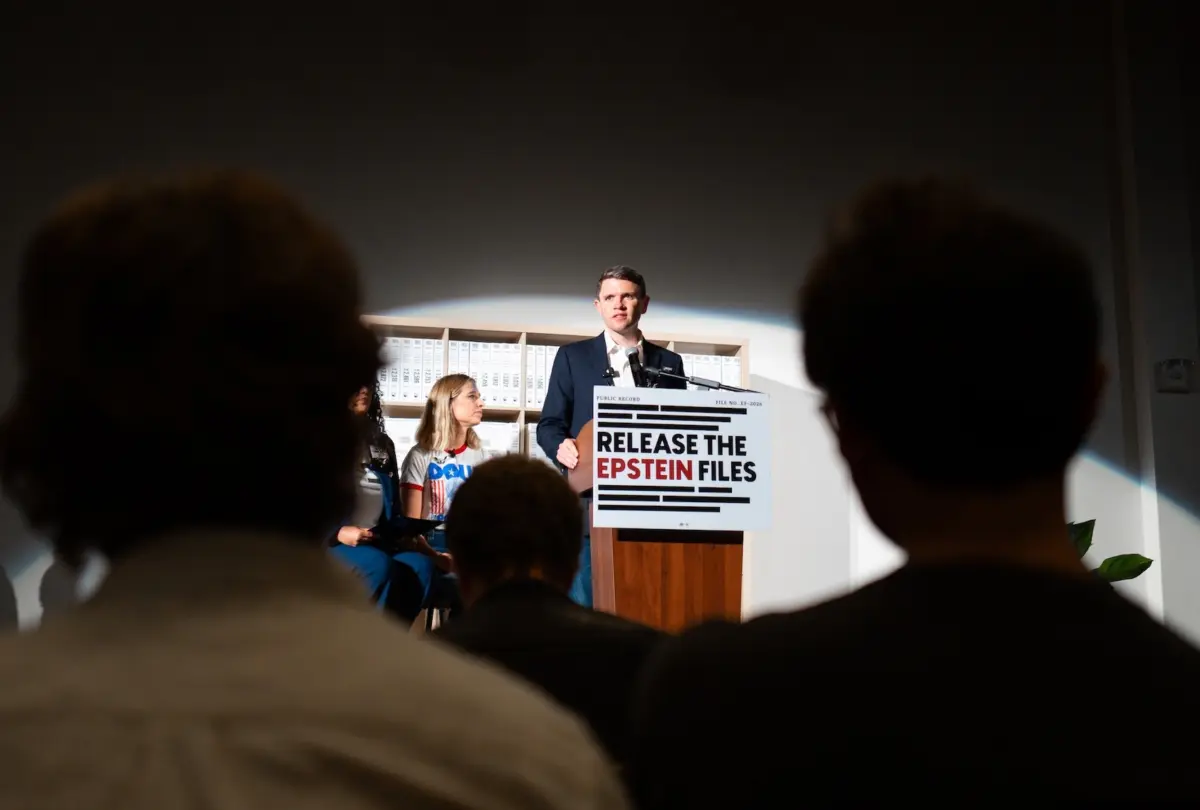
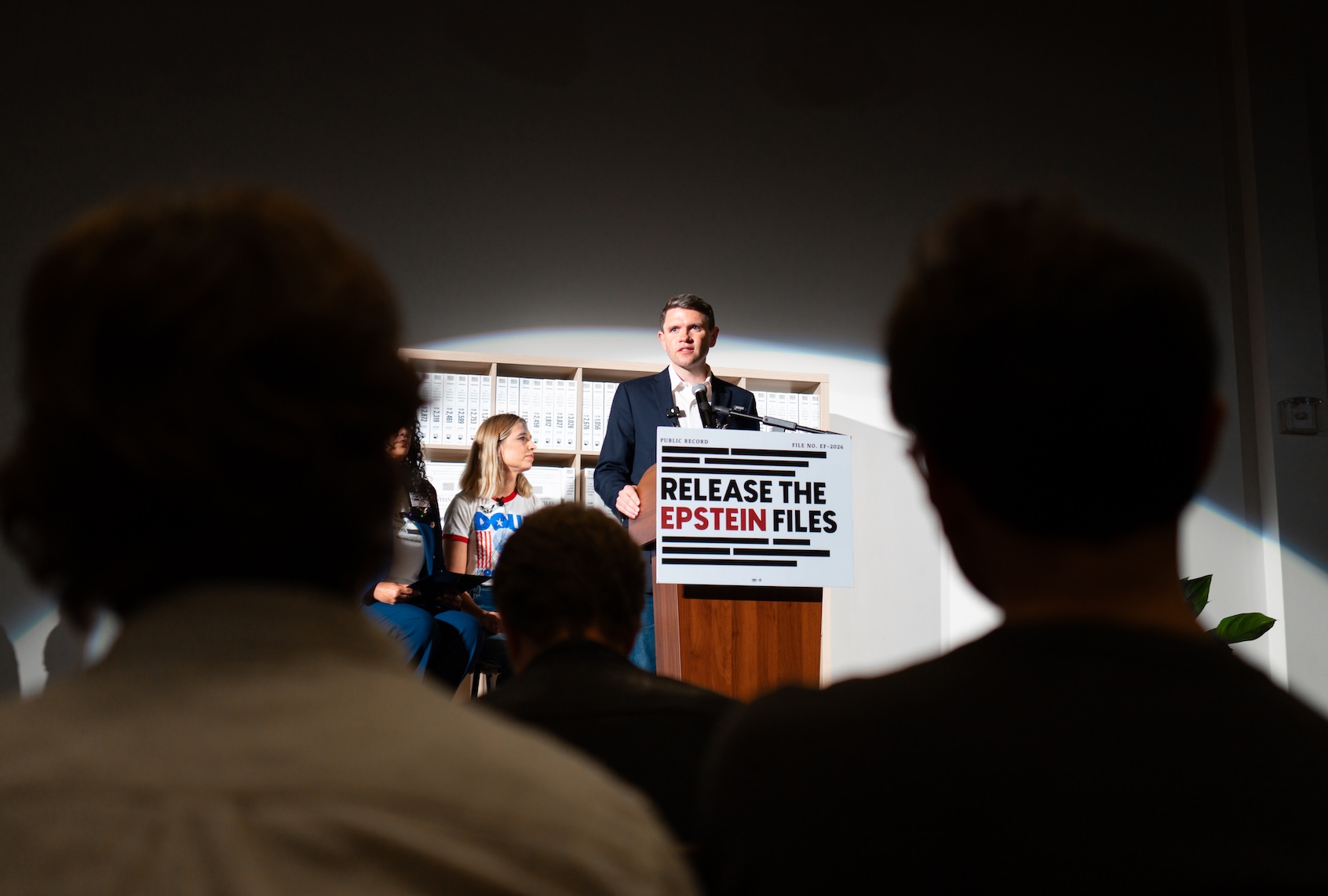
While the Texas Republican Party gathered in Dallas for its pre-midterm convention, Democratic Senate nominee James Talarico made a strategic detour that dominated local and national news cycles. Talarico toured the Reading Room—a traveling public exhibit featuring the Department of Justice’s massive archive of Epstein investigative files. The release of these files marked the culmination of a years-long legal and public relations battle waged by Epstein survivors demanding complete transparency from a federal government they argue repeatedly shielded high-powered perpetrators.
Standing alongside prominent Epstein survivors Annie Farmer and Sharlene Rochard, Talarico delivered a blistering indictment of his general election opponent, Texas Attorney General Ken Paxton. Talarico publicly criticized Paxton for refusing to meet with the survivors and accused the state’s top law enforcement official of presiding over a "history of covering up abuse." Talarico issued a direct call to action, demanding that Paxton utilize his office to sue the Justice Department over alleged obfuscations in its handling of the Epstein archive.
Mid-September 2026: Ad Wars and Legal Scrutiny in Texas
The confrontation in Dallas immediately spilled over into the airwaves. Just one day after the conclusion of the Texas GOP convention, Talarico’s campaign debuted a hard-hitting television ad targeting Paxton over a separate, explosive local legal controversy: an "Epstein-style" plea deal offered by the Texas Attorney General’s office to Waco attorney Adam Hoffman.
Hoffman had faced trial for the alleged sexual abuse of a minor, which ultimately ended in a hung jury. Rather than pressing for a retrial, state prosecutors offered a plea agreement that would have permitted Hoffman to serve a mere single day in jail—a proposal that sparked instant public outcry and was ultimately rejected by the presiding judge. Hoffman subsequently pleaded guilty to misdemeanor charges, receiving a 60-day jail sentence without being required to register as a sex offender.
While career prosecutors defended the arrangement in a letter to state lawmakers, arguing it spared the young victim the trauma of testifying in a second trial, Talarico’s campaign weaponized the event. The television spot minced no words, declaring: "Ken Paxton’s corruption endangers our kids. We don’t need any more pedophile protectors in Washington."
Paxton’s campaign pushed back aggressively, attempting to tie Talarico to the very network of billionaires and figures historically linked to Epstein. Specifically, Paxton’s camp highlighted an $11.5 million financial windfall flowing to a pro-Talarico super PAC from Silicon Valley venture capitalist and tech founder Reid Hoffman. Hoffman had previously crossed paths with Epstein during philanthropic and institutional work with the MIT Media Lab in the 2010s—well after Epstein’s 2008 conviction—though Hoffman formally apologized for the association in 2019.
"James Talarico continues to lie to Texans about his radical record with the help of Epstein money," said Paxton campaign spokesperson Madison Cercy. "It’s disgusting that the man claiming to run a campaign against billionaires is bought and paid for by Epstein’s billionaire buddy."
Supporting Context & Metrics: A Paradigm Shift in Crime Politics
To understand the potency of the Democrats’ new messaging offensive, one must look at shifting voter perceptions regarding law enforcement and public safety.
- The Crime Trust Gap: According to a 2025 Pew Research Center survey, 45 percent of American voters trusted the Republican Party most on the issue of crime, marking a steady climb from 40 percent in 2023. For decades, this trust advantage allowed GOP candidates to dictate the terms of debate on public safety, painting Democrats as inherently "soft" on criminals.
- The Crossover Appeal of Accountability: Internal Democratic polling and nonpartisan research compiled by organizations tracking the 2026 midterms indicate that voter anger regarding institutional child abuse and powerful enablers transcends traditional party lines. Because the Epstein files implicate figures across the political and corporate spectrum, the issue does not cleave neatly along partisan divides, giving centrist and progressive candidates alike a rare cudgel to brand opponents as protectors of the corrupt.
- National Expansion: This playbook is not confined to Texas. Similar dynamics are playing out in marquee Senate, gubernatorial, and House contests nationwide:
- North Carolina: The state Democratic Party launched a digital ad blitz targeting Republican U.S. Senate nominee Michael Whatley—a former RNC chair endorsed by Donald Trump—over his historical elevation of Harvey West Jr. West, a former police officer and prominent GOP donor, pleaded guilty in 2000 to taking indecent liberties with minors, serving six years in prison and registering as a sex offender. Despite West’s criminal record, Whatley repeatedly appointed him to leadership posts within the state party. A national Democratic super PAC, WinSenate PAC, injected $2.3 million into digital ads asking voters: "If this is who Whatley hires for a job, why would we ever hire Whatley for the Senate?"
- Arizona: Democratic Governor Katie Hobbs and allied groups have trained their fire on Republican gubernatorial nominee U.S. Rep. Andy Biggs. The attacks center on Biggs’s legislative record in 2013, when—serving as president of the Arizona state Senate—he allegedly blocked a widely supported bill designed to grant the state authority to intervene and take over the corrupt marshals in Colorado City, a stronghold of the Fundamentalist Church of Jesus Christ of Latter-Day Saints (FLDS) polygamist cult led by Warren Jeffs. While Biggs has defended his actions by arguing the bill was poorly drafted and opposed by police unions, opponents have utilized a documentary-style campaign website to frame the vote as an active enabling of institutional abuse.
- Virginia and Michigan House Races: Down-ballot candidates with direct prosecutorial backgrounds are centering their entire political identities on accountability. In Virginia’s 1st District, Democratic prosecutor Shannon Taylor released a hard-hitting ad highlighting her willingness to investigate and prosecute members of her own party, specifically pointing to her handling of former Democratic state lawmaker Joe Morrissey’s 2014 sex case. In Michigan’s 10th District, former sex crimes prosecutor Christina Hines has made her courtroom experience dealing with abuse survivors a cornerstone of her stump speeches, noting that voters consistently rank the issue among their highest personal priorities.
Official Statements and Campaign Crossfire
The escalation of these attacks has elicited fierce pushback from Republican campaigns, who argue that Democrats are engaging in hypocritical, desperate smears designed to distract from their own policy vulnerabilities.
The Defense Against Epstein and Donor Associations
Republicans have increasingly sought to deflect attacks by pointing out that figures across the political aisle maintained historical connections to Jeffrey Epstein and other controversial figures. Donald Trump, who has endorsed numerous embattled Republicans this cycle, faced intense scrutiny during his 2024 presidential campaign regarding his past social acquaintanceship with Epstein—though Trump maintained that he severed ties long before Epstein’s criminal conviction.
Meanwhile, in North Carolina, Whatley’s campaign has consistently dismissed questions regarding Harvey West as a "distraction" and a "smear," choosing instead to pivot the conversation toward public safety. Whatley has hammered his opponent, former Democratic Gov. Roy Cooper, over pandemic-era policies that led to the early release of certain incarcerated individuals—attacks that Cooper’s campaign has dismissed as misleading political theater.
Prosecutors Speak Out
In defense of contested legal decisions, career civil servants have frequently stepped into the public fray. Regarding the controversial Waco plea deal in Texas, the career prosecutors who handled the case issued a public letter clarifying that the negotiated outcome was reached strictly to spare the child victim from the psychological trauma of enduring a second grueling trial. Nevertheless, in the crucible of a midterm election, technical legal rationales often struggle to cut through the visceral impact of political messaging centered on child safety and institutional accountability.
Future Outlook: The Final Weeks of the 2026 Midterms
As the 2026 midterm elections enter their home stretch, the tactical deployment of sexual abuse and institutional accountability records is proving to be one of the most unpredictable variables in the battle for control of Congress and statehouses nationwide.
Political analysts note that while traditional economic metrics and standard partisan grievances remain foundational to voter decision-making, the ability of Democratic candidates to successfully flip the script on crime and corruption has fundamentally altered the electoral map. By tying opponents directly to compromised institutional actors, unvetted political donors, or legislative inaction in the face of predatory abuse, Democrats have forced Republicans into a defensive crouch on an issue where they historically held absolute dominance.
Whether this aggressive strategy will yield the necessary legislative majorities remains to be seen. However, one reality is clear: the political reckoning catalyzed by the Epstein files and the national spotlight on institutional abuse has permanently transformed modern campaign communications, ensuring that questions of accountability, survivor justice, and institutional trust will remain central to American politics for years to come.