

Executive Overview
In the contemporary landscape of American political campaigning, the currency of attention is scarcer and more fiercely contested than ever before. As the 2026 midterm elections approach, traditional methods of voter outreach—such as direct-mail flyers, heavy-rotation cable television ads, and formal town halls—are increasingly competing with the bottomless, algorithmic void of vertical video feeds. Into this high-stakes digital arena steps Senator Jon Ossoff of Georgia.
Seeking a second term in one of the nation’s most closely watched and hyper-competitive battleground states, the 39-year-old Democrat has inadvertently—and at times deliberately—become the internet’s most prolific political "thirst trap." Far from being dismissed as a mere internet novelty, the viral wave of fan edits, TikTok appreciations, and tongue-in-cheek memes surrounding Ossoff highlights a fundamental shift in how modern political engagement operates.
For years, Democrats have struggled to match the cultural cachet, meme-literacy, and digital swagger that conservative operatives successfully harnessed during the 2024 election cycle. Today, however, a coalition of progressive content creators, Democratic strategists, and grassroots organizers are leaning directly into sex appeal, internet humor, and parasocial fandom. By treating political candidates like pop stars or streaming idols, these digital advocates are transforming casual admirers into engaged voters. While critics and political opponents attempt to weaponize his polished image, Ossoff’s viral ascension underscores a broader evolution: in an era dominated by short-form video, making a candidate "cool" may just be the most effective gateway to the ballot box.
Detailed Chronology: From Capitol Hill Hearings to TikTok Virality
The transformation of a serious, policy-oriented U.S. senator into a viral internet phenomenon did not happen overnight; it is the culmination of shifting media consumption habits, strategic campaign framing, and a rapidly evolving digital ecosystem.
- The Foundation (2020–2024): Jon Ossoff first entered the national consciousness during his historic 2020 Senate run in Georgia alongside Raphael Warnock. Even then, early digital organizers like Qondi Ntini—founder of Thirst for Democracy—began dubbing the candidates "Senator My Boo" and "Senator Bae," identifying early on that personal charisma could bridge the gap for apathetic voters in a purple state. However, Ossoff’s profile remained primarily anchored to traditional legislative duties and committee performance.
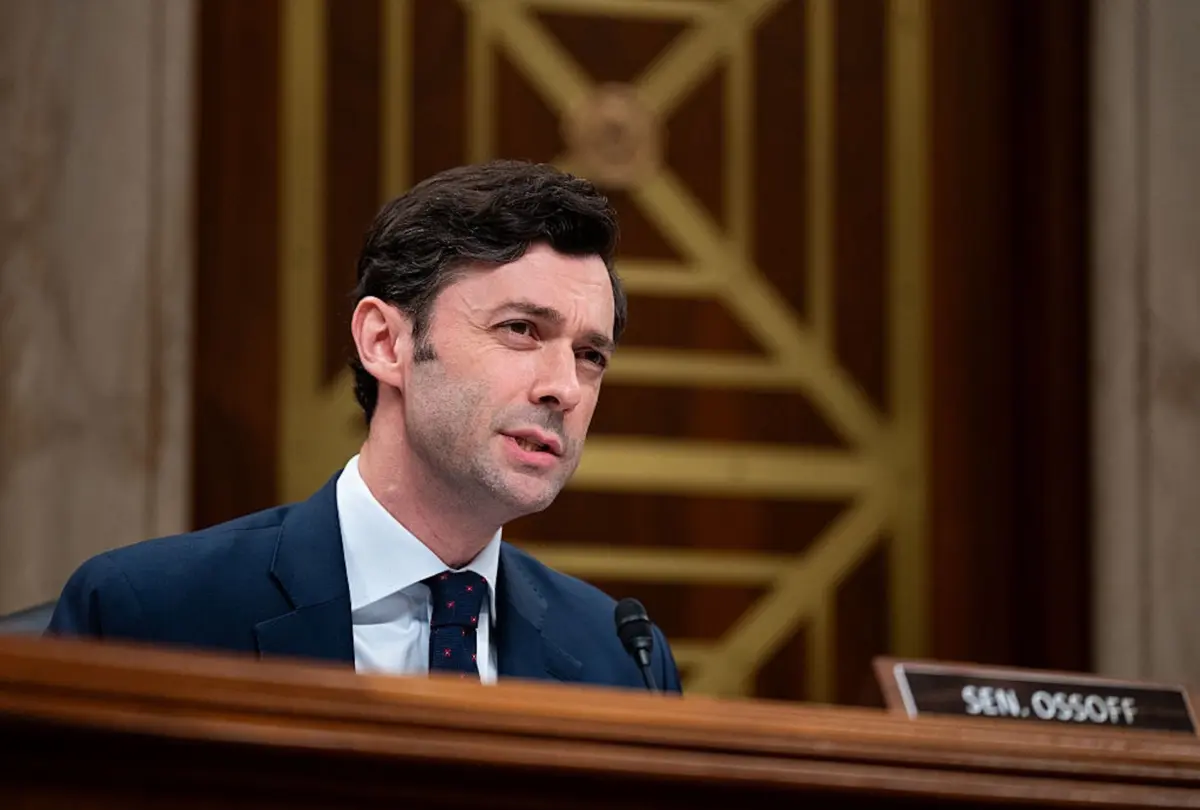
- The Legislative Turning Point (2024–2025): Throughout Senate hearings concerning the Trump administration and federal oversight, Ossoff cultivated a reputation as a sharp, unyielding interrogator. Armed with trademark spectacles and measured delivery, his distinct questioning style began circulating on mainstream platforms, setting the stage for digital reinterpretation.
- The "Thirst Edit" Explosion (Late 2025–Early 2026): By early 2026, TikTok and Instagram feeds were saturated with stylized fan edits. Creators began comparing Ossoff’s aesthetic to literary and cinematic archetypes—dubbing his bespectacled appearance a "slutty Atticus Finch cosplay" or comparing him to fictional presidents from television dramas like Scandal.
- Crossing the Containment Barrier (July 2026): The internet phenomenon officially breached mainstream media when a Washington, D.C.-based TMZ correspondent confronted Ossoff directly about online discussions concerning his purported "BDE" (Big Dick Energy). Ossoff’s amused, self-aware deflection ("Only an Aussie would ask me that") signaled that the campaign was acutely aware of the chatter without needing to awkwardly validate it.
- The Merch and Grassroots Wave (August–September 2026): Organizers took the online enthusiasm offline. At a campaign rally in Athens, Georgia, volunteers distributed pink "Senator My Boo" buttons, creating tangible markers of identity for liberal voters in a conservative-leaning state. Simultaneously, the Democratic National Committee (DNC) and official campaign arms began posting curated, high-angle profile videos—affectionately dubbed "the Obama angle"—designed specifically to feed the algorithmic appetite of millennial and Gen Z voters as the 69-day countdown to the midterms ticked away.
Supporting Context & Metrics: The Mechanics of Fandom Politics
To understand why "thirst culture" is suddenly being embraced by the institutional left, one must examine the fundamental transformation of American news consumption and political communication.
The Shifting Digital Terrain
According to recent media consumption studies, an unprecedented share of American voters—particularly under the age of 40—receive their daily news and political updates through decentralized social media platforms like TikTok, Instagram Reels, and YouTube Shorts. In the wake of the 2024 cycle, Democratic post-mortems frequently highlighted how effectively conservative figures weaponized informal internet culture, meme pages, and independent creator networks to dominate the digital landscape.
Democratic strategists realized they were losing ground because they treated voters as a "captive audience" rather than active participants in a cultural ecosystem. Just as the music industry relies on the fierce, parasocial enthusiasm of stans and fanbases (such as the devoted followings of Taylor Swift or Sabrina Carpenter), political campaigns must now capture ephemeral attention spans.
The Metrics of Earned Media
Ossoff’s campaign has capitalized on this dynamic without explicitly leaning into vulgarity. By providing high-quality, multi-angle video streams of rallies and speeches, the campaign supplies raw materials to independent creators. Monica Venzke, founder of Boyfriends We Deserve, notes that this functions as "free earned media."
Rather than paying exorbitant rates for traditional broadcast spots that younger demographics actively block or ignore, campaigns benefit from organic amplification. The metrics speak for themselves: videos tagged with Ossoff’s name routinely pull hundreds of thousands of views, far outstripping the engagement metrics of standard institutional party accounts.
Navigating the Fine Line: Sex-Positivity vs. Objectification
The embrace of political attractiveness does not come without friction. Content creators like Marie Soledad, a member of the liberal creator network Chorus, point out that there is a delicate boundary between harmless admiration and crude objectification. However, Soledad and her peers argue that leaning into sex-positivity is a radical counter-weight in a political climate dominated by restrictive reproductive rights, high-profile sexual abuse settlements, and national anxiety surrounding personal misconduct. By writing respectful, creative parodies—such as fictional "Your Name" (Y/N) fanfiction featuring alternate political personas—creators reclaim sexuality on their own terms, making democratic politics feel human, accessible, and vibrant.
Official Statements and Stakeholder Perspectives
The phenomenon has drawn sharp contrasts in how institutional figures and grassroots organizers view the intersection of physical appeal and electoral politics.
-
Monica Venzke, Democratic Communications Professional:
"Democrats on the internet can be too serious. It is objectively fun to have a little internet crush, and let that person be the senior senator from Georgia. Republicans are having fun on the internet, and it’s working for them. Let us have fun. If the girls and the gays want to look at Jon Ossoff and be like, ‘Wow, he looks so good in those pants,’ let us. It benefits him, and we’re all having fun."
-
Sophia Gomelsky, Democratic Campaign Strategist:
"The renewed attention on Senator Ossoff has served as a reminder to the Democratic Party, hopefully, that voters can’t be treated like a captive audience. Very similarly to how the music industry runs on the enthusiasm of fans and their attention, politicians actually have to compete and energize voters around their visions and their policies."
-
Qondi Ntini, Founder of Thirst for Democracy:
"What I would want to caution people against is thinking that the thirst or the engagement is the end—that’s been my reservation with it. I mean, I’ve been doing this thirst thing for six years, but it is tied to action, otherwise, what’s the point? Engagement is cute, but it doesn’t move people."
-
The Opposition Response:
Network Republicans have sought to turn Ossoff’s polished aesthetic into a political vulnerability. Both his 2026 Republican challenger, Representative Mike Collins, and national conservative super PACs have launched attack ads targeting Ossoff’s expenditures on professional grooming and hair-styling services, utilizing AI-generated imagery to depict him receiving cosmetic salon treatments. Despite these efforts to paint him as out-of-touch or excessively vain, the counter-narrative has largely washed over his core demographic, reinforcing his image as a meticulously put-together modern leader.
Future Outlook: The 2028 Horizon and the Evolution of Campaigning
As the 2026 midterm elections draw closer, the implications of Jon Ossoff’s viral appeal extend far beyond his individual race in Georgia.
First, the strategy has forced the institutional apparatus of the Democratic Party to adapt. The DNC’s official social media channels, alongside accounts like Kamala HQ, have increasingly integrated millennial and Gen Z candidates—such as Michigan Senate nominee Abdul El-Sayed—into their meme rotations. This institutional pivot signals that the party has recognized informal, personality-driven digital content not as a distraction, but as an essential pillar of modern political coalition-building.
Second, speculation regarding Ossoff’s future—including persistent rumors of a 2028 presidential bid—is inextricably linked to this digital branding. While Ossoff has demurred on higher national ambitions, political scientists note that establishing a distinct, memorable personal brand early in a political career provides an invaluable baseline of national name recognition.
Ultimately, the "thirst edit" phenomenon serves as a modern cautionary tale and a blueprint for political marketers. Physical attractiveness alone cannot sustain a political career, and as organizers like Qondi Ntini warn, superficial engagement must ultimately translate into voter registration, volunteer hours, and actual ballots cast. However, by permitting a younger, more internet-literate generation to humanize, memeify, and lust after their elected officials, the left has unlocked a potent antidote to political apathy. In the algorithmic trenches of the 21st century, making politics fun—and yes, making politicians attractive—may well be the key to winning the future.