

Executive Overview
In the modern digital landscape, the prevailing instinct of software development has long been additive. When faced with a new operational challenge, a productivity bottleneck, or an emerging technological paradigm, organizations and independent developers routinely default to a single solution: build another tool. We have cultivated an ecosystem overflowing with shiny new utilities, standalone dashboard applications, complex command-line interfaces, and endless back-and-forth chat windows, all promising to revolutionize how we work.
Yet, a profound disconnect exists between software proliferation and actual human productivity. Users are not crying out for more discrete applications to install, configure, update, and manage. On the contrary, cognitive fatigue is at an all-time high precisely because digital workers are forced to constantly juggle multiple platforms, fragmenting their attention and diluting their focus.
The future of software design—particularly in the era of artificial intelligence—does not lie in demanding that users adapt to "AI-first" disruptions that shatter existing mental models. Instead, true enterprise and consumer value is unlocked through Quiet AI and seamless integrations: context-aware capabilities that embed directly into established workflows. By matching how humans naturally organize, think, and execute tasks—such as managing files in folders or editing rows in spreadsheets—designers can eliminate friction, reduce error rates, and deliver profound utility without adding cognitive overhead.
Detailed Chronology: The Shift from Additive Software to Contextual Integration
The Era of Standalone Tool Proliferation
For the past two decades, the software-as-a-service (SaaS) boom championed the unbundling of the enterprise suite. Companies were encouraged to adopt best-of-breed point solutions for every micro-task: one tool for task management, another for note-taking, a separate chat platform for communication, and dedicated applications for document generation.
While this unbundling sparked immense innovation, it ultimately created a fractured digital workspace. Users spent a significant portion of their workday context-switching—moving data manually between apps, losing track of information silos, and suffering from notification fatigue.
The Advent of "AI-First" Disruption
When generative artificial intelligence entered the mainstream, the tech industry repeated its historical patterns. Developers rushed to build "AI-first" products. These standalone applications required users to leave their native working environments, open a dedicated web browser tab or desktop client, paste data into a chat interface, and copy the output back into their primary documents or spreadsheets.
While these models demonstrated unprecedented technological capabilities, they often ignored decades of established UX design principles. They forced users to learn entirely new interaction paradigms—such as complex prompt engineering or navigating Terminal-like commands—for tasks that should have been intuitive.
The Rise of "Quiet AI" and Ambient Computing
Recognizing the friction inherent in AI-first silos, the design community began pivoting toward a more harmonious philosophy: Quiet AI. Rather than demanding center stage, Quiet AI operates invisibly in the background. It assists with repetitive, high-friction tasks precisely where the user is already working.
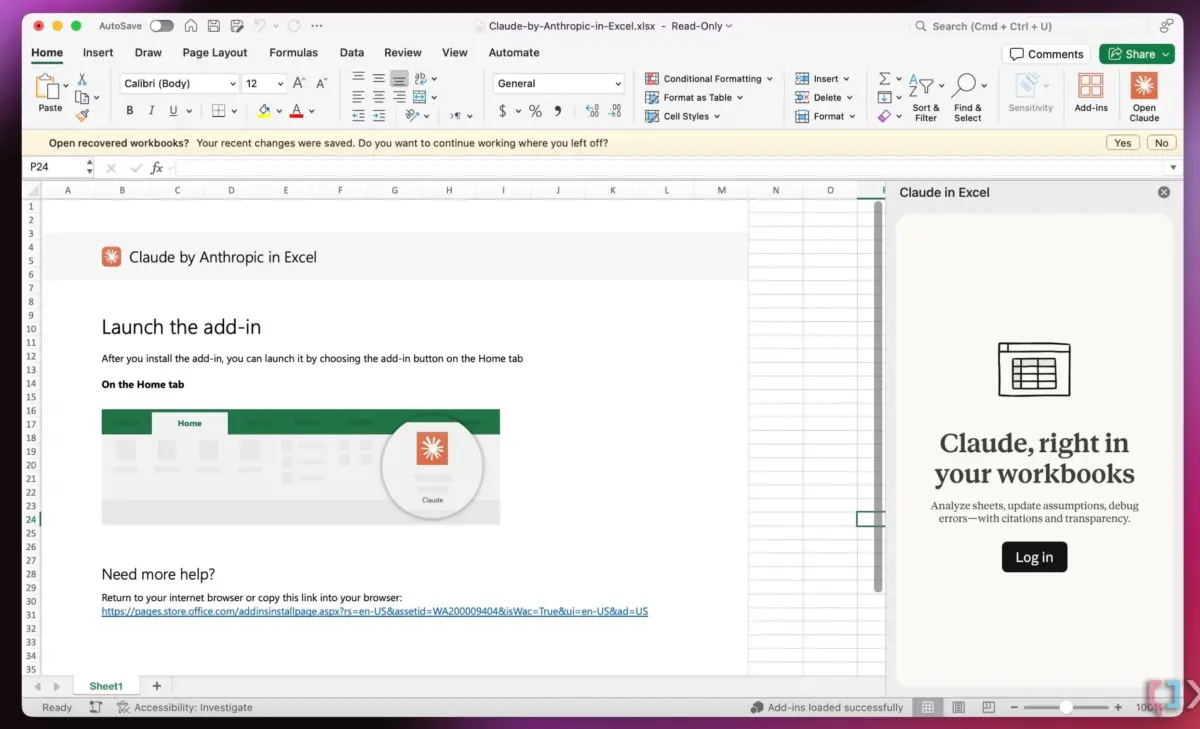
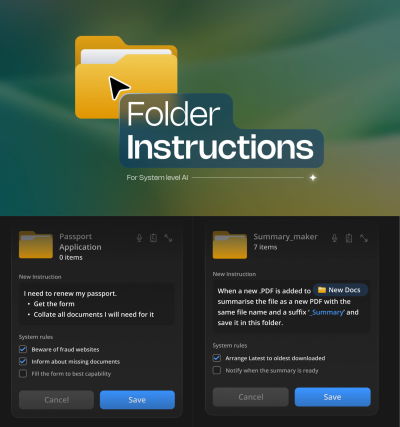
Milestones in this evolution include deep contextual integrations, such as Claude’s native integration within Microsoft productivity suites (Excel, Word, and PowerPoint) and pioneering system-level concepts like Karthikeya GS’s "Folder Instructions." These innovations represent a return to human-centric design, where technology bends to fit established mental models rather than forcing users to build entirely new ones.
Supporting Context & Metrics: The Cost of Context-Switching
To understand why seamless integration is paramount, one must examine the measurable human and economic costs of fragmentation in the modern workplace.
- The Cognitive Penalty of Context Switching: Psychological research consistently demonstrates that switching between disparate applications incurs a heavy cognitive tax. Studies on workplace productivity indicate that knowledge workers switch apps hundreds of times a day, with each interruption requiring upwards of 15 to 20 minutes to regain deep focus.
- Error Rates and Fatigue: When users are forced to juggle multiple views, copy-paste data between incompatible interfaces, and manage numerous software subscriptions, error rates spike. High-severity, high-frequency tasks—such as data reconciliation, document summarization, and file organization—become sources of chronic user frustration.
- The Adoption Barrier: Software adoption metrics show a direct correlation between friction and abandonment. Tools that require a steep learning curve or demand a fundamental shift in daily habits experience high churn rates. Conversely, features embedded seamlessly into existing environments enjoy rapid organic adoption because they require zero new behavior modification.
Case Study: The Power of Contextual File Management
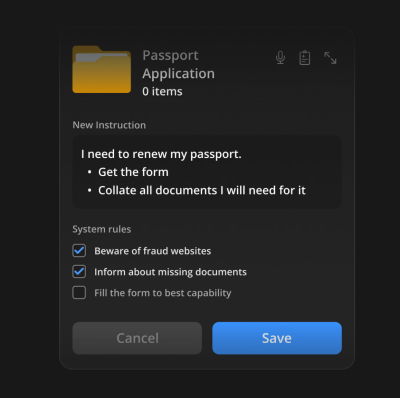
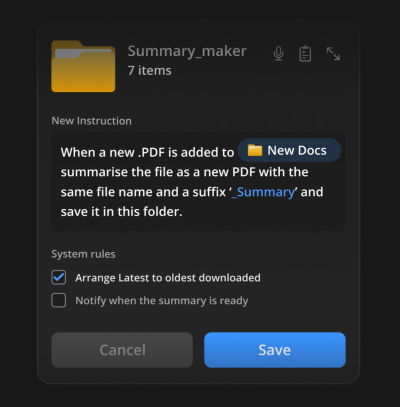
Consider traditional document management. Organizing files, sub-folders, and archival data has relied on directory trees for decades—a deeply entrenched mental model. Rather than building a separate, AI-powered document database that requires a complete migration of files, modern interface design introduces concepts like Folder Instructions.
By allowing users to define system-level AI rules directly inside a standard folder (e.g., instructing a specific project folder to automatically parse incoming PDFs, extract key metrics, and generate summaries), the technology meets the user inside their existing file system. The user does not learn a new tool; they simply imbue their existing tools with ambient intelligence.
Official Statements and Industry Insights
Design leaders and UX pioneers have increasingly raised concerns over the over-engineering of modern digital products. Industry consensus is shifting rapidly toward minimalism, restraint, and deep integration.
"We often hear about shiny new tools that change everything (yet again). But in practice, most people don’t need more tools to deal with in their daily lives. What we actually need are better integrations of useful capabilities that neatly align with our existing and established mental models."
— Design Patterns For AI Interfaces Editorial
The critique of "AI-first" product development centers on its disregard for historical design evolution.
"I’ve always been puzzled by the notion of ‘AI-first’ products. They might speed up production, but we need to know really well first what we actually want to build. AI-first often doesn’t account for years of small and big design decisions that have shaped expectations and mental models over the years."
— Vitaly Friedman, UX Consultant and Educator
Industry observations regarding workflow continuity emphasize that value is generated not by introducing novelty, but by removing obstacles. When AI tools operate quietly in the background—such as spreadsheet assistants analyzing rows and columns natively rather than requiring an external chat window—they respect the user’s cognitive bandwidth and preserve workflow momentum.
Future Outlook: The Next Decade of Human-Computer Interaction
As we look toward the future of software architecture and user experience design, several definitive trends are reshaping the industry:

- The Death of the Standalone Dashboard: The era of asking users to open yet another tab, portal, or application dashboard is coming to a close. Future software will be modular, headless, and ambient, delivering capabilities directly into host applications where work naturally occurs.
- Mental Model Preservation: Successful AI and automation features will no longer attempt to invent new interaction paradigms. Instead, they will anchor themselves to familiar structures—folders, documents, timelines, and spreadsheets—enhancing them invisibly from within.
- Intent-Driven System Architecture: Concepts like folder-level instructions and contextual system rules will mature. Users will define intent once at the system level (e.g., "Always format invoices according to template X and file them by client"), and autonomous, quiet background agents will execute the workflow reliably without manual oversight.
- Educational Shifts in UX Design: As the industry pivots away from additive tool sprawl toward integration and quiet assistance, design education must evolve. Programs like Design Patterns For AI Interfaces are leading the charge, teaching product designers how to craft subtle, human-aligned features that solve high-severity problems without adding to the digital clutter of daily life.
Ultimately, the measure of a truly great technological advancement is not how loud it is, nor how many new habits it forces us to learn. It is how effortlessly it fades into the background, empowering us to achieve our goals with speed, precision, and peace of mind.
