

Executive Overview
The architecture of modern journalism faces an unprecedented confluence of structural, legal, and physical pressures. From the highest levels of the federal government to volatile international conflict zones and local statehouses, the ability of reporters to gather news, hold power accountable, and maintain standard operational protocols is under severe strain.
In Washington, the Trump administration’s systematic reshaping of the White House press pool—marked by the exclusion of mainstream outlets like CNN and Politico, and the elevation of conservative alternative platforms like Real America’s Voice—has fundamentally altered the dynamics of presidential coverage. This federal access crisis was further underscored by administrative turmoil, highlighted by the historic five-day tenure and abrupt ouster of White House Press Secretary Katie Zacharia.
Beyond the beltway, the perils facing reporters have manifested in visceral physical violence and institutional self-inflicted wounds. In the West Bank, veteran Washington Post photojournalist Heidi Levine was severely injured during a coordinated attack by masked Israeli settlers while documenting the olive harvest—an incident that has drawn sharp rebukes from press freedom organizations. Meanwhile, internal industry ethics continue to spark fierce debate, exemplified by CBS News chief legal correspondent Jan Crawford’s controversial, subsequently deleted social media post praising a political heckler.
Compounding these high-profile developments is a quiet, steady erosion of transparency at the local level. As regional newsrooms contract, state and local officials increasingly employ stonewalling tactics and records-request delays, mirroring the hostile rhetoric and operational gatekeeping seen at the national stage. This comprehensive report examines the multi-front challenges confronting the press corps, analyzing the legal battles, institutional shifts, and human costs defining the current media landscape.
Detailed Chronology
The past several weeks have seen a rapid succession of events concerning press freedoms, administrative stability, and reporter safety:
- Late September: Major networks formally resume pool coverage. Concurrently, Real America’s Voice launches
RAVpool.org, offering free White House pool footage and notes to any interested media outlet. The White House begins routinely assigning the "secondary TV" slot to Real America’s Voice on days when CNN is excluded from Air Force One travel. - September 24: Real America’s Voice formally announces its policy of distributing its proprietary White House pool feeds to the broader public and media landscape at no cost.
- October 5–13: Court proceedings and legal briefs accumulate as organizations like Hearst, Scripps News, and various press freedom groups file amicus curiae (friend-of-the-court) briefs supporting CNN, Politico, and MS NOW in their ongoing federal lawsuit against the White House over targeted exclusions.
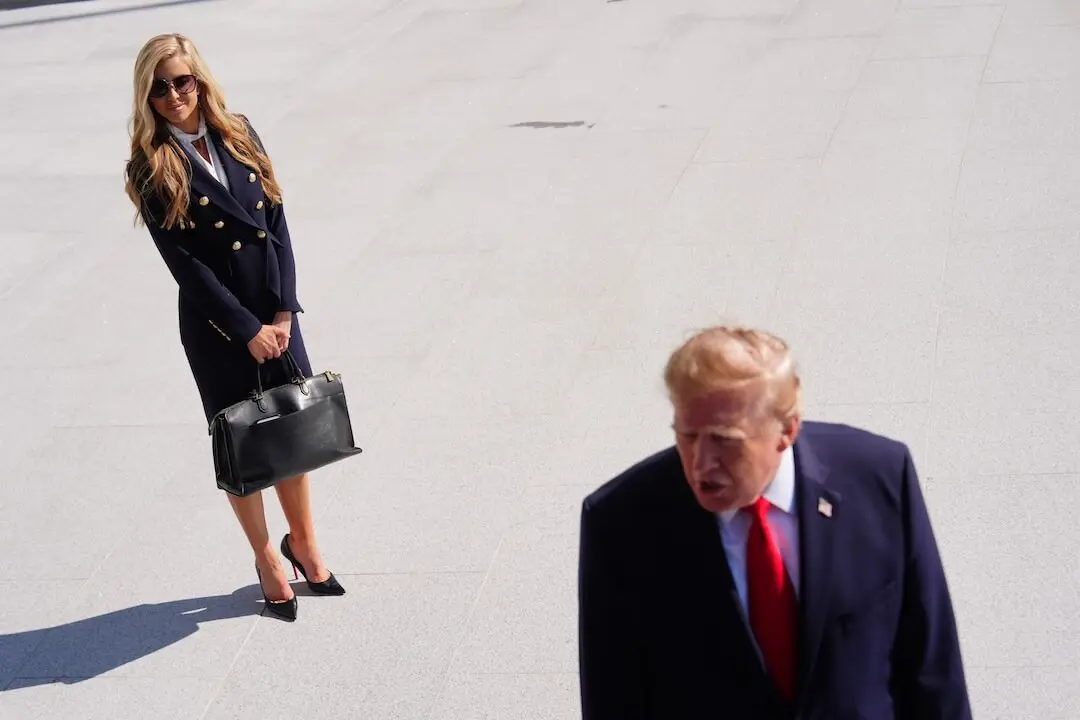
- October 13: Katie Zacharia holds her first and only press briefing on the South Lawn of the White House alongside President Donald Trump.
- October 16 (Friday): Washington Post photographer Heidi Levine is brutally attacked and severely injured by masked Israeli settlers in the West Bank while covering the olive harvest wearing clearly marked "PRESS" gear.
- October 16 (Friday): Katie Zacharia’s tenure as White House press secretary officially concludes after just five days on the job, making it the shortest tenure for the position in modern U.S. history. Her exit follows days of scrutiny regarding her credentials and a sequence of contentious media appearances.
- October 18 (Sunday): CBS News chief legal correspondent Jan Crawford issues a public apology and deletes a social media post in which she lauded a town hall attendee who aggressively questioned Michigan Democratic Senate candidate Abdul El-Sayed, acknowledging that her commentary violated network editorial standards.
Supporting Context & Metrics
The White House Pool Structural Shift
The mechanisms governing how news travels from the executive branch to the public have experienced a paradigm shift since the White House took direct control of the press pool from the independent White House Correspondents’ Association (WHCA) last year.
Traditionally, the pool rotates among five major networks (ABC, CBS, Fox, NBC, and CNN), ensuring shared video feeds, print dispatches, and radio updates for the broader Washington press corps. However, following the administration’s September 18 directive banning CNN, Politico, and MS NOW from standard rotation assignments, the other four major networks have consistently refused to step into CNN’s designated spots in an act of solidarity.
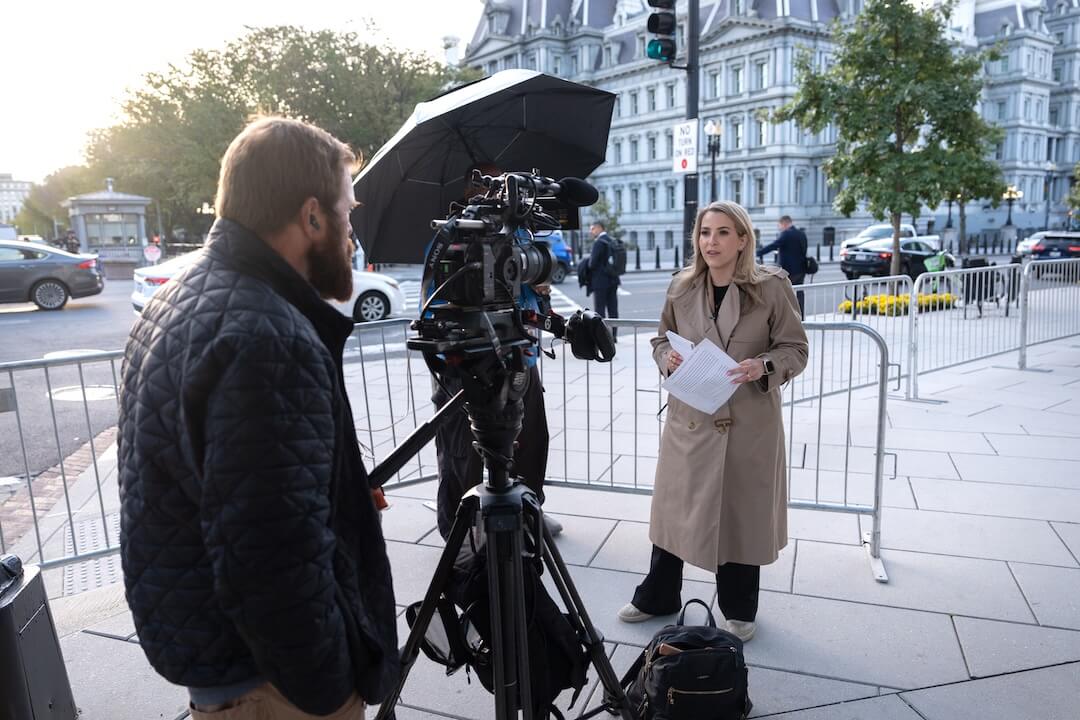
To bypass this institutional friction, the administration has utilized the "secondary TV" slot—a mechanism established when the pool was restructured. While historical analysis from outlets like Poynter indicates the secondary slot has occasionally been awarded to mainstream or local affiliates, recent weeks have seen it systematically funneled to Real America’s Voice. This right-leaning network, known for hosting figures such as Steve Bannon and Charlie Kirk, provides its feeds free of charge. Despite this open-access policy, major mainstream networks have largely declined to incorporate Real America’s Voice footage into their broadcasts, maintaining a widening fracture within the press apparatus.
Local Press Access Stonewalling
While federal battles dominate headlines, regional news organizations face parallel obstacles. Following the establishment of government efficiency panels inspired by national departments—such as the Kansas Senate’s Committee on Government Efficiency (COGE)—local journalists have increasingly found public records requests bogged down by administrative inertia.
Under Kansas law, public bodies are mandated to respond to records requests within three business days or provide legal justification for delay. Yet, outlets like the Kansas Reflector have faced weeks-long and months-long stonewalling, often receiving requested data only after publishing investigations based on leaked materials. Media analysts note that this pattern of delayed transparency is metastasizing across state and local jurisdictions, eroding accountability precisely where regional newsrooms are least equipped to absorb legal costs.
Official Statements
The escalating tensions between the press corps and institutional authorities have elicited sharp rhetoric from all sides:
-
The White House Defense of Access Restrictions:
Defending the administration’s decision to bar specific outlets from presidential travel and Oval Office access, a White House official stated via email:"The Fake News has no place demanding a spot in the President’s Oval Office. The lies they smear are a disservice to the American public and tear at the very fabric of our Democracy. They’re completely capable of reporting from directly outside."
-
The Washington Post on the West Bank Assault:
Executive Editor Matt Murray issued a resolute statement following the attack on photojournalist Heidi Levine: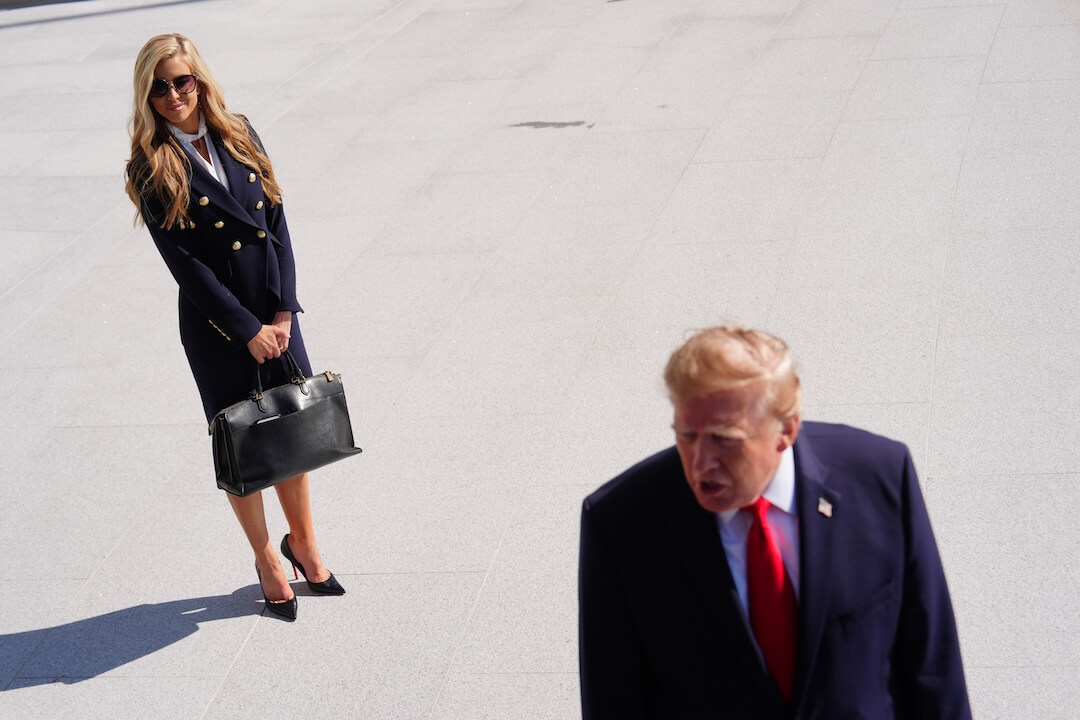
"This morning, a Washington Post photographer, Heidi Levine, was attacked by Israeli settlers while reporting in the West Bank. She was wearing visible markings clearly identifying her as a journalist. While we are relieved that Heidi has received medical care and is safe, we are outraged by this unwarranted attack on a journalist doing her job and urge a thorough investigation and follow-through from authorities."
-
Committee to Protect Journalists (CPJ):
Sara Qudah, CPJ’s regional director, emphasized the systemic nature of the violence in the West Bank, calling the beating of Levine "neither isolated nor the first on a journalist covering the olive harvest in the West Bank," and labeling the ongoing harassment a disturbing pattern. -
CBS News and Jan Crawford’s Apology:
Addressing internal and external fallout over her commentary regarding a political town hall confrontation, Jan Crawford posted to social media:"I deleted that tweet because it was a violation of CBS News standards. I apologize."
Future Outlook
The compounding crises facing the journalistic ecosystem point toward a volatile trajectory for press freedom, institutional relations, and newsroom ethics.
- Litigation and Judicial Intervention:
The ongoing federal lawsuits—including the joint action brought by CNN, Politico, and MS NOW, alongside previous legal challenges by The Associated Press—will serve as vital constitutional battlegrounds. Judicial rulings on executive branch authority to selectively revoke press credentials will set legal precedents defining the First Amendment rights of reporters for decades to come. - Polarized Media Infrastructure:
The emergence of alternative networks like Real America’s Voice as quasi-official pool providers illustrates a bifurcated media reality. As major legacy networks resist administrative gatekeeping while alternative platforms lean into it, the shared factual baseline historically maintained by the White House press pool risks permanent fracture. - Physical and Psychological Toll on Reporters:
With international conflict zones growing increasingly hostile toward clearly identified press personnel—as evidenced by the devastating injuries sustained by Heidi Levine—news organizations face escalating security and insurance burdens. Simultaneously, domestic reporters navigating local stonewalling must increasingly rely on legal mandates and whistleblowers to pierce administrative opacity. - Internal Standards and Public Trust:
Incidents like the brief tenure of Katie Zacharia and editorial missteps by veteran anchors underscore an internal crisis of credibility within media organizations. As public trust remains fragile, newsrooms must rigorously enforce ethical guardrails to maintain journalistic integrity against both external political pressure and internal missteps.