

Executive Overview
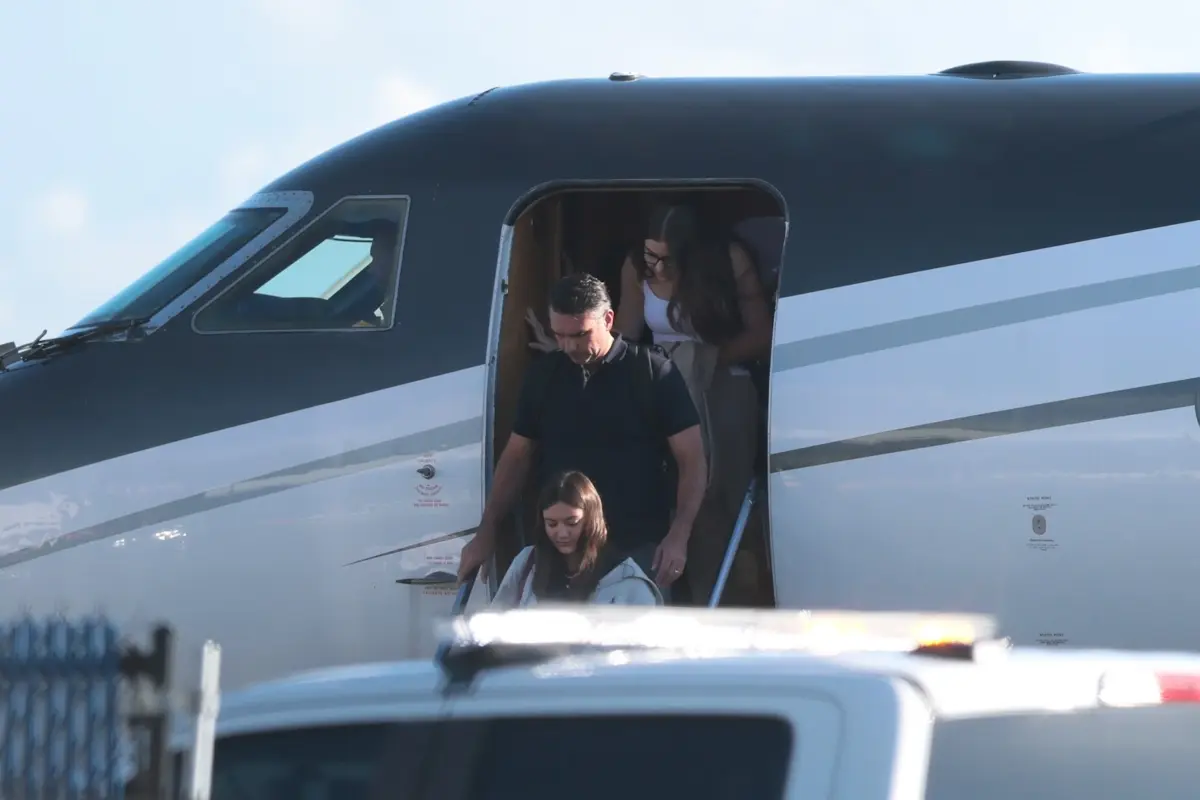
When defeated Brazilian politician Flávio Bolsonaro touched down at Miami-Opa Locka Executive Airport, stepping off the aircraft alongside his family into the humid South Florida air, he was doing more than simply retreating from a lost election. He was participating in a well-worn geopolitical ritual. For nearly a century, the Sunshine State has functioned as an informal, subtropical retirement home—and occasionally a launching pad—for the Western Hemisphere’s fallen despots, ousted dictators, and right-wing populists who found themselves suddenly unwelcome in their home countries.
From Gerardo Machado’s hasty exit from Cuba in the 1930s to the modern migrations of the Bolsonaro clan, Florida’s unique geographic proximity, sprawling immigrant infrastructure, and lax financial and real estate oversight have made it the go-to destination for authoritarian leaders facing domestic collapse. While cultural touchstones like South Beach, Orlando theme parks, and sprawling gated communities in Palm Beach offer a veneer of leisure, the underlying reality is darker: South Florida has long served as a geopolitical purgatory where fallen strongmen attempt to outlive their regimes, protect looted assets, and plot their eventual, though rarely realized, triumphant returns.
Detailed Chronology: A Century of Authoritarian Exiles in Florida
The pipeline connecting Latin American presidential palaces to South Florida asphalt is not a modern political aberration; it is a historical constant that spans eras of revolution, military juntas, and fragile democracies.
The Early Pioneers: Cuba and the 1930s–1950s
The modern era of Florida as a refuge for deposed Caribbean and South American leaders effectively began with Cuba’s Gerardo Machado. Facing an acute economic crisis, widespread labor unrest, and mounting armed resistance against his increasingly dictatorial rule, Machado fled the island nation in 1933. Given Cuba’s physical proximity to the Florida Keys—short enough to be bridged by a determined crossing—Machado made the natural leap to the Sunshine State, where he lived out his final years until his death in Miami in 1939.
Two decades later, another Cuban strongman walked a similar path. Fulgencio Batista, whose military coup in 1952 set the stage for the socialist revolution that would ultimately consume the island, spent years preparing his exit strategy. Batista purchased a sprawling estate in Daytona Beach during a previous period of political instability. Following his ultimate ouster by Fidel Castro’s revolutionary forces on New Year’s Eve in 1958, Batista flew directly to Jacksonville, hoping to secure political asylum in the United States.
Denied safe harbor by Washington—which was eager to distance itself from the crumbling regime—Batista was forced to move on to Spain, then ruled by fellow authoritarian Francisco Franco. His trajectory highlighted an early lesson for Latin American strongmen: while Florida real estate was easily acquirable, permanent U.S. government protection was never guaranteed.
The Cold War Era and Central American Fallout
As Cold War tensions fractured Central and South America throughout the 1960s, 1970s, and 1980s, the traffic toward Miami intensified. In 1979, the 40-year dynastic rule of the Somoza family in Nicaragua collapsed under the weight of the Sandinista revolution. Anastasio Somoza Debayle loaded a cargo plane and fled for Miami, expecting a hospitable reception.
Instead, President Jimmy Carter’s administration rebuffed the dictator, refusing to grant him permanent sanctuary. Somoza’s brief stopover in Miami forced him to seek refuge elsewhere, traveling first to the Bahamas and finally to Paraguay, then ruled by military dictator Alfredo Stroessner. The move offered no permanent safety; Somoza was assassinated by a Sandinista strike team in Asunción just a year later, serving as a cautionary tale for exiles who believed distance alone could shield them from revolutionary vengeance.
The 21st-Century Wave: Subtropical Mussolinis and Embezzlers
The pace of the exodus accelerated into the 2000s, turning South Florida into a patchwork neighborhood for disgraced public figures. In 2010, local publications like the Miami New Times mapped out the high-concentration zones of exiled Latin American political figures, boasting that the region made the classic film setting of Casablanca "look like a Daffy Duck cartoon."
- Bolivia: Former Bolivian President Gonzalo Sánchez de Lozada fled to South Florida following violent nationwide revolts triggered by his controversial plans to export the nation’s natural gas reserves to the United States.
- Panama: Notoriously corrupt former Panamanian President Ricardo Martinelli also utilized South Florida as a primary escape hatch when facing prosecution at home. Unlike some of his predecessors, Martinelli’s stay was eventually interrupted; U.S. authorities arrested him in 2017 and extradited him back to Panama to face trial and subsequent imprisonment.
The Bolsonaro Dynasty’s Contemporary Migration
In recent years, the torch has been passed to Brazil’s right-wing populist movement. Following his defeat in the turbulent 2022 Brazilian presidential election, former President Jair Bolsonaro packed his bags for Florida, taking up temporary residence near Palm Beach—geographically and culturally adjacent to the estate of his American political ideological counterpart, Donald Trump.
While the elder Bolsonaro eventually returned to Brazil, where he currently faces severe legal accountability including a lengthy sentence under house arrest, his political lineage has continued the tradition. His son, Eduardo Bolsonaro, initially joined the Florida migration before relocating to Texas. Most recently, defeated presidential candidate Flávio Bolsonaro touched down at Miami-Opa Locka Executive Airport, instantly thrusting the family back into the South Florida spotlight and renewing debates over the region’s role as an international sanctuary for anti-democratic actors.
Supporting Context & Metrics: Demographics, Geography, and Real Estate
Why does South Florida remain the magnetic north for defeated Latin American conservatives? The answer lies in a powerful convergence of demographics, logistical convenience, and economic incentives.
Demographic Footprint
Florida’s cultural landscape has been deeply shaped by decades of migration from south of the border. According to U.S. Census data and demographic studies, the state is home to more than a fifth of the entire Brazilian diaspora living in the United States, alongside massive, politically influential communities of Cuban, Venezuelan, Nicaraguan, and Colombian expatriates.
For leaders like the Bolsonaros, arriving in Florida does not feel like entering foreign exile; it feels like stepping into a friendly micro-climate. The linguistic familiarity, established cultural enclaves, and networks of sympathetic expatriate business owners provide a comfortable cushion against the shock of political defeat.
Logistical and Financial Hubs
Miami International Airport (MIA) serves as the primary aviation gateway between North and South America, offering dozens of daily direct flights to major hubs like São Paulo, Bogotá, Buenos Aires, and Panama City. For a deposed leader needing to make a rapid, low-profile departure when crowds gather outside the presidential palace, an executive jet out of Brasília or Caracas can land in Florida within hours.
Furthermore, South Florida’s vast, loosely regulated luxury real estate market has historically provided an ideal parking spot for foreign capital. Wealthy political figures can easily purchase anonymous shell-company-backed condominiums in Brickell, Sunny Isles Beach, or Coral Gables, transforming state property into offshore fortresses.
Official Statements and Political Reactions
The arrival of successive waves of foreign political figures has frequently drawn sharp rebukes from human rights organizations, watchdogs, and domestic politicians who argue that the U.S. immigration and asylum systems should not be weaponized to harbor individuals fleeing accountability for democratic backsliding or corruption.
Human rights advocates have routinely pointed out the hypocrisies inherent in U.S. foreign policy regarding exiles. While Washington has historically welcomed anti-communist autocrats and right-wing nationalists, it has simultaneously tightened the borders for asylum-seekers fleeing the very economic and political instability those same leaders helped create.
Domestically, Florida politicians—particularly within the state’s dominant conservative apparatus—have often maintained a welcoming stance toward figures opposing left-wing governments in Latin America, viewing them as valuable allies in regional geopolitical struggles. However, federal authorities have occasionally stepped in when international pressure, formal extradition requests, or criminal indictments for money laundering and financial crimes become too glaring to ignore, as seen in the extradition cases of figures like Ricardo Martinelli.
Future Outlook: Can Florida Remain a Viable Staging Ground?
As Flávio Bolsonaro settles into his new reality in the Sunshine State, political analysts are raising a fundamental question: Can Florida still function as a viable base of operations for a political comeback, or has it devolved into a permanent dead-end for defeated strongmen?
Historical precedent suggests the latter. Outside of Fulgencio Batista’s complicated and ultimately disastrous trajectory—which ended in permanent Iberian exile and widespread historical condemnation—very few leaders have successfully utilized an enforced vacation in Florida as a stepping stone back to power. Modern international legal frameworks, asset-tracking mechanisms, and increased vigilance by financial institutions have made it exponentially more difficult for exiled politicians to run shadow governments or finance domestic coups from a South Florida country club.
Moreover, the shifting political sands within the United States mean that sanctuary is never guaranteed across changing presidential administrations. While local communities may offer cultural shelter and sympathetic political allies, federal scrutiny over foreign money, visa violations, and international warrants continues to tighten.
For Flávio Bolsonaro and the long line of subtropical Mussolinis who preceded him, Florida offers palm trees, swimming pools, and a temporary escape from the consequences of electoral defeat. But history suggests that the sunshine of Miami is ultimately a poor substitute for the halls of power left behind—and a fragile shield against the long-term demands of historical accountability.