

Executive Overview
In the modern discourse surrounding the environmental footprint of emerging technologies, artificial intelligence has quickly become a primary target of scrutiny. As generative AI models integrate deeper into daily life, questions regarding their consumption of finite resources—particularly electricity and water—have escalated from niche academic concerns to mainstream political and social debates.
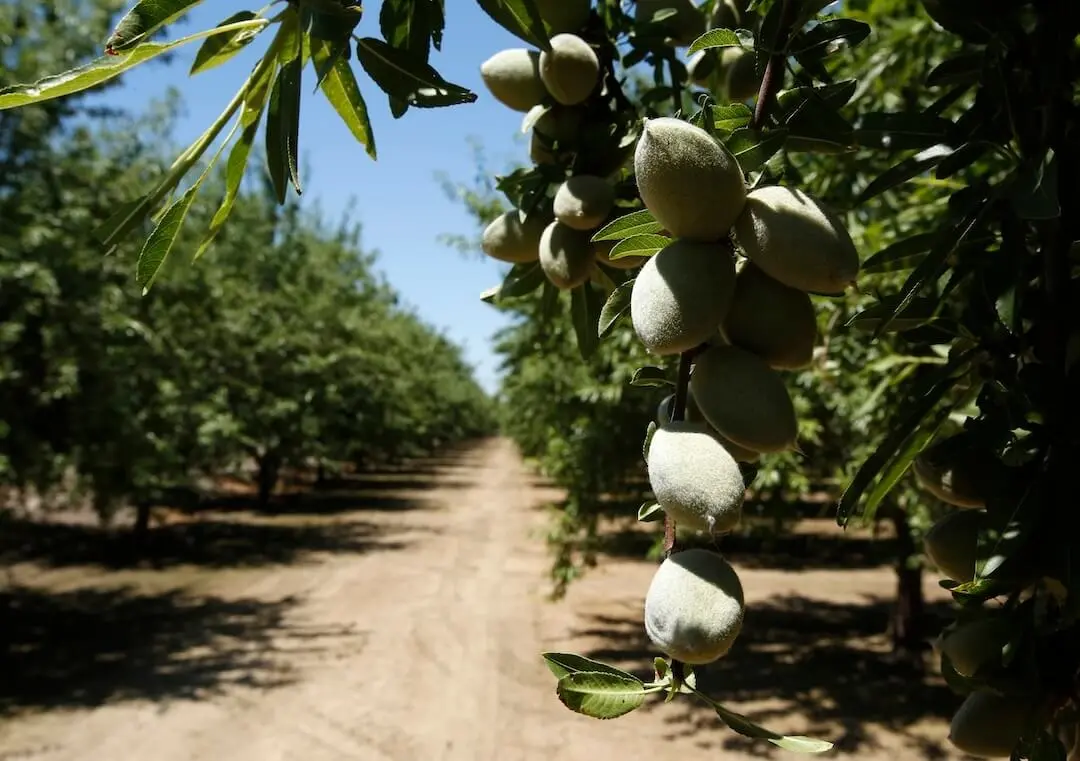
Recently, OpenAI CEO Sam Altman attempted to contextualize the scale of this resource consumption by drawing a striking comparison. During a Sept. 1 interview on the Sources Podcast, Altman asserted that the water required to produce a single California almond is equivalent to the water consumed by roughly 38,000 ChatGPT queries.
At first glance, the comparison is designed to reassure consumers, framing the hidden costs of AI infrastructure as minuscule relative to everyday agricultural habits. However, a rigorous investigative breakdown reveals that Altman’s evocative metric is built on shaky ground. By relying on a heavily inflated, all-inclusive agricultural figure for almond production while utilizing a disputed, unverified low-end estimate for ChatGPT’s water usage, the claim fundamentally distorts the reality of resource allocation.
Independent data shows that the actual ratio is far tighter. When examining direct freshwater use rather than total hydrological footprints—and factoring in the wide variance of modern data center efficiencies—the true equivalent sits closer to 1,000 to 10,000 AI prompts per almond. This deep-dive investigation unpacks the numbers behind Altman’s claim, explores the opaque nature of corporate environmental reporting in the tech sector, and contrasts the hydrological demands of data centers with traditional agricultural industries.
Detailed Chronology: How the Claim Unfolded
To understand how a Silicon Valley executive linked conversational software to Central Valley agriculture, it is necessary to trace the origins of the data points cited in the public sphere.
The Genesis of the OpenAI Estimate
The narrative surrounding ChatGPT’s water footprint largely traces back to early academic warnings in 2023, followed by defensive or clarifying metrics published by tech leadership. OpenAI, as a privately held company, has historically maintained a veil of secrecy regarding its precise operational metrics, including the exact energy and water consumption of its global data center fleet.
However, in a 2025 post on his personal blog titled "The Gentle Singularity," Sam Altman offered a rare glimpse into these metrics. He stated that the average ChatGPT query consumes approximately 0.000085 gallons of water—roughly 0.32 milliliters, or a mere 1/15th of a teaspoon. This specific figure became the baseline calculation for OpenAI’s internal narrative regarding water efficiency. To date, independent verifiers have been unable to replicate or audit this metric, as OpenAI did not publish the underlying methodology, data center locations, or cooling topologies used to arrive at the figure.
The Agricultural Benchmark: The 2019 Study
To find a matching denominator for his hydrological comparison, Altman turned to agricultural literature, specifically drawing inspiration from a widely cited 2019 scientific study focused on California almond farming.
Published in a peer-reviewed environmental journal, the 2019 study calculated that a single California almond requires approximately 3.2 gallons (12 liters) of water from “seed to shell.” Crucially, this study utilized a life-cycle assessment (LCA) approach. It did not merely look at the water sprayed out of irrigation hoses; it calculated total volumetric water footprints, including natural rainfall (green water) and the theoretical water required to dilute agricultural runoff and fertilizer pollutants to meet safety standards (grey water).
The Podcast Pronouncement
On September 1, 2025, appearing on the Sources Podcast, Altman synthesized these two disparate data points. Acknowledging the rough nature of his calculations, he stated:
"For every 38,000 ChatGPT queries, that is the same amount of water that is used in the production of a single almond in California… It might be wrong, but it’s close."
By dividing the study’s 12,000 milliliters (12 liters) per almond by his blog’s estimated 0.32 milliliters per query, Altman arrived at roughly 37,500—rounding up to the clean public figure of 38,000.
Within days, the soundbite circulated across tech and environmental forums, sparking debate among hydrologists, data scientists, and agricultural economists alike.
Supporting Context & Metrics: Unpacking the Math
When subjected to rigorous cross-examination by environmental scientists and fact-checkers, the mathematical scaffolding of Altman’s comparison begins to fracture on both ends.
The Almond Metric: Fresh Water vs. Total Hydrological Footprint
The primary flaw in comparing an AI query to an almond lies in how agricultural water is accounted for versus how data center water is measured.
The 12 liters (3.2 gallons) attributed to a single almond represent a total life-cycle inventory. Of that 12-liter total:
- A substantial portion is supplied by natural rainfall (green water), which would fall regardless of whether an almond tree was planted in its path.
- Another portion represents grey water—an abstract mathematical construct used to measure environmental impact rather than physical water withdrawal.
- When looking strictly at blue water (fresh irrigation water pumped from wells or rivers specifically to sustain the crop), subsequent peer-reviewed research, including a 2021 study published in The International Journal of Life Cycle Assessment, places the direct fresh water consumption closer to 5.8 to 6 liters (roughly 1.5 gallons) per almond.
By using the 12-liter figure, Altman essentially doubled the physical fresh water burden of the almond, artificially inflating the denominator to make ChatGPT’s impact look negligible.
The AI Metric: The Opaque Nature of Data Center Cooling
Conversely, the numerator in Altman’s equation—the water consumed by a single ChatGPT query—rests on deeply contested foundations.
Data centers consume water directly and indirectly:
- Direct Consumption (On-site Cooling): Evaporative cooling towers used in many traditional data centers require massive volumes of water to dissipate the intense heat generated by high-performance GPUs (such as Nvidia chips) running large language models. While some modern facilities utilize closed-loop dry coolers that consume minimal water, they trade this water savings for significantly higher electricity consumption.
- Indirect Consumption (Power Generation): Thermoelectric power plants (coal, natural gas, nuclear) that supply electricity to the electrical grid also consume vast quantities of water for cooling.
Because OpenAI outsources its compute infrastructure primarily to Microsoft’s Azure cloud data centers, the true water footprint varies wildly depending on geographic location. A data center operating in an arid desert climate (like parts of the American Southwest) uses vastly different cooling dynamics than one situated near a hydroelectric source in the Pacific Northwest.
Furthermore, academic research demonstrates that query complexity matters immensely. A September study analyzing cutting-edge AI models found that standard, lightweight non-reasoning prompts might consume fractions of a milliliter, but longer inputs, reasoning-heavy models (such as OpenAI’s specialized reasoning chains), and multimodal queries can drive consumption up exponentially.
According to EcoLogits, a nonprofit initiative tracking the environmental impact of artificial intelligence, utilizing newer models to draft an email or execute a basic multi-step task can consume upwards of 6 milliliters of water per interaction.
When factoring in these updated, realistic ranges for AI water consumption—and pairing them with the actual direct fresh water footprint of an almond (6 liters)—environmental scientists calculate that a user would need anywhere from 1,000 to 10,000 conversational AI prompts to equal the fresh water required to grow a single California almond, rather than the 38,000 claimed by Altman.
Official Statements and Industry Perspectives
The debate over tech sector resource extraction has drawn sharp commentary from academic institutions, independent watchdogs, and industry insiders.
Dr. Shaolei Ren, a professor at the University of California, Riverside, who has spent years researching the environmental footprint of artificial intelligence, notes that the lack of corporate transparency remains the single greatest hurdle in evaluating the true cost of generative AI.
"In general, resource use can vary substantially depending on factors such as the data center location, AI model architecture, prompt and output lengths, inference mode—such as reasoning versus non-reasoning—and the efficiency measures used to serve the model," Ren explained in an interview regarding corporate disclosures. "There is very little public information about how today’s ChatGPT systems operate and what resources they actually consume on a daily basis."
Agriculture advocacy groups have similarly pushed back against tech executives using farming as a comparative punching bag. While California’s multi-billion-dollar agricultural sector—which produces roughly 80% of the world’s almonds—has faced legitimate criticism for intensive water usage in a drought-prone state, industry representatives argue that comparing biological sustenance to computational text generation is a false equivalence.
Farms produce physical food commodities that feed global populations and drive regional economies, whereas generative AI queries encompass a vast spectrum of utility, ranging from mission-critical medical research to trivial text generation and automated jokes.
OpenAI, for its part, declined multiple requests for comment from investigative journalists regarding the specific methodologies behind Altman’s blog post and podcast assertions, leaving the tech community to rely on independent academic estimates.
Future Outlook: Sustainability at the Crossroads
As the artificial intelligence boom collides with global climate realities, the pressure on tech giants to achieve true sustainability has never been higher.
The scale of expansion is staggering. Nationally, United States farms consumed nearly 30 trillion gallons of water for crop irrigation in the most recent comprehensive U.S. Geological Survey data. In comparison, U.S. data centers consumed an estimated 228 billion gallons of water. While the total volume utilized by agriculture dwarfs that of data centers on a macro level, the hyper-localized impact of massive data center clusters in regions facing severe water scarcity—such as parts of Texas, Arizona, and Virginia—presents acute municipal challenges.
To mitigate these concerns, the tech industry is pivoting toward aggressive engineering innovations:
- Advanced Cooling Systems: Transitioning away from water-hungry evaporative towers toward closed-loop liquid cooling, immersion cooling, and dry-air heat exchangers.
- Geographic Optimization: Constructing future data centers near renewable, water-abundant energy sources or utilizing waste heat recovery systems for municipal heating.
- Algorithmic Efficiency: Developing leaner, quantized models that require fewer computational parameters per inference, thereby driving down both electricity and water footprints per query.
Conclusion
Sam Altman’s viral comparison was clearly designed to provide a digestible, earth-bound perspective on an abstract technological marvel. However, by weaponizing an inflated agricultural statistic alongside an unverified, best-case-scenario internal metric, the comparison fundamentally misrepresents the data.
While it remains technically true that farming consumes orders of magnitude more water than software queries, normalizing the environmental footprint of AI requires transparent, auditable reporting rather than casual analogies. As generative AI embeds itself deeper into the global infrastructure, accountability will require tech monopolies to open their server logs to independent scrutiny, ensuring that the true cost of the digital age is accurately measured, understood, and mitigated.