

Executive Overview
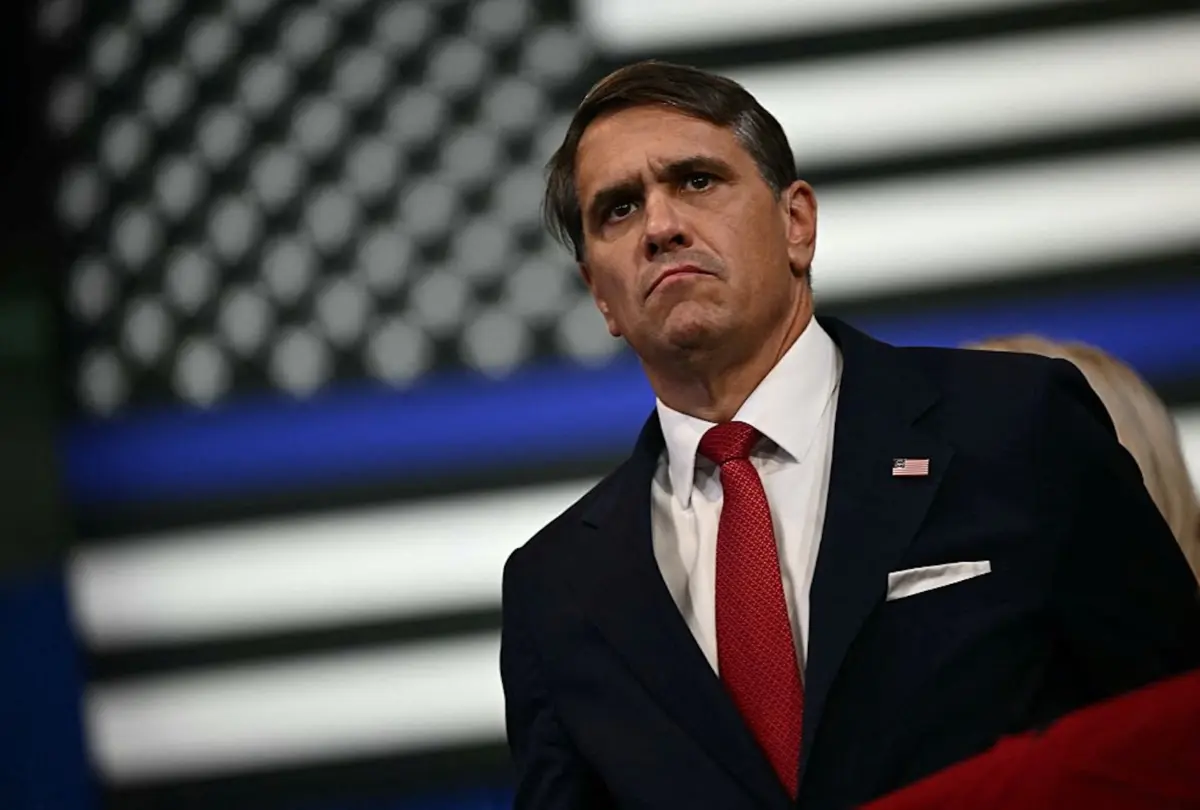
The confirmation of Todd Blanche as United States Attorney General marks an unprecedented evolution in the executive branch’s relationship with the Department of Justice (DOJ). Transitioning directly from his role as Donald Trump’s criminal defense attorney to the nation’s top law enforcement official, Blanche has made it unequivocally clear that he views his mandate not as an independent guardian of the rule of law, but as an extension of the executive’s personal agenda.
In a debut post-confirmation appearance on NBC’s Meet the Press, Blanche explicitly declined to pledge institutional independence from the White House. This stance directly challenges the post-Watergate norms established to insulate federal law enforcement from partisan interference. While Blanche insists that the administration operates without unlawful or unethical directives, a trail of policy shifts, personnel exoduses, and explicit executive pronouncements suggests a deeply compromised "neutral zone." With thousands of career prosecutors and staff members resigning in protest, and controversial memos protecting executive assets surfacing, the Justice Department under Blanche faces an existential crisis regarding its foundational commitment to the American public.
Detailed Chronology & Historical Context: From Watergate to Blanche
To fully understand the gravity of Blanche’s appointment, one must trace the historical framework governing the DOJ. The modern architecture of prosecutorial independence was forged in the fires of the 1970s Watergate scandal.
- October 1973 (The Saturday Night Massacre): President Richard Nixon’s firing of special prosecutor Archibald Cox—along with the subsequent resignations of Attorney General Elliot Richardson and Deputy Attorney General William Ruckelshaus—laid bare the dangers of a politicized Justice Department. In response, Congress enacted sweeping reforms to create a structural wall between White House political operations and DOJ investigations.
- The Post-Watergate "Neutral Zone": For decades, successive administrations of both parties largely respected the unwritten rule that while the president establishes broad national law enforcement priorities, the White House does not direct specific investigations or target political opponents.
- The Bush Administration Precedents: While historical guardrails held firm for the most part, cracks appeared over time. In 2004, Attorney General John Ashcroft famously resisted a White House push to reauthorize a domestic surveillance program deemed illegal, resulting in a tense bedside standoff. Later, in 2007, Attorney General Alberto Gonzales resigned following the scandal over the politically motivated firings of U.S. attorneys who refused to prosecute Democrats on dubious pre-election charges.
- The Trump Era and the "Chief Client": The return of Donald Trump shattered these remaining guardrails entirely. Following the departure of predecessors like Pam Bondi—reportedly ousted for failing to secure swift indictments against political rivals—the administration elevated Todd Blanche. Blanche, whose career defending Trump in court uniquely positions him within the president’s inner circle, took charge with a philosophy that treats the commander-in-chief as the DOJ’s "chief client" rather than the American people.
Supporting Context & Metrics: The Exodus and Institutional Erosion
The transformation of the DOJ under Blanche has triggered measurable, structural damage to the agency’s internal workforce and institutional integrity:
- Mass Resignations: Since Blanche assumed leadership roles within the department (moving from deputy to acting, and finally to confirmed attorney general), an estimated 16,000 to 20,000 personnel have left the Justice Department. This historic brain drain includes career prosecutors, civil rights attorneys, and administrative staff unwilling to execute directives that subordinate the law to executive whim.
- The "Chief Client" Philosophy: Internal reports from legal monitoring groups highlight that DOJ leadership under Blanche has openly framed the administration as its primary beneficiary, shocking career staff who historically understood their client to be the United States government.
- Controversial Policy and Document Actions:
- In early 2026, the DOJ admitted to removing nearly 48,000 files concerning Jeffrey Epstein from public databases, including documents containing allegations involving Donald Trump.
- Blanche personally signed a memorandum of understanding designed to shield the president and his family from future IRS audits.
- The wholesale dismissal or reassignment of prosecutors who worked on high-profile cases—most notably the January 6 prosecutions—further underscores the systematic dismantling of the department’s historical independence.
Official Statements and Public Defense
Blanche’s defense of his posture centers on semantics and an aggressive refutation of claims regarding direct political interference. During his watershed appearance on Meet the Press with host Kristen Welker, Blanche addressed concerns regarding his alignment with the executive branch:
"No, I’m not going to pledge that. No attorney general should ever pledge that."
When pressed on whether he would maintain institutional distance from the Oval Office, Blanche rejected the premise that an independent attorney general must maintain adversarial relations with the president. He forcefully denied that the White House engages in micromanagement of prosecutions:
"There is this extraordinarily false narrative that the president wakes up in the morning and calls me and says, ‘Todd, go prosecute X or Y.’ He does not do that. He has never done that. He will never do that."
Blanche further attempted to reframe the debate around independence by arguing that pledging absolute autonomy from the executive branch would mean refusing valid law enforcement goals set by the elected leader of the country:
"If I were to pledge I were to be independent of the White House, what that means is that if President Trump says, ‘I want the Department of Justice to go after every violent criminal in this country,’ which is what he has said—what you’re saying to me is I should say, ‘No sir, I’m not gonna do it.’ So I will act with integrity, our prosecutors will act with integrity, we will prosecute without fear or any sort of favor, and that’s exactly what we have been doing."
Despite these assurances, critics point to past public statements—such as Trump’s accidentally published September 2025 Truth Social draft demanding immediate indictments of political opponents like James Comey, Adam Schiff, and Letitia James—as undeniable proof that the pressure for partisan prosecution is both active and relentless.
Future Outlook: Navigating the Road Ahead
As the Trump administration pushes forward with more than two years remaining in its term, the long-term ramifications for the Department of Justice are profound. The traditional separation of powers designed to protect citizens from arbitrary state power has been replaced by a system where loyalty to the executive supersedes institutional neutrality.
The consequences of this paradigm shift extend far beyond individual court cases. When the nation’s top prosecutor explicitly rejects the concept of structural independence, public trust in the administration of equal justice under law is severely undermined. Moving forward, observers expect that any high-profile investigations, pardons, or enforcement actions originating from the DOJ will be viewed through a lens of deep skepticism.
For the thousands of career civil servants remaining within the department, the daily reality is an ongoing struggle to maintain professional ethics under leadership that views the rule of law as an instrument of political protection. Whether the institutional norms of the post-Watergate era can ever be restored will depend heavily on future legislative reforms, judicial pushback, and the eventual re-establishment of independent executive oversight.