

Executive Overview
The transformation of methane into valuable industrial chemicals and fuels is one of the grand challenges of modern catalytic chemistry. Central to this field is the partial oxidation of methane (POM), a premier industrial route for producing synthesis gas (syngas)—a critical mixture of carbon monoxide and hydrogen used globally in the synthesis of synthetic fuels, methanol, and downstream petrochemicals. For decades, the conventional wisdom guiding industrial catalysis assumed that metallic nickel (Ni) nanoparticles served as the primary, immutable active centers driving this critical reaction. However, this long-standing paradigm has been haunted by a persistent, unresolved mechanistic question: Is metallic nickel truly the active catalytic species, or is it merely a post-reaction byproduct formed when nickel oxide is aggressively reduced by hot syngas during the cooling or operational phases?
To address this blind spot, a multi-institutional, international research collaboration led by Professor Tao Zhang, Professor Aiqin Wang, and Professor Xiaoyan Liu from the Dalian Institute of Chemical Physics (DICP) of the Chinese Academy of Sciences (CAS), alongside Professor Wei Liu from DICP, Professor Tao Yang from Xi’an Jiaotong University, and Professor Graham J. Hutchings from Cardiff University, undertook a rigorous investigation. Utilizing advanced in situ characterization techniques coupled with state-of-the-art density functional theory (DFT) calculations, the team discovered that the true active agent is not static metallic nickel, nor is it standard bulk nickel oxide.
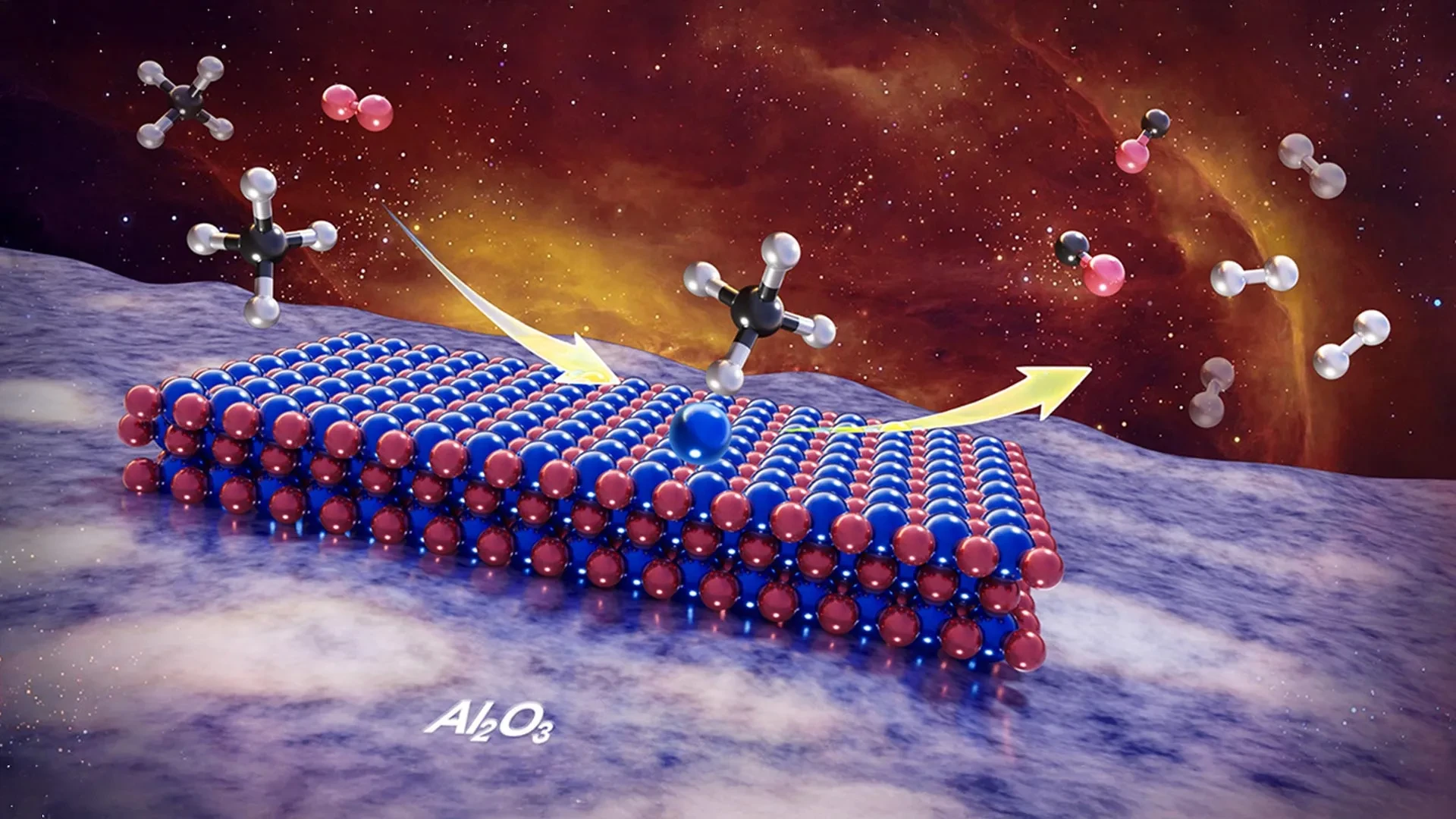
Instead, the researchers revealed that highly active, transient atomic structures form dynamically on the catalyst surface under real-world reaction conditions. Specifically, during the partial oxidation of methane, the surface of nickel oxide reconstructs to form a highly specialized [Ni1O4Ni4] structural motif on the NiO(100) surface. This atomic reconstruction drastically lowers the activation energy required to break stubborn carbon-hydrogen (C–H) bonds.
Published in Nature Catalysis, these findings fundamentally reshape our understanding of high-temperature redox catalysis. By demonstrating that dynamic surface reconstruction—rather than high metal loading—dictates catalytic efficiency, this breakthrough paves the way for designing ultra-efficient, low-cost catalysts that minimize reliance on precious or high-concentration transition metals, marking a paradigm shift for the chemical manufacturing industry.
Detailed Chronology: From Long-Standing Assumptions to Atomic-Scale Discovery
The Historical Blind Spot of Nickel Catalysis
For generations, industrial chemists investigating nickel-based catalysts for reforming reactions operated under a relatively straightforward assumption: under reducing reaction atmospheres at elevated temperatures, nickel oxide ($textNiO$) precursors are reduced to metallic nickel ($textNi^0$) nanoparticles, which then act as the workhorses of the reaction.
While this model successfully correlated post-reaction characterization data with catalytic performance, it suffered from a fundamental methodological flaw. Most analytical techniques examined catalysts ex situ—after the reactor had been shut down, cooled, and exposed to ambient air. Under these conditions, identifying the state of the catalyst at room temperature often bore little resemblance to its true state under the harsh, high-temperature operating environment of an active POM reactor.
Nickel is a transition metal capable of undergoing profound changes in both its oxidation state and its atomic coordination under high-temperature redox conditions. Tracking these rapid, reversible transformations in real time proved exceptionally difficult with legacy instrumentation. Consequently, the true active species remained elusive, leaving researchers unable to definitively link catalyst structure to catalytic function.
The Experimental Breakthrough: Designing the Low-Loading Catalyst
To pierce through the fog of traditional ex situ analysis, the research team recognized the necessity of observing the catalyst in situ—while it was actively engaged in the partial oxidation of methane.
To isolate the catalytic phenomena and eliminate background noise from overly dense metal agglomerates, the researchers synthesized a novel $textNi/Al_2textO_3$ catalyst containing an exceptionally low nickel loading of just 0.8 weight percent (wt%), prepared via a precision microemulsion method. Conventional catalysts designed for similar industrial duties typically utilize much higher metal loadings (often 5 to 10 wt%) to ensure sufficient active surface area.
When tested under demanding POM conditions, the low-loading 0.8 wt% $textNi/Al_2textO_3$ catalyst defied expectations. It demonstrated remarkable catalytic proficiency, achieving a 92% methane conversion rate. Furthermore, the selectivities toward carbon monoxide ($textCO$) and hydrogen ($textH_2$) reached an impressive 87.0%, while maintaining a stable $textH_2text/CO$ molar ratio of approximately 2.0—the gold standard ratio for downstream Fischer-Tropsch synthesis and hydroformylation processes.
The Paradox of the Missing Metal
Upon analyzing the catalyst after the reaction cycle, the research team uncovered a startling anomaly: standard analytical methods detected virtually no metallic nickel nanoparticles in the spent 0.8 wt% catalyst.
This finding completely upended the classical mechanistic model. How could a catalyst lacking detectable metallic nickel match the performance of traditional high-loading formulations? To evaluate this, the researchers compared the 0.8 wt% microemulsion-derived catalyst against an 8.0 wt% $textNi/Al_2textO_3$ benchmark catalyst prepared via standard wet impregnation methods. Remarkably, the ultra-low-loading catalyst delivered performance metrics comparable to its high-loading counterpart, despite containing only one-tenth of the nickel.
Moreover, preparation methodology mattered immensely. When the researchers prepared another 0.8 wt% $textNi/Al_2textO_3$ material using traditional impregnation methods instead of the microemulsion technique, the resulting catalyst failed entirely at partial oxidation, exhibiting only total combustion activity that converted methane directly into unwanted carbon dioxide and water.
Deeper inspection revealed another layer of complexity: metallic nickel nanoparticles present at the very beginning of the reaction were rapidly oxidized into the $textNiO$ phase under the oxidizing/reducing environment of POM. Yet, plain nickel oxide was not the answer either. A control experiment utilizing a pre-formed, pure-phase $textNiO$ catalyst showed zero POM activity, catalyzing exclusively the complete combustion of methane.
Clearly, neither bulk metallic nickel nor pristine nickel oxide was the true active site. The secret lay in how the catalyst changed dynamically during the reaction itself.
Supporting Context & Metrics: Unlocking the Atomic Mechanism
The Discovery of the [Ni1O4Ni4] Structural Motif
To solve the mystery of why the microemulsion-derived catalyst excelled while traditional formulations failed, the researchers deployed advanced in situ spectroscopic and microscopic characterization tools. These methods allowed them to peer directly onto the catalyst surface while the partial oxidation of methane was actively taking place.
The observations revealed a dynamic structural transformation. Under realistic POM reaction conditions, the surface of the nickel oxide phase underwent spontaneous atomic-scale reconstruction. Specifically, the team captured the formation of a localized, highly coordinated [Ni1O4Ni4] structural unit embedded directly on the NiO(100) crystal surface.
This reconstructed motif represents a distinct thermodynamic and structural state that only exists in the presence of the reacting gases at high temperatures. It bridges the gap between ionic oxide lattices and metallic coordination environments, creating a unique electronic and steric local environment capable of activating robust chemical bonds.
Quantum-Chemical Insights via Density Functional Theory (DFT)
To understand why the [Ni1O4Ni4] motif dramatically alters catalytic performance, the research team turned to advanced theoretical modeling using density functional theory (DFT) calculations.
In the partial oxidation of methane, the rate-determining step—and the most challenging energetic hurdle—is the activation and subsequent cleavage of the first strong carbon-hydrogen ($textC–H$) bond in the methane molecule, which possesses a bond dissociation energy of roughly $439text kJ/mol$.
The DFT calculations mapped out the kinetic activation barriers for this crucial bond-breaking step across three distinct surfaces:
- The Intact NiO(100) Surface: Yielded a formidable activation barrier of $38.5text kcalcdottextmol^-1$. This excessively high barrier explains why pure nickel oxide catalysts fail to drive POM efficiently, instead defaulting to total combustion pathways.
- The Metallic Ni(111) Surface: Yielded a significantly lower activation barrier of $15.7text kcalcdottextmol^-1$, reflecting the traditional view of metallic nickel’s catalytic efficacy.
- The Reconstructed
[Ni1O4Ni4]Motif on NiO(100): Achieved an exceptionally low activation barrier of just $12.5text kcalcdottextmol^-1$.
This dramatic kinetic advantage—lowering the activation energy well below that of traditional metallic nickel surfaces—provides definitive theoretical proof that the dynamically reconstructed [Ni1O4Ni4] unit is the true active center driving efficient partial oxidation.
+-------------------------------------------------------------+
|               C–H Bond Activation Barriers                  |
+-------------------------------------------------------------+
| Reconstructed [Ni1O4Ni4] Motif :  12.5 kcal·mol⁻¹  (Fastest)|
| Metallic Ni(111) Surface       :  15.7 kcal·mol⁻¹           |
| Intact NiO(100) Surface        :  38.5 kcal·mol⁻¹  (Slowest)|
+-------------------------------------------------------------+
Quantitative Performance Breakdown
The convergence of atomic reconstruction and ultra-low metal loading yielded exceptional performance metrics during prolonged operational testing:
- Methane Conversion: Achieved a steady-state conversion rate of 92%, ensuring high reactant utilization.
- Product Selectivity: Maintained high selectivities of 87.0% for both carbon monoxide ($textCO$) and hydrogen ($textH_2$).
- Stoichiometric Stability: Preserved an optimal $textH_2text/CO$ molar ratio of 2.0, perfect for subsequent industrial synthesis processes.
- Resource Efficiency: Achieved parity with 8.0 wt% conventional catalysts while utilizing only 0.8 wt% nickel—a 90% reduction in active transition metal usage.
Official Statements & Expert Perspectives
The implications of this discovery extend far beyond academic curiosity, offering a masterclass in how modern materials science must evolve to understand catalysts as living, dynamic systems.
Reflecting on the overarching significance of the work, Professor Wei Liu emphasized the necessity of shifting away from static analytical frameworks. "Our study highlights the critical role of in situ characterization in identifying dynamic active structures under reaction conditions," Professor Liu noted during a discussion of the findings.
He further elaborated on how these insights transform catalyst engineering: "Dynamic reconstruction enables low-loading catalysts to achieve high performance, offering new opportunities for the rational design of efficient catalysts while reducing reliance on high metal loadings."
Industry observers and co-authors from the collaborative institutions—spanning the Dalian Institute of Chemical Physics, Xi’an Jiaotong University, and Cardiff University—echoed these sentiments. By proving that catalytic activity does not stem from bulk metallic phases or static metal oxides, but rather from transient atomic motifs generated in situ, the research provides a blueprint for engineering catalysts at the atomic scale. Instead of dumping large quantities of expensive or environmentally sensitive metals onto supports in the hope that some fraction survives reduction, engineers can now focus on engineering the surface chemistry that encourages beneficial dynamic reconstruction.
Future Outlook: Re-Engineering Industrial Catalysis
The publication of this study in Nature Catalysis marks a watershed moment for heterogeneous catalysis, opening up several vital avenues for future research and industrial application.
1. Rational Design of Low-Loading, High-Performance Catalysts
For decades, industrial catalyst development has relied heavily on trial-and-error methodologies, often increasing metal loadings to boost activity at the expense of cost, resource depletion, and catalyst sintering. The revelation that an ultra-low loading of 0.8 wt% nickel can match the performance of an 8.0 wt% system—provided the local atomic environment is optimized—invites a complete overhaul of catalyst formulations. Future industrial catalysts can be engineered to maximize the dispersion of precursor sites that readily undergo beneficial dynamic reconstruction, dramatically cutting raw material costs.
2. The Imperative of Operando and In Situ Characterization
This work underscores the absolute necessity of operando and in situ characterization. Studying a catalyst before and after a reaction is no longer sufficient; scientists must observe the working catalyst under operating temperatures, pressures, and gas compositions. As characterization tools—such as ambient-pressure X-ray photoelectron spectroscopy (AP-XPS), high-resolution environmental transmission electron microscopy (ETEM), and operando X-ray absorption spectroscopy (XAS)—continue to advance, researchers will be better equipped to identify other hidden active structures in a wide array of industrial reactions.
3. Expanding to Other Reforming and Oxidation Systems
The phenomenon of stress- or atmosphere-induced surface reconstruction is unlikely to be unique to nickel-catalyzed partial oxidation of methane. Researchers are already turning their attention to other vital industrial processes, such as dry reforming of methane (DRM), water-gas shift reactions, and selective oxidations involving cobalt, iron, copper, and precious metal catalysts. Understanding whether similar dynamic motifs form in these systems could unlock unprecedented catalytic efficiencies across the board.
4. Sustainability and Environmental Impact
From an environmental perspective, minimizing transition metal usage reduces the ecological footprint associated with mining, refining, and processing industrial metals. Furthermore, efficient partial oxidation processes that operate cleanly with lower energy inputs and higher selectivities contribute directly to cleaner chemical manufacturing, supporting global initiatives toward sustainable carbon utilization and the transition to a circular chemical economy.
In conclusion, by looking past the outdated dogma of static metallic active sites and embracing the fluid, dynamic nature of catalyst surfaces under operating conditions, science has unlocked a deeper level of control over chemical transformations. The humble nickel atom, viewed through the lens of dynamic atomic reconstruction, has proven that in catalysis, it is not how much metal you use that matters, but precisely how it behaves when the heat is on.