

Executive Overview
In a groundbreaking geological study published in the journal Earth and Planetary Physics, an international team of researchers has fundamentally upended conventional scientific understanding regarding the tectonic evolution of the Americas. For decades, the prevailing consensus held that the monumental collision between Central America and the northwestern margin of South America—an epochal geological event that profoundly shaped the geography, climate, and biodiversity of the Western Hemisphere—was a relatively late phenomenon. However, by leveraging high-precision magnetic fabric analysis on volcanic rocks harvested from the Northern Andes of Colombia, scientists have discovered that the most violent, primary phases of this tectonic collision occurred significantly earlier than previously believed.
According to the new data, the peak compressive forces and major crustal shortening driving this convergence had largely concluded well before the late Miocene epoch, pushing the principal window of collision back prior to approximately 10 million years ago. This revelation forces geologists to redraw tectonic models and re-evaluate the timing of paleogeographic changes that connected the two continental landmasses.
Led by first author Dr. Victor A. Piedrahita and corresponding author Dr. J. Li, alongside a coalition of elite geoscientists, the study focuses on late Miocene volcanic formations spanning roughly 12 to 6 million years ago within the Combia Volcanic Province of central Colombia. By meticulously examining the magnetic orientation of minerals preserved within these ancient stones, the research team was able to peer backward through deep time, distinguishing between pristine volcanic emplacement and the agonizing pressures of tectonic deformation.
The implications of this study extend far beyond regional Colombian geology. The timing of the Central and South American collision is intimately tied to the closure of the Central American Seaway, the Great American Biotic Interchange—wherein terrestrial fauna migrated between North and South America—and the ultimate establishment of modern ocean-atmosphere circulation patterns that dictate global climate today. By establishing a more rigorous, empirically backed timeline through rock magnetism, this study provides a crucial missing puzzle piece in our comprehension of planetary dynamics.
Detailed Chronology
To fully grasp the magnitude of the new findings, it is essential to examine the historical timeline of the region’s geological evolution, the sequence of the recent study, and the methods that allowed researchers to look deep into the Earth’s crust.
The Traditional Timeline vs. the New Paradigm
For years, standard tectonic models suggested that the major collisional crunch between the trailing edge of the Central American arc systems and the South American Plate occurred during the late Miocene or even into the Pliocene epoch. Geologists mapped out regional fault lines, sedimentary basins, and metamorphic belts, generally assuming that the intense folding, faulting, and crustal thickening in the Northern Andes were concurrent with the youngest volcanic pulses in the region.
However, the study led by Piedrahita and Li disrupts this neat chronology. By targeting the Combia Volcanic Province—a rich geological archive situated in the heart of the Colombian Andes—the researchers sought to test the age of major deformation against the age of the rocks themselves.
Investigating the Combia Volcanic Province
The Combia Volcanic Province is characterized by a thick sequence of late Miocene volcanic and volcaniclastic rocks, dated between 12 and 6 million years old. These rocks formed during a turbulent window when the South American Plate was actively colliding and interacting with the approaching continental and arc components of Central America.
If major tectonic deformation was ongoing during this late Miocene window, any volcanic rocks emplaced at that time should bear the physical scars of compression. Their internal mineral grains should be systematically sheared, stretched, and realigned by the immense tectonic forces squeezing the crust.
To test this hypothesis, the research team deployed an advanced analytical framework known as Anisotropy of Magnetic Susceptibility (AMS), or magnetic fabric analysis.
The Mechanics of Magnetic Fabric Analysis
Rocks are not uniform masses; they contain microscopic magnetic minerals (such as magnetite or pyrrhotite) that act as tiny compass needles frozen within the rock matrix. When magma moves, erupts, or flows as a debris avalanche, these magnetic crystals align themselves in predictable patterns dictated by fluid dynamics and gravity. Conversely, if a rock later experiences intense tectonic deformation—crustal shortening, mountain-building, and lateral shearing—those microscopic magnetic minerals are forced to reorient in response to directional stress.
By measuring the magnetic susceptibility across three dimensions, scientists can determine the "magnetic fabric" of a rock. This technique allows researchers to answer a critical geological question: Did this rock’s internal structure form during its initial volcanic birth, or was it subsequently warped by tectonic tectonic forces?
What the Rocks Revealed
Upon analyzing samples from multiple sites across the Combia Volcanic Province, the research team made a startling discovery. The vast majority of the late Miocene volcanic rocks preserved primary magnetic fabrics. Their internal mineral alignments were entirely consistent with original magma flow, explosive volcanic emplacement, and surface debris flows. They showed virtually no signs of having been subjected to intense, regional-scale tectonic deformation after they cooled.
While a small subset of sampled locations did exhibit localized traces of tectonic disturbance, these alterations were minor, highly restricted in geographic scope, and lacked the overwhelming regional signature that would accompany a major continental collision.
The conclusion was inescapable: by the time these volcanic rocks were erupted and emplaced between 12 and 6 million years ago, the most violent, crust-shredding phases of the Central-South American collision had already run their course. The primary tectonic engine had shifted from active, high-strain collision to a more quiescent or localized regime. Consequently, the main collisional events must have occurred much earlier—primarily during the Oligocene and middle Miocene epochs, long before the late Miocene window traditionally assumed by many tectonic models.
Supporting Context & Metrics
Understanding the broader context of this discovery requires examining the quantitative frameworks, geographical settings, and funding structures that made this research possible.
Geographic and Temporal Parameters
- Study Region: The Combia Volcanic Province, located in the central sector of the Colombian Andes.
- Rock Age Range: Late Miocene epoch, specifically spanning approximately 12 million to 6 million years ago.
- Key Tectonic Interface: The convergence zone between the South American Plate and the moving arc systems / continental fragments of Central America.
- Primary Analytical Method: Anisotropy of Magnetic Susceptibility (AMS) / Magnetic Fabric Analysis.
- Revised Collision Window: Principal tectonic deformation and major crustal shortening primarily occurred during the Oligocene through middle Miocene epochs, concluding prior to the late Miocene.
The Broader Geodynamic Framework
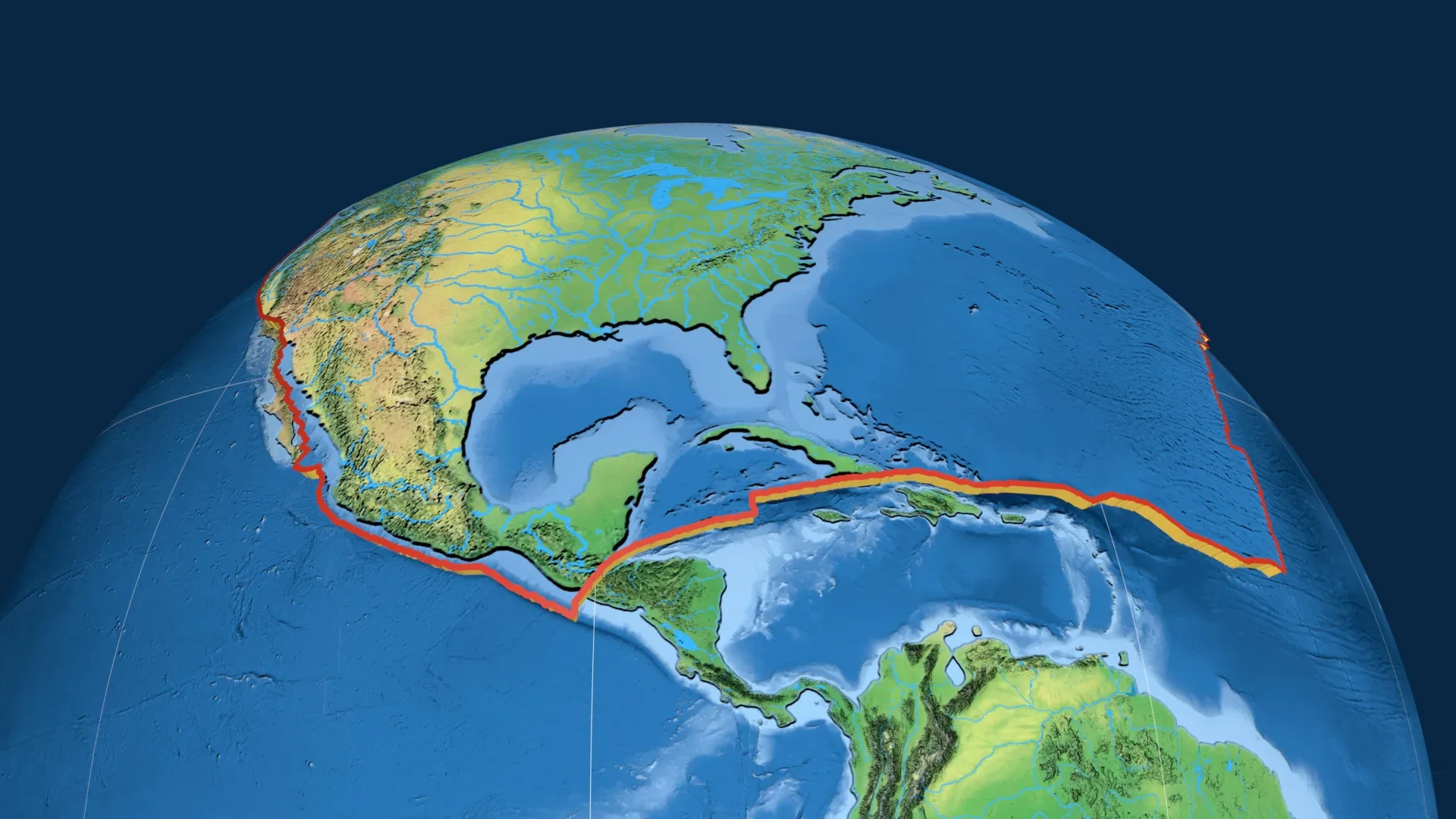
The Northern Andes represent one of the most complex tectonic nodes on Earth. Here, the Nazca, Caribbean, and South American plates converge in a messy dance of subduction, accretion, and strike-slip faulting. The collision of Central America with northwestern South America was a pivotal moment in this dance, acting as a tectonic barrier that fundamentally altered mantle dynamics, crustal thickness, and surface topography.
For decades, scientists struggled to reconcile the timing of this collision with other major regional milestones, such as the uplift rates of the Andes mountains and shifts in sedimentary deposition patterns in surrounding basins. By pushing the primary collision timeline back into the Oligocene-middle Miocene, this new study resolves several long-standing discrepancies in Andean geology. It provides a more generous temporal buffer for the geological processes that built the modern landscape, allowing geomorphologists and climatologists to recalibrate their models of when high-altitude ecosystems and major river drainage systems began to form.
Institutional Support and Funding
High-impact geochronological and rock-magnetic research requires state-of-the-art laboratory infrastructure and extensive field expeditions. This study was made possible through dedicated financial backing and grants provided by the National Natural Science Foundation of China (NSFC). These grants were officially awarded to corresponding author Dr. J. Li and first author Dr. Victor A. Piedrahita, facilitating international collaboration and advanced laboratory analyses that crossed continental divides to unlock the secrets of the South American crust.
Official Statements
The significance of these findings has drawn commentary from the study’s lead researchers, who emphasize both the methodological elegance of their work and the paradigm-shifting nature of the conclusions.
Reflecting on the unique capacity of volcanic rocks to act as geological tape recorders, Dr. Victor A. Piedrahita, the study’s first author, noted:
"Volcanic rocks can preserve a remarkably detailed record of geological processes. Their magnetic fabrics help us determine whether deformation occurred before, during, or after the rocks were emplaced. By looking past the physical appearance of the rock and examining the micro-scale orientation of its magnetic minerals, we gain an unfiltered window into the stress regimes of the ancient past."
Elaborating on the broader tectonic implications and the timeline revision, Dr. Piedrahita and Dr. J. Li jointly explained in the study’s primary findings:
"Our data indicate that the most significant collisional events between Central and South America occurred earlier than we previously thought, mainly during the Oligocene-middle Miocene. By the time these volcanic rocks formed [in the late Miocene], tectonic deformation had become weaker and more localized."
These statements underscore a paradigm shift in how structural geologists must approach collisional orogens. Rather than assuming that regional rock formations are synchronous with ongoing mountain-building events, researchers must employ sophisticated micro-analytical techniques—such as AMS—to decouple the age of rock emplacement from the history of tectonic strain.
Future Outlook
As the ripples of this study spread through the geological community, researchers are already looking toward the horizon to determine how these revised timelines will reshape related scientific disciplines.
Rebuilding Andean Tectonic Models
The immediate fallout of the study will be a comprehensive re-evaluation of tectonic reconstruction models for the Caribbean, Nazca, and South American plates. Numerical geodynamic models that simulate lithospheric subduction and continental collision will need to be re-run using the updated Oligocene-middle Miocene primary collision window. By adjusting the input parameters to reflect an earlier peak collision, modelers can test how stress is transmitted through the lithosphere over longer evolutionary timescales.
Implications for Paleoclimate and Biodiversity
The timing of the Central and South American land bridge formation is not merely a matter of rocks and faults; it is fundamentally intertwined with the history of life on Earth. The closure of the oceanic gateway between the Pacific and the Atlantic—and the physical bridging of the two continents—triggered the Great American Biotic Interchange, allowing animals like mammals, reptiles, and plants to migrate across the hemisphere. Furthermore, it altered global ocean currents, helping to trigger the glaciation of the Northern Hemisphere.
With the primary tectonic collision now pushed back into the Oligocene-middle Miocene, paleoecologists and evolutionary biologists must re-examine fossil records to see if biotic migration events correlate more closely with these earlier structural milestones.
Expanding Magnetic Techniques in Volcanic Arcs
Finally, the methodological success demonstrated by Piedrahita, Li, and their international colleagues highlights the immense power of magnetic fabric analysis in complex volcanic settings. Traditional structural geology methods can struggle in regions heavily blanketed by younger volcanic deposits or altered by tropical weathering, where classic outcrop features are obscured.
By demonstrating that magnetic minerals within volcanic rocks can reliably retain primary flow signatures while faithfully flagging localized versus regional tectonic stress, this study sets a new methodological benchmark. Future research initiatives are expected to apply AMS techniques to other volcanic arcs around the Pacific Rim and alpine collision zones worldwide, unlocking hidden chapters of planetary history that were previously obscured by the complexities of deep-time deformation.