

Executive Overview
In the fast-evolving landscape of enterprise technology, few brands carry the historical weight, complex portfolio, and intellectual property of International Business Machines (IBM). Yet, with that legacy comes a distinct modern challenge: cutting through the noise to clearly communicate what the company stands for today.
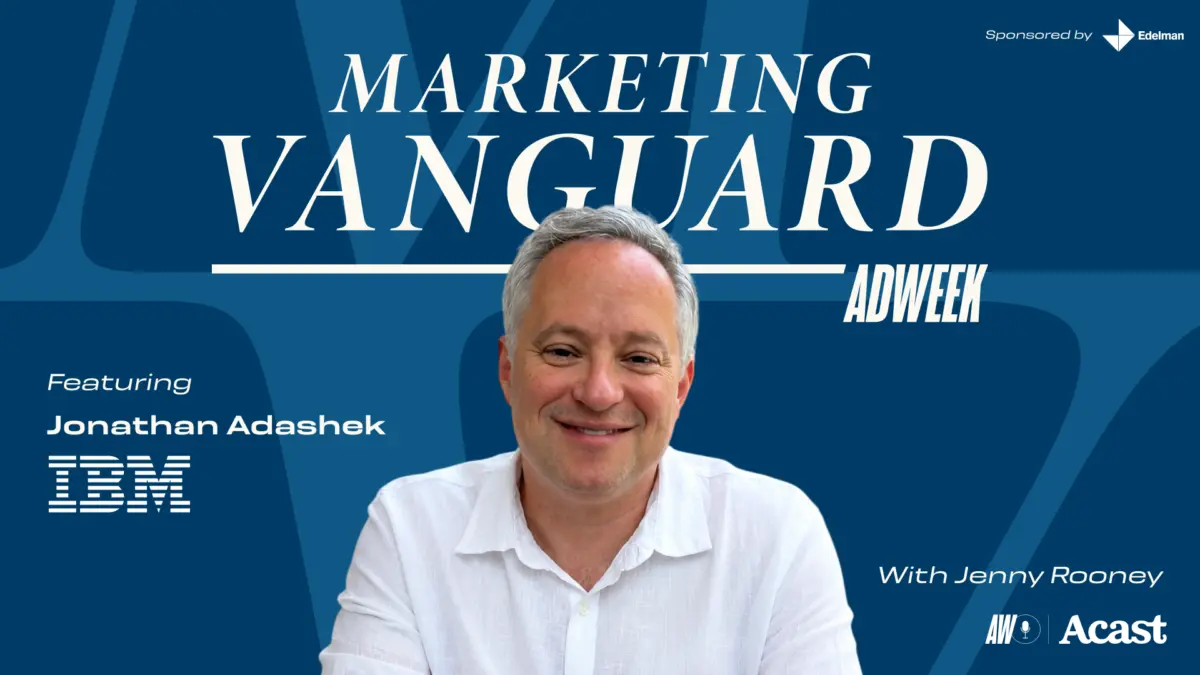
In a recent installment of the Marketing Vanguard Cannes series, presented in partnership with Edelman, host Jenny Rooney sat down with Jonathan Adashek, IBM’s Senior Vice President of Marketing and Communications. Recorded against the dynamic backdrop of the Cannes Lions international festival of creativity, the conversation offers an uncompromising, master-class look at how legacy enterprise giants must adapt, integrate artificial intelligence, and fundamentally restructure their operational engines to survive and thrive.
Adashek’s insights cut straight through the industry hype surrounding generative AI. Rather than treating AI as a trendy novelty or an isolated software add-on, IBM has deployed a rigorous, process-driven strategy centered around its internal "client zero" methodology. The results speak for themselves: $4.5 billion in operational savings realized over a three-year period, with an additional $1 billion targeted for the current year.
Perhaps most counter-intuitively for modern marketers trapped in an endless cycle of "more output, more activations," Adashek revealed that IBM has systematically reduced its physical and experiential event footprint by 50% compared to two years ago. Despite halving its event volume, the company has simultaneously driven a 10% to 20% increase in qualified leads and audience interest. By weaponizing AI-enabled targeting, predictive personalization, and hyper-relevant pre- and post-event engagement, IBM has proven that strategic precision will always outperform indiscriminate volume.
This comprehensive report unpacks Adashek’s blueprint for modern enterprise marketing. It examines the pivotal brand wake-up calls that forced a complete narrative overhaul, the operational discipline required to scale AI safely, the stark economic realities of workforce evolution, and the future outlook for B2B technology marketing.
Detailed Chronology: The Journey to Modernizing IBM’s Brand and Operations
The Brand Wake-Up Call: "What Does IBM Do?"
Every great turnaround story begins with an uncomfortable truth. For Adashek, that truth arrived almost immediately after accepting his role at IBM in January 2020. Transitioning from Chief Communications Officer to taking over the global marketing portfolio in January 2022, Adashek shared a formative anecdote that set the stage for IBM’s entire brand repositioning strategy.
Shortly after being offered the job, Adashek shared the news with a close friend—a highly successful executive operating within the tech sector. The friend paused, looked at him, and asked a blunt, unfiltered question: "What does IBM do?"
For a company with over a century of technological innovation, a multi-billion-dollar R&D engine, and pioneering work in quantum computing, hybrid cloud, and enterprise artificial intelligence, hearing that question from a tech-literate peer was a jarring wake-up call.
"That moment crystallized the repositioning challenge," Adashek explained during the Cannes discussion. "If someone deeply entrenched in the technology space could not answer that question clearly and concisely, the brand needed a sharper, more disciplined focus."
Rather than erasing IBM’s storied history—which ranges from mainframe computing to the creation of the UPC barcode and Deep Blue—Adashek and his team realized they needed to anchor the brand firmly in the present. The mission became ensuring that when enterprise clients face complex data, infrastructure, or security challenges, they immediately recognize when and why they must come to IBM. This clarity paved the way for a unified global narrative centered around hybrid cloud, enterprise-grade AI, and open technology architectures.
Transitioning from Chaos to Discipline: The Process-First AI Playbook
As generative AI exploded onto the global stage, corporations scrambled to deploy tools haphazardly across departments. Adashek warns that this "wild west" approach to AI adoption is a recipe for operational disaster.
At IBM, the integration of artificial intelligence began not with the purchase of software licenses, but with exhaustive operational mapping. Adashek’s marketing and communications organization systematically audited existing workflows to identify precise bottlenecks where AI could automate repetitive tasks, simplify complex journeys, or eliminate redundant work entirely.
"AI adoption is not just about adding tools," Adashek emphasized. "Teams need proper training, dedicated time to learn, and a clear understanding of how workflows change when different people utilize different tools."
Without this foundational discipline, organizations quickly run into severe structural pitfalls. They risk generating thousands of disconnected AI agents that cannot communicate with one another, creating severe data silos, and racking up runaway token and operational costs. IBM’s approach insists that process discipline must always precede technological deployment.
Supporting Context & Metrics: The "Client Zero" Strategy and Event Transformation
The "Client Zero" Philosophy and Economic Impact
To build credibility with external enterprise clients seeking guidance on their own digital transformations, IBM adopted an inward-facing strategy known as "client zero."
Under this framework, IBM’s internal teams serve as the primary test subjects for every emerging technology, software tool, and AI deployment the company eventually sells to the market. By stress-testing solutions within its own enterprise operations first, IBM ensures that its commercial offerings are battle-tested, highly secure, and verifiably effective.
The financial results of the client zero approach have been staggering. Over a three-year period, this operational overhaul generated $4.5 billion in quantifiable savings. Furthermore, the company has committed to driving another $1 billion in savings within the current fiscal year.
However, Adashek is quick to correct a common misconception among corporate leadership:
"This is not solely about cost takeout. The real value lies in becoming fundamentally more effective, more efficient, and hyper-focused on growth. We are using our own global operations as the ultimate case study."
Doing Less, Achieving More: The Event Strategy Revolution
Perhaps the most striking metric shared during the Cannes interview relates to IBM’s experiential marketing and event strategy. For decades, the B2B marketing playbook dictated a relentless cadence of global trade shows, sponsored activations, and massive proprietary conferences. The prevailing philosophy was simple: visibility equals viability.
Adashek dismantled that orthodoxy. Over the past two years, IBM has cut the total number of events it participates in or hosts by half (50%).
Conventional marketing wisdom would predict a corresponding drop in brand visibility and lead generation. Instead, the exact opposite occurred: IBM generated a 10% to 20% increase in qualified leads and prospect interest from the reduced event schedule.
This dramatic efficiency gain was achieved by applying advanced, AI-enabled data analytics to audience targeting. Rather than casting a wide net and hoping to capture passing foot traffic, IBM utilized predictive modeling to identify high-value enterprise decision-makers well in advance. By deploying hyper-personalized messaging, tailored pre-event briefings, and targeted post-event nurturing sequences, the marketing team maximized the return on every single dollar spent.
This pivot serves as a vital correction to the industry-wide instinct to "do more." In the modern era of enterprise marketing, precision targeting vastly outperforms sheer activity volume.
Official Statements and Industry Perspectives
The conversation between Jenny Rooney and Jonathan Adashek also tackled the heavier human realities of enterprise automation—specifically, the anxiety surrounding job displacement.
When Rooney raised the inevitable question regarding workforce reductions caused by intelligent automation, Adashek did not shy away from the hard truth. He acknowledged that while automation inevitably alters the scope of certain roles, it simultaneously unlocks pathways for entirely new professional opportunities.
"The average life span of a core technology skill is now under three years," Adashek noted. "Organizations cannot simply automate and walk away. Companies have to maintain a continuous commitment to hiring, aggressively reframing job descriptions, and actively helping their people adapt to shifting paradigms."
True AI leadership, according to Adashek, requires a delicate balance. It demands ruthless operational transformation and systems optimization, matched with absolute transparency and honesty regarding what changes for the human beings operating within those systems.
Edelman, as a partner in presenting the Marketing Vanguard Cannes series, underscored the timeliness of these insights. In an era where B2B buyers are increasingly skeptical of corporate messaging, brand authenticity can only be established when internal practices match external promises—a principle that sits at the very heart of IBM’s client zero ethos.
Future Outlook: What’s Next for Enterprise Marketing?
As the enterprise technology sector looks toward the remainder of the decade, the blueprint outlined by Jonathan Adashek offers several critical takeaways for Chief Marketing Officers and communications leaders:
- Radical Brand Simplification: If internal stakeholders or tech-savvy peers cannot immediately articulate your company’s core value proposition in a single sentence, your brand positioning requires immediate restructuring. Complexity is the enemy of adoption.
- Process Precedes Tech: Deploying AI without mapped processes, cross-departmental training, and strict governance will lead to fragmented data silos, unmanaged operational expenses, and failed digital transformations.
- Quality Over Quantity in Experiential Marketing: The era of bloated event calendars and indiscriminate trade show sponsorships is over. Marketers must leverage predictive AI analytics to target high-value accounts, allowing them to slash event volume while multiplying lead quality.
- The Human Element of Reskilling: As technology skill half-lives shrink below the three-year mark, marketing and communications leaders must champion internal education, continuous upskilling, and transparent communication to guide their teams through structural disruption.
By treating itself as the primary proving ground for innovation, IBM has transitioned from a historical computing giant into a nimble, AI-driven enterprise powerhouse. For the broader marketing industry, Adashek’s strategy serves as an authoritative guide on how to navigate the future with clarity, discipline, and measurable impact.