

Executive Overview
The modern creator economy often feels like a frictionless digital ecosystem, but its ascent from an unregulated Wild West to a cornerstone of enterprise media is the result of deliberate institutionalization. Long before "influencer marketing" became a ubiquitous term dominating corporate boardrooms and multi-billion-dollar media strategies, early digital pioneers were quietly testing the limits of social platforms as primary publishers.
Few individuals have witnessed—and shaped—this evolution as intimately as Ryan Detert. As the founder and chief executive officer of Influential, Detert transitioned from managing a sprawling network of viral parody and niche lifestyle accounts boasting 30 million collective followers to helming the largest influencer marketing company by revenue. Today, Influential partners with over 60 percent of the Fortune 500 and operates under the banner of Publicis Groupe, following a landmark acquisition that cemented influencer marketing as an indispensable pillar of modern enterprise advertising.
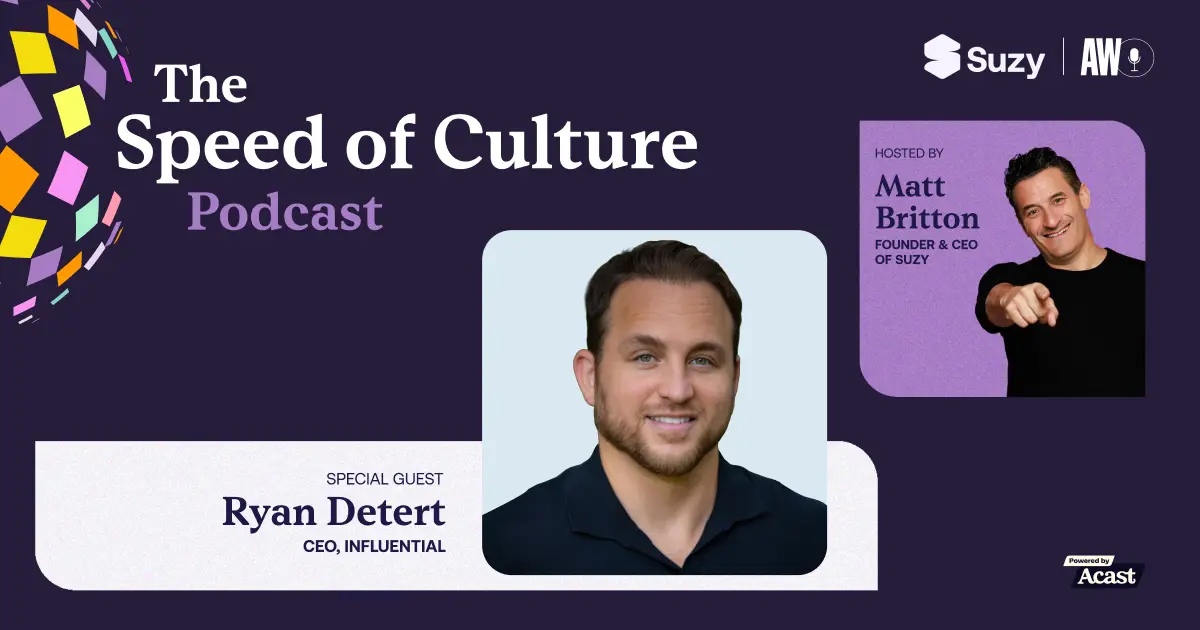
In a recent deep-dive conversation on The Speed of Culture podcast hosted by Matt Britton, Detert pulled back the curtain on the mechanics of this transformation. Tracing his journey from a digital publisher to a titan of data-driven media, Detert discussed the historical hurdles that once relegated influencer campaigns to experimental public relations budgets, the ongoing industry reckoning with artificial intelligence and digital fraud, and the strategic rationale behind integrating with corporate giants like Publicis and Epsilon.
This article explores the trajectory of the creator economy through Detert’s lens, offering an authoritative examination of how rigorous data, technological adaptation, and structural maturity transformed digital influence into an enterprise-grade medium.
Detailed Chronology: The Evolution of Digital Influence
To understand the current maturity of the creator economy, one must revisit its formative years—an era characterized by decentralized content and an absolute lack of institutional standardization.
Phase One: The Niche Publishing Era (Pre-2015)
Sixteen years ago, the social media landscape looked radically different. Platforms like Twitter and Instagram were not yet viewed as sophisticated commercial funnels; rather, they were emerging as distribution networks for raw, unfiltered content. During this foundational period, Detert established himself as a prominent early influencer, managing sprawling digital properties that amassed 30 million followers across specialized verticals such as fashion, automotive, and travel.
Crucially, this early era was defined not by personal branding or individual creator celebrity, but by "publisher-style alignment." Accounts were built around interest-based communities rather than charismatic personalities. These niche hubs demonstrated an unprecedented ability to capture consumer attention, frequently eclipsing traditional media events in real-time engagement.
However, this wild growth presented severe operational challenges. Brands and Madison Avenue agencies recognized the raw power of these digital audiences, yet they lacked the infrastructure required to safely allocate capital. There were no standard pricing models, no verified metric systems, and virtually zero brand-safety guarantees. It became glaringly obvious to operators like Detert that if social media influence was to graduate from a marketing novelty into a credible channel, it required professionalization, standardized metrics, and rigorous accountability.
Phase Two: Breaking Out of the PR Bucket (2016–2020)
As social platforms matured, the primary obstacle facing the influencer industry shifted from audience acquisition to corporate budgeting. For years, enterprise brands treated influencer marketing as an offshoot of public relations or ad-hoc sponsorships. Consequently, campaigns were funded through meager, experimental PR allocations rather than robust, predictable media budgets.
Detert highlights a pivotal inflection point around 2016 that fundamentally reshaped this dynamic. The breakthrough occurred when agencies and brands learned to combine organic creator-generated content with paid media amplification. By turning influencer posts into targeted advertisements backed by algorithmic distribution, campaigns could suddenly scale across vast demographic segments.
This technical leap allowed influencer marketing to break free from the constraints of PR buckets and tap directly into massive corporate media pools. Creators were no longer just supplying aesthetic endorsements; they were serving as high-performing creative assets within sophisticated, multi-channel media buys.
Phase Three: The Institutional Merge and Data Maturity (Present)
The culmination of this evolutionary arc arrived with Influential’s acquisition by Publicis Groupe. No longer a scrappy startup bridging the gap between brands and content creators, Influential operates as an enterprise-grade infrastructure capable of matching the rigorous standards of global holding companies. By integrating into Publicis—and leveraging advanced consumer data sets from platforms like Epsilon—Detert and his team have successfully anchored digital influence into concrete, verifiable consumer behavior.
Supporting Context & Metrics: Data, Micro-Creators, and the ROI Imperative
The professionalization of the creator economy rests upon a fundamental shift in how campaign efficacy is evaluated. For years, the industry suffered from an over-reliance on "vanity metrics"—superficial indicators such as follower counts, raw impressions, and general likes that offered little correlation to actual business outcomes.
The Superiority of Micro-Creators
One of the most significant paradigm shifts highlighted by Detert is the corporate embrace of micro-creators over mega-celebrities. While a celebrity with tens of millions of generic followers can generate massive top-of-funnel visibility, they frequently fail to convert those impressions into meaningful consumer action.
Conversely, micro-creators—individuals with highly dedicated, niche audiences ranging from 10,000 to 100,000 followers—consistently deliver superior middle- and lower-funnel results. Because micro-creators possess deep domain authority and authentic community trust, their recommendations drive significantly higher conversion rates. By utilizing audience affinity mapping and precise demographic targeting, brands can bypass broad, inefficient visibility in favor of laser-focused engagement that directly impacts sales.
Bridging Digital Content to Offline Sales
Perhaps Detert’s most enduring contribution to the influencer space has been his relentless focus on measurable business outcomes. Under his leadership, Influential pioneered methodologies that connect digital social impressions directly to physical retail environments.
By tying creator campaigns to transactional data, the company proved that an Instagram post or TikTok video could drive tangible offline sales and measured foot traffic into brick-and-mortar storefronts. This capability fundamentally altered the conversation between brands and creators. Advertisers no longer had to accept digital engagement on blind faith; they could measure return on investment (ROI) with the same precision applied to programmatic display advertising or linear television.
Industry Perspectives & Official Statements
As the creator economy absorbs trillions of media dollars, industry leaders face a complex web of technological disruption, ethical dilemmas, and consumer skepticism. In his discussion with Matt Britton, Ryan Detert offered candid insights into the current friction points plaguing the digital landscape.
Navigating the Bot Epidemic and "AI Slop"
The rapid democratization of generative artificial intelligence has introduced unprecedented challenges regarding authenticity and brand safety. According to Detert, while Influential has utilized AI for years behind the scenes—specifically for creator sourcing, sentiment analysis, and automated brand-safety checks—Fortune 1000 brands remain deeply cautious about deploying generative AI for consumer-facing content.
This hesitation is rooted in two primary concerns:
- Negative Consumer Sentiment: Modern consumers have developed a sharp eye for synthetic, low-effort digital content, increasingly dismissing inauthentic media as "AI slop." Brands risk severe reputational damage if their marketing appears manufactured or devoid of human touch.
- Rights Management and Consent: There is mounting anxiety within the creative community regarding the unauthorized use of a creator’s name, image, and likeness (NIL) by generative AI models. As creators fight to protect their intellectual property, transparent disclosure and strict rights management have transitioned from peripheral legal concerns to central pillars of campaign execution.
The Power of Collaborative Leadership
Beyond market mechanics, Detert reflects on the unique interpersonal dynamics of scaling a high-growth enterprise. Building Influential alongside close friends and family members created a foundation of radical trust and resilience. In an industry defined by hyper-competition and rapid technological shifts, having an inner circle anchored by shared history allowed the company to weather early market skepticism and scale efficiently to the top of the sector.
Future Outlook: The Next Frontier of the Creator Economy
As the dust settles on the initial era of digital influence, the horizon for the creator economy points toward total integration with enterprise intelligence.
The strategic alignment between Influential, Publicis Groupe, and Epsilon signals a permanent shift in how advertising capital will be deployed. In the coming years, influencer marketing will no longer be evaluated as a distinct or specialized vertical; rather, it will be fully absorbed into the overarching architecture of omnichannel media planning.
To remain competitive, brands must move beyond surface-level metrics and adopt sophisticated data ecosystems. By marrying the authentic human storytelling of creators with deep, deterministic consumer purchase history, the creator economy is poised to enter its most lucrative and accountable chapter yet.
For marketers looking to shape what comes next, the mandate is clear: abandon vanity metrics, prioritize authentic micro-communities, and demand the same rigorous data validation from creators that has long governed traditional enterprise media. The future of brand equity is being forged at the intersection of human creativity and data-driven intelligence—and the architects of this new era have only just begun.