

Executive Overview
In a striking convergence of fundamental biological research and translational medicine, scientists have uncovered an unexpected therapeutic avenue for combating rare genetic conditions. A recent, groundbreaking study reveals that vitamin B12—a common and inexpensive nutrient—can successfully reverse severe developmental defects in laboratory organisms modeling Verheij syndrome, a rare and debilitating human condition.
Verheij syndrome is characterized by profound developmental delays, impaired overall growth, and characteristic short stature. Until now, therapeutic options for patients afflicted with this condition and other similar rare genetic disorders have been virtually non-existent, largely because the underlying molecular cascades remain poorly understood. However, this new research demonstrates that a fundamental disruption in RNA processing can cascade into specific metabolic failures
that are surprisingly responsive to simple vitamin supplementation.
The implications of this discovery stretch far beyond a single rare syndrome. By demonstrating that targeted micronutrient intervention can correct complex genetic defects in animal models, the findings suggest a paradigm shift in how researchers view the interplay between RNA splicing, cellular metabolism, and disease pathology. While medical experts caution that clinical translation to human patients will require rigorous, controlled trials, the discovery opens a compelling chapter in precision medicine, offering renewed optimism for families and clinicians navigating the vast, often frustrating landscape of rare genetic diseases.
Detailed Chronology: From Lifespan Queries to Breakthrough Metabolic Discoveries
The path to this discovery did not begin with a targeted search for a cure to Verheij syndrome. Instead, it started in the basic science laboratory, driven by curiosity regarding the biological mechanisms of aging and longevity.
The Initial Pursuit: Investigating Lifespan in C. elegans
Researchers utilizing Caenorhabditis elegans—a microscopic roundworm widely embraced as a cornerstone model organism in biological and genetic research—were originally conducting screens to identify previously unknown genes that influence lifespan. During this investigative process, the team homed in on a specific genetic mutation affecting RNA splicing, a vital cellular mechanism. Interestingly, the very same gene harboring this mutation is directly associated with Verheij syndrome in humans.
Observing the Phenotype
Upon isolating the mutation in the roundworms, the scientists observed pronounced phenotypic alterations. The mutant worms developed physiological problems that bore a striking resemblance to the hallmark features of the human disorder. Specifically, their developmental timeline was severely delayed, their growth rates plummeted, and they remained significantly smaller throughout their life cycles compared to wild-type control groups.
Fascinated by how a defect in a generalized process like RNA splicing could manifest in such distinct growth restrictions, the research team initiated a deep dive into the worms’ internal biochemistry. They performed comprehensive genetic screens and detailed metabolic profiling to isolate the biochemical bottlenecks causing the developmental arrest.
The Metabolic Link and the Vitamin B12 Intervention
The analysis yielded a critical breakthrough: the RNA splicing mutation did not merely cause widespread, chaotic cellular dysfunction. Rather, it selectively disrupted specific, highly localized metabolic pathways that are entirely dependent on vitamin B12. These pathways are crucial for driving healthy growth and maintaining normal cellular energy balance in the organism.
Recognizing that the core issue was a localized metabolic deficiency tied to the vitamin, the researchers designed a simple yet radical intervention: they supplemented the worms’ environment with additional vitamin B12.
The results were astonishing. The vitamin treatment not only restored the impaired metabolic processes back to baseline operational capacity, but it also completely rescued the developmental abnormalities. The treated mutant worms overcame their growth restrictions, developing normally despite carrying the underlying genetic mutation.
Bridging the Gap to Human Biology
Encouraged by their success in the invertebrate model, the research team sought to determine whether this mechanism held true in human biology. They analyzed extensive publicly available datasets derived from human cells and collaborated closely with clinical partners, including Dr. Hormos Dafsari, a neuropediatrician at the University Hospital Cologne. Together, they collected and analyzed blood samples from human patients diagnosed with Verheij syndrome.
The human data mirrored the laboratory findings. Investigators uncovered distinct evidence of similar metabolic perturbations in the clinical samples, confirming that the vitamin B12-dependent pathways impaired in the roundworm models also play a critical pathological role in human patients suffering from Verheij syndrome.
Supporting Context & Metrics: Understanding the Science
To fully appreciate the significance of this discovery, it is essential to examine the underlying biological systems at play: RNA splicing, metabolic dependency, and the unique challenges of rare genetic diseases.
The Mechanics of RNA Splicing
At the heart of the cellular machinery is the central dogma of molecular biology: DNA is transcribed into messenger RNA (mRNA), which is subsequently translated into functional proteins. However, raw mRNA transcripts cannot be translated immediately; they contain alternating segments known as exons (coding regions) and introns (non-coding regions).
RNA splicing is the precise molecular editing process wherein introns are excised, and exons are joined together in the correct sequence. This process is mediated by a massive, highly complex molecular machine known as the spliceosome. When mutations occur in genes responsible for encoding spliceosomal components or auxiliary factors, the splicing process goes awry. This can result in:
- The inclusion of aberrant introns, leading to truncated or non-functional proteins.
- The skipping of vital exons, causing structural instability in critical cellular enzymes.
- Widespread disruption of downstream metabolic and regulatory networks.
In the case of Verheij syndrome, mutations in specific splicing-associated genes trigger a cascade of molecular errors that ultimately bottleneck cellular metabolism.
The Crucial Role of Vitamin B12 in Metabolism
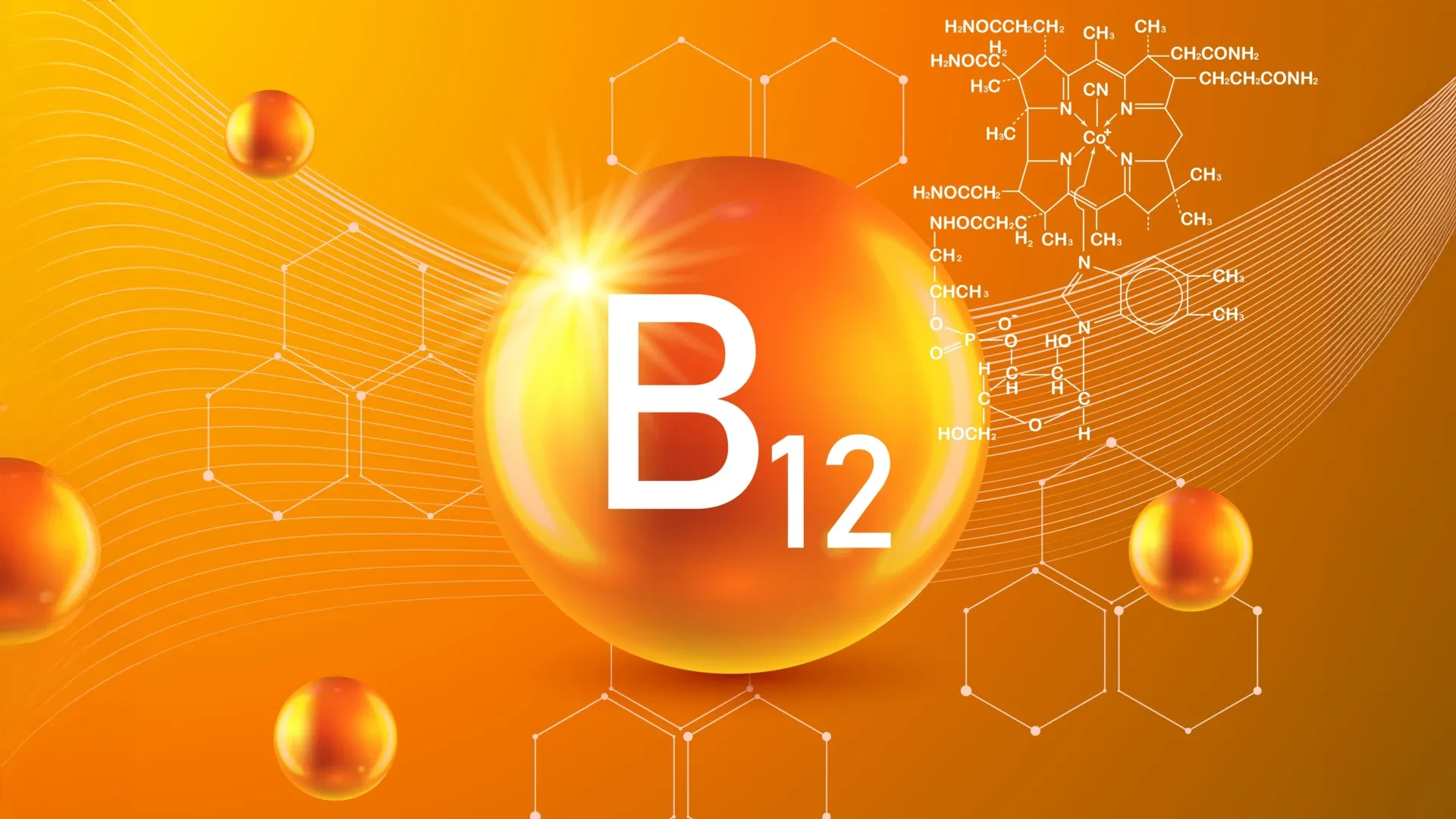
Vitamin B12 (cobalamin) is a water-soluble vitamin that the human body cannot synthesize independently; it must be acquired through diet. Biochemically, vitamin B12 acts as an essential cofactor for two major enzymes in human cells:
- Methionine synthase: Crucial for DNA methylation, amino acid metabolism, and the recycling of homocysteine.
- Methylmalonyl-CoA mutase: Essential for the breakdown of specific odd-chain fatty acids and branched-chain amino acids, ensuring proper energy production within mitochondria.
When these B12-dependent pathways are compromised—whether through dietary deficiency, inherited metabolic disorders, or, as newly discovered, secondary disruptions caused by faulty RNA splicing—toxic intermediates accumulate, and cellular energy production stalls. This metabolic starvation directly impairs high-energy processes such as cellular proliferation and tissue growth, explaining the hallmark growth delays and short stature seen in Verheij syndrome.
The Landscape of Rare Genetic Disorders
Rare genetic disorders, often referred to as "orphan diseases," affect a small percentage of the global population individually, but collectively impact millions of people worldwide. Developing treatments for these conditions presents immense economic and scientific hurdles:
- Small patient populations: Clinical trials are notoriously difficult to recruit for and execute.
- Complex pathophysiology: Because many rare diseases stem from single-gene mutations with pleiotropic effects, designing targeted pharmacological agents is extraordinarily complex.
- High attrition rates: Traditional drug development pipelines can take over a decade and cost billions of dollars, making treatments for rare conditions economically unviable for many pharmaceutical firms.
The discovery that an already approved, safe, and inexpensive nutrient like vitamin B12 can correct a complex genetic defect in an animal model provides an alternative blueprint for drug discovery: drug repositioning and metabolic rescue.
Official Statements and Expert Perspectives
The research team behind the study emphasizes both the fundamental biological insights gained and the prudent caution required before applying these findings in a clinical setting.
Jonathan Kölschbach, the first author of the study, highlighted the unexpected nature of the initial findings:
"We were surprised to find that a change in a fundamental process of RNA processing had such a targeted effect on vitamin B12-dependent metabolism. Even more exciting was that we were able to largely correct the consequences of this change in the worm model using vitamin B12."
Dr. Hormos Dafsari, a neuropediatrician at the University Hospital Cologne who assisted in gathering patient samples, underscored the vital bridge between basic laboratory science and clinical diagnostics, noting that human data corroborating the metabolic disruptions provide a strong rationale for further clinical investigation.
Adam Antebi, Director at the Max Planck Institute for Biology of Ageing and lead author of the study, reflected on the broader philosophical and scientific implications of the work:
"Our study is a good example of how basic research on model organisms can provide new insights into human diseases. A fundamental biological question can thus give rise to a new approach that could also become medically relevant in the long term."
Medical experts and independent geneticists not directly involved in the study have echoed these sentiments, pointing out that while the discovery is scientifically dazzling, patients and families must maintain measured expectations while formal clinical evaluations are designed and executed.
Future Outlook: Translating Worm Models to Human Therapies
As the scientific community digests the implications of this study, researchers are already looking toward the horizon to chart the next phases of investigation.
Bridging the Translational Gap
The immediate scientific challenge is clear: determining whether the metabolic rescue observed in C. elegans can be successfully replicated in human patients. While human blood samples have confirmed parallel metabolic disruptions in individuals with Verheij syndrome, human biology is vastly more complex than that of a roundworm.
Future research initiatives will likely involve:
- Preclinical mammalian trials: Testing vitamin B12 supplementation regimens in mammalian models (such as mice) engineered to carry equivalent splicing mutations.
- Pharmacokinetic and pharmacodynamic studies: Establishing optimal dosing strategies to ensure that targeted tissues receive sufficient bioavailable cobalamin to overcome the splicing-induced bottleneck.
- Controlled clinical trials: Designing carefully monitored, pilot clinical trials for consenting patients with Verheij syndrome under strict pediatric and metabolic oversight.
A Broader Paradigm for Rare Diseases
Perhaps the most profound long-term takeaway from this research is the conceptual shift it introduces. For decades, treatments for genetic disorders have focused almost exclusively on gene therapy, antisense oligonucleotides, or correcting the primary genetic lesion.
This study suggests an alternative or complementary approach: targeting the downstream metabolic consequences of genetic errors. If faulty RNA splicing frequently disrupts specific micronutrient pathways across a variety of rare conditions, researchers may be able to identify a catalog of metabolic workarounds using safe, readily available cofactors and vitamins.
By looking beyond the gene itself and examining the metabolic ecosystem it supports, science may unlock a new generation of targeted, cost-effective, and low-risk therapies for conditions that have long eluded modern medicine. The journey from a microscopic worm in a lifespan assay to potential human therapeutics is proof that fundamental scientific curiosity remains one of humanity’s most powerful tools for healing.
