In the sprawling, blood-soaked landscape of HBO’s House of the Dragon, power is currency, and life is paid as the toll. From the smoke-choked skies above King’s Landing to the clandestine chambers of the Red Keep, the Targaryen civil war—famously known as the Dance of the Dragons—engulfs every corner of Westeros in generational trauma, political maneuvering, and calculated cruelty. Yet, amid the symphony of clashing steel and draconic fury, one character chose a completely different path.
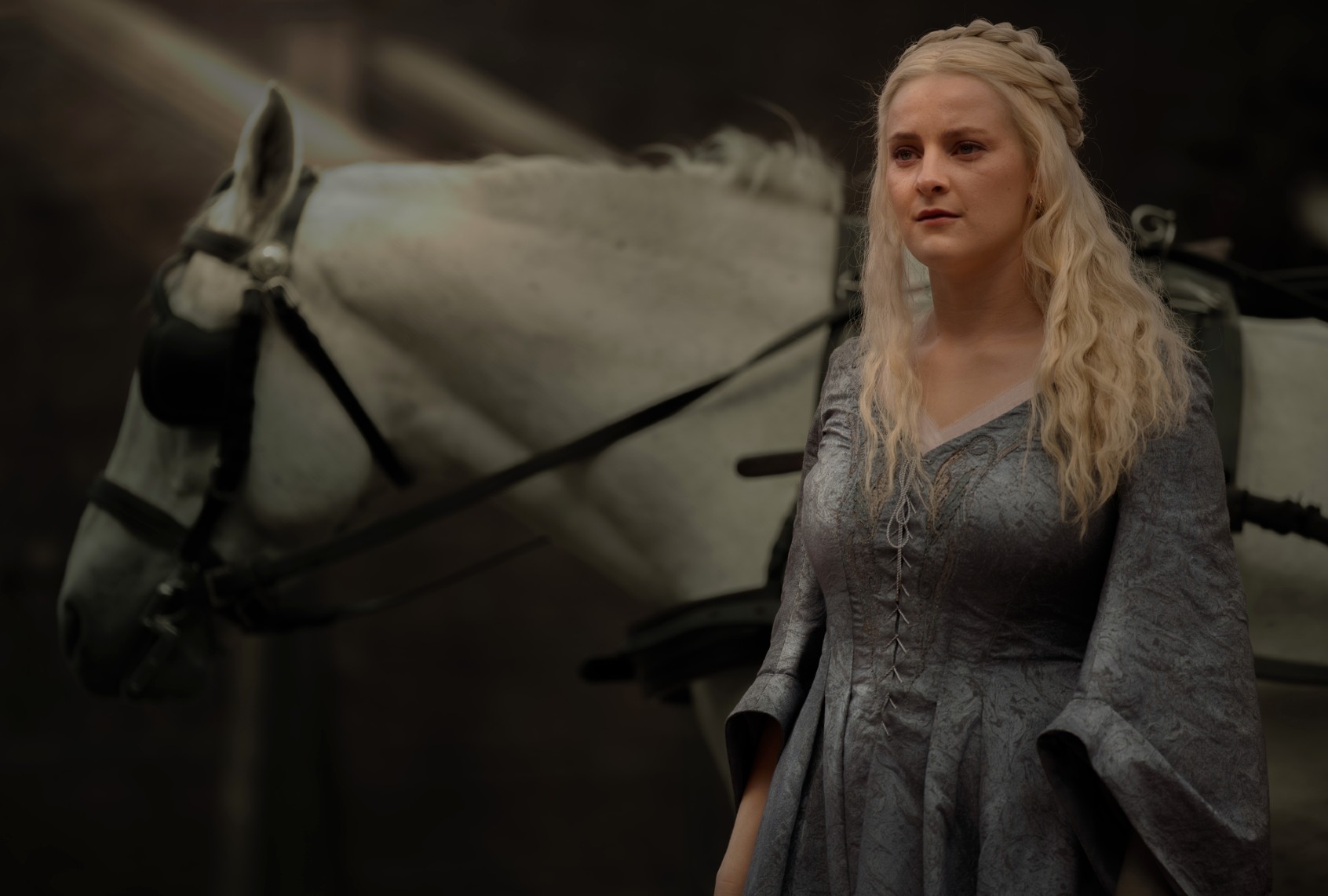
Helaena Targaryen, portrayed with haunting ethereal grace by Phia Saban, spent three seasons evolving from an eccentric, insect-obsessed princess into the series’ most quietly radical figure. While her family members tore the realm apart in their relentless pursuit of the Iron Throne, Helaena possessed a rare, unyielding trait: she refused to play the game.
Culminating in a devastating and fiercely debated exit during the Season 3 finale, Helaena’s departure was far more than a tragic casualty of war. It was a profound act of ideological rejection. By taking her undervalued premonitions, her innate empathy, and her pure spirit out of the equation, Helaena dealt a silent, devastating blow to her oppressors. She exposed the fundamental hollowness of the power struggle defining Westeros, leaving behind a legacy that brands her as the only player who truly won by refusing to take a turn.
Detailed Chronology: From Eccentric Dreamer to Reluctant Pawn
To understand the radical nature of Helaena’s final moments, one must trace her trajectory from the periphery of the Red Keep to the center of the tragedy that consumed her house.
The Early Years: Whispers of the Unseen
Introduced early in the series as the daughter of King Viserys I Targaryen (Paddy Considine) and Queen Alicent Hightower (Olivia Cooke), Helaena was immediately marked by her family as an oddity. While her brothers, Aegon (Tom Glynn-Carney) and Aemond (Ewan Mitchell), were groomed for dominance, martial prowess, and political maneuvering, Helaena sat quietly on the stone floors of the castle, studying centipedes, silk worms, and patterns of speech that sounded like gibberish to the uninitiated.
However, her murmurs were not mere eccentricities; they were prophetic visions. Long before the catastrophes struck, Helaena foresaw them with chilling accuracy. She muttered warnings about Aemond losing his eye, predicted Rhaenys Targaryen crashing through the floorboards during Aegon’s coronation atop her dragon Meleys, and foretold the devastating infiltration of blood-soaked assassins targeting her infant son.
Time and again, the adults around her dismissed these prophecies as the ramblings of a fragile mind. In a court obsessed with tactical advantages, military might, and dynastic legitimacy, a princess who spoke in riddles about bugs and nightmares held no perceived value—unless she could be married off to cement a political alliance.
The Crucible of War
As the Dance of the Dragons escalated, Helaena was systematically stripped of any agency she might have possessed. Forced into an unwanted marriage with her brother Aegon, she endured the unimaginable trauma of losing her child to the political violence orchestrated by her family’s enemies. Yet, rather than hardening into a vengeful participant in the cycle of blood and retribution—the path chosen by almost every other surviving Targaryen and Hightower—Helaena remained detached from the malice of the conflict.
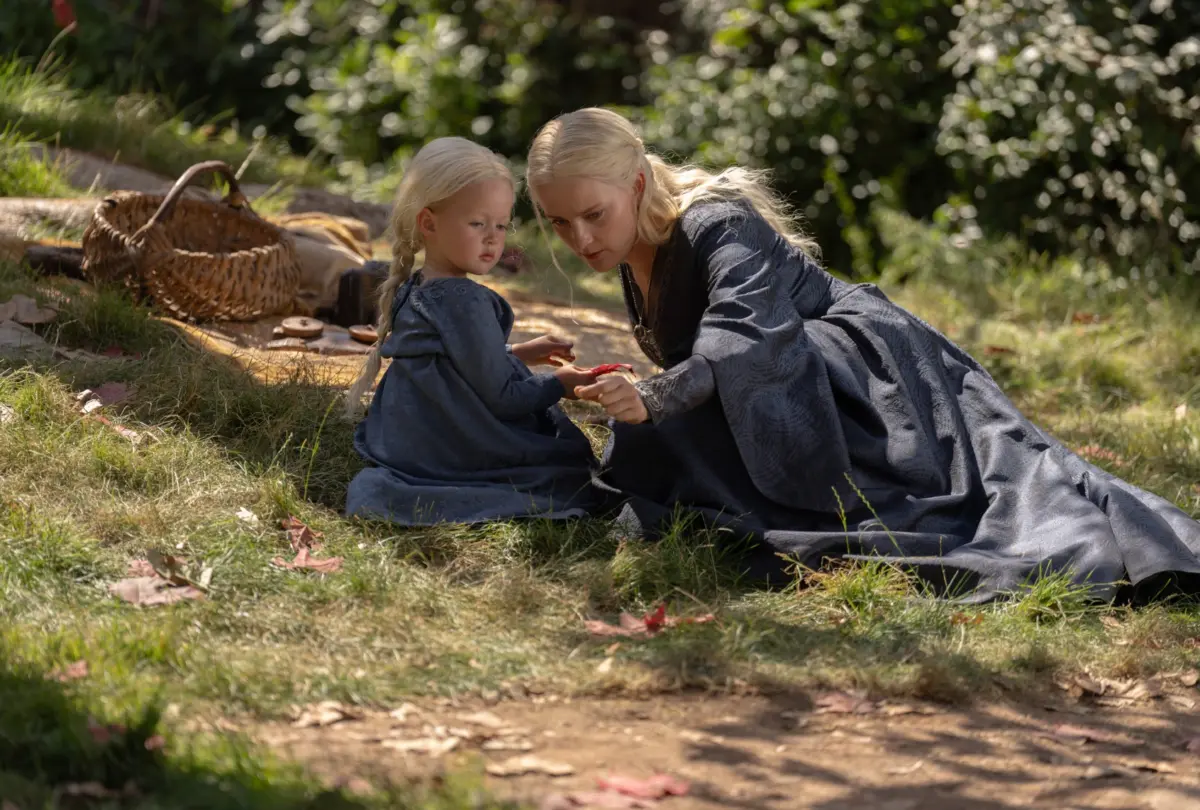
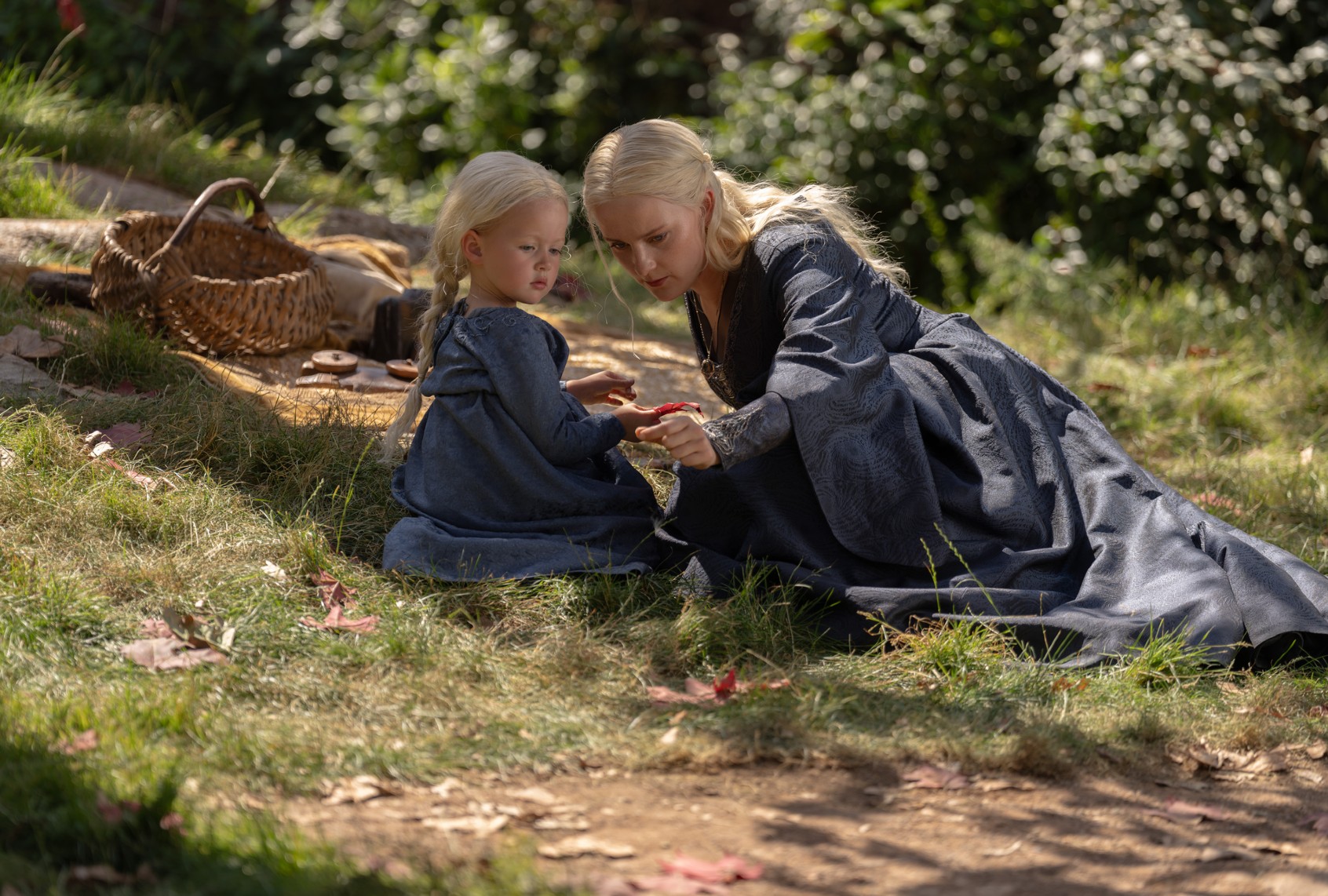
Her empathy extended beyond human politics. In her poignant conversations with her daughter Jaehaera, Helaena frequently used the natural world to mirror the toxic ecosystem of the Red Keep. She observed how caterpillars and nightshade interact:
"They eat the leaves of the nightshade, but that would be death for you or me… It’s a puzzle."
While her family members happily fed on the metaphorical poison of absolute power, believing it fortified their status, Helaena recognized it for what it truly was: a slow, agonizing death that ultimately corrupted everything it touched.
The Season 3 Finale: The Final Refusal
The breaking point arrived in the Season 3 finale, where Helaena found herself held prisoner under the watch of Rhaenyra Targaryen’s faction. Pregnant once more with what was presumed to be her brother-husband’s child, and suffering under the physical and psychological toll of her captivity, Helaena engaged in a chillingly calm confrontation with Rhaenyra.
Refusing to eat and acutely aware of the existential trap closing around her, Helaena delivered a parting monologue that completely unmasked the shallow delusions of her rival:
"There’s a beetle that emerges on the cusp of summer. It has lots of colors. Blue, gold, purple. It looks like a turtle… You can only find it in King’s Landing. It sustains itself on the waste of other creatures. It’s beautiful."
When Rhaenyra failed to grasp the thinly veiled critique, Helaena dropped all pretense, looking squarely at the woman vying for the ultimate seat of power and delivering a devastating verdict:
"All the things you care about are ugly. This place is ugly. You, yourself… ugly."
Asking the ultimate, paradigm-shifting question—"You think life is nothing more than not being dead?"—Helaena made her choice. Rather than existing as a pawn, a hostage, or a breeding instrument for a regime she despised, she stepped off the precipice, choosing death over complicity.
Supporting Context & Metrics: The Cost of the Iron Throne
The narrative weight of Helaena’s exit becomes even clearer when examining the broader thematic infrastructure of House of the Dragon. The series has consistently measured the cost of the Targaryen civil war not just in lost lives, but in moral decay.
The Anatomy of a Contaminated Realm
Statistically and narratively, the Dance of the Dragons represents a pyrrhic conflict where every faction loses far more than it gains.
The Human Toll: Over the course of the first three seasons, thousands of commoners, soldiers, and minor nobility have perished in skirmishes sparked entirely by dynastic pride.
Draconic Extinction: The war marks the beginning of the end for the Targaryen dynasty’s ultimate strategic advantage—their dragons. Majestic beasts like Meleys, Arrax, and countless others are slaughtered on the battlefield.
The Psychological Erosion: Characters like Rhaenyra, Alicent, and Aemond undergo severe moral transformations, sacrificing their humanity, their relationships, and their mental stability for a chair made of melted swords.
In contrast, Helaena stands completely outside these metrics. She accrued no body count, sought no titles, and commanded no armies. Her "power"—prophetic foresight—was arguably more potent than dragonfire, yet she wielded it without malice. By removing herself from the statistical ledger of the war, she rendered the calculations of her family meaningless.
Official Statements & Cast Insights
The profound impact of Helaena’s character arc and final exit has been a major focal point for both the creators and the cast of House of the Dragon.
During a post-finale press conference covered extensively by industry publications like Variety, actress Emma D’Arcy (who portrays Queen Rhaenyra Targaryen) offered deep insight into the thematic resonance of Helaena’s choice:
"She’s maybe the only character who has a proximity to power, but remains kind of uncontaminated," D’Arcy noted, discussing Helaena’s unique psychological standing in the Red Keep. Furthermore, D’Arcy highlighted the irreversible narrative turning point Helaena’s death creates: "I think her death condemns Rhaenyra to the path she’s chosen. There’s no way back after that."
Phia Saban’s portrayal also redefined how audiences viewed the "madness" traditionally associated with certain Targaryen bloodlines. Where past characters like King Aerys or even early depictions of prophecy-bearers were framed as tragic or unstable, Saban imbued Helaena with a serene, almost monastic clarity. Her madness was not a failing of the mind, but an expanded consciousness that simply could not reconcile itself with the petty, bloodthirsty ambitions of mortal lords and ladies.
Future Outlook: The Legacy of Helaena’s Defiance
As House of the Dragon looks toward its subsequent chapters, the ripple effects of Helaena’s suicide will undoubtedly shape the trajectory of the remaining characters.
For Rhaenyra, Helaena’s dying words serve as an inescapable haunting. The accusation that everything she fights for is fundamentally "ugly" strips away the romanticized notions of duty and divine right that Rhaenyra uses to justify her campaign. There is no glorious victory to be claimed when the most innocent soul in the kingdom chooses a fatal plunge over living in your world.
For Alicent Hightower, the imagery of fragile butterflies flittering around her in the wake of her daughter’s death serves as a devastating visual reminder of what was sacrificed at the altar of ambition. Alicent spent decades playing the game of thrones, trading her youth, her happiness, and her moral compass for proximity to power, only to watch her children destroyed by the very system she helped uphold.
Ultimately, Helaena Targaryen’s story offers a radical counter-narrative to the fantasy genre’s obsession with violent triumph. In a world where heroes and villains alike are measured by how many enemies they can burn or outmaneuver, Helaena proved that the ultimate act of rebellion is refusing to play at all. She left a fractured kingdom to choke on its own poison, securing her own peace while leaving the survivors to reckon with the ashes of their own making.