In an increasingly saturated digital economy, the mechanics of customer acquisition have undergone a profound paradigm shift. While visual media and short-form video continue to capture consumer attention, the written word remains the foundational architecture of digital transactions. However, the definition of exceptional writing has changed. The contemporary digital landscape no longer prioritizes flowery prose or literary eloquence; instead, it demands highly strategic, direct-response copywriting engineered to convert readers into paying customers.
According to data compiled from leading digital marketing agencies and educational platforms, including the seven-figure course and community Copyblogger, the most lucrative marketing channels remain text-dominant: blog posts, targeted social media campaigns, and curated email newsletters. For enterprises seeking sustainable growth, mastering this form of communication is not merely a creative pursuit but a financial imperative.
This investigative report dissects the core methodologies employed by high-earning copywriters and digital entrepreneurs to scale businesses past the seven-figure threshold. By shifting focus from subjective aesthetic appeal to objective Return on Investment (ROI), modern copywriters are redefining the boundaries of content marketing, leveraging advanced research techniques, competitor intelligence, and collaborative artificial intelligence to secure predictable customer acquisition.
Detailed Chronology: The Anatomy of High-Conversion Copywriting
The transition of copywriting from an intuitive art form to a systematic, data-driven science has occurred over the last two decades alongside the rise of search engine optimization (SEO) and social media algorithms. To understand how modern copywriters systematically engineer high-converting campaigns, we must analyze the sequential execution process that defines industry best practices today.
+-----------------------------------------------------------------+
|                    THE COPYWRITING PIPELINE                     |
+-----------------------------------------------------------------+
|  1. Qualitative Research (Customer Interviews, Reddit Mining)   |
+-----------------------------------------------------------------+
                                |
                                v
+-----------------------------------------------------------------+
|  2. Competitive Intelligence (Ad Library Analysis, Swipe Files)  |
+-----------------------------------------------------------------+
                                |
                                v
+-----------------------------------------------------------------+
|  3. Process-Driven Drafting (Structured Outlining & Formatting) |
+-----------------------------------------------------------------+
                                |
                                v
+-----------------------------------------------------------------+
|  4. Performance Analytics & Attribution (GA4, Conversion Audits)|
+-----------------------------------------------------------------+
Phase 1: Deep Customer Alignment and Pain-Point Mapping
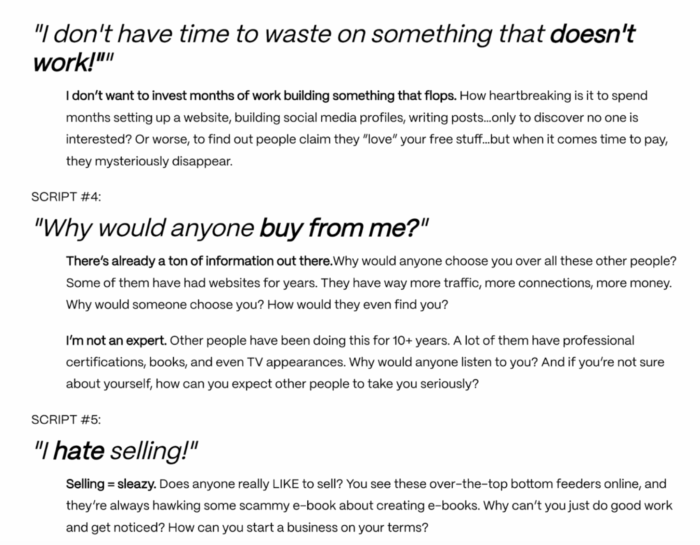
Before a single word is drafted, elite copywriters engage in rigorous qualitative research. The primary objective of a copywriter is to mirror the exact internal monologue of the target consumer. This requires a comprehensive understanding of the customer’s day-to-day realities, specific frustrations, and deeply held objections.
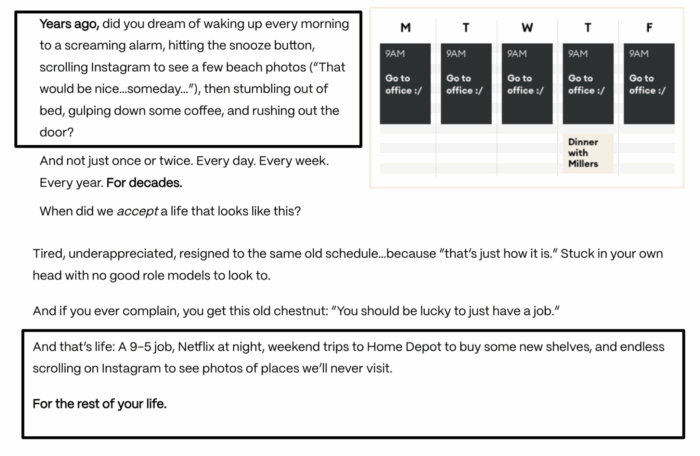
Industry experts point to the sales pages of highly successful digital programs, such as Ramit Sethi’s Earnable course, as prime examples of this methodology. Instead of relying on generic value propositions like "increase your income," the copy utilizes highly specific lifestyle markers: referencing the monotony of a 9-to-5 desk job, watching Netflix at night, weekend trips to home improvement stores, and endless scrolling on social media. By reflecting these precise behaviors, the copy establishes immediate psychological rapport, proving to the prospect that the product was engineered specifically for their unique situation.
To achieve this level of alignment, modern copywriters employ several research channels:
Sales Representative Debriefs: When working with corporate clients, copywriters interview frontline sales staff to identify recurring objections and customer hesitation points.
AI-Assisted Call Transcript Analysis: Copywriters upload recorded sales calls and customer service transcripts into advanced language models to extract exact phrases, emotional pain points, and specific vocabulary used by the target demographic.
Digital Ethnography: Researchers mine public forums such as Reddit and specialized Facebook groups to observe unvarnished consumer discussions regarding industry pain points, competitor shortcomings, and desired solutions.
Phase 2: Deconstructing Competitor Intelligence
The second phase of the modern copywriting workflow involves systematic competitive analysis. Rather than attempting to innovate in a vacuum, high-performing copywriters analyze the marketing assets of established competitors who have already invested capital in testing and optimization.
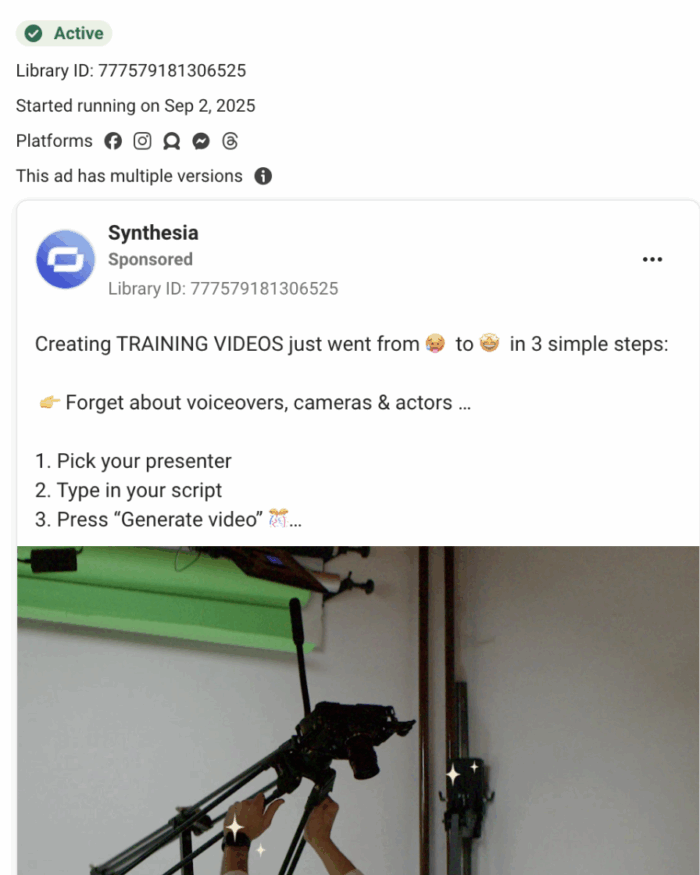
The primary tool for this research is the public ad libraries maintained by major social media platforms, including Meta (Facebook) and LinkedIn. By filtering for ads that have been running continuously for extended periods (e.g., thirty days or more), copywriters can identify "winning" angles. In paid acquisition, prolonged ad run-time is a strong proxy for profitability and positive ROI.
For instance, an analysis of business-to-business (B2B) software-as-a-service (SaaS) ads reveals that top-performing campaigns rarely focus on technical specifications. Instead, they target systemic operational friction. Video creation platform Synthesia focuses its copy on the logistical pain of coordinating physical video shoots for training modules, while customer relationship management (CRM) provider Close highlights the specific revenue leakage that occurs when messy sales data leads to forgotten deals.
Phase 3: The Structured Writing and Editing Pipeline
To maintain consistency and bypass the cognitive bottleneck of writer’s block, professional copywriters rely on strict, repeatable processes. A standard operating procedure (SOP) for high-yield content production typically follows a three-tiered structure:
The Structural Outline: The writer establishes the core thesis, identifies the target audience, defines the primary pain points, and outlines the call to action (CTA).
The Velocity Draft: The writer completes the draft rapidly without editing, prioritizing flow, psychological sequence, and arguments over grammatical perfection.
The Conversion Optimization Edit: The draft is refined for maximum readability. This involves shortening paragraphs, inserting formatting elements (bullet points, bold text, and subheadings) to accommodate scanning readers, and strategically embedding high-contrast CTAs.
Supporting Context & Metrics: Vanity Metrics vs. True Conversion
A critical point of divergence between novice content creators and professional copywriters lies in the metrics used to evaluate performance. Historically, marketing departments have over-indexed on "vanity metrics"—such as page views, social media impressions, likes, and shares. However, modern direct-response copywriting treats these metrics as secondary indicators.
Metric Type
Examples
Strategic Value
Business Impact
Vanity Metrics
Page Views, Likes, Shares, Impressions
Low / Secondary
Corresponds to brand exposure, but does not guarantee capital inflow.
Engagement Metrics
Comments, Time-on-Page, Click-Through Rate (CTR)
Moderate
Indicates content relevance and audience alignment.
Attribution Metrics
Demo Signups, Direct Purchases, Lead Capture Rate, Customer Acquisition Cost (CAC)
High / Critical
Directly correlates to organizational revenue and pipeline growth.
The hazard of prioritizing traffic over intent is illustrated by a classic case study in the digital commerce space: a niche drop-shipping business specializing in high-end cuckoo clocks. An initial content strategy focused on publishing high-traffic articles explaining "how to repair cuckoo clocks" successfully drove thousands of monthly visitors to the website.
However, analytical tracking revealed that this traffic failed to generate sales. The visitors were hobbyists seeking free repair advice, not buyers looking to purchase premium clocks. This critical realization highlights the necessity of aligning content with purchase intent rather than raw search volume.
To prevent these costly misalignments, advanced marketing teams configure conversion tracking frameworks within platforms like Google Analytics 4 (GA4). By establishing clear attribution pathways, businesses can trace specific client acquisitions and closed deals back to individual blog posts, emails, or social media updates.
Official Statements and Industry Insights
The philosophy underpinning modern copywriting is championed by leading practitioners who emphasize the commercial reality of the craft over its artistic elements.
Charles Miller, a prominent personal branding specialist and partner in various high-ticket digital ventures, emphasizes the importance of direct feedback loops in developing copywriting talent:
"The process of building a successful career in copywriting is often incredibly isolating. Without direct, expert feedback on your work, you are essentially guessing in the dark. Access to a community of experienced marketers who can objectively critique your copy is the single fastest catalyst for moving from a novice writer to a high-earning strategist."
Furthermore, esteemed copywriter Neville Medhora, creator of SwipeFile.com, has long advocated for the preservation and study of historical marketing assets. Medhora’s work highlights that while the mediums of delivery change—shifting from print newspapers to email newsletters and social media feeds—the fundamental psychological triggers that drive human decision-making remain entirely unchanged.
Famed investor and philosopher Naval Ravikant also captured the operational mindset required for long-term marketing success, advising professionals to "be impatient with action and patient with results." This dual approach is highly applicable to the copywriting discipline:
                  +-----------------------------------+
                  |      THE NAVAL RAVIKANT MODEL     |
                  +-----------------------------------+
                                    |
                  +---------------------------------+
                  |                                 |
                  v                                 v
        [ IMPATIENT WITH ACTION ]         [ PATIENT WITH RESULTS ]
        - Daily writing discipline        - Expect flat metrics initially
        - Rapid A/B testing of hooks      - Allow SEO/funnels to mature
        - Continuous market research      - Focus on compounding authority
Future Outlook: Artificial Intelligence and the Premium on Community
As the marketing landscape looks toward the next decade, two macro-trends are poised to redefine the copywriting profession: the democratization of generative Artificial Intelligence (AI) and the rise of highly specialized micro-communities.
The Strategic Integration of Generative AI
The initial panic that generative AI platforms like ChatGPT would entirely replace human copywriters has transitioned into a more nuanced reality. While basic, low-tier writing tasks are increasingly automated, high-level strategic copywriting has become more valuable than ever.
Elite copywriters view AI not as a threat, but as an operational force multiplier. The technology is highly effective when deployed for specific, non-creative use cases:
Rapid Idea Generation and Semantic Variation: Inputting draft copy and asking for multiple alternative phrasings to optimize headline testing.
Complex Synthesis: Prompting AI to identify patterns within large sets of qualitative data, such as analyzing hundreds of forum posts to categorize customer pain points.
Contextual Sourcing: Leveraging AI search tools to locate real-world case studies, industry quotes, and relevant statistics to bolster the authority of a piece of copy.
Ultimately, the copywriters who thrive in the future will not be those who compete with AI, but those who master the prompt engineering and analytical oversight required to direct it.
The Value of Micro-Communities and Feedback Loops
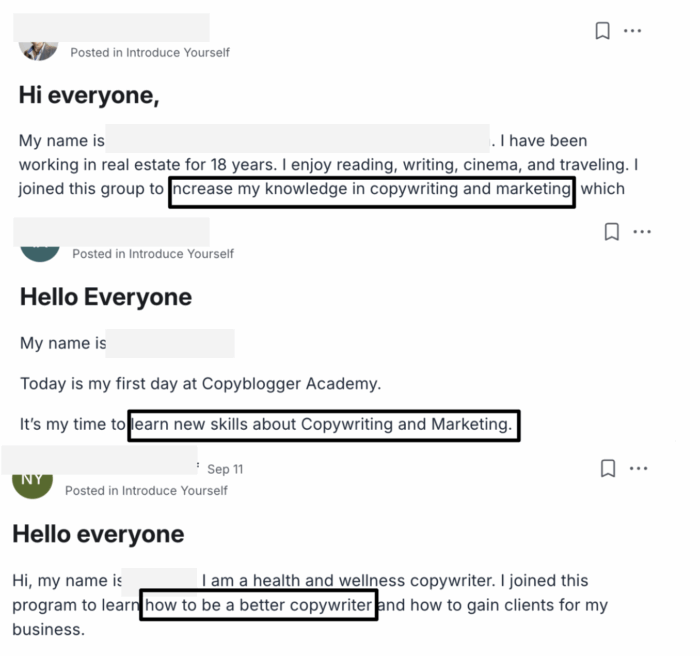
Because search algorithms and paid advertising platforms are subject to sudden, volatile updates, static educational courses are rapidly losing utility. In their place, dynamic micro-communities—such as the Copyblogger Academy—are becoming the preferred vehicle for professional development.
These ecosystems offer a combination of structured curriculum, peer accountability, and direct access to proven seven-figure marketers. By participating in active feedback loops, aspiring writers can refine their portfolios, exchange client referrals, and stay ahead of real-time shifts in digital acquisition. In an automated world, the human element of collaborative editing, psychological empathy, and strategic market positioning remains the ultimate competitive advantage for modern copywriters.