

Executive Overview
The modern athletic equipment landscape is dictated by a simple, time-tested trickle-down theory: brands design elite-tier products for professional athletes, and everyday consumers buy those exact items to emulate their heroes. In tennis, golf, and basketball, the high-performance benchmark is set at the top. Yet, for years, the meteoric rise of pickleball—North America’s fastest-growing sport—operated in total reverse. Beginners and top-tier professionals alike stepped onto the court wielding identical equipment, paddles fundamentally engineered with the novice player in mind.
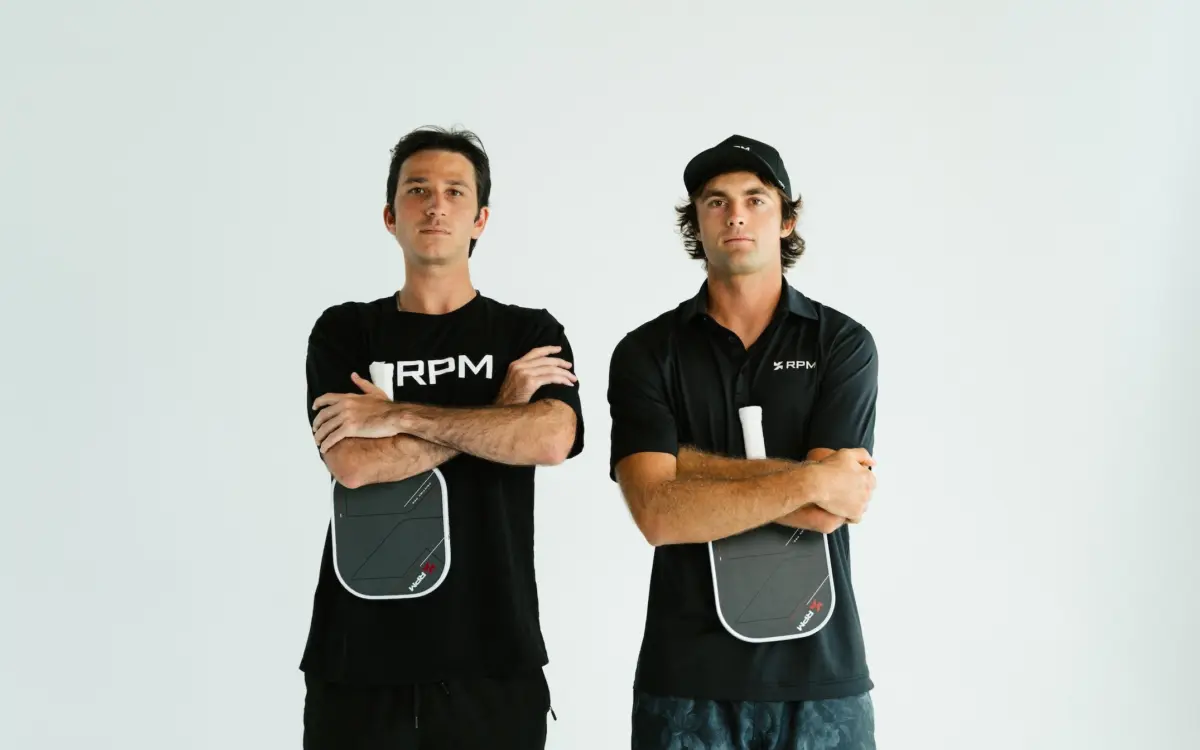
This paradox became the catalyst for RPM Pickleball, a bootstrapped startup founded by four-time Professional Pickleball Association (PPA) champion James Ignatowich and his childhood friend, data scientist Marwan Abaza. Launched in September without a single dollar of venture capital or outside equity, the brand has transformed a professional’s court-side gripes into an explosive commercial juggernaut.
On pace to clear $31 million in annual sales—with a staggering $4.5 million generated in a single recent month—RPM Pickleball has upended the industry. Having shipped upwards of 35,000 specialized paddles across 100 countries, the company has proven that elite players were waiting for equipment designed specifically for their caliber of play. This in-depth report explores the genesis of RPM Pickleball, the mechanics of its meteoric rise, the challenges of scaling a grassroots enterprise in a supply-chain-constrained market, and the future innovations waiting on the horizon.
Detailed Chronology: From South Florida Courts to Global Enterprise
The Childhood Bond (Early Origins)
The story of RPM Pickleball begins not in a corporate boardroom, but on the junior tennis circuit in South Florida. James Ignatowich and Marwan Abaza were roughly 12 years old when they first crossed paths at a local tournament. Navigating the grueling, highly competitive world of youth tennis forged a lasting bond between the two boys.
Even at a young age, the pair shared an entrepreneurial ambition. They frequently fantasized about launching a business together once they grew up. However, life temporarily pulled them in divergent directions. Abaza pursued a rigorous path in athletics and academia, eventually playing Division 1 collegiate tennis before pivoting his analytical mind toward computational data science. Ignatowich continued his pursuit of elite-level racket sports, ultimately transitioning to pickleball, where he ascended to a world No. 2 ranking and established himself as a dominant, four-time PPA champion.
The Venting Sessions That Sparked an Industry
Despite his immense success on the professional pickleball tour, Ignatowich found himself plagued by a persistent frustration: he loathed his equipment. Even as he continued to hoist trophies and win high-stakes matches, his dissatisfaction with available paddles weighed heavily on him.
He repeatedly dialed Abaza to vent about the glaring deficiencies in market offerings. Paddles lacked the structural integrity, precise weighting, and responsive aerodynamics required for top-tier professional play. These conversations quickly evolved from casual venting to serious strategizing. Ignatowich realized that if a top-two player in the world was struggling to find a paddle that met his performance thresholds, a massive market gap existed.
"We decided to make a paddle that was made for pros," Ignatowich notes, framing the pivotal mindset shift that birthed their enterprise.
Launching into the Void
In September—just a year prior to the brand’s current financial milestone—Ignatowich and Abaza made the leap. Capitalizing on their shared childhood vision, they founded RPM Pickleball.
Crucially, the founders elected to bypass traditional funding routes. Rejecting venture capitalists, angel investors, and institutional loans, they launched the company entirely bootstrapped. Relying on their own savings and sheer sweat equity, they set out to design, manufacture, and market a product that defied industry norms.
What followed was an unprecedented trajectory. Within its first twelve months of operation, RPM Pickleball captured the attention of the global athletic community. The brand scaled rapidly, culminating in a jaw-dropping $4.5 million sales month and positioning the company for a $31 million annual run rate. To date, the startup has distributed over 35,000 high-end paddles to players spanning 100 countries worldwide.
Supporting Context & Metrics: Decoding the Pickleball Boom
Identifying the Industry Blind Spot
To understand RPM Pickleball’s rapid ascension, one must examine the structural flaws of the broader pickleball equipment market. During the sport’s initial exponential boom, manufacturers treated paddles as one-size-fits-all commodities. Because the sport drew millions of recreational players overnight, companies optimized production for ease of use, forgiveness, and broad-market appeal.
Consequently, professionals and beginners were playing with the exact same technology. This stands in stark contrast to legacy sports like tennis. When brands like Wilson, Head, or Babolat engineer a new tennis frame, they collaborate closely with top-10 ATP and WTA professionals to maximize power, spin control, and torsional stability. The resulting racquets are uncompromisingly tailored for elite performance. Everyday players willingly purchase these professional-grade frames precisely because they crave the authentic performance edge utilized by their idols.
RPM Pickleball recognized that pickleball lacked this aspirational, performance-first tier. By designing a paddle built from the ground up for the biomechanics and shot-making velocity of professional players, Ignatowich and Abaza created a vacuum in the high-end market—and filled it instantaneously.
Financial and Global Reach Metrics
The numbers behind RPM Pickleball underscore a masterclass in organic, product-led growth:
- Annual Sales Pace: Projected at $31 million.
- Peak Monthly Revenue: Reached $4.5 million in a single recent month.
- Global Footprint: Over 35,000 paddles sold across 100 countries.
- Funding Status: 100% bootstrapped with zero outside institutional capital.
These metrics highlight not only strong consumer demand but also exceptional profit margins and brand loyalty, achieved without the backing of multi-national conglomerate marketing budgets.
Official Statements and Founder Insights: The Anatomy of a "Paddle Connoisseur"
Inside the R&D Lab: The China Factory Floor
Unlike many modern e-commerce brands that outsource every phase of product development to third-party brokers, Ignatowich and Abaza maintain a fiercely hands-on approach to manufacturing. The co-founders spend approximately half of their calendar year embedded directly on factory floors in China.
There, the duo meticulously fine-tunes the physical properties of their inventory. They oversee adjustments to foam densities, thermal heating durations, surface grit applications, and core composition matrices. This relentless commitment to microscopic detail has allowed them to develop multiple patent-pending technologies along the way.
Marwan Abaza aptly describes their operational philosophy by labeling himself and his co-founder as "paddle connoisseurs." Because Ignatowich competes at the absolute highest level of the sport, he brings an uncompromising, empirical eye to testing. The feedback they provide to overseas manufacturers is vastly more sophisticated, granular, and demanding than what legacy corporations—which often rely on isolated focus groups—typically deliver.
The Growing Pains of Hyper-Growth
Such unprecedented demand has not come without operational friction. The founders’ biggest headache during their inaugural year in business was simply keeping pace with orders.
Because the paddles required complex, precision-engineered manufacturing processes that could not be rushed, RPM Pickleball experienced severe inventory bottlenecks. The brand was backordered for roughly half of its entire first year in business.
"We were always dealing with angry customers that were waiting," Ignatowich admits candidly, highlighting the grueling reality of trying to satisfy a global waiting list with a bootstrapped supply chain. Resolving these fulfillment issues without compromising product quality became an essential crucible for the young company.
Future Outlook: Beyond the Paddle
Having successfully disrupted the pickleball paddle market, Ignatowich and Abaza are already casting their gaze toward the horizon, looking for the next major inefficiency in the racquet sports ecosystem.
The Untapped Potential of Training Tools
When asked where the next massive entrepreneurial opportunity lies within the sport, Ignatowich points decisively to training tools.
He draws a direct parallel to the sport of golf, which boasts a multi-million-dollar sub-industry dedicated to training aids, swing analyzers, putting mats, and resistance devices designed to help players improve away from the course. By contrast, pickleball currently possesses very little in the way of sophisticated, high-end training technology.
As the sport matures and recreational players increasingly seek structured coaching, drill routines, and skill-development mechanisms, the market for training accessories is primed for an explosion. Ignatowich has already begun exploring new entrepreneurial ventures aimed at filling this specific void.
Sustaining Momentum
As RPM Pickleball transitions from an explosive startup into an established industry pillar, the challenge ahead lies in scaling operations while maintaining the uncompromising quality control that fueled its initial rise. With a solid foundation built on elite-tier engineering, zero debt, and a globally recognized brand name, Ignatowich and Abaza have proven that listening to your own frustrations on the court can pave the way to a multi-million-dollar empire.