

Executive Overview
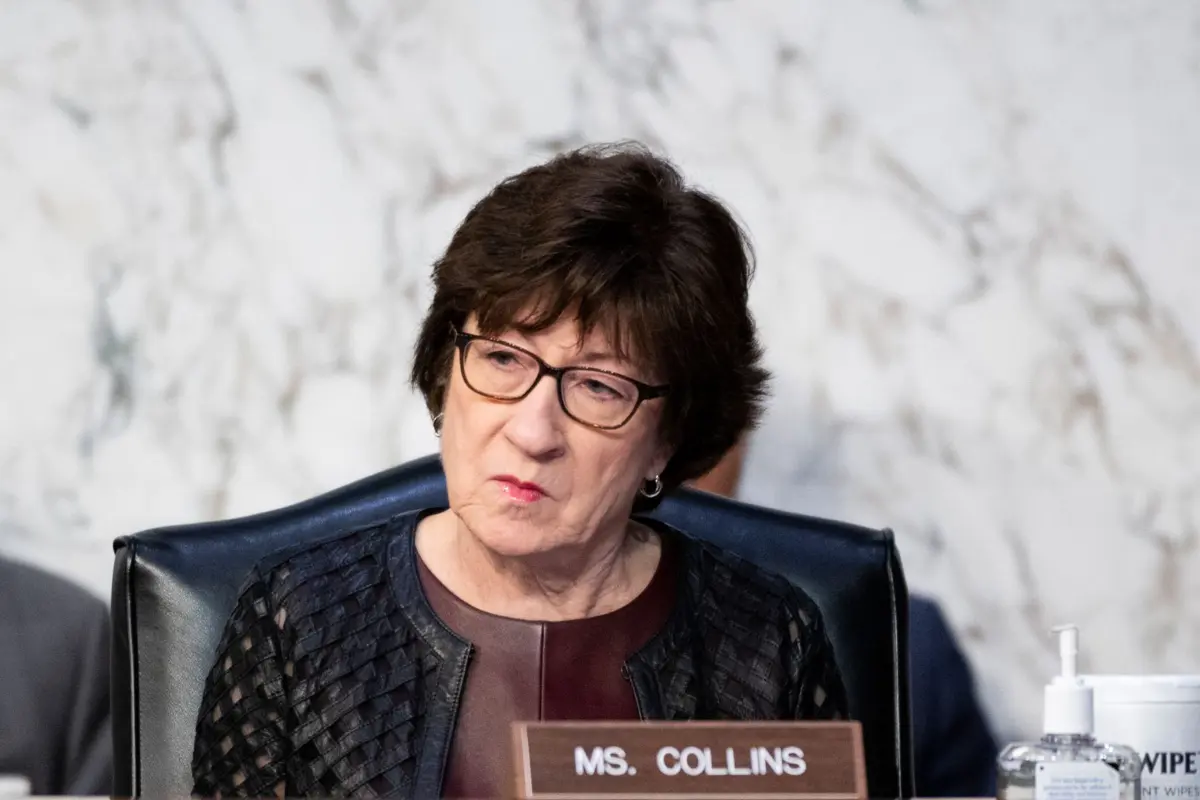
In the picturesque yet fiercely independent state of Maine, a quiet political earthquake is reshaping the electoral landscape. Longtime Republican U.S. Senator Susan Collins—once considered an untouchable fixture of Maine politics, celebrated for cultivating a brand of pragmatic, independent moderation—finds herself facing the most perilous reelection campaign of her decades-long career. As she vies to defend her seat, Collins faces a surging Democratic challenger, Troy Jackson, in a race that polls show is dead even.
At the heart of Collins’ political vulnerability is not just a shifting partisan map, but a profound breach of trust with a demographic that has historically anchored her campaigns: older women voters. For years, women well past their reproductive years served as the bedrock of Collins’ winning coalitions, drawn to her self-styled reputation as a moderate, pro-choice Republican. Today, however, many of those same women are organizing, volunteering, and actively working to unseat her.
Interviews with Maine women over 60 reveal a unifying thread of disillusionment, tracing directly back to October 2018. That was the month Collins cast her decisive, much-scrutinized vote to confirm Brett Kavanaugh to the Supreme Court—a pivotal domino that ultimately led to the overturning of Roe v. Wade in 2022. While these voters are no longer of childbearing age themselves, their opposition is deeply personal, driven by a fierce protection of their daughters, granddaughters, and future generations. Coupled with broader dissatisfaction regarding her alignment with national Republican agendas, Collins now confronts a formidable grassroots backlash that threatens to dismantle her carefully guarded political legacy.
Detailed Chronology: From 1966 Back-Alleys to the 2026 Senate Battleground
To understand the visceral anger driving older Maine women to the polls today, one must look backward across decades of reproductive rights history. The lived experiences of these voters starkly contrast with the political calculus practiced in Washington, D.C.
The Pre-Roe Era: A Legacy of Fear
Lisa Kushner, now an 80-year-old resident of Maine, carries memories that feel chillingly relevant in the post-Roe political climate. In 1966, long before the landmark 1973 Supreme Court decision legalized abortion nationwide, Kushner was a 19-year-old college student in New York, where abortion was strictly illegal. Realizing she was pregnant, she knew her academic future—and her path as the first in her family to attend college—would evaporate if she carried the pregnancy to term.
Describing it as a "tense, miserable time," Kushner recalled cold-calling contacts until someone discreetly referred her to a medical provider operating out of what looked like a dentist’s office in a bleak, empty office building in Newark, New Jersey. She entered through a side door in a dark alley. Decades later, her father—a World War II Army mechanic—admitted he had never been more terrified in his life than the day he drove his daughter to that clandestine appointment. When Roe v. Wade was decided in 1973, Kushner believed the dark era of dangerous, back-alley abortions was permanently relegated to the past. "We thought this fight was over," she reflects. "And we were wrong."
The Turning Point: October 2018
Fast forward to the fall of 2018. Susan Collins, holding a crucial swing vote in a deeply divided Senate, deliberated over the nomination of Brett Kavanaugh to the nation’s highest court. Amid intense national protests and allegations of sexual misconduct, abortion rights advocates pleaded with senators to reject a nominee widely expected to dismantle federal abortion protections.
Collins ultimately voted to confirm Kavanaugh, assuring her constituents that she believed Roe v. Wade was settled law ("super-precedent") and that Kavanaugh had assured her he respected judicial precedent.
For many moderate voters in Maine, that vote was the Rubicon. Sarah Mahoney, a 65-year-old resident of Arrowsic, Maine, who voted for Collins in 2008 alongside Barack Obama because she valued the senator’s moderate, pro-choice profile, expressed deep regret. "I am mortified by that vote," Mahoney said. When the Supreme Court officially struck down Roe in the summer of 2022, Mahoney immediately thought back to the 1980s when she was a young woman living in Dallas, where she had access to a safe, legal abortion. "My whole reproductive life was lived safely within the confines of Roe v. Wade, and my kids don’t have that."

The 2026 Reckoning
The current election cycle marks Collins’ first reelection battle since the fall of Roe. Strategists from both sides of the aisle acknowledge that the landscape has fundamentally shifted. The Kavanaugh vote is no longer a theoretical talking point; it is a lived, catastrophic reality for reproductive rights advocates. Planned Parenthood’s advocacy arm has poured more than $600,000 into advertising campaigns explicitly linking Collins to the eradication of federal abortion rights, while national groups like Reproductive Freedom for All have thrown their weight behind Democratic challenger Troy Jackson.
Supporting Context & Metrics: Demographics, Coalitions, and the Electorate
Maine’s unique demographic profile amplifies the stakes of this voter realignment. Understanding why older women hold such immense electoral power requires examining the state’s population statistics and organizational networks.
Maine’s Aging Electorate
According to U.S. Census data, Maine possesses the oldest median age in the United States, resting at 44.8 years. Women make up the clear majority of voters in the state. Historically, candidates running statewide in Maine—regardless of party—must court the pragmatic, independent-minded older demographic that populates the state’s coastal towns and rural communities.
While groups like the AARP point out that traditional issues such as financial security, caregiving costs, and healthcare affordability remain foundational concerns for older members, political scientists note that older voters are uniquely motivated by the generational consequences of policy decisions.
"If you’re going to mobilize older women voters, then you will mobilize a population or group that is more likely to support abortion access," explains Ashley Kirzinger, a Maine-based national pollster with KFF.
Intergenerational Solidarity
Interviews with Maine women over 60 reveal that their mobilization is driven by a profound sense of intergenerational anxiety.
- Elayne Richard (72, Fairfield): A volunteer with local reproductive rights organizations, including Grandmothers for Reproductive Rights ("GRR"), Richard worked at an abortion clinic in Louisiana in the late 1970s and experienced a deeply wanted pregnancy shortly thereafter. That transformative experience solidified her belief in bodily autonomy. Now, she worries for her descendants. "It’s not just us. We’re talking about our children," Richard says. "And some of our children are not going to have to worry about abortion care, but our grandchildren and our great-grandchildren."
- Elizabeth Leonard (Retired historian and former Colby College professor, Waterville): "It’s heartbreaking as an older person to think, this is what the last chapter of my life is going to be—watching the future my children have to live through become darker and darker instead of brighter and brighter," Leonard shares. While she notes she is "way past menopause," her investment in the rights of younger generations has fueled her active support for Jackson’s campaign.
Official Statements and Campaign Dynamics
The political fallout from the Kavanaugh confirmation has fractured alliances that once seemed ironclad. Both campaigns are acutely aware that the narrative surrounding trust, independence, and reproductive freedom will dictate the outcome of the race.
The Challenger’s Strategy: Holding the Line on Accountability
Troy Jackson’s campaign has made Collins’ judicial record a cornerstone of its messaging, arguing that the senator’s repeated justifications for her vote ring hollow in a post-Roe America.
"Susan Collins had convinced Mainers she was pro-choice. The Kavanaugh vote was very problematic for her, and her numbers have never been the same since," noted veteran Democratic pollster Celinda Lake.

Echoing this sentiment, Jackson’s campaign spokesperson, Maggie Amjad, pulled no punches: "Even now, Collins proudly says she doesn’t regret her vote, and while she will keep making excuses for her actions, Troy will keep fighting to repair the damage she caused and restore abortion rights nationwide."
The Incumbent’s Defense: The Myth of the Independent Voice
For decades, Collins has survived tough political environments by distancing herself from national party orthodoxy, projecting an image of a bipartisan workhorse who prioritizes the unique needs of Mainers over party loyalty. Her supporters point to her historic votes during the Trump presidency—including crossing party lines during impeachment proceedings—as proof of her independent streak.
However, critics like Elizabeth Leonard argue that Collins’ legislative record has increasingly mirrored national Republican priorities, describing her alignment on key judicial and economic votes as moving "hand in glove" with the conservative establishment.
As outside spending mounts and grassroots organizations mobilize door-to-door, Collins’ campaign is forced to defend a record that once served as her greatest asset: her role in shaping the modern federal judiciary.
Future Outlook: Implications for the Senate and National Politics
The Senate race in Maine serves as a vital bellwether for the broader American political landscape. It tests whether a veteran incumbent can successfully outrun a defining, highly polarizing national vote by relying on long-standing personal relationships and a brand of local moderation that predates the modern era of intense partisan sorting.
If Collins ultimately falls short in November, the autopsy of her defeat will point squarely to the shifting allegiances of older women voters. These are voters who once viewed her as a vital bulwark for moderate values, but who now view her actions as a betrayal of fundamental rights.
More broadly, the dynamic in Maine underscores a persistent reality for the post-Dobbs political era: reproductive freedom is not merely a youth issue or a single-demographic concern. For grandmothers, retirees, and pioneers of the second-wave feminist movement who fought for bodily autonomy decades ago, the defense of abortion access is an intergenerational obligation. As Lisa Kushner and her peers knock on doors and rally their communities across Maine, they carry a clear message to Washington: actions have consequences, and trust once broken cannot easily be restored.
