

Executive Overview
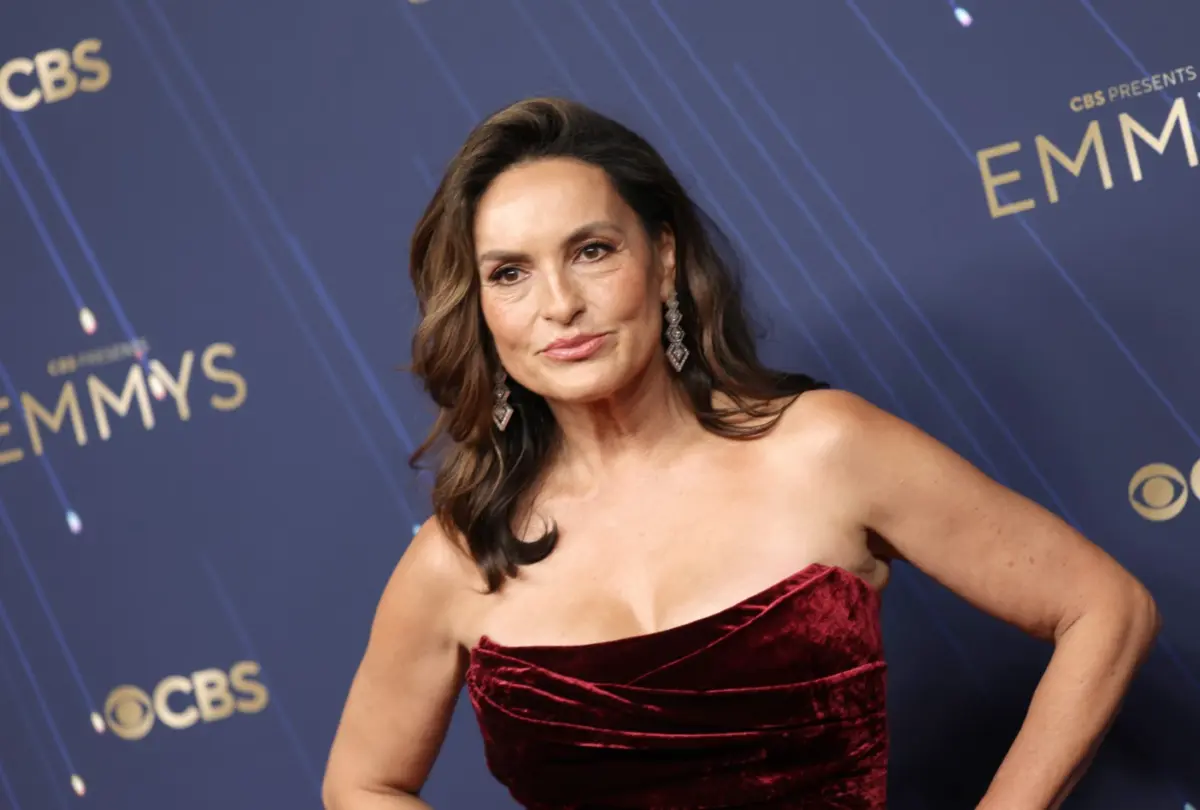
When television executives announced that Mariska Hargitay would host the upcoming Primetime Emmy Awards, the news was met not with the viral storm or social media uproar that typically accompanies such high-profile gigs, but rather with a quiet, collective shrug. In an entertainment landscape where the mere announcement of an award show host routinely triggers polarizing digital debates, the selection of the Law & Order: Special Victims Unit icon represents a calculated pivot toward absolute safety.
Hargitay, who has spent nearly three decades playing the indomitable Captain Olivia Benson apprehending "especially heinous offenders," is perhaps the least objectionable choice modern television could offer. Crucially, she possesses one defining asset that distinguishes her from a long line of recent award show hosts: she is not a stand-up comedian.
In selecting Hargitay, network producers are signaling a definitive retreat from the high-wire act of booking professional comics—a strategy that has repeatedly blown up in the faces of major networks over the past decade. From Kevin Hart’s historic Oscar withdrawal to Jo Koy’s disastrously reviewed Golden Globes stint, and Nate Bargatze’s sudden alienation of liberal fans following a political outing, the traditional marriage between stand-up comedy and high-stakes television emceeing has grown terminally fractured.
Hargitay’s appointment is not merely a casting choice; it is a cultural diagnostic. It underscores a broader, risk-averse era of "comfort viewing" across the entire entertainment ecosystem. At a time when audiences increasingly reject being challenged—and studios are paralyzed by the threat of real-time social media backlash—the television industry has opted for universal goodwill over edge. Hargitay engenders a rare, bipartisan consensus: everyone agrees that fighting crime is noble and rooting for the New York Knicks is harmless. But her ascension to the Emmys stage also marks a sobering milestone for television culture: an admission that the art of the award-show roast has been effectively legislated out of existence.
Detailed Chronology: The Slow Fracture of the Comedian-Host Tradition
To understand why television gatekeepers have bypassed traditional stand-ups in favor of a dramatic television veteran, one must examine the progressive erosion of trust between comedians and modern audiences. The tension between comic hosts and high-society crowds is certainly not new—dating back to Chevy Chase’s infamous 1988 Oscar opener ("Good evening, Hollywood phonies") and Joan Rivers’ razor-sharp, complaint-generating jabs at the 1983 Emmys. However, the dawn of social media supercharged this friction, transforming isolated broadcast gaffes into instant, borderless public executions.
The 2010s: The Rise of Unapologetic Edge and Its Casualties
For much of the 2010s, producers leaned into edgy, take-no-prisoners comedians to jolt lethargic broadcast ratings. Ricky Gervais’s multi-year run hosting the Golden Globes (2010–2012, 2016, 2020) epitomized this era. Gervais routinely roasted the Hollywood Foreign Press Association and the assembled A-listers to their faces, culminating in a viral, unapologetic 2020 monologue where he explicitly told the room he did not care about their political lectures.
Yet, parallel to Gervais’s defiant run, the cultural ground beneath stand-up comedy began to shift violently. A succession of comedy titans fell out of public favor due to a mixture of professional scandals, personal missteps, and shifting social standards:
- Kevin Hart: Tapped to host the 2019 Academy Awards, Hart bowed out after public outcry over resurfaced, historically homophobic tweets. His subsequent attempts to defend edgier comedy—most notably in the wake of the 2024 Netflix roast backlash featuring jokes about George Floyd and lynchings—only deepened public cynicism.
- The "Fallen" Icons: Longtime award show mainstays like Ellen DeGeneres, Dave Chappelle, and Louis C.K. faced severe career damage due to well-documented reckonnings over workplace toxicity, transphobic commentary, and sexual misconduct.
- Hasan Minhaj: Once a darling of liberal political comedy and a frontrunner to take over The Daily Show, Minhaj saw his career trajectory severely derailed following a 2023 New Yorker expose that critiqued the fabricated emotional truths underpinning his stand-up routines.
The Post-2020 Scramble and the Will Smith Shockwave
Following the cultural reckoning of 2020, award show producers panicked, desperately seeking hosts who could "meet the moment" without baggage. This produced well-meaning experiments, such as the 2022 Oscars trio of Wanda Sykes, Regina Hall, and Amy Schumer.
That fragile equilibrium was shattered entirely when presenter Chris Rock delivered an ill-advised joke targeting Jada Pinkett Smith’s alopecia, prompting Best Actor nominee Will Smith to march on stage and strike Rock across the face. The resulting physical and cultural shockwave terrified network executives. The primary directive of award show production shifted overnight: prevent an unscripted, volatile comedy moment at all costs.
The Recent Missteps
Subsequent years proved that finding a safe, universally palatable comic was nearly impossible. When Jo Koy hosted the 2024 Golden Globes, he bombed in front of a self-serious room and drew fierce accusations of sexism for clumsy jokes targeting Taylor Swift.
Desperate for a unifying figure, Emmy producers tapped Nate Bargatze to host the 2024 ceremony. Hailed by The Atlantic as "the nicest man in stand-up," Bargatze’s profanity-free, apolitical brand of humor made him an ideal unifier—until June of the following year, when he was outed for attending Donald Trump’s 80th birthday party. The revelation alienated his liberal base, leaving Bargatze stranded without an explanation and proving that in today’s hyper-polarized climate, even the "nicest" comedian carries landmines.
Supporting Context & Metrics: The Economics of Comfort Viewing
The retreat from comedy-led broadcasts mirrors a wider macroeconomic and cultural trend: the absolute dominance of risk-aversion in Hollywood.
- The Ratings Paradox: Despite last year’s Emmy telecast achieving a four-year viewership high—largely driven by heavy-hitter prestige dramas and streaming fatigue—audience engagement data reveals that viewers rarely tune in for the host unless that host provides a lightning rod for outrage.
- The Reboot Economy: This appetite for safety is mirrored across television slates. Networks and streamers continue to flood the market with familiar Intellectual Property (IP)—from adaptations of classic literature like The Odyssey to streaming redos of comfort-era staples like Little House on the Prairie. Studios are deeply petrified of alienating any subsegment of a fragmented global audience.
- The Public Relations Disconnect: While critically acclaimed stand-up specials continue to roll out on streaming platforms, they rarely achieve the broad, unifying public praise of past eras. Instead, individual jokes are weaponized by rival political factions on social media, turning every monologue into a potential corporate crisis.
For television executives calculating ad revenues and shareholder value, the math has become remarkably simple: a controversial host risks alienating sponsors, while a non-threatening actor guarantees smooth sailing.
Official Statements: Engineering "Goodwill"
Industry leaders have been remarkably candid about the strategic shift behind Hargitay’s hiring. Pearlena Igbokwe, TV chair at NBCUniversal, captured the network’s rationale in a revealing interview with Variety:
"She simply engenders goodwill."
While Igbokwe insisted that Hargitay also possesses a "wicked sense of humor," industry insiders note that no one expects the long-running procedural star to deliver cutting roasts or sharp political zingers in the tradition of Joan Rivers or Ricky Gervais.
Hargitay herself has kept details of the broadcast tightly under wraps, though she did tease aspirations to mount an “SVU musical” during the ceremony. While whimsical, the concept reinforces the precise tonal register producers are aiming for: campy, self-referential comfort rather than barbed social satire. It is an evening designed to soothe rather than stimulate.
Future Outlook: What the Hargitay Era Means for Live Television
The selection of Mariska Hargitay to anchor television’s biggest night marks a Rubicon moment for the medium. It suggests that the traditional "roast master" model of award show hosting is, for the foreseeable future, defunct.
As we look toward future iterations of the Emmys, Oscars, and Golden Globes, several structural realities are likely to define the landscape:
- The Rise of the "Non-Comic" Emcee: Expect networks to increasingly poach beloved dramatic actors, athletes, and reality personalities who carry built-in fanbases and zero ideological baggage.
- Sanitized Monologues: Opening numbers will likely feature high-concept musical numbers, self-deprecating sketches, and wholesome celebration rather than topical monologues that poke fun at industry power brokers.
- The Death of Edge as a Metric: As studios prioritize global streaming demographics over domestic cultural friction, the willingness to offend—once considered a badge of honor for late-night and stand-up comedians—will be treated as a fatal corporate liability.
Ultimately, Mariska Hargitay’s Emmy hosting gig succeeds because it is built on two unshakeable pillars of modern consensus: everyone loves a dedicated fictional detective, and everyone loves the New York Knicks. She may not deliver the most dangerous or unpredictable monologue in television history, but in an industry terrified of its own shadow, a safe harbor is precisely what Hollywood ordered.
