

Executive Overview
One year after the fatal shooting of right-wing media firebrand and Turning Point USA (TPUSA) co-founder Charlie Kirk at Utah Valley University, the organization he left behind finds itself mired in ideological incoherence, public ridicule, and internal chaos. Kirk, who spent over a decade transforming TPUSA from a secular libertarian college campus outreach effort into an evangelical-aligned powerhouse of MAGA cultural warfare, died a violent death that his supporters initially hoped would cement his status as a martyred figure of the contemporary conservative movement.
Instead, the intervening twelve months have witnessed a striking collapse in the organization’s gravity and seriousness. Rather than rallying around a cohesive legacy, the conservative ecosystem surrounding TPUSA has devolved into infighting, opportunism, and viral mockery. At the center of this storm sits Erika Kirk, the organization’s CEO and Charlie’s widow. Tasked with steering her late husband’s sprawling political empire, Erika has struggled to reconcile a foundational paradox: she remains a zealous proponent of rigid, patriarchal gender roles—arguing that a woman’s ultimate fulfillment and societal place belong strictly in the home—while simultaneously operating as the chief executive of a multi-million-dollar political apparatus.
This deep ideological contradiction has transformed TPUSA into a target of sharp critique from both political opponents and erstwhile conservative allies. High-profile right-wing influencers like Candace Owens have weaponized these inconsistencies for personal branding and financial gain, turning a national tragedy into a spectacle akin to professional wrestling. As the organization fumbles for direction ahead of impending legal proceedings for the accused gunman, Tyler Robinson, the legacy of Charlie Kirk stands as a cautionary tale of how quickly political martyrdom can curdle into farce when foundational dogmas collide with operational reality.
Detailed Chronology
September 2025: The Tragedy and the Memorial
The unraveling began in the immediate aftermath of September 2025, when Charlie Kirk was gunned down while addressing a live audience at Utah Valley University. The assassination sent shockwaves across the American political landscape, drawing immediate condemnations from leaders on both sides of the aisle.
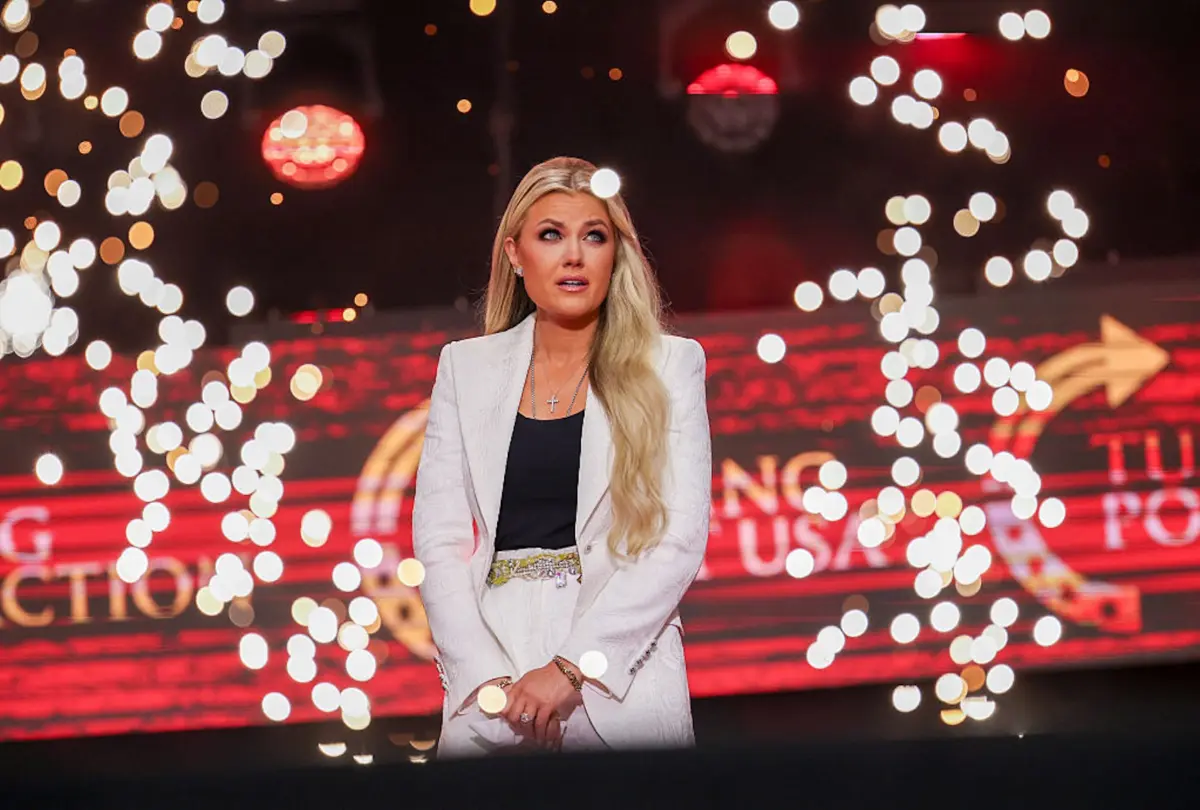
However, the tone of the mourning period quickly veered into unorthodox territory during a public memorial service in Arizona. Rather than adopting a solemn, traditional tone, the event featured production values more reminiscent of a championship sporting match, complete with celebratory fireworks. It was during this pivotal moment that Erika Kirk stepped into the public eye to assume leadership of the organization, setting the stage for a tenure defined by intense public scrutiny and ideological friction.
Fall 2025 to Spring 2026: The Rise of the Memetic Backlash
As prosecutors gathered substantial evidence against the accused shooter, Tyler Robinson—leading to an indictment and setting the stage for a high-stakes trial—public perception outside and inside the conservative movement shifted dramatically. Almost immediately after the shock wore off, Charlie Kirk’s legacy became fertile ground for dark internet humor and viral satire.
Grisewolde and offensive memes began circulating heavily across platforms like X and TikTok. An AI-generated commemorative track titled "We Are Charlie Kirk" was quickly subverted by internet subcultures, transformed from an earnest tribute into a widespread running joke. The stark disconnect between how the MAGA elite viewed Kirk and how the broader public—and even younger factions of digital natives—perceived him exposed a severe vulnerability in TPUSA’s brand.
Summer 2026: The PBD Podcast "Debate" and Media Exploitation
The nadir of the post-Kirk era crystallized in mid-2026 when right-wing commentators Candace Owens and Andrew Wilson participated in a heavily promoted "debate" regarding the circumstances of Kirk’s death. Hosted by "The PBD Podcast" and marketed using explosive, WWE-style promotional graphics, the event treated a real-life murder investigation as entertainment.
Owens and Wilson largely bypassed the robust evidentiary record detailed in state indictments, opting instead to trade personal insults and posture for engagement metrics. In the weeks following the broadcast, both figures capitalized on the engagement by churning out reaction videos, effectively monetizing a tragedy. This spectacle underscored how thoroughly the conservative influencer ecosystem had prioritized algorithmic optimization over reverence or factual integrity.
September 2026: The Chapter Leadership Summit and Continuing Dissonance
Marking the one-year anniversary of her husband’s death, Erika Kirk delivered a keynote address at a TPUSA Chapter Leadership Summit that laid bare the internal contradictions of her leadership. Attempting to bridge her dual roles as a corporate executive and a theological traditionalist, she offered a bizarre architectural metaphor: comparing a marriage to a cathedral, where the husband serves as the structural frame bearing the weight, while the wife functions as the stained-glass windows—useless and shattered if removed from the frame.
Yet, standing at the podium directing chapter expansion, strategizing organizational survival, and framing her life as a "battle against Satan," Erika embodied the exact opposite of a shattered, dependent figure. This speech encapsulated the core failure of contemporary TPUSA: an insistence on preaching female submissiveness while being led by a woman who has proven herself remarkably capable of surviving and operating independently in the public sphere.
Supporting Context & Metrics
The struggles facing Turning Point USA are not merely interpersonal; they are structural and ideological. To understand the organization’s current malaise, one must examine the metrics of its public footprint and the socio-political dynamics at play:
- Leadership Vacuum: TPUSA boasts a deep bench of prominent male conservative figures and campus operatives who theoretically align more cleanly with the organization’s patriarchal ideology. The decision to install Erika Kirk—despite her lack of prior executive political experience—created an immediate ideological friction point.
- The "Tradwife" Paradox: Sociological studies and media tracking over the past three years have highlighted the explosive growth of the "traditional wife" (tradwife) movement on social media. However, branding experts note that the movement’s commercial viability relies entirely on the visible presence of a male head of household. Operating without one transforms the messaging from a lifestyle philosophy into an unworkable corporate paradox.
- Engagement vs. Efficacy: While TPUSA continues to hold campus summits and maintain chapters across hundreds of high schools and universities, internal morale and external seriousness have taken heavy hits. Metrics across alternative media platforms indicate that while sensationalized content regarding Kirk’s death generates high initial clicks (as seen with the Owens-Wilson broadcast), it fails to translate into substantive policy influence or institutional respect.
Official Statements and Reactions
The crisis at TPUSA has elicited sharp commentary across the political spectrum, highlighting the deep discomfort even allies feel regarding the organization’s current trajectory.
During her widely discussed critique on the PBD Podcast, Candace Owens zeroed in on the structural hypocrisy defining the organization’s leadership:
"His legacy is his children… Erika Kirk did not have to take over Charlie’s company when they don’t have a parent at home."
Owens further called out figures like Andrew Wilson for defending Erika’s corporate ascension while simultaneously building their entire ideological brands on the premise that women belong exclusively in domestic spaces.
Mainstream political analysts have similarly pointed out that the weaponization of grief by right-wing media personalities has fundamentally degraded the seriousness of conservative discourse. Commentators note that the inability of TPUSA’s leadership to present a unified, dignified front has invited bad-faith actors to hijack the narrative, turning a murder trial into a streaming-era soap opera.
Legal spokespersons for the prosecution in the upcoming trial of Tyler Robinson have maintained their focus on the concrete evidence outlined in court documents, declining to engage with the media circus generated by partisan influencers. Nevertheless, the legal proceedings—expected to commence fully this fall—hang heavily over an organization desperately seeking closure it seems structurally incapable of achieving.
Future Outlook
As Turning Point USA enters its post-Kirk era, the organization faces a stark crossroads. The fundamental question facing the board and its leadership is whether an enterprise built entirely around the cult of personality of a single, aggressive provocateur can survive his absence while clinging to dogmas that its current leadership actively violates in practice.
- The Upcoming Trial: The impending trial of Tyler Robinson will inevitably drag the organization back into the media spotlight. How TPUSA and its surrogates manage this legal milestone will determine whether they can pivot toward legitimate institutional advocacy or sink further into tabloid-style sensationalism.
- Branding Realignment: For Erika Kirk, the path forward requires either a dramatic evolution in messaging or a step back from executive operations. Continuing to champion an ideology of female submission while acting as a corporate CEO is a contradiction that no amount of rhetoric can permanently mask.
- Institutional Survival: If TPUSA is to retain its influence among younger conservative generations, it must transition away from grievance-driven influencer culture and rebuild its credibility on college campuses—a domain where serious policy debate historically overshadowed online posturing.
Without a fundamental reckoning with its internal contradictions, Turning Point USA risks cementing its status not as a bastion of conservative thought, but as a cautionary monument to the limits of performative politics in the digital age.