

Executive Overview
For nearly two decades, the WordPress ecosystem has operated under a standardized set of structural assumptions. To build a website without writing raw code, millions of users have relied on traditional page builders that anchor design within rigid rows, columns, and nested container boxes. While these legacy tools democratized web development, they introduced an invisible tax: bloated Document Object Models (DOMs), heavy reliance on third-party plugin stacks, and performance bottlenecks that consistently plague Core Web Vitals.
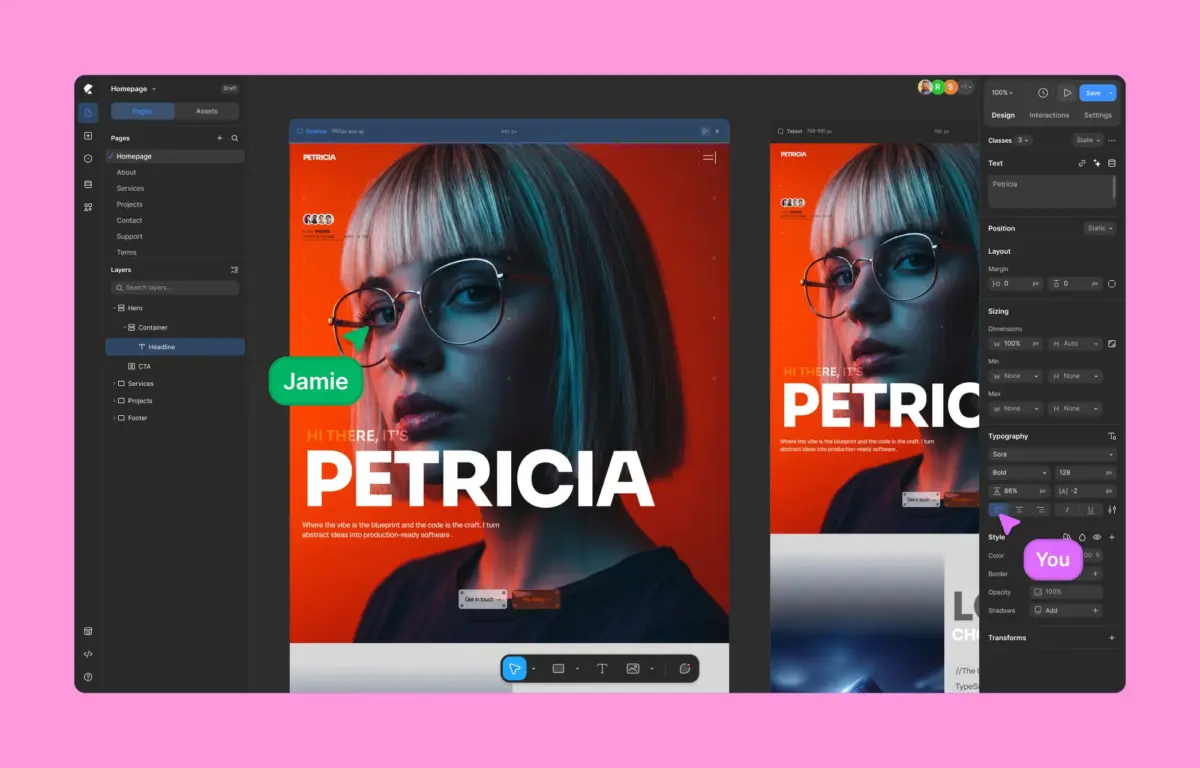
Enter Kirki, a paradigm-shifting visual website builder that discards legacy conventions in favor of a freeform infinite canvas. Designed to bridge the gap between developer-grade performance and no-code accessibility, Kirki functions as an all-in-one ecosystem for WordPress. It combines native dynamic content management, real-time multi-user co-editing, timeline-based animation tools, and a streamlined Figma-to-WordPress workflow into a single package.
By eliminating third-party dependencies and generating clean semantic HTML, Kirki challenges established industry heavyweights like Elementor, positioning itself not merely as an alternative, but as a potential blueprint for the future of WordPress site architecture. This report provides an authoritative examination of Kirki’s performance benchmarks, feature ecosystem, pricing models, and long-term implications for web designers and developers.
Detailed Chronology: The Evolution of WordPress Page Building
To understand the significance of Kirki’s market entry, one must trace the chronological evolution of WordPress site building.

Era 1: The Theme Customizer and Shortcode Phase (Early 2010s)
In the early days of advanced WordPress customization, developers relied on theme option frameworks and shortcode generators. While lightweight, these systems offered minimal visual feedback, forcing builders to toggle constantly between backend editors and frontend previews. Customization was tightly bound to individual theme structures, making site migrations complex and design updates tedious.
Era 2: The Box-Bound Drag-and-Drop Revolution (Mid-to-Late 2010s)
The introduction of visual page builders transformed the market. Tools like Elementor, Divi, and Beaver Builder introduced the concept of drag-and-drop design. However, these platforms inherently inherited the structural limitations of HTML block architecture. Elements had to reside inside strict containers: sections containing columns, columns containing widgets. While effective for basic layouts, this box-bound philosophy resulted in heavy DOM trees characterized by excessive <div> wrappers.

Era 3: The Block Editor Era and Headless Paradigms (2020–Present)
As web performance became a dominant ranking factor for search engines, developers increasingly turned to block-based editors, static site generators, and headless architectures. Yet, designers craving the pixel-free precision of tools like Figma or Webflow often found native WordPress blocks restrictive.
Kirki emerges at this precise inflection point. By introducing an infinite canvas—a concept long standard in vector design tools—to the WordPress environment, Kirki bypasses the structural box constraints of its predecessors, allowing absolute positioning, fluid overlapping, and spatial organization without sacrificing database integrity.

Supporting Context & Metrics: Performance and Architecture
Performance directly impacts conversion rates, user engagement, and organic search visibility. To quantify how Kirki’s architectural choices influence real-world performance, comparative benchmarking tests were conducted against established market solutions under identical test conditions.
Benchmark Methodology
- Environment: Clean WordPress installation utilizing the default Twenty Twenty-Five theme.
- Layout Complexity: Identical multi-section landing pages featuring hero banners, typography hierarchies, call-to-action blocks, grid galleries, and responsive media elements.
- Evaluation Metric: Google Lighthouse audits assessing load times, total blocking time, DOM size, and Core Web Vitals.
| Evaluation Metric | Kirki Builder | Traditional Competitor (Elementor) |
|---|---|---|
| DOM Element Count | Low (Optimized, shallow tree) | High (Deeply nested wrappers) |
| Code Output Quality | Clean semantic HTML with minimal inline bloat | Extensive nested <div> markup and auxiliary scripts |
| Lighthouse Score | Superior performance across all devices | Noticeable latency on resource-constrained devices |
The performance disparity stems directly from code generation. Kirki produces a streamlined DOM structure that significantly reduces browser rendering times. Conversely, traditional builders frequently inject heavy scripting frameworks and deeply nested markup structures, even on simple layouts, which drags down overall execution speed.

Official Statements and Value Propositions
Kirki’s leadership emphasizes that modern web creation should not require financial compromises or bloated plugin ecosystems. Traditional builders frequently lock critical features—such as dynamic content fields, popup builders, and advanced form management—behind expensive tier gates or require supplementary third-party plugins (e.g., Advanced Custom Fields).
Kirki adopts a unified philosophy: Zero plugin dependency.

Pricing and Licensing Transparency
Unlike competitors that employ complex tiered upsells, Kirki’s pricing structure is designed around transparency:
- Free Version: Available directly from the official WordPress.org repository. Unlike limited trial versions, Kirki’s free tier is fully functional, empowering users to design modern websites on an infinite canvas at zero cost.
- Starter Plan: Priced competitively at $59/year for a single site license, including all premium features from day one.
- Lifetime Plan: Available for a one-time investment of $499, offering unlimited lifetime usage with zero recurring renewal fees or unexpected surcharge gates.
Included natively across all paid plans are dynamic content tools, native popup and form builders, submission management utilities, and an expanding library of professional template kits.

Deep Dive: Core Features and Capabilities
1. The Freeform Infinite Canvas
Kirki replaces restrictive grid structures with an infinite canvas environment. Designers can pan freely, zoom in and out, layer backgrounds, and overlap elements with absolute precision. For professionals transitioning from Figma or Webflow, the workspace feels instantly familiar and natural.
2. Concurrent Multi-Breakpoint Editing
Traditional builders require users to switch back and forth between desktop, tablet, and mobile viewing modes to adjust responsive behavior. Kirki introduces concurrent responsive editing, displaying desktop, tablet, landscape, and mobile views side by side on the same canvas in real time. Adjustments made to larger breakpoints cascade intelligently down through smaller viewports, minimizing redundant configuration work.

3. Instant Figma-to-Kirki Handoff
Designers can import existing Figma projects directly into Kirki. The system automatically translates vector and layout data into responsive WordPress elements, drastically compressing the timeline from design conceptualization to functional deployment.
4. Native Dynamic Content Management
By integrating dynamic data binding natively, Kirki removes the necessity of external custom-field plugins. Users can map custom post types, user meta, and dynamic taxonomies directly within the visual interface without writing a single line of backend PHP.

5. Class-Based Styling and CSS Variables
To maintain scalability across large projects, Kirki incorporates a class-based styling engine. Edits made to an element dynamically generate reusable CSS classes. Coupled with Global CSS Variables, developers can establish centralized design tokens for typography, spacing, and color palettes, ensuring absolute brand consistency site-wide.
6. Timeline-Based Visual Animations
Moving far beyond basic entry fades, Kirki features a timeline-based interaction editor. Users can orchestrate complex scroll-triggered animations, hover states, and multi-step element transformations visually, parsing text down to individual characters or words without relying on external animation libraries.

7. Real-Time Team Collaboration
Addressing a long-standing workflow hurdle in WordPress development, Kirki offers native multi-user co-editing. Team members can work on the same page simultaneously, viewing color-coded live cursors and placing pinned contextual comments directly on the canvas.
8. Built-In Quality Control Audit
Before publishing, Kirki’s automated Page Audit tool scans the layout for common technical oversights, including missing image alt text, broken hyperlinks, accessibility violations, and SEO misconfigurations.

Future Outlook: Is Kirki the Future of WordPress?
The release of Kirki marks a critical inflection point for the WordPress ecosystem. As web standards shift toward greater emphasis on speed, clean code, and seamless design-to-development handoffs, legacy page builders face increasing pressure to modernize their core architectures.
By successfully merging the fluid creative freedom of vector-based design tools with the robust content management capabilities of WordPress, Kirki offers a compelling proposition. It caters equally to the pixel-perfectionist designer, the performance-conscious developer, and the business owner seeking a reliable, all-in-one publishing platform.

As the community continues to evaluate no-code tools against headless and custom-coded alternatives, Kirki proves that WordPress site building does not need to be bound by boxes. For professionals serious about scalable performance, clean code, and streamlined workflows, Kirki represents a powerful evolution in modern web creation.
