

Executive Overview
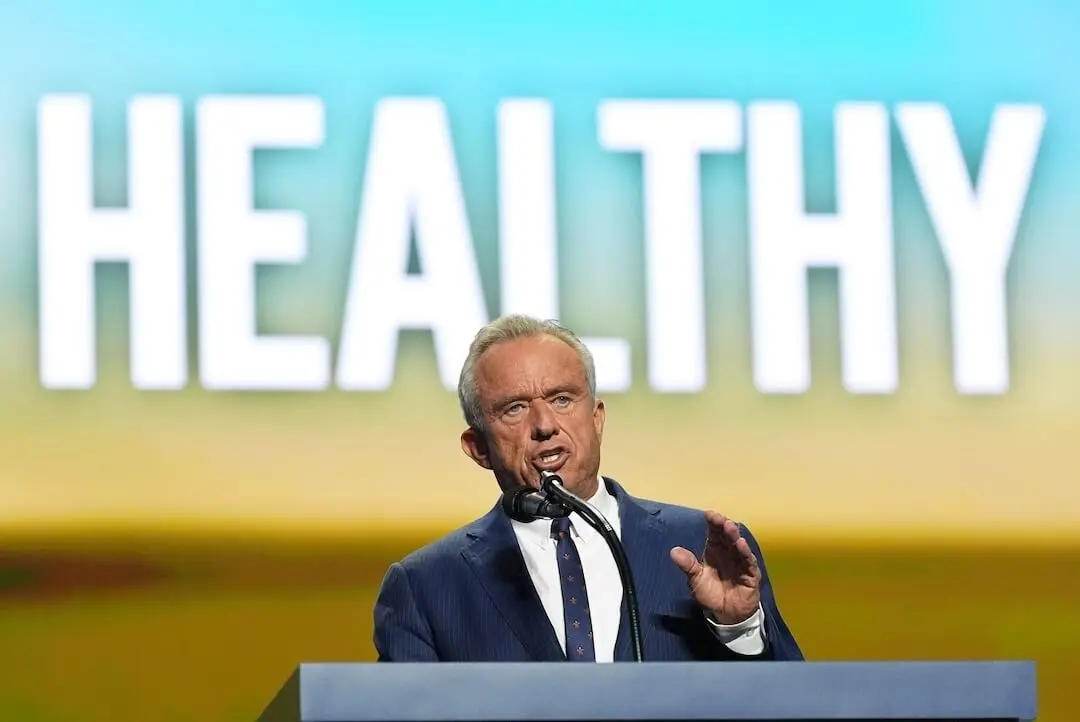
In the landscape of modern public discourse, sweeping rhetorical declarations are frequently deployed to underscore systemic crises. Few figures have leveraged this strategy as prominently as Health Secretary Robert F. Kennedy Jr., who recently ignited a fierce debate over American healthcare infrastructure and pediatric outcomes. Addressing the Republican midterm convention in Dallas, Kennedy presented a stark paradox: despite the United States outspending every other nation on healthcare by a factor of two or three, the country allegedly harbors a pediatric population facing unprecedented health degradation.
"This country pays two to three times what every developing nation in the world pays, and yet we have the sickest children in the history of the world," Kennedy stated on September 10. He further punctuated his argument by asserting, "We have the highest chronic disease burden ever recorded."
While Kennedy’s core critique touches upon legitimate, documented anxieties regarding rising rates of childhood chronic illnesses and comparatively poor mortality metrics relative to other wealthy nations, his specific phraseology—“the sickest children in the history of the world”—collapses under historical and epidemiological scrutiny.
An exhaustive review of historical public health data reveals that Kennedy’s claim fundamentally ignores the monumental advancements in sanitation, pharmacology, and preventative medicine achieved over the past two centuries. For the vast majority of human existence, childhood was fraught with catastrophic mortality rates and ubiquitous infectious devastation that dwarfs today’s health challenges.
Nevertheless, dismissing Kennedy’s remarks entirely would overlook the genuine, persistent vulnerabilities plaguing American youth. Contemporary research from the National Academies of Sciences, Engineering, and Medicine, alongside recent studies published in the Journal of the American Medical Association (JAMA), demonstrates that American children face disturbing deficits in mental well-being, physical health, and survival rates when benchmarked against peers in other high-income nations. This investigative report dissects the rhetoric, weighs the historical context, evaluates modern metric realities, and explores the nuanced truth behind America’s current pediatric health crisis.
Detailed Chronology & Context of the Statement
The trajectory of Robert F. Kennedy Jr.’s public commentary on pediatric health has evolved alongside his political platform, transitioning from a central theme of his 2024 independent and aligned campaigns into a foundational pillar of his policy stance within the Department of Health and Human Services (HHS).
The specific assertion that U.S. children are the "sickest in the history of the world" is not a slip of the tongue; it is a recurring rhetorical motif. Kennedy utilized a variation of this exact phrasing during high-profile events throughout 2024, including prominent political rallies, before codifying it into his address at the Republican midterm convention in Dallas on September 10.
When pressed for underlying documentation, representatives from the Department of Health and Human Services did not immediately furnish comprehensive datasets to substantiate the historical superlatives embedded in Kennedy’s declaration. This lack of immediate official corroboration prompted independent investigative watchdogs, notably PolitiFact, to launch an analytical fact-check of the claim.
The timing of Kennedy’s Dallas speech is critical. Delivered amid shifting political paradigms and heightened national conversations regarding healthcare expenditure, administrative reform, and the regulatory oversight of chronic illnesses, the statement served a dual purpose: it galvanized a political base dissatisfied with institutional medical establishments while forcefully drawing attention to the creeping incidence of childhood obesity, autoimmune disorders, and neurodevelopmental conditions.
However, by framing this modern domestic crisis in apocalyptic, trans-historical terms—claiming unprecedented sickness across all of human history—Kennedy stepped outside the boundaries of verifiable epidemiological science. His rhetoric conflates the very real, modern challenges of non-communicable chronic diseases with the sweeping, unmitigated devastation of historical pandemics and infrastructural poverty that defined childhood for thousands of years.
Historical Perspective: Looking Past Modern Advances
To evaluate whether American children today are truly the "sickest in the history of the world," one must examine the baseline reality of childhood health for the vast majority of human history. When viewed through the long lens of historical demography, modern children—even those grappling with contemporary chronic illnesses—exist in a state of unprecedented biological resilience compared to their ancestors.
The Era of Pre-Industrial Infant Mortality
For millennia, infant and childhood mortality was an agonizingly common fixture of family life across every continent and civilization. Historical demographers studying pre-industrial societies have consistently found that approximately half of all children died before reaching puberty. Infectious diseases—ranging from smallpox, measles, and diphtheria to scarlet fever, tuberculosis, and diarrheal illnesses—acted as relentless agents of attrition.
Children in past centuries did not merely experience sickness; they lived in constant proximity to fatal pathogens without the benefit of antibiotics, systemic sanitation, or vaccines. A child growing up in ancient Rome, medieval Europe, or even 19th-century industrial America faced a daily gauntlet of environmental hazards that routinely cut short millions of young lives.
The Transformation of the 20th Century
The dramatic divergence between historical reality and modern conditions began to take shape late in the 19th century and accelerated dramatically throughout the 20th century. Public health historians credit three foundational interventions with transforming childhood survival:
- Sanitation infrastructure: The implementation of clean municipal water supplies, sewage management systems, and food safety regulations drastically reduced the transmission of waterborne and filth-borne pathogens.
- Antibiotics: The discovery and mass production of antimicrobial drugs in the mid-20th century turned once-fatal bacterial infections into manageable, easily curable conditions.
- Vaccination: Systematic immunization campaigns effectively eradicated or neutralized deadly viral and bacterial threats that had terrorized human populations for generations.
According to data compiled by the U.S. Centers for Disease Control and Prevention (CDC), as recently as 1900, approximately 1 in every 5 children in the United States died before reaching their fifth birthday. By stark contrast, data from 2018 indicates that the mortality rate for American children aged 1 to 4 had plummeted to roughly 24 deaths per 100,000.
Globally, the impact of these medical interventions has been staggering. A landmark 2024 study published in scientific literature estimated that vaccination programs alone have prevented an astounding 146 million deaths among children under the age of 5 globally since 1974.
When evaluated against this backdrop, the assertion that contemporary American children are the "sickest in the history of the world" collapses. Modern children enjoy lifespans, immunological protections, and freedom from acute infectious scourges that would have seemed miraculous to any generation living prior to the 20th century.
Supporting Context & Metrics: The Modern U.S. Pediatric Landscape
While Kennedy’s historical superlative is demonstrably false, his underlying anxiety regarding modern American youth is anchored in legitimate, troubling trends. When compared strictly to contemporary peer nations—and when analyzing the trajectory of chronic disease over the past few decades—the United States faces profound pediatric health challenges.
Global vs. Domestic Benchmarks
To understand the nuance, it is necessary to separate historical health from international peer health. Compared to developing nations, American children exhibit remarkably positive baseline outcomes:
- The U.S. under-5 mortality rate is roughly 80% lower than the global average.
- Catastrophic global childhood killers—such as untreated diarrhea, malaria, and severe malnutrition—account for virtually zero mortality within the United States.
However, when the United States is benchmarked against other high-income, developed nations (such as Western European countries, Canada, Japan, and Australia), the narrative shifts dramatically.
The Wealthy Nation "Bottom Tier"
A comprehensive 2024 report published by the National Academies of Sciences, Engineering, and Medicine delivered a sobering assessment of American youth, concluding that the United States "ranks at the bottom among wealthy nations on the mental wellbeing, physical health, and academic and social skills of children."
This systemic lag is further illuminated by empirical mortality and morbidity studies:
- Overall Mortality Disparities: A 2025 study published in the Journal of the American Medical Association (JAMA) revealed that from 2007 to 2022, the mortality rate for U.S. children and adolescents aged 1 to 19 was 80% higher than the rate observed in comparable high-income nations.
- Infant Vulnerability: Infants born in the United States are 78% more likely to die during their first year of life compared to infants born in other developed countries, driven largely by higher rates of prematurity, congenital anomalies, sudden unexpected infant deaths (SUID), and respiratory infections.
- The Firearms and Trauma Crisis: The divergence in mortality rates between American youth and their international peers is heavily driven by external causes of death. Research conducted by specialists at the Children’s Hospital of Philadelphia and the University of California, Los Angeles, demonstrated that U.S. children are 15 times more likely to die from firearm-related injuries than children residing in other high-income nations. Motor vehicle accidents and violence-related trauma further widen this fatal gap.
The Rise of Chronic Conditions
Beyond mortality, the prevalence of non-communicable chronic illness among American youth has undeniably escalated over recent decades. The JAMA-associated studies and health tracking data show that:
- U.S. children in recent years are 15% to 20% more likely to suffer from a chronic condition than their counterparts were in the early 2010s.
- Conditions such as pediatric obesity, sleep disorders, type 2 diabetes, asthma, and neurodevelopmental challenges (including ADHD and anxiety disorders) have exhibited steady upward trajectories.
Thus, while chronic disease rates are rising and American performance relative to peer nations is subpar, these localized and contemporary negative trends do not translate to the hyperbolic claim of having the "sickest children in the history of the world."
Official Statements and Fact-Check Verdict
The convergence of political rhetoric, public health policy, and rigorous data analysis culminated in a definitive evaluation of Robert F. Kennedy Jr.’s statements by independent fact-checkers.
Summary of the Argument
- The Claim: Health Secretary Robert F. Kennedy Jr. asserted that despite astronomical financial investments in healthcare, the United States possesses the "sickest children in the history of the world" and the "highest chronic disease burden ever recorded."
- The Evidence Against: Historical demography confirms that prior to the advent of modern sanitation, antibiotics, and mass immunization in the 19th and 20th centuries, approximately 50% of all children globally succumbed to infectious diseases before reaching puberty. Modern American children experience vastly lower mortality rates and enjoy protection from historical plagues.
- The Evidence For (Nuance): Contemporary data indicates that U.S. children suffer from increasing rates of chronic conditions (such as obesity and mental health issues) and experience significantly higher mortality rates—driven heavily by firearms, vehicular accidents, and infant vulnerability—than children in other wealthy, developed nations.
- The Final Ruling: False. While Kennedy correctly identifies concerning trends in modern chronic illness and lagging American health rankings relative to peer countries, his overarching claim ignores two centuries of monumental medical progress and misrepresents the historical reality of global childhood health.
(Note: This comprehensive fact-check evaluation builds upon original reporting and investigative analyses originally published by PolitiFact, a core project of the Poynter Institute.)
Future Outlook: Navigating America’s Pediatric Health Realities
As the public health debate moves forward, the divergence between political rhetoric and empirical science underscores the need for a balanced, evidence-based approach to American pediatric healthcare. The appointment and commentary of health officials like Robert F. Kennedy Jr. ensure that chronic disease, environmental toxins, ultra-processed foods, and lifestyle factors will remain at the forefront of the national conversation.
Addressing the genuine vulnerabilities of American youth—such as rising obesity rates, the youth mental health crisis, and unacceptable pediatric mortality gaps when compared to Europe and Asia—requires moving past hyperbole. Policymakers, researchers, and medical professionals must focus targeted interventions on the actual drivers of modern morbidity:
- Gun Safety and Injury Prevention: Given that firearms represent a staggering portion of the mortality gap between U.S. children and those in other wealthy nations, addressing community and domestic firearm access is paramount.
- Maternal and Infant Health Infrastructure: Combating high rates of preterm birth and infant mortality through enhanced prenatal care and socioeconomic support for mothers.
- Preventative Chronic Disease Strategies: Investing in robust nutritional education, regulating harmful environmental exposures, and expanding access to pediatric mental health services to reverse the upward tick of chronic conditions.
Ultimately, while America’s children are not the sickest in human history, the United States undeniably possesses the capacity—and the economic resources—to perform far better on the global stage. Bridging the gap between astronomical healthcare spending and superior health outcomes will demand rigorous science, transparent data, and a commitment to protecting the next generation without resorting to historical distortions.