

Executive Overview
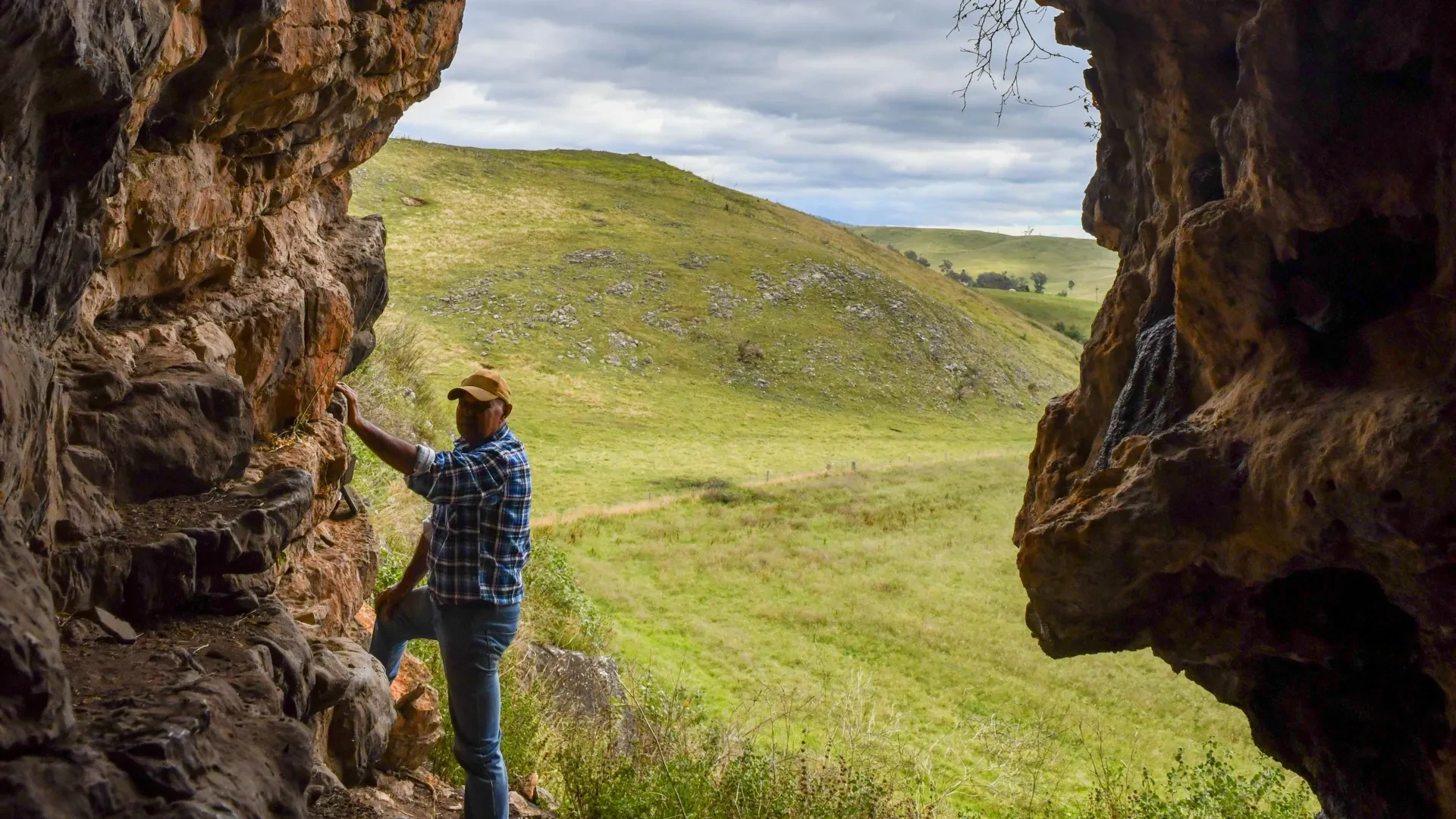
Deep within the rugged southern Victorian Alps of Australia, an ancient subterranean sanctuary has yielded archaeological evidence of a sacred tradition spanning a staggering 25,000 years. Cloggs Cave, situated in the traditional lands of the GunaiKurnai nation—the recognized custodians of Gippsland and the surrounding region—has long been anchored in the oral histories of its Indigenous stewards.
For generations, accounts recorded by settlers in the 19th century alongside continuous oral traditions have described the caves of this region as powerful places of the spirit. They were spaces where respected and learned practitioners, known as mulla-mullung, along with other spiritual leaders, performed complex rituals involving magic, healing, and cursing.
Now, a groundbreaking scientific study published in the journal Frontiers in Environmental Archaeology has transformed these oral histories into empirically verified history. By analyzing microscopic plant remains preserved in layers of ancient sediment, an international team of researchers has confirmed that Cloggs Cave was systematically used for ritual burning practices across an extraordinary temporal depth.
The research was initiated at the direct request of the GunaiKurnai Land and Waters Corporation (GLaWAC), highlighting a collaborative model of modern science and Indigenous knowledge systems. GunaiKurnai representatives were deeply integrated into every phase of the project, from initial research design and fieldwork to cultural interpretation and public communication. The resulting discoveries not only validate deep-time oral traditions but also illuminate sophisticated prehistoric resource selection, paleobotanical preservation, and an enduring cultural relationship with the landscape that predates many of the world’s most famous ancient monuments.
Detailed Chronology: Unlocking the Stratigraphy of Cloggs Cave
The path to uncovering this 25,000-year history required meticulous archaeological excavation and state-of-the-art dating techniques. The foundational work took place during field campaigns in 2019 and 2020, launched specifically to determine how ancient peoples collected and manipulated plant life inside the dark recesses of the cave.
To reconstruct this history, researchers analyzed two deep excavation pits, measuring 1.5 meters and 2.3 meters in depth. Within these pits, the upper sections revealed an extraordinary sequence of 73 distinct, ultra-thin layers of ash. These layers were deposited by human hands between approximately 4,400 and 1,600 years ago. To establish this precise chronology, the scientific team deployed advanced dating methodologies, including optically stimulated luminescence (OSL)—which measures the last time sediment grains were exposed to sunlight—and accelerator mass spectrometry (AMS) carbon dating.
Hidden amid these delicate strata of ash, the excavators uncovered another striking artifact: a standing stone measuring 28 centimeters in height. Subsequent analysis confirmed that GunaiKurnai ancestors had intentionally placed this monolith within the cave environment for explicit ritual purposes roughly 2,000 years of history ago.
Dr. Elle Grono, a postdoctoral researcher at the Australian National University and corresponding author of the study, explained the meticulous deposition process: "Here we show that the Old Ancestors selected whole grasses from the wider landscape and carried them into Cloggs Cave to spread out in thin layers and burn. Over time, sediments covered these burnt layers, preserving each layer on top of another over thousands of years."
The presence of these preserved, alternating layers of ash and sediment provided a high-resolution window into prehistoric human behavior, showing that the fires were not haphazardly lit campfires, but rather deliberate, repeated ritual actions carried out in pitch darkness.
Supporting Context & Metrics: Microscopic Clues from Ancient Plants
Because total darkness blankets the interior of Cloggs Cave, no vegetation can grow naturally within its depths. This environmental constraint provided the research team with a unique methodological advantage. Any plant material found inside the cave—or its microscopic chemical signatures—had to be introduced deliberately by human agency or, occasionally, transported on the fur or through the scats of animals such as possums.
To differentiate between natural animal transport and deliberate human introduction, Grono and her colleagues from Australia, France, and New Zealand focused their investigations on phytoliths. Phytoliths are microscopic silica structures that form within living plant tissues when plants take up dissolved silica from groundwater. These rigid structures can survive in the soil for millennia long after the organic matter of the plant has completely decayed.
Unlike pollen, which travels vast distances via wind or insect vectors, phytoliths mostly accumulate precisely where a plant decays. By examining thousands of phytoliths recovered from the excavation pits using high-powered microscopy, the researchers were able to paint a remarkably detailed picture of paleobotanical use. Crucially, the team focused on half-burnt phytoliths retrieved directly from ashy layers. Because unburnt phytoliths could theoretically have been tracked into the cave by animals, only the burned specimens offered ironclad proof of intentional human transport and thermal alteration.
Microscopic Botany and Selective Foraging
The research team identified 29 distinct types of phytoliths, representing an array of grasses, herbs, and woody plants. Many of these microscopic remains were exceptionally well-preserved, retaining delicate morphological features such as hair cells.
The quantitative metrics of the discovery are striking:
- Grass Dominance: Grass phytoliths dominated the samples, accounting for an astounding 97% of the total assemblage.
- Thermal Alteration: Up to 18% of the recovered phytoliths exhibited clear signs of burning or melting, distributed consistently across the dated deposits.
- Chronological Depth: Systematic ritual burning and vegetation transport spanned an extraordinary timeline of roughly 25,000 years.
- Temporal Precision: The upper strata contained 73 distinct ash layers deposited between 4,400 and 1,600 years ago.
- Artifact Discovery: A deliberate 28-centimeter standing stone was erected for ritual use approximately 2,000 years ago.
The taxonomic breakdown of the grasses further highlights deliberate human choice over opportunistic gathering. The identified samples included members of the Poeideae subfamily (which prefer cool, temperate conditions) and Panicoideae grasses (which thrive in warm, humid environments). Conversely, drought-tolerant Chloridoideae grasses, adapted to arid conditions, appeared far less frequently, while local herbs and woody plants were largely absent from the deposits.
Before European settlement, the ecosystem surrounding Cloggs Cave was diverse, featuring riparian forests and open woodlands rich with countless plant species. Yet, these ambient plants were largely excluded from the archaeological layers. Instead, the people utilizing the cave exercised targeted selectivity, choosing specific grasses growing relatively close to the cave entrance.
Furthermore, the phytolith morphology revealed that these were not merely harvested seed heads; they included stems, leaves, flowers, and roots. This proves that whole grasses—including the inedible structural parts—were uprooted and hauled into the cavernous darkness for the express purpose of ritual burning.
Official Statements and Indigenous Collaboration
The success of the Cloggs Cave project serves as a premier example of how modern archaeological science can be conducted in equitable partnership with Indigenous sovereign nations. The research was initiated directly at the behest of the GunaiKurnai Land and Waters Corporation, ensuring that traditional ownership and cultural protocols guided every step of the inquiry.
Professor Bruno David of Monash University, who co-led the excavations alongside the GLaWAC, emphasized how the hard scientific data aligns seamlessly with ancient cultural practices.
"Their burning is consistent with GunaiKurnai traditional practices of using ash to perform magic and rituals, and also to track the footsteps of anyone coming in, including spirit-Beings," Professor David explained.
He further noted that other macro-botanical evidence discovered during the excavations—such as fat-smeared, trimmed wooden sticks crafted from Casuarina trees found in deeper, older deposits—demonstrates that ritual expressions at Cloggs Cave took multiple forms over the millennia, incorporating both herbaceous and woody flora.
Dr. Elle Grono underscored the significance of the findings regarding human behavior and landscape interaction:
"The phytoliths found at Cloggs Cave were from different parts of grass plants such as stems, leaves, flowers and roots, indicating that whole grasses were brought in, including the inedible parts. This level of intentionality across such vast expanses of time redefines our understanding of how deep-time Australian Aboriginal communities engaged with their spiritual landscapes."
This collaborative framework ensures that the heritage of the GunaiKurnai nation is honored, protected, and interpreted through a lens that respects the sanctity of the site and the continuity of an unbroken cultural lineage.
Future Outlook: Preserving Deep-Time Heritage
The revelations at Cloggs Cave open unprecedented avenues for Australian archaeology and paleoenvironmental research. By demonstrating that microscopic plant analysis can successfully unlock the hidden ritual history of subterranean spaces, the study provides a methodological blueprint for investigating other ancient sites across the Australian continent and beyond.
As archaeological techniques continue to advance—particularly in micro-morphology, biomolecular analysis, and high-precision chronological dating—researchers anticipate uncovering even more granular details about prehistoric Indigenous lifeways. Future phases of the research partnership between the GunaiKurnai Land and Waters Corporation and academic institutions will likely focus on expanding phytolith analysis to surrounding cave systems, mapping how regional networks of spiritual practice evolved throughout the late Pleistocene and Holocene epochs.
Crucially, the ongoing stewardship of Cloggs Cave by the GunaiKurnai people guarantees that these sacred landscapes will be protected from unauthorized intrusion and environmental degradation. By bridging the gap between deep ancestral memory and cutting-edge laboratory science, the Cloggs Cave project stands as a powerful testament to the resilience, intellectual sophistication, and enduring spiritual traditions of the world’s oldest continuous living culture.