

Executive Overview
For fitness enthusiasts and professional athletes alike, the quest to squeeze out just one or two more repetitions during a grueling resistance training session is a constant pursuit. Traditionally, pushing past physical boundaries has required heavy reliance on pre-workout supplements laden with caffeine, intense mental fortitude, or specialized training protocols. However, groundbreaking research published in the journal Frontiers in Physiology suggests that the key to unlocking enhanced workout performance might be resting right under our noses—quite literally.
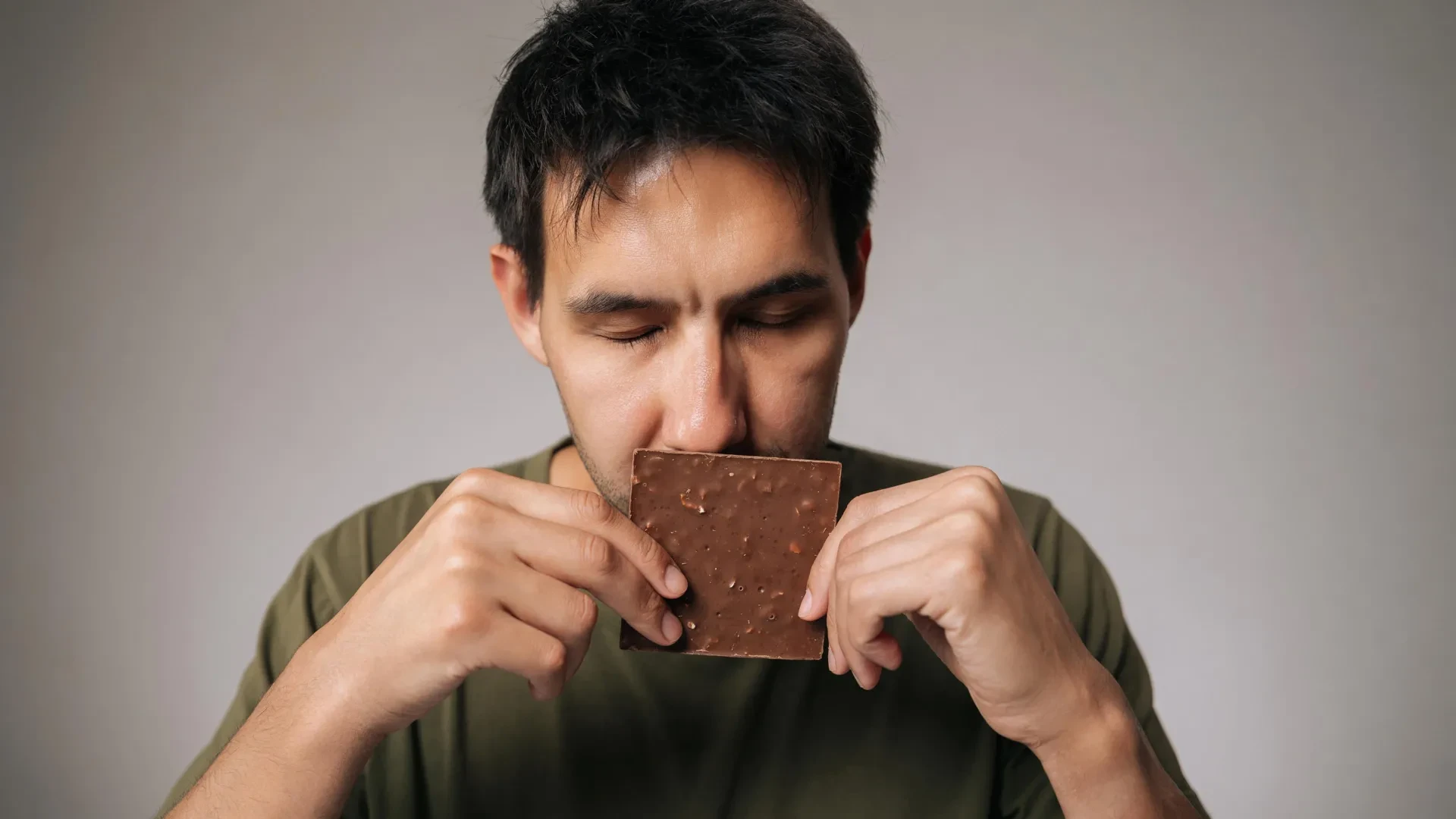
According to a recent study led by researchers at the University of Malaya, simple exposure to the aroma of chocolate before and during resistance exercise can dramatically boost overall training volume. Even more remarkable is the finding that this performance enhancement occurs without increasing the exerciser’s perceived exertion. In other words, gym-goers were able to lift more weight for more repetitions while feeling as though they were working no harder than usual.
This intriguing psychobiological phenomenon bridges the gap between sensory neuroscience and sports performance. By exposing moderately trained young men to the scents of dark and milk chocolate, investigators uncovered a fascinating interplay between olfaction, appetite regulation, and muscular endurance. While the study points toward promising new avenues for non-invasive performance enhancement, it also opens up critical questions about how deeply our sensory environment can influence physical capacity.
As the fitness and scientific communities digest these findings, the implications extend far beyond the weight room. This research hints at a broader paradigm in human physiology: that the brain’s anticipation of sensory rewards—triggered entirely by scent—can trick the body into heightened states of physical readiness and metabolic anticipation, all without consuming a single calorie.
Detailed Chronology: Unpacking the University of Malaya Study
To understand how a simple scent can transform a grueling leg workout, it is essential to examine the meticulous methodology and chronological progression of the University of Malaya trial. The study was meticulously designed to isolate the psychological and physiological impacts of chocolate olfaction on physical exertion.
Phase 1: Participant Recruitment and Fasting Protocols
The study enrolled 23 healthy, moderately trained young men in their early to mid-20s. These participants were carefully screened to ensure they possessed adequate baseline experience with resistance training, minimizing the risk of skewed data resulting from improper form or unfamiliarity with the equipment.
Crucially, before entering the testing environment, all participants were required to undergo a mandatory fasting period of at least 10 hours. This step was vital for establishing a baseline hunger state, allowing researchers to measure how different food aromas interacted with metabolic appetite cues while the body was in a fasted condition.
Phase 2: Baseline Assessments and Scent Distribution
Upon arrival at the laboratory, participants underwent initial psychological evaluations. They rated their current levels of hunger, perceived fullness, conscious desire to eat, and intention to eat in the near future.
The cohort was then divided into three distinct exposure groups. Each group was introduced to a specific olfactory stimulus delivered right before and during their training sets:
- The Dark Chocolate Group: Exposed to liquefied dark chocolate containing 90% cocoa.
- The Milk Chocolate Group: Exposed to liquefied milk chocolate containing 60% cocoa.
- The Control Group: Exposed to plain, odorless water.
The exposure protocol was integrated directly into the workout routine. Participants were subjected to the designated scent for 30-second intervals between sets of resistance exercises, ensuring continuous olfactory stimulation throughout the physical exertion phase.
Phase 3: The Exercise Protocol and Data Collection
The physical test chosen for the study was the leg extension—a classic, highly isolated resistance exercise performed while seated, where the individual straightens their lower legs against mechanical resistance to lift a weighted stack. This exercise is particularly effective for isolating the quadriceps, making it an ideal candidate for measuring localized muscular fatigue and failure.
Throughout the session, researchers maintained a rigorous data collection schedule. Before exercising, they recorded appetite metrics. While completing their sets, researchers interleaved 30-second scent exposures with ongoing evaluations of hunger and the desire to eat.
By tracking both the exact number of repetitions completed until muscular failure and the subjective psychological feedback of the participants, the research team was able to map a clear correlation between the olfactory stimulus, appetite modulation, and overall training volume.
Supporting Context & Metrics: The Science of Scent and Muscle
To fully appreciate the findings of the University of Malaya study, one must examine the hard metrics and the underlying mechanisms of olfaction—the sense of smell—and how it interfaces with the human brain.
The Olfactory Pathway and Brain Wiring
Human olfaction is uniquely wired compared to other senses. While visual and auditory signals pass through intermediary processing centers in the brain before reaching higher-level cognitive structures, olfactory nerves route directly to the limbic system. This includes the amygdala (which processes emotion) and the hippocampus (which manages memory and learned associations).
Because of this direct wiring, smells can instantly evoke vivid memories, trigger deep-seated emotional responses, and powerfully modulate appetite networks. However, prior to this study, virtually no scientific literature had systematically investigated the three-way interaction between smell, appetite regulation, and actual resistance exercise capacity.
Quantifying the Performance Boost: The Numbers
The empirical results of the study revealed striking quantitative differences between the control and experimental groups:
- The Dark Chocolate Effect: Sniffing the 90% dark chocolate aroma added an average of 18 more repetitions to participants’ total leg extension volume compared to the odorless water control.
- The Milk Chocolate Effect: Inhaling the 60% milk chocolate odor added an average of 9 more repetitions compared to the same control group.
- Exertion vs. Volume: Despite completing significantly more total work, participants in the chocolate-scented conditions reported no corresponding increase in perceived exertion (measured using standardized scales of physical strain).
Divergent Impacts of Dark Versus Milk Chocolate
Interestingly, the two chocolate aromas did not affect the participants in the exact same manner, highlighting the nuanced relationship between cocoa concentration, flavor profiles, and psychological triggers.
- Dark Chocolate (90% Cocoa): Consistently associated with suppressed hunger, diminished desire and intention to eat, and heightened feelings of fullness before exercise even began. The high cocoa content appeared to act as a powerful cognitive cue for bitterness and dense caloric satisfaction, effectively tricking the central nervous system into an anticipatory state of satiety.
- Milk Chocolate (60% Cocoa): Rated by participants as more immediately pleasant and sweet than the dark chocolate or water samples, but it failed to significantly alter baseline hunger or metabolic appetite signals. Instead, the sweeter scent functioned primarily as a hedonic reward cue, creating a positive sensory environment that bolstered training volume through elevated mood and sensory engagement rather than metabolic suppression.
Official Statements and Expert Insights
The study’s lead investigators have offered deep insights into the psychological and physiological frameworks driving these results, emphasizing the concept of "learned associations."
Dr. Mohamed Nashrudin bin Naharudin, an assistant professor at the Faculty of Sports and Exercise Science at the University of Malaya and the senior author of the study, highlighted the sheer novelty of the psychobiological outcome:
"Exposing moderately trained men to chocolate odors right before and between sets of resistance exercise significantly increased their overall training volume without increasing their perceived exertion," Dr. Naharudin stated. "Seeing a substantial increase in repetitions without the athletes feeling like they were exerting themselves any harder is a fascinating psychobiological outcome."
Elaborating on the mechanics of olfaction and appetite, Dr. Naharudin explained how our lifelong relationship with food shapes our physiological reactions:
"We know olfaction is powerfully wired into the brain’s appetite and emotion networks, but surprisingly, no study has systematically looked at the three-way interaction between smell, appetite, and actual resistance exercise capacity."
When discussing the divergence between the dark and milk chocolate samples, Dr. Naharudin pointed to the distinct mental frameworks triggered by each scent:
"The dark chocolate scent serves as a learned cue for a rich, bitter, and highly satiating food, which essentially tricks the system into an anticipatory state of fullness. Conversely, the sweeter milk chocolate scent acts more like a hedonic reward cue, enhancing training volume by creating a highly pleasant sensory environment rather than by shifting basic metabolic hunger signals."
These expert insights suggest that humans possess a deeply ingrained conditioned response to food aromas. Repeatedly experiencing certain smells alongside eating throughout our lives trains the brain and body to anticipate what normally follows food consumption—sometimes even triggering changes that mimic post-meal physiological states while fasting.
Critical Limitations of the Study
While the findings are undeniably captivating, the researchers are careful to maintain scientific rigor by acknowledging several notable limitations inherent in their study design. Understanding these boundaries is crucial for avoiding overgeneralizations.
- Speculative Biological Pathways: Although the behavioral and performance metrics were clear, the biological explanation remains largely theoretical. The research team did not measure circulating blood hormones (such as ghrelin or leptin) or monitor real-time neural activity via neuroimaging. Consequently, the study cannot definitively pinpoint the exact internal physiological pathways responsible for the shifts in appetite and enhanced exercise capacity.
- Aroma Intensity and Control Group Flaws: The study could not guarantee that the subjective intensity of the dark and milk chocolate aromas was entirely uniform. Furthermore, because the control condition utilized completely odorless water, participants were acutely aware of when they were receiving the control sample, introducing a potential psychological bias or placebo effect regarding the active scents.
- Homogeneous Sample Size: The research cohort was relatively small (23 participants) and strictly limited to healthy, moderately trained young men in their early to mid-20s. Therefore, these findings cannot yet be generalized to women, untrained novices, older populations, or elite endurance and strength athletes. Further research involving larger, highly diverse demographic groups is mandatory to establish universal applicability.
Future Outlook: Beyond the Chocolate Bar
The publication of this study opens up a vast, largely unexplored frontier in exercise science, sports psychology, and cognitive enhancement. As researchers look to the horizon, several compelling questions demand further investigation.
Are Other Food Smells Equally Effective?
The most pressing question following this research is whether chocolate possesses unique properties, or if other familiar, highly rewarding food aromas can yield comparable or even superior performance boosts. Dr. Naharudin and his team believe chocolate is likely not entirely unique:
"We don’t think chocolate is entirely unique, though it is a food cue with incredibly strong, universally recognized reward associations."
Future studies will likely examine whether the scent of other comforting, high-satisfaction foods—such as freshly baked bread, roasted coffee, or savory herbs—can trigger similar psychobiological shifts in appetite and physical endurance. However, researchers emphasize that an individual must find the odor familiar and appealing (or at least tolerable) for the necessary psychological shift to occur. If a person dislikes a specific scent, the stress or aversion could negate any potential performance benefits.
Practical Applications in the Gym
In the near future, we may see the commercial fitness market capitalize on these findings. The integration of targeted aromatherapy into pre-workout routines, gym locker rooms, or wearable scent-delivery devices could emerge as a novel, non-invasive ergogenic aid. Unlike chemical stimulants that can cause jitters, elevated heart rates, or post-workout crashes, strategic olfactory exposure offers a clean, stimulant-free method to help athletes break through plateaus.
Ultimately, this research serves as a testament to the complex, deeply integrated nature of the human mind and body. It demonstrates that sometimes, to push our physical limits further, we do not need to push harder—we simply need to stimulate the senses in ways that inspire the brain to unlock hidden reservoirs of strength.