

Executive Overview
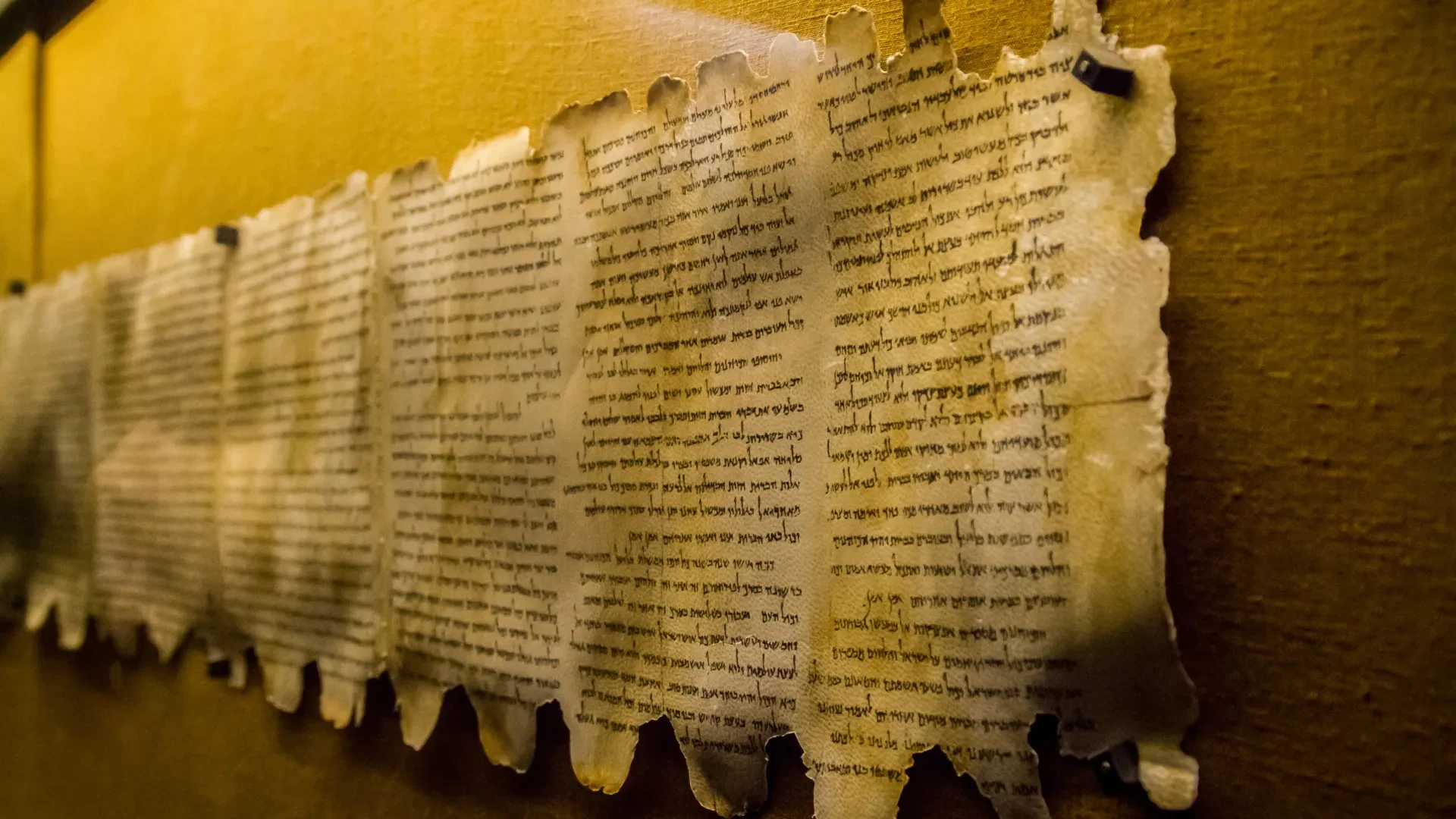
For more than half a century, the discovery of the Dead Sea Scrolls has remained one of the most significant archaeological breakthroughs in modern history. Unearthed in the cave systems of the Judaean Desert near Qumran between 1947 and 1956, these ancient Hebrew, Aramaic, and Greek texts have provided unprecedented insights into the sectarian dynamics, religious literature, and socio-political climate of Second Temple Judaism. Yet, amid the wealth of theological and historical data preserved in the scrolls, one enduring mystery has consistently divided scholars: the community’s adherence to an unusual, rigid 364-day calendar.
For decades, academic debate has polarized around two fundamentally conflicting hypotheses. One camp of scholars argued that the Qumran sect—widely believed to be an isolated ascetic community, often identified with the Essenes—practically utilized this 364-day system in their daily lives, organizing their communal labor, agricultural cycles, and holy days around it. The opposing camp maintained that the calendar was entirely theoretical—a utopian, theological ideal that existed solely in the realm of sacred literature as a critique of the prevailing religious establishment in Jerusalem, never intended for actual mundane implementation.
Now, a groundbreaking study conducted by Professor Eshbal Ratzon of the Department of Jewish Philosophy and the Cohn Institute for the History and Philosophy of Science and Ideas at Tel Aviv University’s Entin Faculty of Humanities proposes a compelling, nuanced resolution to this longstanding academic standoff. Published in the esteemed Tarbiz Quarterly for Jewish Studies, Ratzon’s research suggests that both traditional hypotheses may contain partial truths.
According to the new reconstruction, the Qumran community did not merely dream up this calendar as a theoretical abstraction; rather, they actively lived by it during their formative early history. During the volatile second century BCE, this calendar served as a profound ideological boundary marker and a catalyst for their physical and theological separation from the Jerusalem Temple establishment. However, as decades rolled on, the community was forced to grapple with a relentless astronomical flaw: a 364-day year inherently drifts out of sync with the natural solar year. Compounded by shifting political dynamics during the reign of Hasmonean ruler Alexander Jannaeus, the sect ultimately abandoned the practical application of the calendar. In doing so, they relegated it from a functional timepiece to a powerful religious ideal, a symbol of pristine creation, and an eschatological blueprint for the End of Days.
This comprehensive synthesis not only bridges a decades-long scholarly divide but also illuminates the complex interplay between science, politics, and religious fundamentalism in ancient Judaea.
Detailed Chronology: From Formation to Esoteric Ideal
To fully grasp the significance of Professor Ratzon’s findings, one must trace the historical trajectory of the Qumran sect and the evolution of its unique temporal worldview within the broader context of the Second Temple period.
Phase I: The Formative Split and the Ideological Clock (2nd Century BCE)
During the early years of the second century BCE, Judaea was swept up in profound religious and political transformations, amplified by Hellenizing pressures and internal power struggles within the Jewish priesthood. The religious authorities in Jerusalem adhered to a lunisolar calendar—a complex system that reconciled the lunar month (roughly 29.5 days) with the solar year (roughly 365.25 days) through the periodic intercalation of months. This system placed the power of timekeeping firmly in the hands of the human priesthood, who possessed the authority to declare when months and festivals would begin based on astronomical observations and institutional decree.
The proto-Qumran community fiercely rejected this paradigm. Deeply committed to an uncompromisingly strict interpretation of divine law, they believed that sacred times were immutable and had been divinely established during the primordial Creation of the world. To allow mortal, and in their view compromised, human leaders in Jerusalem to manipulate holy dates was considered a severe transgression.
To codify their divine worldview, the sect embraced a calendar consisting of precisely 364 days. Because 364 can be divided evenly by seven, the year yielded exactly 52 complete weeks. Under this system, every annual festival fell on the exact same day of the week, year after year. For a community seeking divine perfection, this mathematical symmetry was intoxicatingly holy.
According to Ratzon’s analysis, it was precisely during this formative phase that the sect actively implemented the 364-day system. The adoption of a radically distinct calendar was not a passive academic exercise; it was an act of profound defiance. By celebrating festivals on days entirely different from those observed in the Jerusalem Temple, the sect created an unbridgeable chasm between themselves and the central religious establishment, driving their eventual physical secession into the harsh wilderness of the Judaean Desert.
Phase II: The Inevitable Astronomical Reckoning
While the 364-day calendar offered immaculate mathematical and theological harmony, it harbored a fatal flaw: it failed to account for basic astrophysics. A standard solar year—the time it takes for Earth to complete one revolution around the sun—is approximately 365.25 days long. Consequently, a 364-day calendar falls short of the astronomical year by roughly one and a quarter days annually.
In the short term, this discrepancy is subtle. However, over the course of two decades, the cumulative drift amounts to nearly 25 days—virtually an entire month. Left uncorrected, a spring festival rigidly anchored to a 364-day schedule would steadily migrate backward through the calendar, eventually landing in the depths of winter or the scorching heat of autumn.
For an agrarian society whose religious festivals—such as Passover (associated with the barley harvest), Shavuot (the Festival of Weeks and wheat harvest), and Sukkot (the Ingathering)—were inextricably linked to the seasonal rhythms of the earth, this drift posed an existential threat. A calendar that divorced holy days from agricultural realities would quickly lose its viability.
Scholars have long debated how the Qumran community might have managed this crisis. Some hypothesized that the sect periodically inserted intercalary days or weeks to recalibrate the calendar, while others insisted the system was never meant to be practical. Ratzon’s study cuts through these assumptions by suggesting that the sect did not permanently fix the drift; instead, as the seasonal misalignment became glaringly apparent over generations, the practical utility of the calendar eroded.
Phase III: Political Shifts and the Pragmatic Pivot
A religious community does not exist in a historical vacuum. By the late second and early first centuries BCE, the political landscape of Judaea had shifted dramatically. During the reign of the Hasmonean king and high priest Alexander Jannaeus (ruled 103–76 BCE), relations between the Qumran sect and the ruling establishment underwent a complex evolution. Historical and legal analyses of texts recovered from the caves suggest that Alexander Jannaeus, despite his often brutal conflicts with the Pharisaic leadership, occasionally aligned with legal (halakhic) interpretations that resonated with sectarian viewpoints.
This changing political climate created new diplomatic and social possibilities. As Ratzon argues, an easing of tensions and a more favorable political environment likely reduced the sect’s compulsion to maintain an entirely counter-cultural, hyper-rigid calendar purely as an instrument of political separation. Freed from the absolute necessity of marking their identity through a radically divergent calendar, pragmatism began to prevail. The community found it increasingly difficult to sustain a calendar that clashed violently with the changing seasons, prompting a gradual transition toward the more functional timekeeping methods utilized in the broader Jewish world.
Phase IV: Preservation and Eschatological Transfiguration
Even as the Qumran sect abandoned the 364-day calendar for daily use, the system was by no means discarded from their collective consciousness. Instead, it underwent a profound metamorphosis.
Relegated from an operational timepiece to an esoteric ideal, the 364-day calendar was elevated to the status of cosmic truth. It became a powerful symbol of pristine creation—the original schedule ordained by God before human corruption tainted the world. Furthermore, it assumed a strong eschatological dimension: the community believed that when the divine order was ultimately restored at the End of Days, this perfect, unblemished calendar would once again govern the cosmos.
This dual trajectory—abandoned in practice yet fiercely cherished in literature—explains why nearly twenty distinct manuscripts concerning astronomy and calendars were discovered among the Dead Sea Scrolls, making it one of the most heavily represented intellectual subjects in the Qumran library.
Supporting Context & Metrics
To appreciate the depth of Professor Ratzon’s findings, it is helpful to examine the empirical data and textual footprints left behind by the Qumran scribes. The following metrics and contextual elements illustrate the centrality of temporal studies within the community:
- Corpus Concentration: Out of roughly 900 manuscripts discovered across the eleven Qumran caves, approximately 20 distinct scrolls are explicitly dedicated to calendars, timekeeping, and astronomical calculations. This high concentration of calendrical texts is disproportionate to any other archaeological site from the Second Temple period, underscoring that timekeeping was a consuming intellectual and spiritual obsession for the sect.
- The Book of Jubilees: Preserved in multiple copies among the Dead Sea Scrolls, the Book of Jubilees serves as the primary ideological pillar for the 364-day system. The text rewrites the narratives of Genesis and Exodus, explicitly framing the 364-day calendar not as a human invention, but as a heavenly decree revealed by angels to Moses on Mount Sinai. It fiercely condemns those who follow lunar cycles, warning that they will disrupt holy festivals and feast days.
- Astronomical Discrepancy Rate:
- Annual Deficit: ~1.25 days per year short of the solar cycle.
- Decadal Drift: ~12.5 days over 10 years (nearly two full weeks).
- Generational Drift: ~37.5 days over 30 years (shifting a seasonal festival entirely into a different season).
- Comparative Frameworks:
- Jerusalem Establishment: Lunisolar calendar (relying on lunar months adjusted via solar equinoxes and empirical sightings of the new moon).
- Qumran Sect: Purely solar, schematic 364-day calendar (52 weeks, 4 quarters of 91 days each, with each quarter consisting of two 30-day months and one 31-day month).
Official Statements & Academic Insights
The publication of Professor Ratzon’s study in the Tarbiz Quarterly for Jewish Studies has generated substantial discourse within the international academic community, offering fresh momentum to research surrounding ancient Jewish sects.
Reflecting on the core breakthrough of her research, Professor Eshbal Ratzon summarized the reconciliation between theory and practice:
"The Qumran calendar has long been regarded as one of the Qumran sect’s defining features, but also as one of the most baffling mysteries of the Dead Sea Scrolls. This study proposes an alternative for the seeming contradiction between a functional calendar and a theoretical one. It is quite possible that the calendar was in fact used for a certain period of time, but then, losing its practical role due to both inherent problems and political changes, became a religious ideal and a symbol of identity. This would explain both its centrality in the Qumran scrolls and its gradual disappearance from historical reality."
Scholars specializing in Second Temple literature have praised the study for moving beyond the rigid binaries that have characterized academic discourse for decades. By introducing a developmental timeline—where a calendar transitions from practical implementation to ideological preservation—Ratzon provides a dynamic model that accounts for both the physical survival needs of an ascetic community and the soaring theological ambitions of its scribes.
Furthermore, historians of science note that the study highlights how ancient religious communities interacted with natural philosophy. The tension between the mathematical elegance of a 52-week year and the stubborn realities of solar mechanics demonstrates that Qumran intellectuals were deeply engaged in astronomical observation, even when their theological commitments initially blinded them to long-term mathematical drift.
Future Outlook & Implications for Dead Sea Scrolls Research
As research into the Dead Sea Scrolls enters its eighth decade, discoveries continue to reshape our understanding of ancient Judaism, early Christianity, and the sectarian landscapes of Judaea. Professor Ratzon’s reconstruction of the Qumran calendar opens several promising avenues for future investigation:
- Interdisciplinary Textual Analysis: Future studies will likely re-examine the precise dating of various calendrical and astronomical scrolls (such as the Mishmarot texts, which detail the rotation of priestly courses) to determine whether palaeographic and carbon-14 data align with a chronological shift from early practical use to later literary idealization.
- Broader Comparative Studies: Researchers are increasingly looking at how other contemporaneous Jewish and Near Eastern groups conceptualized time. Understanding how neighboring sectarian movements navigated calendar disputes will provide a richer comparative backdrop to the Qumran phenomenon.
- Digital Humanities and Astronomical Modeling: Advanced computational simulations of ancient skies can now model the precise seasonal disruption experienced by a 364-day calendar over multi-decadal spans. These simulations can help pinpoint the exact historical windows when the seasonal drift would have become utterly untenable for an agrarian community, potentially allowing historians to date the sect’s pragmatic policy shifts with even greater precision.
Ultimately, Ratzon’s research reminds us that the Dead Sea Scrolls are not static artifacts frozen in time, but living testaments to a community striving to align human existence with divine will. By solving the mystery of the 364-day calendar, scholars are gaining a clearer, more deeply human portrait of the ancient sectarians who walked away from Jerusalem, embraced the desert silence, and measured their lives by a clock built in heaven.