

Executive Overview
The fragile truce within the Republican Party faced fresh strain on Sunday, October 4, 2026, following a public and surprisingly abrasive clash between President Donald Trump and GOP Senator Tom Cotton of Arkansas. The dispute—centered bizarrely on the contentious and perennial debate over daylight saving time—exploded over the weekend when President Trump published what he claimed was Senator Cotton’s personal cellphone number online, urging constituents to barrage the lawmaker with demands to "lock the clock."
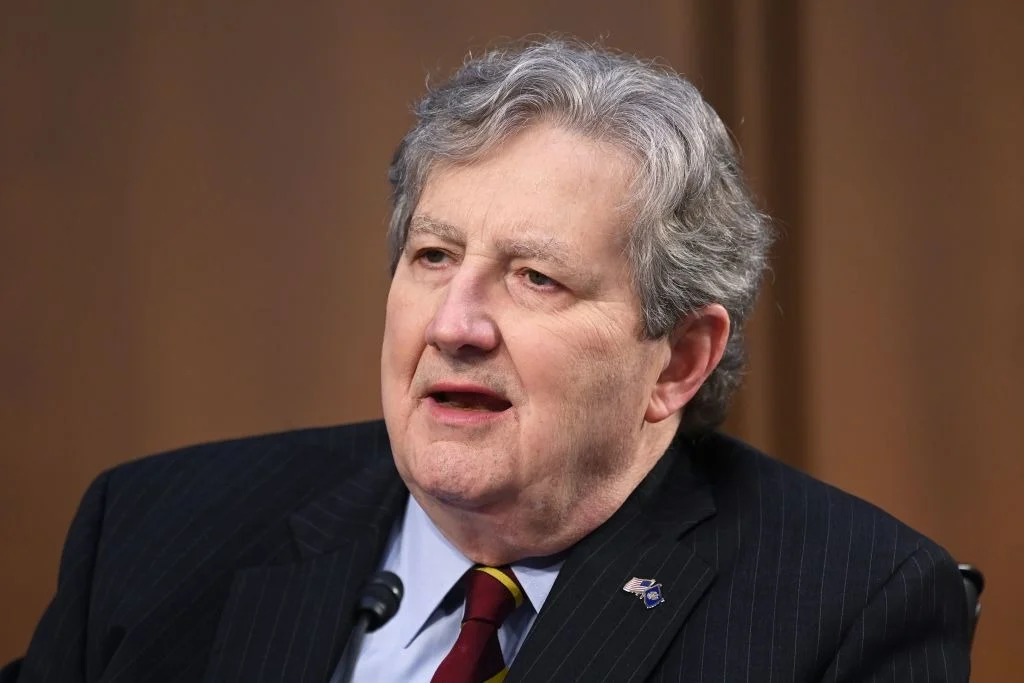
Appearing on NBC’s Meet the Press, Louisiana Republican Senator John Kennedy did not mince words when addressing the president’s tactics. Delivering his trademark brand of folksy yet razor-sharp rhetoric, Kennedy criticized Trump for crossing a major political boundary, famously remarking that the president can transition "from zero to a-hole in three seconds."
Beyond the immediate theater of the daylight saving time feud, the Sunday morning interview served as a broader warning flare for the GOP. With the critical 2026 midterm elections looming just one month away, Kennedy offered a blunt, unfiltered assessment of his party’s vulnerabilities, notably warning colleagues against dismissing voters’ deep-seated anxieties over the cost of living. Adding a dramatic political footnote to his appearance, the 74-year-old Louisiana senator also confirmed that he is actively weighing a potential run for the presidency in 2028, threatening to enter the fray should he deem the future Republican field a collection of "goobers."
Detailed Chronology: How the Daylight Saving Time Feud Evolved
The bizarre intraparty war began in earnest on Saturday, October 3, 2026, when President Trump took to social media to vent his frustrations over the stalled legislative efforts to make daylight saving time permanent. Trump has long been a vocal advocate for the Sunshine Protection Act, arguing that extending daylight hours deeper into the evening brings immense psychological and economic benefits, famously lamenting that standard winter time feels "dark" and "depressing."
However, the legislation has repeatedly hit roadblocks in Congress, facing opposition from various procedural hurdles, public health experts, and fiscal conservatives—with Senator Tom Cotton emerging as a prominent conservative roadblock. Cotton, known for his hawkish stance on defense and his steadfast adherence to traditional legislative processes, has maintained reservations about permanently altering the nation’s timekeeping framework without more comprehensive economic and safety data.
Frustrated by the legislative gridlock, President Trump escalated the policy disagreement into a personal confrontation. On Saturday, Trump published what purported to be Cotton’s personal cellphone number across his social media networks. He directly incited Arkansas voters to flood the senator’s phone with calls, demanding that Cotton yield to the executive branch’s preferred timeline and "release the sun."
The unprecedented move—using executive-sized social media reach to dox or target a sitting member of the same political party over a non-existential domestic policy disagreement—sent immediate shockwaves through Capitol Hill. While some Republican operatives attempted to downplay the incident as another instance of typical Trumpian bluster, rank-and-lawmakers privately expressed alarm at the normalization of public intimidation tactics directed at legislative colleagues.
By Sunday morning, the controversy dominated political talk shows, culminating in Senator Kennedy’s fiery appearance on Meet the Press, where he became one of the few high-profile Republicans willing to publicly reprimand the president’s tactics in real time.
Supporting Context & Metrics: The Political Stakes of the 2026 Midterms
While a public feud over the position of clock hands might read like political satire, the timing of the Trump-Cotton clash has amplified anxieties across the Republican campaign apparatus. Taking place precisely thirty days before the 2026 midterm elections, the spat threatens to distract from the GOP’s core messaging strategy.
Republicans have largely sought to anchor their midterm campaigns to economic grievances, capitalising on public fatigue over inflation, housing costs, and overall household expenditures. Yet, as Senator Kennedy candidly admitted during his Meet the Press appearance, the party’s rhetoric has occasionally missed the mark.
"Telling them not to believe their own lying checkbooks is not going to work," Kennedy stated bluntly, acknowledging that ordinary Americans continue to feel squeezed despite macroeconomic indicators touted by Washington insiders. "Some of that is our fault. We should have done more."
Key Midterm Vulnerabilities for the GOP:
- Cost of Living Realities: Polling leading into October 2026 indicates that pocketbook issues remain the single greatest determinant for undecided and independent voters.
- Intraparty Friction: Public displays of executive-legislative hostility risk depressing base turnout by projecting an image of internal chaos and disunity.
- Legislative Distractions: Spending prime campaign bandwidth debating the merits of daylight saving time pulls oxygen away from cohesive messaging on border security, taxation, and government spending.
Political analysts note that while Trump’s base revels in his unfiltered, combat-driven style, the collateral damage inflicted on popular legislators like Tom Cotton—a darling of the conservative establishment—could complicate unity in both houses of Congress should the GOP retain or expand its majorities in November.
Official Statements and Reactions
The fallout from the weekend’s events prompted a flurry of guarded statements and analysis from Capitol Hill insiders, though few dared to match John Kennedy’s colorful vocabulary.
- Senator John Kennedy (R-LA): Defending his colleague on NBC, Kennedy praised Cotton’s tenacity while condemning the president’s escalatory behavior. "Tom is a rock star senator," Kennedy said. "If you get between him and what’s best for Arkansas, he’ll devour you like a light snack. Every now and then there are disputes in Congress that have existential significance for Western civilization. Daylight saving time is not one of them." Addressing Trump directly, Kennedy added: "The president, as we know, can be sometimes—um—he exists loudly. He can be tempestuous. He can go from zero to a-hole in three seconds. I don’t think he should have given out Tom’s cell phone number. I don’t think that’s going to help convince Tom."
- The White House and Trump Allies: Representatives for the president doubled down on the push for the Sunshine Protection Act over the weekend, framing Trump’s social media blast as an expression of populist urgency. Allies argued that Washington insiders routinely drag their feet on common-sense measures that enjoy broad public popularity, framing the pressure campaign not as an attack on Cotton personally, but as an aggressive push to deliver on voter preferences.
- Senator Tom Cotton’s Office: Cotton’s office maintained a disciplined silence regarding the published phone number, choosing not to amplify the drama publicly while quietly managing the influx of constituent calls. Observers note that Cotton, a seasoned political operator, is unlikely to fold under pressure from either the executive branch or coordinated online campaigns.
Future Outlook: The 2028 Presidential Field and Beyond
Perhaps the most startling development of Kennedy’s Sunday interview was his pivot toward the distant horizon of the 2028 presidential election. While national attention remains firmly fixed on the unfolding 2026 midterms, the Louisiana senator’s willingness to entertain a White House bid injected a new dynamic into the future of the conservative movement.
When directly questioned by the Meet the Press moderator about his potential aspirations for 2028, Kennedy responded with a succinct, characteristically blunt: "Yeah."
The 74-year-old lawmaker outlined a specific set of conditions for a presidential run. While his immediate priority remains seeking reelection to his Senate seat representing Louisiana, Kennedy indicated he would not hesitate to enter the presidential primary ecosystem if he remains thoroughly unimpressed by the anticipated roster of contenders.
"If a bunch of goobers run, and I think they’re goobers and one of the goobers might win, and I think I can do a better job," Kennedy mused, "I would consider running."
What Lies Ahead:
- The Midterm Reckoning: How the GOP manages its internal fractures over the final month of the campaign will heavily dictate its legislative efficacy in the next Congress.
- Legislative Stalemate: Despite the president’s public pressure campaign, the Sunshine Protection Act faces steep headwinds in the Senate, where substantive disagreements over infrastructure, commercial scheduling, and health impacts continue to stall progress.
- The Post-Trump Conservative Landscape: Incidents like the Kennedy-Trump clash over Tom Cotton highlight the underlying tensions within a Republican party caught between populist executive pressure and traditional institutional loyalty—tensions that will undoubtedly define the primary battles of 2028.