

The corporate world is currently stumbling through an artificial intelligence rollout so profoundly misguided that, if adapted for the silver screen, movie critics would dismiss it as unbelievable fiction. No management team, audiences would argue, could possibly be that short-sighted. Yet, reality frequently outpaces satire. Across industries, executive boards and IT departments are repeating the exact same strategic blunders that plagued the digital transformation era a decade ago.
The root cause of this systemic failure is both simple and stubborn: organizations continue to treat AI adoption as a technological challenge rather than a profound cultural and human shift.
In 2014, digital strategist Paul Boag published Digital Adaptation, a diagnostic book addressing why traditional enterprises were repeatedly failing to integrate digital tools effectively. Revisiting those core lessons today reveals an eerie parallelism. Whether it is the corporate obsession with rolling out generic software licenses, the total disregard for employee motivation, or the iron-fisted governance that sparks clandestine "Shadow IT," history is repeating itself with expensive precision.
To survive the current technological paradigm shift, corporate leaders must move past the hype, recognize the human element at the core of AI adoption, and fundamentally rethink how they manage change, mitigate risk, and empower their workforce.
Detailed Chronology: From the CMS Blunders of 2014 to the Copilot Chaos of Today
To understand why contemporary AI rollouts are crashing against the rocks of organizational resistance, one must trace the institutional amnesia currently plaguing the C-suite. The blueprint for failure was written more than ten years ago during the height of the digital transformation boom.
The Digital Transformation Trap (2010–2015)
During the early 2010s, organizations faced a clear imperative: digitize or die. Executive leadership responded by tasking IT departments with sweeping, top-down software deployments. Content Management Systems (CMS), Customer Relationship Management (CRM) platforms, and sprawling corporate intranets were purchased, licensed, and forced onto internal teams. Externally, businesses rushed to launch mobile apps and responsive websites.
However, these initiatives were driven almost entirely by technological checkboxes rather than human utility. IT departments focused on installation, not implementation. They gave zero consideration to how actual human beings—both internal employees and external customers—would interact with these systems.
Consequently, internal intranets were notoriously difficult to use, and external customers found corporate digital touchpoints irrelevant or frustrating. Businesses spent millions on infrastructure while ignoring procedural knowledge, leaving employees overwhelmed and customers alienated.
The AI Era Deja Vu (2023–Present)
Fast forward to the present day, and the corporate playbook has barely evolved. Seduced by relentless media hype surrounding generative AI, senior leadership teams are once again rushing to procure technological fixes.
The modern equivalent of the 2014 CMS rollout is the enterprise-wide distribution of standardized AI tool licenses—such as Microsoft’s Copilot Studio—pushed out to every desk with little more than a generic, one-size-fits-all training webinar. Executive boards check the "AI integration" box on their quarterly reports, assume the work is done, and wait for productivity metrics to skyrocket.
Instead, they are met with a workforce that is paralyzed by uncertainty, exhausted by unmanageable workloads, and terrified that these exact systems are coming for their jobs. Employees are handed powerful new technologies without receiving the time, safety, or targeted training required to integrate them into daily workflows. The institutional amnesia is complete: corporations are once again attempting to solve a human, cultural crisis with a purely technological band-aid.
Supporting Context & Metrics: The Human Cost of Mismanaged Technology
The parallels between digital transformation and AI adoption extend far beyond poor software rollouts. They highlight a fundamental disconnect between executive expectations and frontline realities.
It’s About People, Not Technology
Technology is always the tip of a very large, complex iceberg. Beneath the surface lie deeply ingrained working practices, psychological safety, and organizational culture. When an enterprise deploys AI without consulting the end-user, it places an enormous psychological burden on its staff.
This time around, the stakes are significantly higher. During the digital transformation era, employees worried about learning a new interface; today, they fear for their livelihoods. Headlines detailing AI-driven layoffs dominate the news cycle, and corporate promises of "augmentation, not replacement" ring hollow to a workforce expected to produce more output in the exact same amount of time.
The Motivation Deficit
A core flaw in modern AI strategies is the complete absence of a value proposition for the employee. Senior management champions AI for one primary reason: productivity. By empowering staff to do more in less time, leadership envisions leaner operations and reduced overhead.
However, from an employee’s perspective, this equation offers zero personal benefit. Workers are still expected to log their standard forty-hour workweeks. They do not get extra time off, nor do they see commensurate compensation increases. Instead, "increased productivity" translates directly into a heavier workload within the same compressed timeframe. Without a clear answer to the fundamental question—Why should I adopt this?—employees naturally resist change.
Organizations must reframe AI adoption by collaborating with staff to identify the most tedious, hated aspects of their daily routines, positioning AI as a tool to eliminate drudgery rather than an instrument of corporate surveillance and speedup.
The Rise of Shadow AI and the Paralysis of Strict Governance
When corporate IT departments attempt to solve the adoption puzzle by locking down technology, they trigger unintended consequences. During the digital transformation era, overly restrictive corporate policies led directly to the rise of "Shadow IT," where employees turned to unauthorized tools like Dropbox and personal Google Docs to get their jobs done.
Today, this phenomenon has mutated into Shadow AI. When an in-house AI assistant fails to support a UX team’s specialized research repository needs, or when cumbersome bureaucratic approval processes stall innovation, employees do not simply give up. They open personal ChatGPT or Claude accounts on their smartphones and personal laptops.
This behavior introduces massive compliance and security risks. Company data ends up in unvetted, external tools completely outside the organization’s purview. Rather than responding with draconian bans and disciplinary threats, forward-thinking organizations study Shadow AI as a diagnostic tool, using it to identify where official tech stacks are falling short.

Official Statements & Industry Insights
To better understand the structural failures currently undermining corporate AI strategies, industry experts and organizational psychologists emphasize the critical need for psychological safety and adaptive governance.
"Organizations need to recognize that AI is a cultural shift as much as a technology, and that shift has enormous implications for their staff. Rather than trying to win over the most resistant staff first, organizations should find the people already experimenting with AI, give them time to share what they have learned, and let social proof do the heavy lifting."
— Paul Boag, Digital Adaptation Strategist and Author
Industry analysts consistently point out that traditional corporate governance structures are fundamentally unsuited for the exploratory nature of artificial intelligence. Bureaucratic steering committees that demand rigid Key Performance Indicators (KPIs) from day one inadvertently create a culture of fear. When employees are penalized for experimental errors—such as exceeding token budgets or misusing a prompt during early learning phases—they quickly retreat to the safety of familiar, analog workflows.
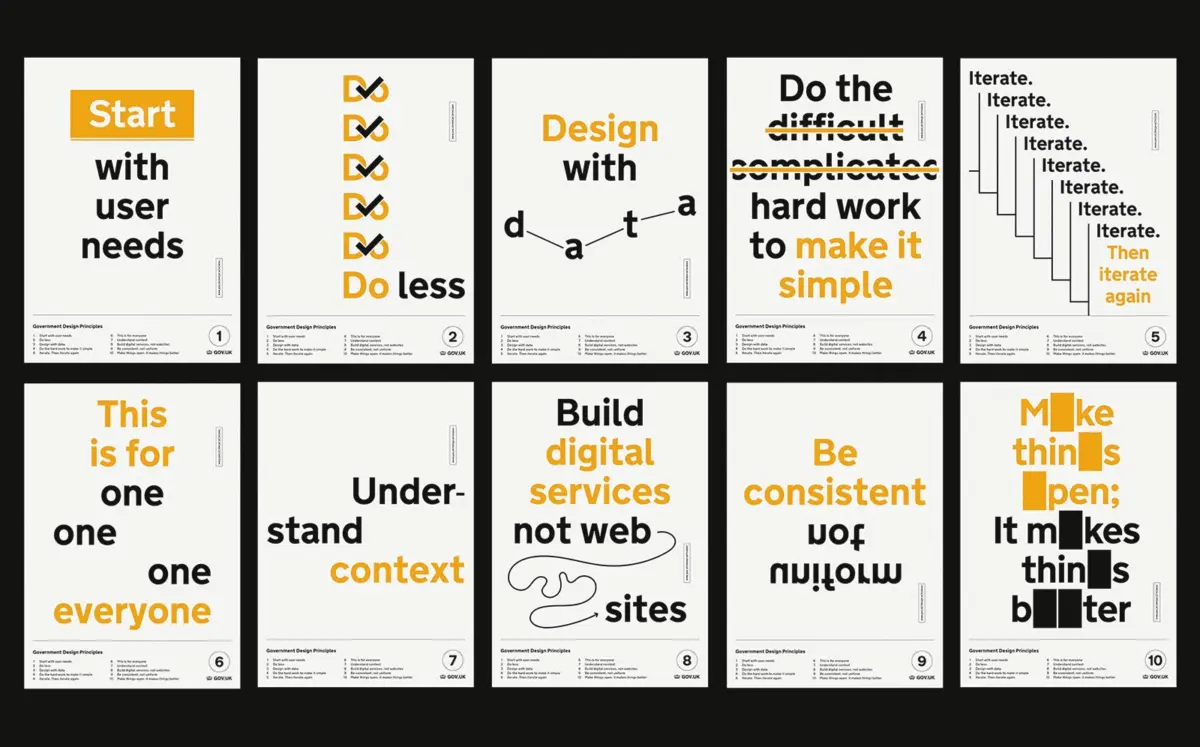
Experts advocate for a minimalist governance model inspired by successful public-sector frameworks, such as the UK Government’s digital design principles. Instead of hundreds of pages of restrictive compliance manuals, organizations should issue a concise set of guiding principles, trusting employees to exercise professional common sense during the exploratory phase.
Future Outlook: Navigating the Road Ahead
As the artificial intelligence landscape matures, the organizations that successfully navigate this transition will be those that abandon top-down coercion in favor of organic, community-driven adoption models.
1. Fostering Communities of Practice
Formal training courses and generic e-learning modules have proven insufficient. The most effective catalyst for internal AI adoption is peer-to-peer learning. Enterprises must identify internal enthusiasts—those rogue innovators already experimenting with AI off the clock—and provide them with dedicated time, space, and platforms to share their successes. Internal conferences, show-and-tell sessions, and cross-departmental showcases do more to drive authentic engagement than any executive memo ever could.
2. Creating a Safe Environment to Fail
Innovation cannot occur in an environment dominated by fear. To encourage genuine exploration, leadership must actively adjust performance metrics, re-evaluate review processes, and temporarily relax strict operational governance while teams rebuild their procedural knowledge. Making it safe to fail is not a luxury; it is a prerequisite for adaptation.
3. Shifting from Control to Empowerment
Ultimately, the primary danger facing modern enterprises is not the risk of moving too fast with AI; it is the existential risk of moving too slowly while bogged down by centralized control and bureaucratic inertia. By acknowledging that AI adoption is fundamentally a human challenge—rooted in culture, change management, and empathy—organizations can transform a source of widespread workplace anxiety into a powerful engine for long-term growth.