In the realm of contemporary agricultural journalism, few investigations delve as deeply into the sensory, historical, and occasionally absurd characteristics of heirloom produce as the ongoing pomological evaluations conducted by the "Apple Snack Gang." Following the publication of an initial, highly unorthodox assessment wave, a secondary batch of rare and heritage apples has undergone rigorous, highly subjective sensory scrutiny.
This report covers a comprehensive audit of seven distinct cultivars: Kickapoo Spice, St. Edmunds Pippin, Sops of Wine, Fenceline Surprise, Americus Crab, Campfield (False), and Graham. Far from standard grocery store fare, these botanical specimens challenge conventional metrics of sweetness, structural integrity, and culinary utility. Through a blend of sensory profiling, historical excavation, and unvarnished consumer critique, this investigation reveals an unpredictable landscape of high-tannin cider apples, jaw-shattering workout fruits, and unexpected flavor profiles that defy botanical logic.
As the cultural appreciation for heirloom and forgotten fruit varieties surges across North America—spurred by upcoming regional tours through New York, New England, and Canada—understanding the qualitative spectrum of these apples has never been more critical for the modern pomologist and casual snacker alike.
Detailed Chronology of the Tasting Phase
The evaluation of this latest batch followed a strict, unstructured consumption protocol designed to test each apple across multiple vectors: initial visual impression, structural resistance upon biting, immediate flavor delivery, lingering aftertaste, and an overall numerical rating on a ten-point scale.
1. Kickapoo Spice
Metric: 6.9 / 10
Profile: Visually described as a "dense boy" and a "weird friend," the Kickapoo Spice immediately establishes its thematic credentials through its robust spice profile. Dominant notes of nutmeg, supported by secondary layers of cinnamon and clove, validate its nomenclature. However, the fruit lacked essential juiciness, leaving behind an unorthodox cut-grass aftertaste. Experts note that its performance highlights the precarious storage vulnerability of apples: improper timing can plunge a specimen straight into mediocrity.
2. St. Edmunds Pippin
Metric: 8.3 / 10
Profile: Serving as an early-season benchmark, the St. Edmunds Pippin presents a paradox of rough, shark-skin exterior texture paired with an exceptionally crisp, explosive snap upon impact. Flavor-wise, it delivered a bright, herbal complexity reminiscent of fennel pollen, harmoniously balanced against a natural baseline sweetness. Despite its aggressive exterior, it emerged as one of the season’s premier balanced varieties.
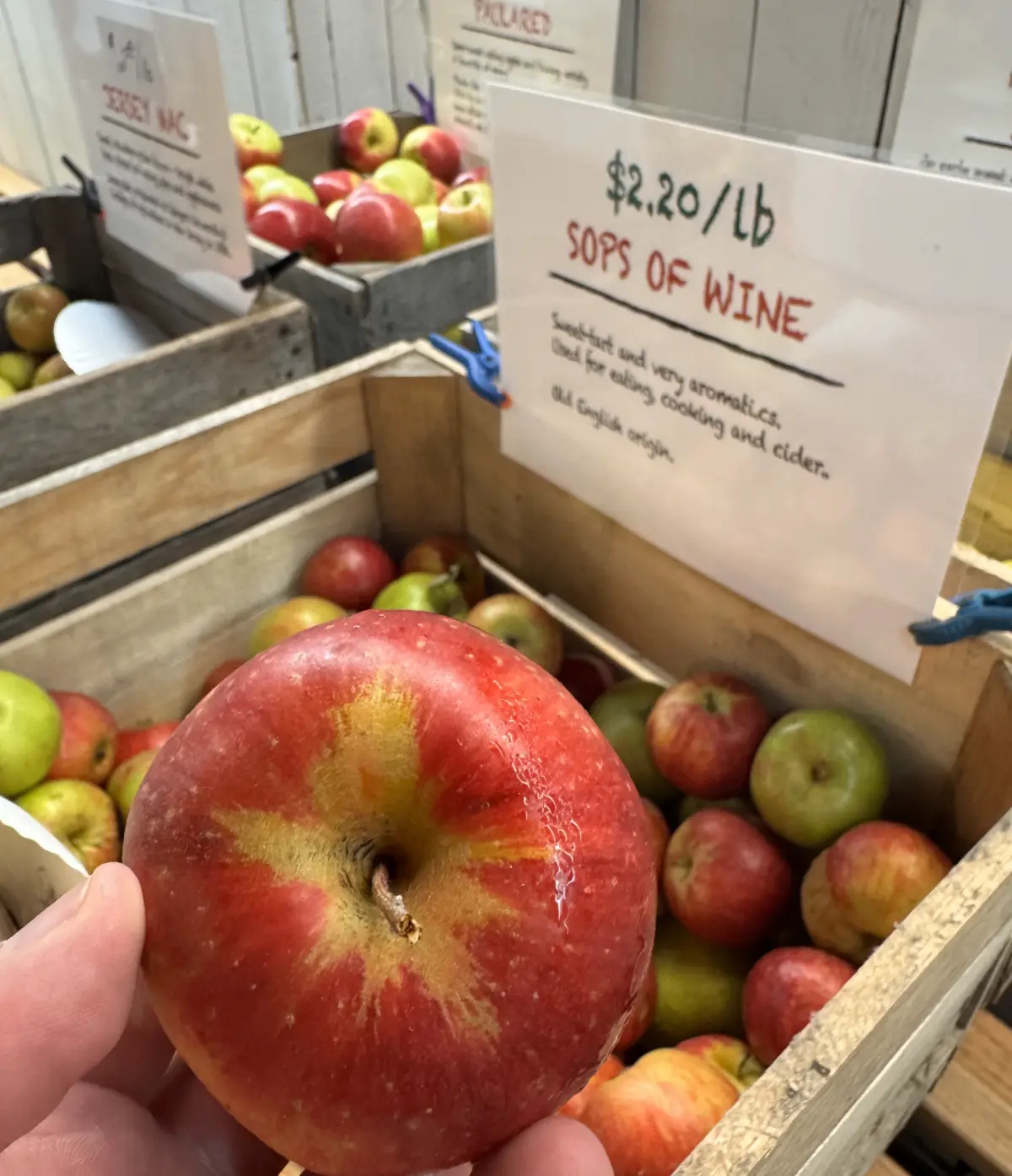
3. Sops of Wine
Metric: 3.5 / 10
Profile: This cultivar introduced significant sensory and psychological friction. Exhibiting a mealy, gritty texture characteristic of over-ripening, the Sops of Wine sample failed to display the historical red-fleshed anomalies associated with the name. Instead, it offered a sub-acid flavor profile threaded with vanilla and spice notes, though compromised entirely by its degraded structural integrity.
4. Fenceline Surprise
Metric: 1.0 / 10
Profile: True to its ominous moniker, the Fenceline Surprise proved to be a severe disappointment. Marketed as a "firm apple," the specimen yielded a bland, sandy mush that lacked any substantial structural backbone. A fleeting, misted-pear essence prevented a total score of zero, but it remains a cautionary tale regarding over-mature cold storage distribution.
5. Americus Crab
Metric: 2.5 / 10
Profile: As a representative crabapple, the Americus Crab is explicitly not engineered for casual, out-of-hand snacking. Exhibiting a formidable synthesis of savory depth, extreme tartness, intense toughness, and high tannin levels, it functions primarily as an exploratory challenge for adventurous palates rather than a refreshing dietary staple.
6. Campfield (False)
Metric: 4.1 / 10
Profile: Labeled cryptically with the qualifier "(false)," this high-tannin specimen offered a chewy, abrasive texture that felt almost adversarial to the human mouth. Recognizing its true identity as a cider apple rather than a dessert fruit explains its astringency, which demands industrial fermentation to unlock its true culinary potential.
7. Graham
Metric: 8.0 / 10
Profile: The physical resilience of the Graham cultivar pushed the limits of dental endurance. Possessing a structural density capable of resisting standard mastication, the apple cleaved apart like a calving glacier. Yet, the reward for this physical exertion was astonishing: a clean, unapologetic, and direct flavor profile mirroring commercial Juicy Fruit gum.
Supporting Context & Metrics
Evaluating heirloom fruit requires an appreciation of the complex interplay between pomology, history, and consumer expectations. Unlike standardized, heavily commercialized varieties bred exclusively for shelf-life and uniform sweetness (such as the ubiquitous Red Delicious), heritage apples represent localized agricultural history, evolving regional climates, and specific industrial applications—ranging from fresh cider production to long-term winter storage.
Cultivar Name
Primary Flavor Notes
Structural Integrity
Target Utility
Final Rating
Kickapoo Spice
Nutmeg, cinnamon, cut grass
Dense, dry
Fresh consumption (timed)
6.9 / 10
St. Edmunds Pippin
Fennel pollen, herbal sweet
Sharp-breaking, crisp
Fresh consumption
8.3 / 10
Sops of Wine
Vanilla, spice, sub-acid
Mealy, gritty
Historical curiosity
3.5 / 10
Fenceline Surprise
Faint pear mist
Sandy mush
Avoid
1.0 / 10
Americus Crab
Savory, highly tart, tannic
Extremely tough
Culinary/Foraging
2.5 / 10
Campfield (False)
Tannic, astringent
Chewy, fibrous
Hard Cider production
4.1 / 10
Graham
Juicy Fruit gum
Rock-hard, dense
Fresh (with jaw conditioning)
8.0 / 10
The disparity in these ratings underscores a fundamental truth of modern fruit consumption: heirloom preservation is an exercise in managing volatility. Variations in soil composition, harvest windows, and post-harvest cold storage dictate whether an apple achieves the sublime bubblegum sweetness of a Graham or collapses into the sandy regret of a Fenceline Surprise.
Official Statements and Historical Interludes
The investigation into these cultivars brought forth fascinating historical documentation, particularly surrounding the lineage of the Campfield apple. Historical records indicate deep roots in early American colonial history:
"Campfield Apple. It is from a family in New Jersey, namely mine. His name was Matthew Canfield, also spelled Mathew and Campfield at the time. He was an anti-royalist Puritan who came from Harleston, England before 1637 in The Great Puritan Migration, and is a founding father of New Haven Colony, Norwalk, CT, and Newark, N.J. where the best hard cider was made… In the town, there was a requirement for ‘freeholders’ to cultivate four acres. Thus, the creation of orchards."
This colonial mandate—requiring landowners to plant extensive fruit tree acreage to secure their voting rights and civic standing—directly fueled the proliferation of cider-grade apples across the American landscape. Varieties like the Campfield were never meant to be consumed raw by human teeth; they were foundational building blocks for the fermented beverages that sustained early colonial settlements.
Furthermore, psychological associations during sensory testing played an unexpectedly prominent role. The auditory and linguistic trigger of the name Sops of Wine notoriously evoked cinematic memories of Middle-earth governance, illustrating how deeply cultural touchstones intertwine with culinary perception.
Future Outlook
As the agricultural community looks toward the upcoming autumn harvest season, the trajectory of heirloom apple exploration is poised for significant expansion. With upcoming field research expeditions scheduled across New York, New England, and the Canadian provinces, pomological investigators are casting a wider net into regional orchards and local markets.
The demand for authentic, non-standardized fruit varieties continues to rise among consumers who reject uniformity in favor of character, complexity, and historical continuity. Whether future expeditions yield more jaw-shattering athletic apples like the Graham or uncover forgotten cider varieties steeped in colonial lore, one reality remains certain: the world of apples is vast, eccentric, and entirely unforgiving to the unprepared consumer. Regional orchardists and apple purveyors are advised to prepare their inventories accordingly.