

Executive Overview
In the realm of seasonal agricultural critique, few endeavors match the unyielding rigor, chaotic introspection, and sensory dedication of the ongoing Apple Snack Gang trials. As autumn’s crisp air settles across orchards and markets alike, connoisseurs and casual consumers look for authoritative insights into the year’s yield. Enter the second installment of the 2026 pomological reviews—a wild, uncompromising expedition through eccentric cultivars, historical anomalies, and jaw-shattering structural integrity.
This report synthesizes the evaluation of seven distinct apple varieties tested during the peak of the 2026 harvest cycle. From the nutmeg-heavy depths of the Kickapoo Spice to the perplexing, gym-honed density of the Graham, these evaluations challenge conventional supermarket expectations. Rather than merely cataloging sweetness and acidity, this investigation explores the intersection of texture, historical lineage, pop-culture hallucinations, and dental resilience.
With an upcoming tour across New York, New England, and Canada threatening to flood the reviewer’s itinerary with even more seasonal specimens, this comprehensive dossier breaks down the ratings, characteristics, and underlying oddities of the current batch. Welcome, once again, to the party, Apple Snack Gang.
Detailed Chronology of the Tasting Trials
The testing protocol for this batch followed a strict, albeit idiosyncratic, methodology: acquisition, visual inspection, structural assessment (bite resistance), aromatic profiling, flavor decomposition, and an unsparing numerical score out of ten. Below is the chronological breakdown of the specimens evaluated in this latest phase of the 2026 harvest audit.

1. Kickapoo Spice: The Dense, Herbal Contender
- Score: 6.9 / 10
Kicking off the session with a name evocative of classic rock ballads and frontier lore, the Kickapoo Spice presented itself as a physical anomaly. Described aptly as a "dense boy" and a "weird friend," this apple leaned heavily away from standard dessert profiles.
Upon biting, the high spice component immediately dominated the palate. Nutmeg reigned supreme, accompanied by robust secondary notes of cinnamon and clove, living up fully to its middle name. However, structural and textural shortcomings held it back from true greatness. The fruit lacked juiciness, presenting instead an unexpected and less-than-ideal aftertaste reminiscent of freshly cut grass. Pomological analysts note that apples are notoriously fickle regarding storage conditions; some improve post-harvest, while others begin an irreversible descent into mediocrity the moment they are plucked. The Kickapoo Spice likely required a more nuanced storage window, yet it remains a fascinating, spiced specimen worthy of a respectable 6.9 rating.
2. St Edmunds Pippin: The Shark-Skinned Champion
- Score: 8.3 / 10
Marking the reviewer’s first proper pomological experience of the season, the St Edmunds Pippin proved to be an absolute triumph, overcoming its initial intimidating exterior. The skin offered a tactile warning—rough to the touch, likened playfully to "licking a shark backward."
Yet, the sensory reward arrived instantly upon impact. The bite yielded a magnificent, sharp-breaking pop and crunch. Flavor-wise, the Pippin delivered a bright, herbal complexity with distinct fennel pollen undertones, expertly counterbalanced by an underlying sweetness. It stands as a masterclass in how a slightly eccentric, funky apple can achieve a sublime tart-sweet harmony. Earning an 8.3 out of 10, the St Edmunds Pippin set a high benchmark for the remainder of the season.

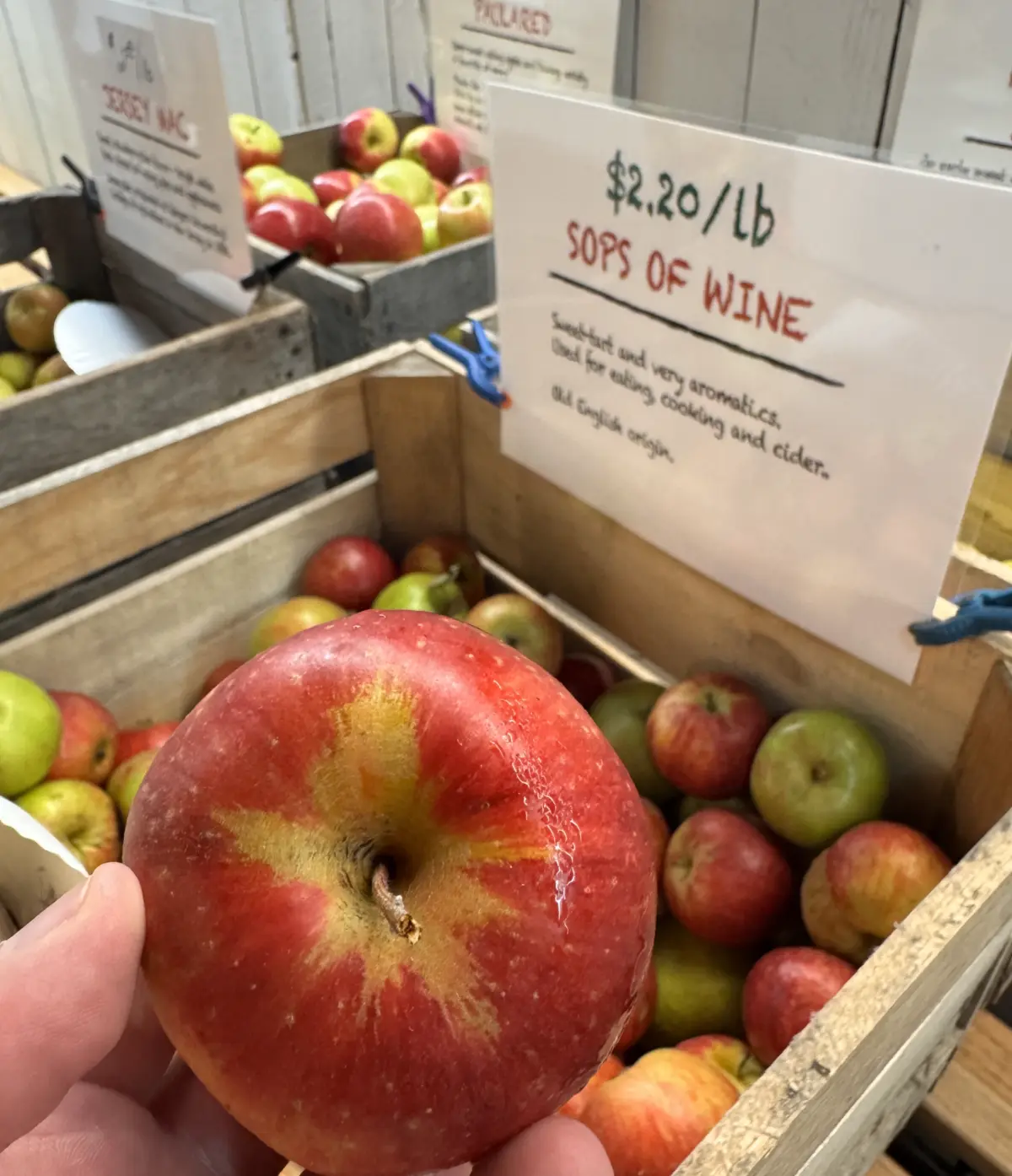
3. Sops of Wine: A Mealy Memory
- Score: 3.5 / 10
Few apples evoke such visceral, cinematic hallucinations as the Sops of Wine. Merely encountering the name triggered an involuntary mental playback of Lord of the Rings—specifically Denethor’s notoriously dramatic tomato consumption, complete with a phantom voice echoing "SOPS OF WINE" through the hollows of the reviewer’s consciousness.
Unfortunately, the reality of the fruit did not match the dramatic flair of its nomenclature. Exhibiting good underlying flavors—subacid sweetness paired with subtle vanilla and spice notes—the apple suffered from a critically compromised texture. Having been consumed days after purchase, it had evidently spent too long off the tree, resulting in a mealy and gritty mouthfeel. Furthermore, while historical accounts suggest Sops of Wine should feature red-fleshed attributes or striking red-streaked white flesh, this particular specimen offered no such visual poetry. Caught between botanical ambiguity and phantom cinematic echoes, it limped across the finish line with a meager 3.5 out of 10.
4. Fenceline Surprise: The Disappointing Outlier
- Score: 1.0 / 10
True to its ominous moniker, the primary surprise of the Fenceline Surprise was just how profoundly underwhelming it tasted. While a sophisticated linguistic joke might be made by pronouncing the name with a French cadence rather than a standard "fence line," no amount of linguistic flair could rescue the fruit’s catastrophic structural flaws.
The experience was defined by bland mushiness. A fleeting, ghostly trace of pear juice hinted at potential, but it vanished almost instantly, leaving behind a sensation akin to chewing beach sand. Despite signage proudly labeling it a "firm apple," this specimen was either harvested from a genetically grumpy batch or had long since crossed the threshold into cold worm-food before making it to market. Spared from a zero-point rating solely by its dainty residual pear whisper and an otherwise handsome outward appearance, it earned a harsh 1 out of 10.

5. Americus Crab: The Steampunk Inventor
- Score: 2.5 / 10
Looking less like a standard piece of produce and more like a character from a Victorian sci-fi adventure, the Americus Crab demands respect through sheer atmosphere. Imagined as a brilliant, eccentric inventor—or perhaps a maritime superhero alongside "America’s Crab" saving the high seas from the villainous Brine Man—this crabapple proved as uncompromising in flavor as it is in title.
As expected from a true crabapple, eating it out of hand is an extreme sport. It is savory, aggressively tart, structurally unyielding, and saturated with tannins. It is fundamentally not designed for casual snacking. However, for those with a predilection for wild, untamed botanical experiences—or those who enjoy consuming items they legally probably shouldn’t—it offers a uniquely thrilling, if punishing, ride. Score: 2.5 out of 10.
6. Campfield (False?): The Revolutionary Puritan
- Score: 4.1 / 10
Labeled mysteriously with a "(false)" designation in its title, the Campfield read less like a fruit and more like a tricksy artifact guarded by subterranean creatures. Structurally, it offered a chewy, callused-thumb texture. It walked a difficult tightrope: overly sweet yet flooded with tannins that created the uncanny sensation that the apple was consuming the taster just as much as the taster was consuming it.
As a noted cider apple, such aggressive tannin levels are entirely standard; these fruits are chemically locked behind a gate that only the goblins of fermentation can truly unlock.

However, the true marvel of the Campfield lies in its deeply entrenched historical lore. Archival records trace the lineage of the name back to Matthew Canfield (alternatively spelled Campfield), an anti-royalist Puritan who arrived in America during the Great Puritan Migration of 1637. A founding father of New Haven Colony, Norwalk, and Newark, Canfield’s descendants played complex roles in the American Revolution on both sides. Historical town records note his civic duties—including assessing swine damage and examining fences—alongside strict mandates requiring freeholders to cultivate four acres of fruit trees, cementing New Jersey’s legacy of elite hard cider production. Historical weight aside, its raw culinary performance warrants a 4.1 out of 10.
7. Graham: The Gym-Honed Titan
- Score: 8.0 / 10
The final contender of the batch, the Graham, approached physical perfection while simultaneously threatening the structural integrity of human jawbones. So dense and relentlessly hard that it felt immune to standard human teeth, this apple was jokingly diagnosed as having "gone to the gym" and achieved washboard abs impervious to 20-gauge birdshot. Biting into it felt like witnessing a calving glacier.
Yet, the extraordinary effort required to breach its exterior was handsomely rewarded. Once penetrated, the Graham revealed an explosion of juiciness and flavor that defied all expectations: it tasted, unmistakably and wonderfully, of authentic Juicy Fruit gum. Unrestrained and unapologetic, this flavor profile elevated an otherwise punishing experience into a triumph. Had it not demanded complete jaw-smashing looksmaxxing just to consume, it would have easily claimed the top spot. Final score: an impressive 8.0 out of 10.
Supporting Context & Metrics
To provide a holistic view of the 2026 harvest trials, the following analytical matrix summarizes the evaluated varieties based on key pomological metrics:

| Variety | Texture & Density | Dominant Flavor Profile | Historical / Cultural Note | Final Score (/10) |
|---|---|---|---|---|
| Kickapoo Spice | Dense, dryish | Nutmeg, clove, cinnamon, cut-grass finish | Evokes Tenacious D and frontier lore | 6.9 |
| St Edmunds Pippin | Crisp, sharp-breaking, juicy | Fennel pollen, herbal, sweet-tart balance | First proper seasonal fruit; shark-skin texture | 8.3 |
| Sops of Wine | Mealy, gritty | Subacid sweet, vanilla, spice | Evokes cinematic Lord of the Rings hallucinations | 3.5 |
| Fenceline Surprise | Bland, mushy, sandy | Faint, fleeting pear whisper | Misleadingly labeled as "firm" | 1.0 |
| Americus Crab | Tough, unyielding | Savory, tart, high tannins | Steampunk inventor / superhero aesthetic | 2.5 |
| Campfield (False?) | Chewy, tannin-heavy | Sweet-tannic, astringent | Linked to Puritan founder Matthew Canfield | 4.1 |
| Graham | Rock-solid, glacier-breaking | Unadulterated Juicy Fruit gum | Extreme jaw-resistance; high physical cost | 8.0 |
Official Statements & Methodological Philosophy
The overarching philosophy guiding the Apple Snack Gang trials relies on radical transparency, sensory honesty, and an acceptance of pomological chaos. Apples are living agricultural products influenced by microclimates, harvest timing, storage duration, and genetic drift.
As noted throughout the evaluation process, the line between a transcendent dessert apple and a botanical disappointment often rests on days—sometimes hours—of post-harvest handling. Varieties explicitly bred for fermentation, such as the tannin-rich Campfield, cannot fairly be judged by the same metrics applied to fresh-market champions like the St Edmunds Pippin. The trials continue to advocate for a broader appreciation of heirloom, wild, and eccentric cultivars, reminding consumers that perfection is boring, whereas a fruit that tastes like chewing gum or challenges one’s dental fortitude is unforgettable.
Future Outlook
With the completion of this batch, the Apple Snack Gang’s investigative lens turns sharply northward and eastward. Expedition plans are locked in for an upcoming tour spanning New York, New England, and Canada.
Given the rich apple-growing heritage of these regions—steeped in historical orchards, cold-climate adaptations, and localized heirloom preservation—the upcoming itinerary promises an influx of novel specimens. Followers, growers, and local purveyors are actively encouraged to check official appearance schedules and participate in the ongoing harvest audit by bringing regional samples directly to the reviewer.

As the autumn season deepens, one certainty remains: the search for the ultimate apple is relentless, unapologetic, and bound to yield plenty of delicious, and delightfully weird, surprises.