

Executive Overview
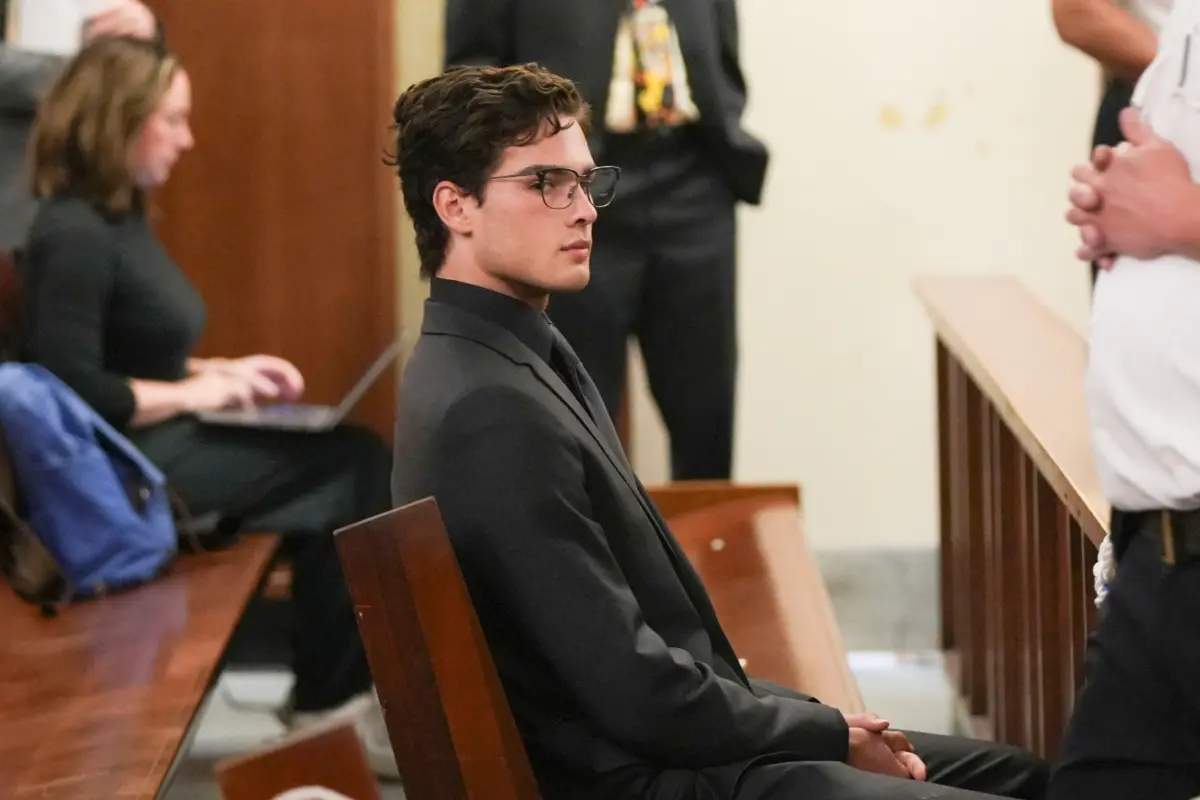
The landscape of modern digital celebrity has long operated in a hyper-accelerated, unregulated space, but the collision between internet subcultures and the traditional legal system often results in profound public reckonings. In a Massachusetts courtroom on Thursday, this cultural reality manifested starkly as Braden Peters—a prominent and controversial figure within the burgeoning "looksmaxxing" digital ecosystem, widely known online by his handle "Clavicular"—formally pleaded not guilty to severe criminal charges, including rape.
The arraignment marks a critical escalation in a legal saga that has steadily moved from civil dockets to felony indictments. Peters, who built an influential digital brand centered on physical self-improvement, body aesthetics, and male subculture commentary, stands accused of assaulting a fellow influencer at his family’s Cape Cod residence in May 2025. The victim, identified in legal and investigative records as Aleksandra Vasilevna Mendoza (better known online as Alorah Ziva), was a minor at the time of the alleged incident.
During Thursday’s proceedings, a Massachusetts judge set Peters’ bail at $10,000, a sum the influencer promptly paid in cash. As conditions of his release, Peters surrendered his passport and agreed to a strict no-contact order, barring him from interacting with the accuser or addressing her through digital channels. While Peters’ defense team successfully argued that their client—who has no prior felony record—did not represent a flight risk or a direct community threat, the gravity of the charges underscores a broader cultural moment.
This case serves as a high-profile intersection of modern influencer culture, accountability, the dark underbelly of fringe internet subcultures, and the mechanisms of the American judicial system. As the case progresses toward trial, it forces a hard look at the real-world consequences of online clout, the blurred boundaries of digital relationships, and the legal repercussions when virtual personas collide with physical-world felonies.
Detailed Chronology of Events
To fully understand the legal labyrinth surrounding Braden Peters, one must trace the timeline from the initial digital interactions to the courtroom steps in Massachusetts. The sequence of events spans over a year of rising digital prominence, escalating tensions, civil filings, and eventual criminal indictments.
May 2025: The Alleged Incident on Cape Cod
The core of the legal action stems from a weekend in late spring. On May 23, 2025, according to court documents, civil filings, and law enforcement reports, Mendoza visited Peters’ family home on Cape Cod, Massachusetts. At the time of the gathering, Mendoza was 17 years old.
According to allegations outlined in subsequent civil and criminal complaints, the visit quickly devolved into an exploitative environment. Peters allegedly provided Mendoza with alcohol, supplying liquor to an underage individual. The civil suit filed by Mendoza claimed that she consumed enough alcohol to become incapacitated, rendering her legally and physically incapable of giving consent.
The complaint detailed a deeply harrowing sequence: later that evening, and continuing into the early morning hours of May 24, Mendoza woke up to find Peters sexually assaulting her without her consent. Furthermore, the civil filing alleged that Peters administered an unapproved substance—suspected by investigators to potentially contain methamphetamine—further compromising her agency.
April 2026: The Civil Suit Filed
Months after the alleged events, the conflict spilled into the public sphere through legal channels. In April 2026, Aleksandra Vasilevna Mendoza filed a civil lawsuit against Peters in federal or state court, bringing forward severe counts of battery, intentional infliction of emotional distress, and fraud.
The civil suit laid bare the allegations regarding the Cape Cod weekend, detailing the provision of alcohol, the incapacitated state of the victim, the non-consensual sexual acts, and the administration of the unapproved substance. The filing immediately sent shockwaves through the niche communities that followed both influencers, drawing intense scrutiny from digital media watchdogs and legal analysts alike.
September 2026: Commonwealth Indictments
While civil litigation allows plaintiffs to seek financial restitution and accountability through damages, the involvement of law enforcement signaled that the state viewed the matter with far greater gravity. In September 2026, the Commonwealth of Massachusetts officially stepped in, formally charging Peters with three criminal counts.
The indictment included two felonies: one count of rape and a secondary drug-related charge tied to the circumstances of the sexual assault. Additionally, prosecutors slapped Peters with a misdemeanor count for procuring liquor for a person under the age of 21. This state intervention transformed the dispute from a private civil battle into a high-stakes criminal prosecution carrying the genuine threat of significant prison time.
October 2026: Strategic Shifts and Court Maneuvers
As the legal pressure mounted, October 2026 brought significant tactical adjustments from both legal teams. Mendoza’s legal counsel opted to refile her civil suit, notably stripping out the specific sexual assault allegations. Legal experts noted that this was a strategic maneuver designed to streamline the civil process and ensure that the civil litigation would not inadvertently compromise or complicate the ongoing criminal prosecution led by the Commonwealth.
Concurrently, investigative reports from The New York Times and other outlets brought newly unsealed police reports and court filings to light, painting a more comprehensive picture of the evidence gathered by Massachusetts law enforcement.
December 2026 / January 2027: The Arraignment and Bail Hearing
The most recent chapter unfolded in a Massachusetts courtroom, where Peters made his formal appearance for his arraignment. During the preliminary hearings on Wednesday, Peters’ defense attorneys fought to secure a low bail amount, laying the foundational framework of their upcoming trial defense. They argued that Peters possessed deep ties, lacked any prior felony record, and posed no danger.
By Thursday, the judge formalized the conditions: a $10,000 cash bail—which Peters paid immediately—the surrender of his passport to prevent international travel, and strict mandates to avoid all contact with the victim, both in person and online. With the not-guilty plea officially entered, the case now hurtles toward pre-trial discovery and motions.
Supporting Context & Metrics: The World of "Looksmaxxing" and Clavicular
To contextualize who Braden Peters is and why this case has captured mainstream media attention, one must examine the insular, rapidly growing digital subculture known as "looksmaxxing."
Decoding "Looksmaxxing"
Looksmaxxing is a slang term originating from male-centric internet forums and social media ecosystems (often tied to the broader "manosphere" and incel adjacent spaces) dedicated to maximizing one’s physical attractiveness. The practices range from benign fitness, skincare routines, and grooming advice to more extreme, controversial regimens, including jawline exercises, posture correction, and even encouragement toward cosmetic surgery (such as jaw implants or rhinoplasty).
Braden Peters ascended to prominence within this ecosystem under the moniker "Clavicular"—a reference to the clavicle bone, which is fetishized in these communities as a marker of masculine skeletal structure and broad shoulders. Leveraging platforms like TikTok, YouTube, and X (formerly Twitter), Peters amassed a dedicated following of young men seeking self-improvement advice, capitalizing on male insecurities about appearance, dating, and social status. At its height, the "Clavicular" brand generated millions of impressions, monetization through merchandise, and significant digital clout.
Prior Controversies
Even before the rape and drug charges brought by the Commonwealth of Massachusetts, Peters was no stranger to controversy. The influencer economy rewards shock value and behavioral extremes, and Peters frequently walked the line between edgy content and public backlash.
Among his prior documented controversies was a viral incident in Florida where Peters was accused of shooting a dead alligator—an act that drew widespread animal welfare criticism and highlighted a pattern of erratic behavior designed to generate online engagement. These peripheral scandals, while legally distinct from the current criminal proceedings, helped cement a public persona of a reckless internet personality operating outside conventional social norms.
The Defense Strategy Unveiled
A critical element emerging from the recent court filings is the strategy Peters’ defense team intends to deploy at trial. According to transcripts and documents from Wednesday’s bail hearing, Peters’ attorneys plan to challenge the credibility of the narrative presented by Mendoza.
The defense highlighted a post-incident pattern of behavior, pointing out that Mendoza had continued to collaborate with Peters on social media projects after the date of the alleged assault. Furthermore, the defense introduced evidence intended to show a friendly, even admiring relationship between the two influencers following May 2025.
Most notably, the defense presented a handwritten note purportedly authored by Mendoza, which read: "Braden, you have my loyalty 100% … I admire the man you are." Additionally, lawyers pointed to public statements where Mendoza had previously described Peters as "so nice."
Legal analysts note that this defense strategy relies heavily on establishing post-incident consent, ongoing amicable relations, or challenging the consistency of the victim’s timeline—a common, albeit intensely scrutinized, approach in high-profile sexual assault litigation involving digital creators whose professional lives require public collaboration.
Official Statements and Legal Positions
As the criminal case proceeds through the Massachusetts judicial system, the parties involved have adopted distinct public postures regarding the allegations and the court’s recent actions.
The Prosecution and Victim’s Counsel
The Commonwealth of Massachusetts is prosecuting the case with the full weight of the state’s district attorney’s office, backed by investigative findings from local law enforcement and the state police. The inclusion of felony rape charges alongside drug administration counts indicates that prosecutors believe they have sufficient forensic and circumstantial evidence to secure a conviction.
Aleksandra Vasilevna Mendoza’s legal representation has maintained a strict, cautious public posture. Following Peters’ not-guilty plea and the $10,000 bail posting, Mendoza’s attorney declined to offer any public comment, reflecting a deliberate strategy to keep the focus inside the courtroom rather than the court of public opinion.
The decision by Mendoza’s legal team to refile her civil suit without the sexual assault claims was explicitly designed to insulate the criminal case from civil discovery cross-contamination, ensuring that the state’s criminal trial remains the primary vehicle for justice.
The Defense and Peters’ Camp
Braden Peters has consistently denied all allegations of wrongdoing. Prior to his formal indictment and arrest, Peters took to his social media channels to issue blanket denials, dismissing the claims as fabricated or exaggerated for clout and financial gain.
During the recent legal proceedings, Peters’ defense attorneys have focused on dismantling the state’s narrative regarding his flight risk and community danger, successfully securing modest bail terms. Their arguments preview a trial defense centered on refuting the coercion narrative by introducing digital collaboration records, text messages, and handwritten notes that suggest a continuing, amicable professional and personal relationship well after the alleged May 2025 incident.
A representative for Peters declined to provide any further comment to reporters following Thursday’s arraignment, signaling that the defense intends to let their legal filings and courtroom arguments speak for themselves moving forward.
Future Outlook: What Lies Ahead for Clavicular and the Influencer Economy
The criminal prosecution of Braden Peters is far from resolution, but its implications extend far beyond the fate of a single "looksmaxxing" influencer. As the case moves toward trial, several key questions and structural trends emerge.
The Legal Road Ahead
With a not-guilty plea officially entered, a $10,000 cash bail paid, a passport surrendered, and a no-contact order in place, the immediate future will be defined by pre-trial motions, evidence discovery, and depositions. The defense will undoubtedly press for access to digital communications, private messages, and metadata to substantiate their claims of post-incident collaboration and amicable interactions. Meanwhile, prosecutors will rely on medical records, toxicological evaluations (regarding the alleged drug administration), police interviews, and the timeline of events established by the Cape Cod police department.
If the case proceeds to a full jury trial, it promises to be a complex legal battle involving digital footprints, the psychology of online relationships, and the legal nuances of consent within the modern creator economy. Should Peters be convicted of the felony rape and drug charges, he faces the prospect of substantial mandatory prison time, effectively ending his career as a digital creator. Conversely, an acquittal would represent a dramatic legal vindication, though the reputational damage to his "Clavicular" brand may prove permanent.
Broader Implications for the Creator Economy
Beyond the courtroom, Peters’ case highlights a darker, systemic issue within the contemporary influencer ecosystem. The rapid rise of decentralized, poorly regulated digital subcultures—where young creators often amass significant wealth, influence, and isolation without institutional oversight—creates environments ripe for exploitation, abuse, and boundary violations.
Platforms that reward hyper-masculine posturing, physical obsession, and controversial shock value frequently insulate creators within echo chambers of adoring fans, making accountability difficult to enforce until the physical world intervenes. The "Clavicular" case serves as a stark reminder that digital fame offers no immunity from the rule of law. As law enforcement and civil courts increasingly scrutinize the offline behavior of online stars, the Braden Peters trial may well stand as a watershed moment—a sobering testament to the reality that actions committed in private homes cannot be scrubbed away by digital clout.