In the modern landscape of search engine optimization (SEO), relying on manual spreadsheets or outdated weekly ranking updates is no longer viable. As search engine results pages (SERPs) evolve with the integration of AI overviews, dynamic snippets, and hyper-localized queries, digital marketers, enterprise brands, and agencies require real-time, highly granular data. Modern SERP tracking tools do more than just monitor keyword positions; they connect ranking metrics to traffic, conversions, and bottom-line revenue.
This comprehensive review evaluates the seven best SERP tracking tools for 2025. By analyzing a blend of dedicated standalone platforms and powerful features embedded within all-in-one SEO suites, this article explores the essential criteria, core functionalities, and pricing structures required to optimize your search visibility strategy in an increasingly competitive digital marketplace.
Detailed Chronology & Evolution of SERP Tracking
The methodology of tracking search engine rankings has undergone a radical transformation over the past decade.
The Manual Era (Pre-2015): Early SEO practitioners relied heavily on manual data entry into spreadsheets, checking individual keyword positions across localized browsers. This process was notoriously slow, highly prone to human error, and incapable of capturing the massive volume of keywords required for scaling modern campaigns.
The Rise of Automated Trackers (2015–2020): As search engines grew more complex and personalized through machine learning algorithms, the industry shifted toward automated desktop and cloud-based ranking tools. Agencies and brands began utilizing software that could scrape search results every 24 hours, introducing basic device segmentation and competitor tracking.
The Era of Real-Time, Omnichannel Intelligence (2020–Present): Today, SERP tracking is defined by on-demand data refreshes, multi-engine monitoring (including Google, Bing, Baidu, Yandex, and YouTube), and sophisticated integration with analytics platforms. Modern tracking systems must account for over 50 distinct SERP features—including AI Overviews and People Also Ask boxes—providing granular insights down to the zip-code level.
Supporting Context, Key Features & Metrics
When evaluating SERP tracking software, professionals must look beyond basic vanity metrics. A robust tracking solution should encompass several fundamental features:
On-Demand Ranking Updates: Rapidly fluctuating search environments demand real-time data refreshes rather than waiting days for automated batch runs.
SERP Feature Monitoring: The ability to track specialized elements like AI Overviews, featured snippets, and local map packs helps organizations identify quick-win optimization opportunities.
Multi-Engine Compatibility: Comprehensive tools extend beyond Google to monitor performance on Bing, Baidu, Yandex, and video platforms like YouTube.
Granular Localization and Device Targeting: Campaigns require precise tracking capabilities spanning international, national, state, city, and zip-code levels, alongside strict separation of mobile and desktop rankings.
Revenue and Conversion Mapping: Integrating rank data with Google Analytics or Adobe Analytics bridges the gap between keyword movement and financial ROI.
Historical Performance and Competitor Benchmarking: Analyzing long-term trends and grouping competitor movements by ranking buckets (e.g., positions 1–3, 4–10) reveals strategic threats and market gaps.
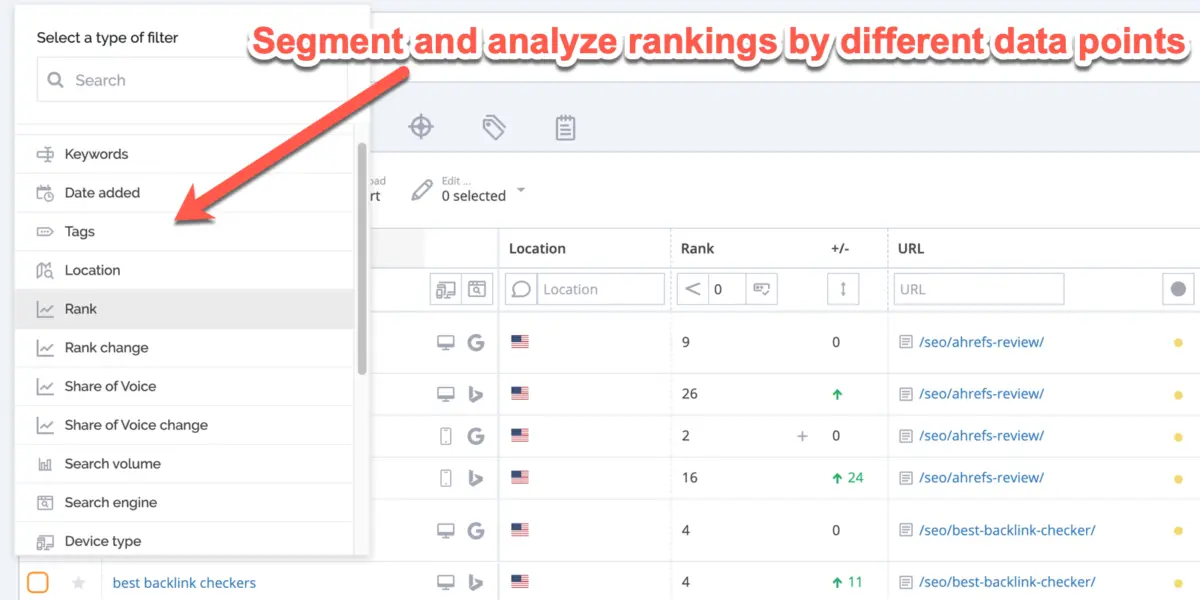
Advanced Segmentation and Custom Reporting: The ability to tag keywords by topic, sales funnel stage, or asset type, paired with white-label reporting and Data Studio/Databox integrations, ensures transparent client communication.
The 7 Best SERP Tracking Tools for 2025
The market features countless options, but a select few platforms consistently deliver superior accuracy, scalability, and feature depth. Below is an in-depth look at the top dedicated and all-in-one solutions available today.
1. AccuRanker
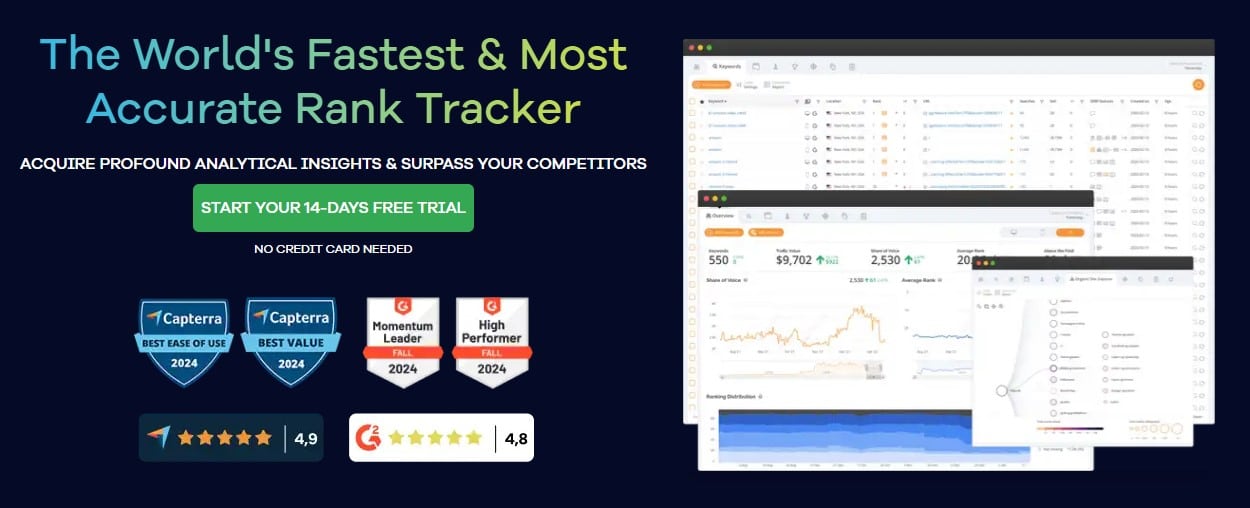
As a premier standalone SERP tracking tool trusted by over 32,000 companies—including enterprise giants like HubSpot, IKEA, and Kinsta—AccuRanker is engineered for speed and precision.
Key Features: Automated 24-hour updates with on-demand manual refreshes, comprehensive tracking across 50+ SERP features, multi-engine support (Google, Bing, Baidu, Yandex, YouTube), and deep integrations with Google Analytics and Adobe Analytics.
Target Audience: Agencies, enterprise brands, and SEO professionals requiring lightning-fast, highly accurate data.
Pricing: Subscription plans scale based on tracked keywords, starting at $116/month for up to 1,000 keywords.
2. Semrush Position Tracker & SERP Gap Analyzer
Semrush is an industry-leading all-in-one SEO platform utilized by over 10 million users from brands such as Samsung and Vodafone. Its Position Tracker matches the accuracy of standalone tools while offering extensive digital marketing capabilities.
Key Features: Highly accurate daily rank tracking, granular international-to-local monitoring, and the innovative SERP Gap Analyzer app in the Semrush App Center, which scans SERPs to uncover under-optimized content and integrates seamlessly with Google Search Console.
Target Audience: Digital marketing professionals, e-commerce brands, and large enterprises looking for an all-in-one ecosystem.
Pricing: Platform plans start at $139.95/month.
3. ProRankTracker
A cost-effective, highly reliable standalone tracking solution utilized by over 60,000 customers worldwide.
Key Features: Extensive multi-engine tracking, robust mobile and local search reporting, and flexible white-label reporting capabilities designed to handle large keyword inventories efficiently.
Target Audience: SEO agencies, international enterprises, and video marketers seeking high accuracy across diverse languages and locations.
Pricing: Entry-level plans begin at an accessible $39/month.
4. Advanced Web Ranking (AWR)
A trusted standalone enterprise tracker used by thousands of organizations, including Microsoft, for scalable rank monitoring and custom reporting.
Key Features: Deep data historical analysis, flexible cloud-based or local agent deployment, and robust white-label reporting builders tailored for client-heavy workflows.
Target Audience: In-house corporate teams, marketing agencies, and large enterprises.
Pricing: Subscription tiers start at $99/month.
5. SERPWatcher (by Mangools)
As the dedicated tracking component of the Mangools all-in-one SEO ecosystem, SERPWatcher is celebrated for its intuitive interface and affordability, earning the trust of brands like Airbnb and Adidas.
Key Features: The proprietary Performance Index metric (which evaluates overall organic traffic potential alongside rankings), interactive visual charts, and bundled access to complementary tools like SERPChecker.
Target Audience: Small business owners, startups, freelancers, and agencies seeking simplicity without sacrificing analytical depth.
Pricing: Bundled plans begin at $29.90/month.
6. SE Ranking
An established all-in-one SEO platform featuring a highly capable Position Tracking module that simulates real user behavior for precise data collection.
Key Features: 100% accurate localized tracking across all major search engines, comprehensive competitor comparison dashboards, and automated reporting.
Target Audience: Small-to-medium businesses, digital agencies, and independent professionals.
Pricing: Plans start at $52/month based on daily updates for 500 keywords.
7. Nightwatch
Trusted by major brands like Shopify and Coinbase, Nightwatch is recognized for its technical sophistication and massive geographic database spanning over 107,296 locations.
Key Features: Exceptional location granularity, flexible data segmentation, automated reporting, and advanced site-auditing capabilities.
Pricing: A 14-day free trial is available, with paid tiers starting at $32/month for up to 250 keywords.
Official Statements & Industry Perspectives
Industry leaders continue to emphasize the vital connection between modern ranking metrics and operational transparency:
"It’s by far the best keyword ranking tracker in the market and has a ton of great reporting functions. If you want visibility on large volumes of keywords housed within a nice dashboard—this is for you."
— Matthew Howells-Barby, Co-Founder, TrafficThinkTank
Furthermore, reporting integrations have revolutionized how agencies communicate value to stakeholders:
"The thing that really got me using them heavily in the last month or two is their Google Data Studio connector. Combining the tag feature, as well as the Share of Voice metric… has been a big help in making these reports immediately digestible."
— Ian Howells, Co-Founder, Traffic Think Tank
Future Outlook
As we look further into 2025 and beyond, the SERP tracking landscape will continue to be shaped by artificial intelligence and algorithmic volatility. Search engines are increasingly serving direct answers via AI-driven interfaces, diminishing traditional blue-link dominance. Consequently, future-proof SERP tracking software must adapt by offering predictive analytics, deeper AI Overview monitoring, and unified multi-channel visibility.
When choosing a platform, organizations must carefully weigh their specific needs: standalone powerhouses like AccuRanker deliver unmatched speed and dedicated focus, while comprehensive suites like Semrush offer expansive all-in-one value. By prioritizing tools that offer real-time data, granular localization, and revenue attribution, businesses can secure a distinct competitive advantage in the modern search ecosystem.