

Executive Overview
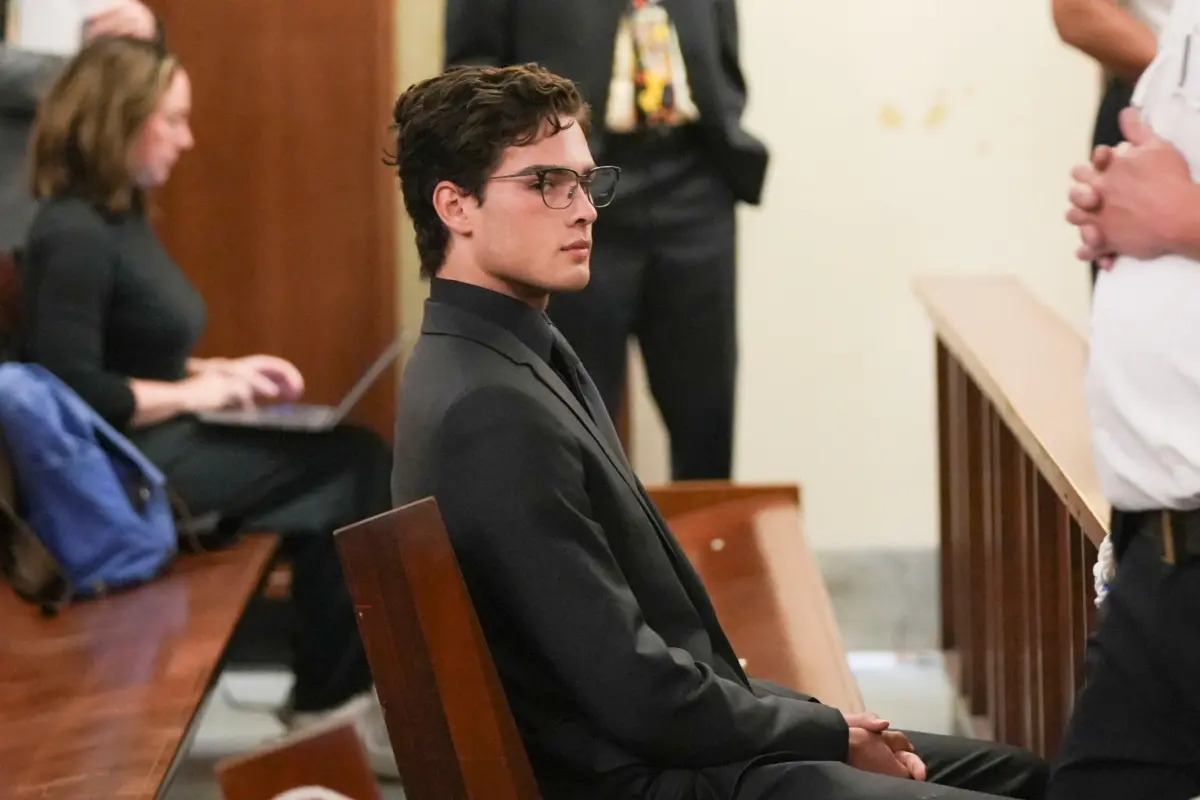
The intersection of digital subcultures, youth-oriented social media monetization, and serious criminal allegations reached a critical juncture on a Thursday courtroom proceeding in Massachusetts. Braden Peters, a prominent and controversial figure within the burgeoning digital subculture known as "looksmaxxing"—where he operated under the alias "Clavicular"—faced a state court judge to officially enter a plea of not guilty to a battery of serious criminal charges. The charges stem from an alleged sexual assault that took place in May 2025 at his family’s property on Cape Cod.
Peters, who built an audience of hundreds of thousands of followers by offering advice on physical optimization, facial bone structure, and aesthetic enhancement, now stands accused of crimes that carry the weight of felony convictions. The legal framework surrounding his case involves complex state charges, including rape, drug distribution connected to sexual activity, and providing alcohol to a minor. The allegations not only threaten to permanently derail Peters’ digital career but also cast a harsh, analytical spotlight on the largely unregulated, hyper-narcissistic ecosystem of modern influencer subcultures.
The case has transitioned from a localized civil dispute into a high-profile criminal proceeding involving investigative reporting from outlets such as NBC News, The New York Times, and Rolling Stone. During Thursday’s arraignment, a Massachusetts judge set Peters’ bail at $10,000, which his legal team paid in cash. As part of the release conditions, Peters was ordered to surrender his passport and comply with strict stay-away mandates protecting his accuser—both online and offline.
This comprehensive report examines the multifaceted dimensions of the Braden Peters case. It analyzes the intricate timeline of events leading up to the indictment, evaluates the broader cultural implications of the "looksmaxxing" movement, reviews the legal strategies deployed by both prosecution and defense, and explores the systemic vulnerabilities exposed when online personas collide with real-world jurisprudence.
Detailed Chronology: From Cape Cod to the Courtroom
To understand the gravity of the legal jeopardy facing Braden Peters, it is necessary to trace the chronology of events that transformed a private weekend gathering into a public legal battleground. The timeline spans from the spring of 2025, when the alleged incidents occurred, through the strategic legal maneuvers of late 2025 and early 2026.
May 2025: The Weekend on Cape Cod
The foundational events of the case occurred over a weekend in late May 2025. According to court documents and subsequent police reports, Braden Peters invited fellow social media influencer Aleksandra Vasilevna Mendoza—widely known online by her professional pseudonym Alorah Ziva—to his family’s residence located on Cape Cod, Massachusetts.
At the time of the gathering, court records indicate that Mendoza was 17 years old, while Peters was an adult influencer whose content targeted young demographics interested in aesthetic self-improvement. Investigators allege that during the visit, Peters provided alcohol to Mendoza, a minor under Massachusetts state law.
The situation escalated significantly during the night and into the following morning. According to legal filings, Mendoza alleges that she was plied with alcohol to the point of incapacitation, rendering her legally and physically incapable of consenting to sexual activity. A pivotal allegation within the initial legal framework claims that Peters engaged in sexual acts with Mendoza while she was heavily intoxicated. Furthermore, the narrative states that Mendoza awoke the following morning to find Peters penetrating her without her consent.
Compounding these severe accusations, Mendoza’s initial legal filings alleged that Peters administered an unapproved pharmaceutical substance—suspected by investigators to potentially contain methamphetamine derivatives—without her knowledge or consent. These compounding factors formed the basis for both subsequent civil actions and the eventual state criminal indictments.
April to October 2025: The Civil Phase and Initial Fallout
Before the Commonwealth of Massachusetts initiated criminal proceedings, the dispute entered the civil courts. In April 2025, Aleksandra Vasilevna Mendoza filed a civil lawsuit against Braden Peters in civil court. The initial complaint asserted comprehensive claims of battery, severe emotional distress, and fraud, detailing the disturbing sequence of events that allegedly transpired at the Cape Cod residence.
As the civil litigation progressed, law enforcement agencies began reviewing the evidence, leading to the involvement of the Massachusetts state prosecutor’s office. Recognizing the severity of the allegations—particularly those involving a minor, incapacitated consent, and illicit substances—the state launched an independent criminal investigation.
In September 2025, the Commonwealth of Massachusetts formally charged Peters with a trio of offenses:
- Rape: A primary felony charge related to non-consensual sexual intercourse.
- Drug-Related Sexual Assault Charge: A secondary felony charge tied to the administration of substances during or leading up to the sexual acts.
- Procuring Liquor for a Minor: A misdemeanor charge addressing the provision of alcohol to an individual under the age of 21.
Sensing potential procedural complications in maintaining the sexual assault claims within the civil sphere while the criminal case moved forward, Mendoza’s legal representation strategically modified the civil action. In October 2025, Mendoza refiled the civil suit, temporarily removing the explicit sexual assault allegations. Legal experts noted that this adjustment was designed to safeguard the integrity of the pending criminal prosecution while keeping the door open for financial and civil accountability later.
January 2026: The Arraignment and Bail Proceedings
The legal trajectory culminated on a Thursday in January 2026, when Braden Peters surrendered to authorities and appeared for his formal arraignment in a Massachusetts courtroom.
In the days leading up to the arraignment, legal skirmishes focused heavily on the conditions of Peters’ pre-trial release. On Wednesday, attorneys representing Peters filed motions arguing for a minimal bail amount. They contended that their client possessed no prior felony record, posed zero risk to the safety of the community, and demonstrated no inclination toward flight.
The defense’s pre-trial memorandum signaled what is likely to form the cornerstone of Peters’ trial strategy. Attorneys introduced evidence intended to challenge Mendoza’s credibility and the nature of her post-incident relationship with the defendant. Specifically, the defense highlighted that Mendoza continued to collaborate with Peters on social media projects after the date of the alleged assault.
To reinforce this point, the defense filing introduced a handwritten note allegedly authored by Mendoza after the May weekend. The note contained the text: "Braden, you have my loyalty 100% … I admire the man you are." Additionally, defense attorneys pointed to messages where Mendoza allegedly described Peters as "so nice" and agreed to participate in joint content creation.
Despite these defense arguments, the presiding judge established bail at $10,000. Peters satisfied the financial requirement by paying the bail in cash on Thursday. Alongside the financial bond, the court imposed strict restrictive covenants: Peters was mandated to surrender his passport immediately and was issued a formal stay-away order prohibiting any direct or indirect contact with Mendoza, as well as any online references or harassment directed at her.
Supporting Context & Metrics: The Rise of "Looksmaxxing" and Digital Subcultures
To fully grasp the cultural significance of the Braden Peters case, one must examine the niche digital ecosystem that birthed his influencer persona: "looksmaxxing."
Defining "Looksmaxxing"
"Looksmaxxing" is an internet-born subculture—largely propagated on platforms like TikTok, YouTube, and specialized online forums—that focuses on maximizing one’s physical attractiveness through various means. While the term originated within fringe internet communities associated with the "manosphere," it has since metastasized into mainstream youth culture, attracting millions of views under hashtags related to facial structure optimization, jawline training ("mewing"), skincare routines, and physical fitness.
In this ecosystem, creators like Braden Peters (known online as "Clavicular") position themselves as authorities or "coaches." They promise young, predominantly male audiences the secrets to transforming their physical appearance to achieve social dominance, romantic success, and digital clout. Peters leveraged his persona to amass a substantial following, turning aesthetic advice into a monetizable brand built on parasocial relationships.
The Metrics of Influence and Controversy
Peters’ career has not been without prior friction. In the months leading up to his criminal indictment, "Clavicular" was repeatedly embroiled in digital controversies that pushed him outside standard influencer norms and into mainstream news cycles.
Among these incidents was a widely criticized social media stunt in Florida involving the alleged shooting of a dead alligator—an act that drew outrage from animal welfare advocates and environmentalists alike. These successive controversies established a pattern of provocative behavior that critics argue reflected a disregard for normative social and legal boundaries.
| Case Milestone / Metric | Detail / Status |
|---|---|
| Date of Alleged Incident | May 23, 2025 |
| Location of Incident | Family residence in Cape Cod, Massachusetts |
| Accuser | Aleksandra Vasilevna Mendoza (Alorah Ziva) |
| Accuser’s Age at Incident | 17 years old |
| Initial Civil Filing | April 2025 (Battery, Emotional Distress, Fraud) |
| State Criminal Indictments | September 2025 (Rape, Drug Charge, Supplying Alcohol to Minor) |
| Civil Suit Modification | October 2025 (Refiled without sexual assault claims to protect criminal case) |
| Arraignment Date | January 2026 |
| Bail Amount | $10,000 cash (Paid in full on arraignment day) |
| Pre-Trial Restrictions | Passport surrender, mandatory stay-away order (online and offline) |
The juxtaposition between Peters’ curated, confident online persona and the grim reality of felony criminal charges underscores a growing sociological phenomenon: the detachment of internet micro-celebrities from real-world accountability. In the digital realm, controversies often translate into algorithmic engagement and financial gain. However, when those actions cross into physical space and violate state penal codes, the algorithmic shield dissolves instantly upon contact with the judiciary.
Official Statements and Legal Posturing
As the case moves forward toward potential trial dates, the public posture of the principal actors remains carefully managed by legal counsel, contrasted by the unfiltered nature of digital media.
The Prosecution and Accuser’s Legal Team
Throughout the preliminary hearings and the Thursday arraignment, representatives for Aleksandra Vasilevna Mendoza have maintained a disciplined public profile. When queried by investigative journalists regarding Peters’ not-guilty plea, Mendoza’s legal counsel declined to issue an official statement, choosing instead to let the court filings and the Commonwealth’s indictments speak for themselves.
Legal analysts suggest this silence is a calculated strategy. By allowing the state prosecutors to shoulder the burden of the criminal case, Mendoza’s civil and private legal teams minimize the risk of procedural missteps that defense attorneys could exploit during cross-examination. The decision to excise the sexual assault claims from the refiled civil suit in October 2025 further demonstrates a coordinated effort to prevent civil discovery depositions from compromising the integrity or timeline of the state’s criminal prosecution.
The Defense Strategy
Braden Peters’ legal team has adopted an aggressive, proactive defense posture. In their filings advocating for reduced bail, defense attorneys laid bare the foundational pillars of what will likely be presented to a jury:
- Challenging Credibility via Post-Incident Conduct: The defense intends to heavily emphasize Mendoza’s actions following the alleged May 2025 weekend. By pointing out continued professional and social collaborations, the defense aims to construct a narrative inconsistent with the trauma typically associated with sexual assault allegations.
- Documentary Evidence of Affection: The introduction of the handwritten note—in which Mendoza allegedly expressed absolute loyalty and admiration for Peters—will form a central exhibit for the defense. They will argue that the note contradicts claims of coercion, fear, or non-consensual dynamics during or immediately after the visit.
- Absence of Prior Criminal Record: Emphasizing Peters’ lack of previous felony convictions served successfully to secure a modest bail amount and will likely be deployed during sentencing phases or character arguments if the trial proceeds.
For his part, Peters has previously utilized his social media channels to issue blanket denials of any wrongdoing, though his public commentary has scaled back significantly following the imposition of judicial gag orders and the surrender of his passport. A representative for Peters declined to provide substantive comment to reporters following Thursday’s arraignment, signaling that future communications will be strictly funneled through legal channels.
Future Outlook: What Lies Ahead for "Clavicular" and the Influencer Economy
The criminal case of Commonwealth v. Braden Peters represents more than an isolated legal dispute between two digital content creators; it serves as a bellwether for how the justice system handles alleged crimes originating within the insular, youth-dominated influencer culture.
The Legal Road Ahead
With the arraignment concluded, bail posted, and pre-trial restrictions enacted, the case will enter the rigorous discovery phase. Prosecutors from the Commonwealth of Massachusetts will be required to turn over all evidence—including forensic analyses of the alleged substances, toxicology reports, police interview transcripts, and digital communications between Peters and Mendoza—to the defense team.
Key legal battles will likely center on:
- The Admissibility of Digital Communications: The extent to which social media messages, collaborative projects, and private correspondence can be used to establish or refute consent.
- Expert Testimony: The integration of medical and toxicological experts to evaluate the allegations regarding unapproved substances and physical incapacitation.
- The Timeline of Reporting: Examining the temporal gap between the May 2025 incident and the formal civil and criminal filings in the subsequent months.
If the case proceeds to trial, a Massachusetts jury will be tasked with navigating the murky waters where hyper-online personas, modern social dynamics, and traditional penal law intersect. A conviction on the felony rape and drug charges could result in substantial prison time, effectively ending Peters’ career as "Clavicular" and sending a formidable deterrent signal to the wider digital creator economy. Conversely, an acquittal or a successful defense challenge regarding consent and credibility would represent a dramatic legal vindication for Peters, though the reputational damage to his brand may prove irreversible.
Broader Implications for the Digital Landscape
Beyond the courtroom doors, the Peters case highlights systemic issues within the modern attention economy. As platforms continue to reward sensationalism, boundary-pushing stunts, and the rapid accumulation of youthful followings, creators often operate in environments devoid of traditional institutional oversight or HR frameworks.
The rise of subcultures like "looksmaxxing" has created insular communities where young, impressionable audiences interact with charismatic influencers whose real-world maturity often lags far behind their digital reach. When power dynamics skew heavily toward established creators—particularly within private, off-platform environments like family estates on Cape Cod—the potential for exploitation multiplies exponentially.
Ultimately, the prosecution of Braden Peters forces a reckoning across the digital landscape. It underscores the reality that digital influence, subscriber counts, and viral aesthetics do not grant immunity from the rule of law. As this high-stakes legal drama unfolds in the Massachusetts courts, it will undoubtedly serve as a watershed moment for how society, law enforcement, and platforms police the darker margins of the influencer age.