

Executive Overview
The intersection of digital fame, unregulated internet subcultures, and the American justice system reached a stark convergence point in a Massachusetts courtroom, where prominent "looksmaxxing" influencer Braden Peters—widely known across digital platforms as "Clavicular"—formally entered a plea of not guilty to serious criminal charges. The arraignment marks a pivotal moment in a high-profile legal battle that has transfixed online communities, drawing intense scrutiny to the darker, largely unchecked corners of modern social media subcultures.
Peters, whose online persona was built around the controversial aesthetics-maximation movement—a digital ecosystem obsessed with physical perfection, bone structure, and hyper-masculine self-improvement—stands accused of crimes that strip away the glossy veneer of his digital empire. Charged in September by the Commonwealth of Massachusetts with multiple felonies, including rape and a related drug charge stemming from sexual intercourse, alongside a misdemeanor for procuring alcohol for a minor, Peters faces a reckoning that extends far beyond the courtroom. The allegations, initially brought to light through a civil lawsuit filed by fellow influencer Aleksandra Vasilevna Mendoza (known professionally as Alorah Ziva), detail a harrowing night at a family residence on Cape Cod in May 2025.
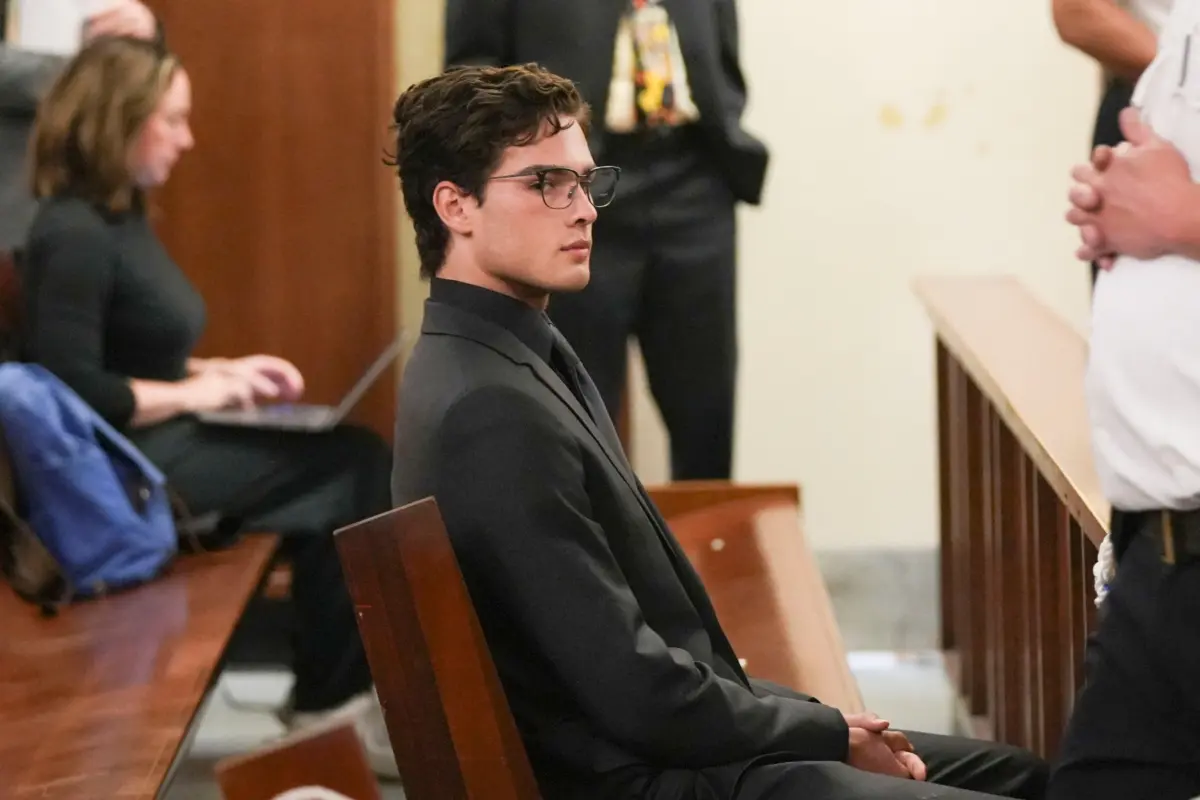
During Thursday’s proceedings, a Massachusetts judge set Peters’ bail at $10,000, an amount the influencer promptly paid in cash. Complying with pre-trial conditions, Peters surrendered his passport and agreed to a strict stay-away order, prohibiting any physical or digital contact with his accuser. While Peters’ legal team successfully argued that their client posed neither a flight risk nor a community danger—pointing to his lack of prior felony convictions—the broader implications of the case threaten to permanently alter the cultural conversation surrounding influencer accountability, digital subcultures, and the legal limits of online fame.
As this case heads toward trial, it serves as a watershed moment for the digital economy, exposing the real-world consequences when internet clout collides with the criminal justice system.
Detailed Chronology of Events
To fully understand the gravity of the legal proceedings against Braden Peters, it is necessary to trace the timeline of events that transformed a digital collaboration into a multi-jurisdictional criminal and civil case. The chronology highlights a complex interplay of online interactions, delayed legal disclosures, and escalating public scrutiny.
May 2025: The Alleged Incident on Cape Cod
The foundational events of the case occurred on or around May 23, 2025, at a family residence owned by the Peters family on Cape Cod, Massachusetts. According to investigative documents, police reports, and civil filings, Aleksandra Vasilevna Mendoza—who was 17 years old at the time—traveled to the location to collaborate with Peters on social media content.
Investigators allege that during the gathering, Peters provided Mendoza with alcohol, violating Massachusetts state laws regarding minors. The evening escalated into severe criminal allegations when Mendoza became heavily intoxicated. According to her initial legal complaints, she reached a state where she was entirely incapacitated and incapable of giving legal or practical consent. The filing details that Mendoza woke up the following morning to find Peters actively penetrating her without her consent. Furthermore, the civil suit and subsequent police reports asserted that Peters administered an unapproved substance, potentially containing methamphetamine, without her knowledge or consent.
April 2025 to September 2025: The Civil Suit and Initial Fallout
Months after the alleged incident, the friction between the two influencers spilled over into the legal system. In April, Mendoza filed a comprehensive civil lawsuit in civil court, naming Peters as the defendant and outlining explosive claims of battery, severe emotional distress, and fraud. The civil filings meticulously detailed the events of the May 23 gathering, bringing the allegations into the public sphere and triggering widespread speculation across TikTok, X (formerly Twitter), and YouTube commentary channels.
Despite the gravity of the civil claims, the formal state apparatus did not move on criminal charges until late summer. In September, prompted by ongoing investigations and evidence compiled by law enforcement agencies, the Commonwealth of Massachusetts officially stepped in, filing a criminal indictment against Peters. The state charged him with two distinct felonies—rape and a drug-related sexual offense—as well as the misdemeanor charge of furnishing alcohol to a minor.
October 2025: Strategic Legal Maneuvers and Civil Adjustments
The legal strategy surrounding the case shifted notably in October. According to reports from NBC News and The New York Times, Mendoza made the tactical decision to refile her civil lawsuit, deliberately stripping out the explicit sexual assault allegations. Legal experts noted that this maneuver was designed to streamline the civil proceedings and ensure that the civil litigation would not inadvertently compromise, complicate, or interfere with the unfolding criminal prosecution led by the state.
Concurrently, Peters’ defense team began laying the groundwork for their trial strategy. In court filings submitted ahead of the October arraignment, defense attorneys pushed for a lower bail amount by introducing evidence intended to undermine the credibility of the accusations. They highlighted post-incident communications between Peters and Mendoza, pointing out that the accuser continued professional and social collaborations with the influencer well after May 23.
The defense introduced a handwritten note allegedly authored by Mendoza, which read: "Braden, you have my loyalty 100% […] I admire the man you are." Additionally, defense filings noted that Mendoza had publicly praised Peters as "so nice" during subsequent social media interactions, framing these artifacts as proof of an ongoing, amicable dynamic that contradicts the narrative of non-consensual trauma.
October Arraignment and Bail Proceedings
The legal trajectory culminated on a Thursday in late October, when Braden Peters surrendered to authorities and stood before a Massachusetts judge for his formal arraignment. Pleading not guilty to all counts, Peters secured his release by posting the $10,000 cash bail. Alongside financial terms, the court imposed strict conditions: the surrender of his United States passport to prevent international travel, and a mandatory stay-away order preventing Peters from approaching Mendoza or interacting with her via digital infrastructure.
Supporting Context & Metrics: The Rise of "Looksmaxxing"
To contextualize who Braden Peters is and why his arrest has generated massive waves across digital media, one must examine the niche, highly insular internet subculture that birthed his influencer persona: "looksmaxxing."
Defining "Looksmaxxing" and the Manosphere
"Looksmaxxing" is a slang term originating from the broader "manosphere" and incel (involuntary celibate) forums, describing an obsessive, hyper-focused effort to maximize one’s physical attractiveness. While soft looksmaxxing includes standard self-improvement practices like skincare, fitness routines, and grooming, hard looksmaxxing often ventures into extreme, pseudo-scientific, and medically dubious territory. This includes practices like "mewing" (tongue posture exercises claimed to reshape the jawline), bone-smashing (a dangerous trend involving intentional trauma to facial bones to stimulate bone growth), and the pursuit of radical plastic surgeries, jaw implants, and orthodontics.
Within this ecosystem, influencers achieve massive followings by rating followers’ faces, dispensing aggressive advice on aesthetics, and promoting a rigid hierarchy of physical attractiveness. Braden Peters, operating under the moniker "Clavicular"—a reference to the clavicle bone structure prized in looksmaxxing aesthetics—became one of the most prominent, polarizing figures in this digital subculture. Cultivating millions of impressions across platforms, Peters monetized his audience through coaching, merchandise, and brand sponsorships tied to the aesthetic-improvement lifestyle.
A History of Digital Controvery
Peters’ arrest is not the first time he has found himself at the center of public outrage. Long before the Massachusetts criminal indictment, "Clavicular" was a magnet for viral controversies. Media outlets and internet sleuths routinely documented his erratic online behavior and shock-value stunts. Notably, Peters previously faced intense backlash after posting content that allegedly depicted him shooting a dead alligator during a trip to Florida—an incident that drew the ire of animal welfare advocates and highlighted the sensationalist nature of his content strategy.
The dissonance between Peters’ curated online persona as an elite aesthetic coach and the grim reality of felony criminal charges has ignited a broader cultural critique. Sociologists and digital media experts point to Peters’ case as a cautionary tale regarding the lack of institutional oversight within unregulated online subcultures, where young, impressionable audiences are often fed toxic ideologies disguised as self-improvement.
Official Statements & Legal Positions
As the criminal case proceeds toward trial, both the prosecution and the defense are locking in their legal arguments, while representatives for the involved parties navigate the delicate balance of public relations and judicial constraint.
The Defense’s Argument: Establishing Consent and Collaboration
In their petitions submitted prior to the Thursday arraignment, Peters’ defense attorneys outlined the core pillars of what is expected to be their primary defense at trial. Rather than denying the interaction took place, the defense is positioning the encounter as entirely consensual, supported by post-incident behavior that they argue is fundamentally inconsistent with the trauma reported by Mendoza.
By submitting the handwritten note in which Mendoza expressed absolute loyalty and admiration for Peters—alongside evidence of continued social media collaborations and friendly public descriptions of the influencer—the defense aims to establish reasonable doubt. Legal analysts suggest this strategy is designed to portray the later accusations as a retroactive retraction driven by falling out within the influencer community, rather than a genuine criminal event. Furthermore, the defense successfully used Peters’ lack of prior felony convictions and deep familial ties to the region to convince the court that he posed neither a flight risk nor an immediate physical danger to the community, securing his release on a relatively modest $10,000 bail.
The Prosecution’s Stance: Protecting a Minor and Enforcing Accountability
The Commonwealth of Massachusetts, backed by the detailed findings of state investigators and municipal police departments, is presenting a robust felony case centered on the abuse of power, intoxication, and non-consensual sexual acts. The prosecution’s case relies heavily on the initial police reports indicating that Mendoza was 17 years old at the time of the alleged incident—making her a minor under the relevant legal frameworks—and that her level of intoxication rendered her legally incapable of granting consent.
Furthermore, the inclusion of the drug-related felony charge underscores the gravity of the state’s allegations regarding the unapproved substance allegedly administered during the encounter. While the prosecution has maintained a strict silence outside the courtroom in accordance with standard legal ethics, the filing of the indictment signals that the state believes it possesses sufficient forensic and testimonial evidence to secure a conviction.
Stances of the Involved Parties
Representatives for Aleksandra Vasilevna Mendoza have maintained a measured public posture. Following Thursday’s arraignment, Mendoza’s legal counsel declined to comment on Peters’ not-guilty plea, choosing instead to focus on the progression of the legal proceedings. Mendoza herself has refiled her civil suit to excise the sexual assault claims specifically to safeguard the criminal case from procedural contamination, indicating a coordinated legal effort to prioritize the state’s prosecution.
Meanwhile, Braden Peters’ public relations representatives have offered no official statements regarding the arraignment. Peters previously addressed the allegations through a series of defiant social media posts in which he flatly denied any wrongdoing, though his online presence has significantly dialed back as his legal team manages his public communications.
Future Outlook: What Lies Ahead for "Clavicular"
As Braden Peters steps out of the Massachusetts courthouse and back into the public eye—albeit under strict court orders and minus his passport—the road ahead is fraught with legal peril and cultural uncertainty.
The Legal Horizon
The immediate future will involve extensive pre-trial motions, discovery exchanges, and evidentiary hearings. The defense will likely seek to challenge the admissibility of certain police findings and attempt to leverage the post-incident communications to weaken the prosecution’s narrative of incapacitation. Conversely, the state will focus on solidifying the timeline of intoxication, medical reports, and the statutory implications of the victim’s age at the time of the offense.
If the case proceeds to a full jury trial, it promises to be a high-stakes legal battle that will deeply dissect the digital footprints, private messages, and public personas of both influencers. A conviction on the felony rape and drug charges could carry severe prison sentences, effectively ending Peters’ career as an internet personality and setting a significant legal precedent for how digital creator interactions are prosecuted.
Cultural and Industrial Ramifications
Beyond the courtroom, the case against Braden Peters forces a reckoning within the broader digital influencer economy. Platforms that host "looksmaxxing" and hyper-masculine self-improvement content are facing renewed pressure from advertisers, watchdogs, and users to moderate toxic behaviors and vet creators who monetize impressionable audiences.
The trial of "Clavicular" will undoubtedly serve as a watershed moment—a stark reminder that the digital realm, no matter how insulated by follower counts, algorithmic fame, and subcultural slang, remains entirely subject to the unyielding weight of the physical world’s laws. As the legal machinery grinds forward, the eyes of the internet will remain fixed on Massachusetts, waiting to see whether justice will catch up to one of its most notorious digital icons.