

Executive Overview
The transformation of an actor into a serial killer is rarely a clean extraction. For British actor Charlie Hunnam, stepping into the skin of one of America’s most notorious historical monsters for Netflix’s Monster: The Ed Gein Story demanded a psychological descent so complete that the boundaries between fiction and reality began to fracture. While his immersive, bone-chilling portrayal earned him widespread critical acclaim—including Golden Globe and Critics Choice nominations, alongside an Emmy nod for Best Actor in a Limited Series—it exacted a distinct toll on his personal life.
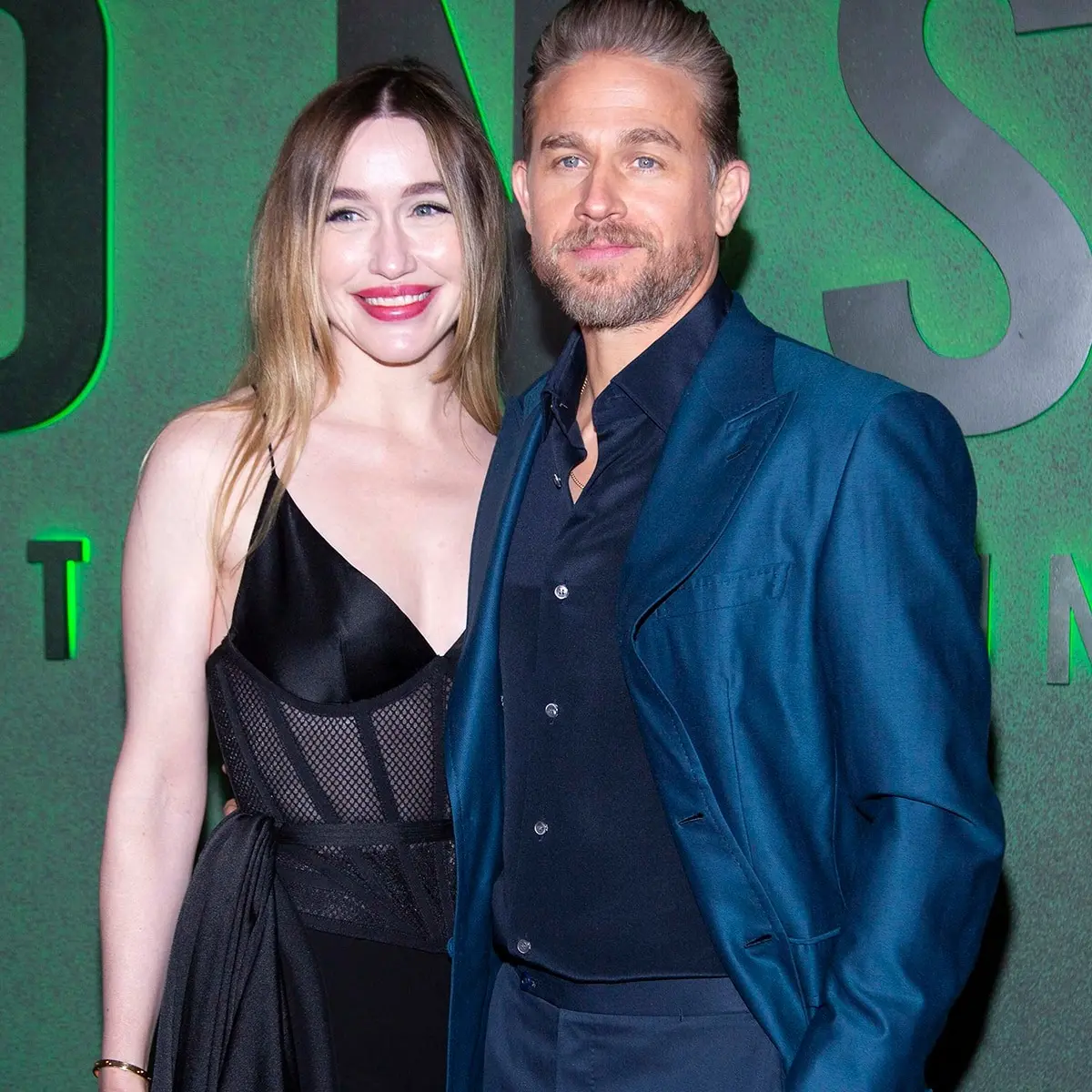
Behind the accolades and red-carpet appearances, Hunnam’s longtime partner, jewelry designer and Maison de Morgana founder Morgana McNelis, found herself drawing a hard line against the residual darkness of the role. Specifically, she requested that the actor leave Gein’s unsettling, high-pitched vocal cadence on the soundstage.
This friction points to a broader theatrical phenomenon: the invisible labor borne by the romantic partners of method actors. Yet, two decades into their relationship, Hunnam and McNelis’s dynamic offers a rare look into a Hollywood partnership built on mutually agreed-upon boundaries, intense loyalty, and a shared understanding of psychological "shadow work." This report examines the mechanics of Hunnam’s transformation, the domestic rules that keep his career from consuming his personal life, and the broader landscape of television excellence recognized during the 2026 awards season.
Detailed Chronology: Method Acting, Domestic Boundaries, and the Road to Monster
Entering the Abyss
When executive producer Ryan Murphy cast Hunnam as the titular 1950s grave robber and serial killer for the Netflix anthology series Monster, the actor understood the gravity of the undertaking. Unlike traditional dramatic roles, stepping into the psyche of Ed Gein required wrestling with some of the darkest impulses in the American true-crime canon.
According to Hunnam, the most persistent vestige of the character was his voice—an unsettling, high-pitched register that the actor found himself slipping into unconsciously during everyday life. Speaking on Live From E!: Critics Choice Awards, Hunnam confessed to the difficulty of shedding the character between takes.
The psychological residue bled into his home life, prompting an intervention from McNelis. "She would say, ‘Dude, you have to stop at the voice,’" Hunnam recalled. "’At breakfast, it’s a little too much.’"
The Rules of Engagement
The strain of intense character immersion is not new to the couple. McNelis, who has weathered two decades by the actor’s side through demanding projects like Sons of Anarchy and The Lost City of Z, established a psychological contract with Hunnam roughly a decade ago to protect their relationship from the collateral damage of his work.
Frustrated by Hunnam’s tendency to return from grueling shoots as an emotionally depleted "shell," McNelis laid down explicit parameters. As Hunnam explained to E! News:
"Here’s the rules of engagement: Go do your work. Be as selfish as you need to be, but then take some time, because when you get back, you better be ready to see me."
This framework has proven essential. When Hunnam filmed The Lost City of Z in Colombia in 2015, an unreliable local postal system led to an extended period of radio silence that left McNelis effectively ghosted for months. While an appropriately sized emerald served as an olive branch, it was clear that material gestures could not replace emotional presence.
The Path to Closure
To ensure a definitive break from the character upon wrapping Monster in Chicago, Hunnam eschewed a traditional post-production vacation. Instead, he drove directly to Gein’s actual gravesite in Wisconsin. Spending quiet, solitary time at the resting place of the historical figure served as a visceral, grounding ritual—a symbolic full stop to a harrowing professional chapter.
Ironically, it was McNelis who initially pushed Hunnam to accept the role. Well-versed in psychoanalysis and the necessity of "shadow work," she viewed the daunting project not as a descent into gratuitous violence, but as a vital artistic challenge. "She was an amazing support to me," Hunnam noted, "saying, ‘You just got to go do this thing, you got to enter the cave and face the dragon.’"
Supporting Context & Metrics: A History of Loyalty and Public Misunderstandings
The strength of the Hunnam-McNelis partnership has been tested publicly on multiple occasions, often catalyzed by the intense cultural fervor surrounding the actor’s career.
Defending the Partnership
When Hunnam starred as Jax Teller in FX’s runaway hit Sons of Anarchy, the overwhelming adoration of the fanbase occasionally manifested as toxicity directed toward McNelis. In 2016, Hunnam took the rare step of addressing his fan base directly via his official Facebook page to castigate online bullies attacking his partner.
"This is a girl I love very much and have spent the last 11 years of my life with and hope to spend the next 60 years," Hunnam wrote. "She has been my loyal and supportive partner long before I had any success or money. Why would you attack her out of admiration for me? It makes no sense."
The Marriage Misconception
The couple’s stance on marriage has likewise been a subject of public fascination. In a 2020 interview with Andy Cohen on SiriusXM, Hunnam candidly remarked that because McNelis was eager to tie the knot, he would do so primarily for her benefit, despite feeling indifferent toward the institution himself.
The remark sparked immediate backlash, exacerbated by Hunnam’s candid recollections of a brief, impulsive Vegas marriage to actress Katharine Towne when he was 18—an experience he characterized as "terrible, painful, and expensive."
Recognizing that his comments had wounded his partner, Hunnam issued a swift public clarification weeks later via TooFab. He explained that while the bureaucratic, government-sanctioned aspect of marriage holds no personal weight for him, the romance of it means everything.
"I really hurt my girlfriend’s feelings," Hunnam admitted. "I actually didn’t mean it at all. But listen, you spend 12 hours a day for three days doing interviews straight, you’re going to say stupid s–t."
Today, though they have never legally formalized their union, Hunnam openly refers to McNelis as his wife, and she continues to design bespoke pieces for him—including a discrete, diamond-encrusted ring that subverted his initial skepticism about men’s jewelry.
Official Statements and Industry Resonance
Hunnam’s searing performance in Monster: The Ed Gein Story is part of a broader, highly competitive television landscape evaluated during the 2026 awards cycle. The convergence of prestige streaming series and traditional network triumphs brought forth an array of reflections from industry veterans and rising stars alike.
The 2026 Emmy and Critics Choice Landscape
-
Matthew Rhys (Nominated for Lead Actor in Widow’s Bay and The Beast in Me):
"I spent the year as a psychopath and a politician, and the Television Academy has generously chosen not to hold either against me… I am so happy that both series were so warmly received this year."
-
Rhea Seehorn (Nominated for Lead Actress in Pluribus):
"Holy Cow! I was so excited to hear of my nomination, my first for a lead, this morning! & I’m absolutely over the moon for my castmates’ & colleagues’ noms!"
-
Sepideh Moafi (Nominated for Supporting Actress in The Pitt):
"It’s an honor beyond words to be the first Iranian actress and first actress from the SWANA/Middle East to be nominated in this category—it’s a tribute to all the powerhouse women who came before me."
-
Charles Melton (Nominated for Beef):
"Lee Sung Jin created a space in BEEF for me as an actor to explore identity, ambition, and belonging. I owe him an enormous debt of gratitude and share this nomination with him, our brilliant writers, directors, cast, and crew…"
Future Outlook
As the television industry continues to push performers toward psychologically grueling territory—evidenced by true-crime anthologies and high-concept psychological thrillers—the boundary management demonstrated by Charlie Hunnam and Morgana McNelis offers a blueprint for sustaining long-term artistic and personal health.
With Hunnam eyeing a return to the Sons of Anarchy universe via the upcoming spinoff series Legends, the demands on his time and emotional bandwidth will undoubtedly intensify. However, the explicit "rules of engagement" forged over two decades ensure that when the cameras stop rolling and the characters are laid to rest—whether via a quiet Wisconsin gravesite visit or a firm domestic boundary—Hunnam returns fully present to the life he has built outside the spotlight.
For an actor who spends his career exploring the darkest corners of human depravity, the real triumph lies not merely in the trophies collected on awards night, but in preserving the human connections that survive the descent into the abyss.