

Executive Overview
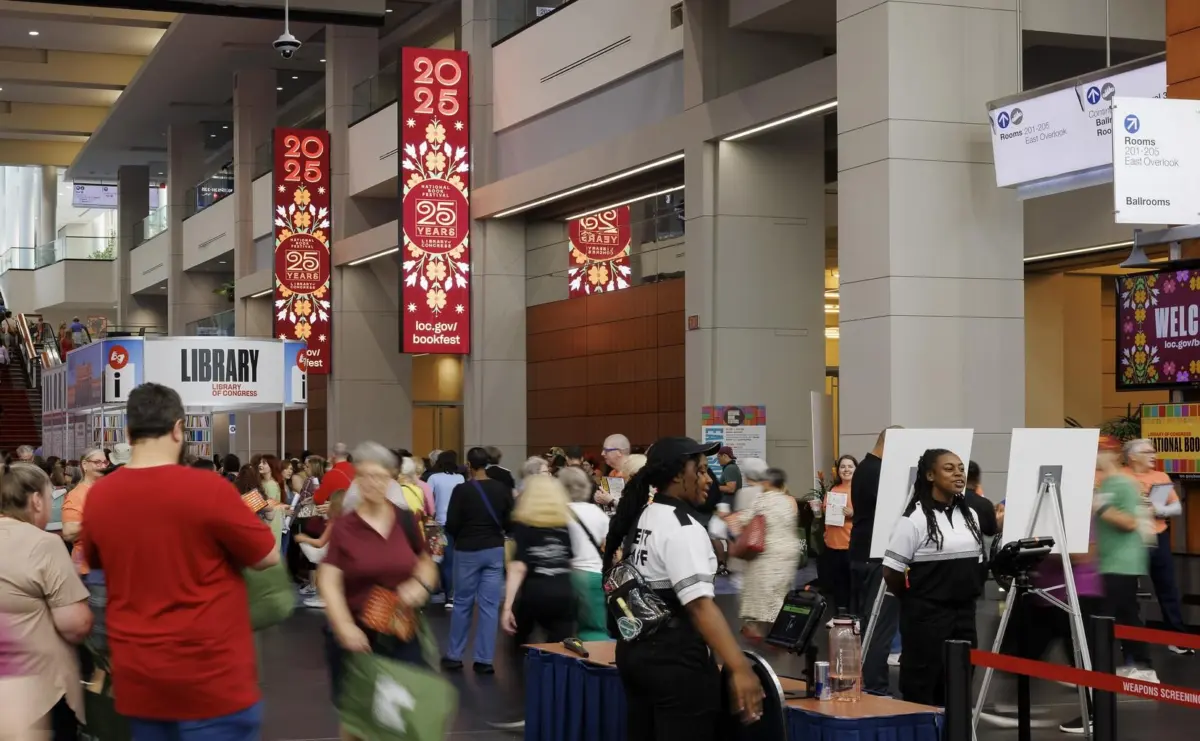
The Library of Congress (LOC) has officially announced a major expansion of its cultural programming for the 2026 National Book Festival, signaling a broad evolution in how the world’s largest library presents literary arts to the public. Scheduled for August 22, 2026, at the Walter E. Washington Convention Center in Washington, D.C., the flagship event will convene more than 80 distinguished authors, historians, filmmakers, and performers. Institutional organizers project that attendance will meet or exceed the 2025 benchmark of 45,000 in-person visitors, bolstered by a expanded nationwide broadcast and streaming architecture.
Rather than framing the festival strictly as a showcase for traditional print publishing, LOC leadership is leveraging the event to highlight the institution’s broader preservation ecosystem. The 2026 festival will explicitly integrate specialized divisions within the Library, including the National Audio-Visual Conservation Center, the National Film Registry, the Music Division, and the American Folklife Center—the latter celebrating its 50th anniversary. Headlining the roster are Academy Award-winning filmmaker Martin Scorsese, who will address the imperiled state of global film preservation, and Tony and Emmy Award-winning performer Cynthia Erivo, discussing her forthcoming memoir Simply More.
This strategic transformation aligns with broader preparations across the federal government for America’s semiquincentennial—the 250th anniversary of the nation’s founding. By framing historical inquiry through innovative storytelling media, ranging from live oral history recordings to audio drama adaptations, the Library of Congress aims to foster a critical public dialogue regarding American identity, historical memory, and the enduring value of long-form intellectual engagement in an increasingly fragmented media environment.
+-----------------------------------------------------------------------------------+
|                           2026 NATIONAL BOOK FESTIVAL                             |
|                                At a Glance                                        |
+--------------------------+--------------------------------------------------------+
| Date & Location          | August 22, 2026 | Walter E. Washington Convention Center |
| Projected Attendance     | 45,000+ In-Person Visitors                             |
| Featured Speakers        | 80+ Authors, Historians, Artists, and Filmmakers       |
| Primary Broadcast        | C-SPAN Book TV (9 Hours Live)                          |
| Secondary Streaming      | WETA+, PBS Streaming Apps                              |
| Key Institutional Anchor | 50th Anniversary of the American Folklife Center       |
| Macro Curatorial Theme   | U.S. Semiquincentennial & Multi-Disciplinary History   |
+--------------------------+--------------------------------------------------------+
Detailed Chronology and Institutional Programming Evolution
From Capitol Lawns to National Convention Halls: A Brief History
The National Book Festival was established in 2001 by First Lady Laura Bush and Librarian of Congress James H. Billington. Inspired by the Texas Book Festival, the inaugural gathering took place on the grounds of the U.S. Capitol and the Library of Congress, drawing an estimated 25,000 attendees. Over the subsequent two decades, the festival underwent a series of logistical expansions:
- 2001–2013: Held outdoors on the National Mall, growing into a sprawling multi-tent event that drew up to 200,000 visitors annually, though exposed to severe summer weather hazards.
- 2014–Present: Transitioned indoors to the climate-controlled facilities of the Walter E. Washington Convention Center, enabling expanded audio-visual capabilities, formal stage setups, and multi-track broadcasting.
- 2020–2021: Shifted to hybrid and virtual models in response to the COVID-19 pandemic, accelerating the digital archive infrastructure that today supports nationwide streaming.
- 2026 (26th Season): Represents a structural turn toward integrated multi-disciplinary programming, pairing authors with institutional archivists, audio engineers, and performing arts specialists.
FESTIVAL LOGISTICAL EVOLUTION
[2001] Inaugural Event on Capitol Grounds (~25k Attendees)
  │
[2002–2013] Expansion across the National Mall (Outdoor Multi-Tent Format)
  │
[2014] Strategic Transition to Walter E. Washington Convention Center
  │
[2020–2021] Deployment of Fully Virtual / Hybrid Broadcast Frameworks
  │
[2026] 26th Season: Integrated Multi-Disciplinary Cultural Summit
The 2026 Curatorial Framework
The 2026 festival schedule centers on connecting published texts directly to the primary sources held within the Library’s millions of physical and digital items. According to LOC Literary Director Clay Smith, the 2026 programming structure was explicitly opened to allow individual divisions within the Library to curate specialized tracks.
                    ┌─────────────────────────────────────────┐
                    │ 2026 LOC FESTIVAL CURATORIAL INTEGRATION │
                    └────────────────────┬────────────────────┘
                                         │
        ┌───────────────────┬────────────┴───────────┬───────────────────┐
        ▼                   ▼                        ▼                   ▼
┌───────────────┐   ┌───────────────┐        ┌───────────────┐   ┌───────────────┐
│ American      │   │ National Film │        │ Music         │   │ Audio-Visual  │
│ Folklife Ctr. │   │ Registry      │        │ Division      │   │ Conservation  │
│ (50th Anniv.) │   └───────┬───────┘        └───────┬───────┘   └───────┬───────┘
└───────┬───────┘           │                        │                   │
        │                   │                        │                   │
        ▼                   ▼                        ▼                   ▼
Oral History &      Film Preservation        The Great American   Audio Dramas &
Cultural Heritage   & Cinema History         Songbook Studies    Archival Media
Key Thematic Strands for 2026
-
The Semiquincentennial Historical Re-examination: Addressing foundational moments in American history through contemporary scholarship.
- Elizabeth Adelman (Chasing Lewis’s Monkeyflower) and Craig Fehrman (This Vast Enterprise) will present joint research analyzing the scientific and geopolitical realities of the Lewis and Clark Expedition.
- Isaac Fitzgerald (American Rambler) and Bancroft Prize-winning historian Beverly Gage (This Land Is Your Land) will examine the physical topography of American historic sites, discussing their journeys across physical landscapes to evaluate how collective memory is tied to place.
- Historian Lindsay Chervinsky will discuss her contributions to The American Revolution and America’s Role in the World, investigating how early American diplomacy established global precedents.
- Geoff Bennett, co-anchor of PBS NewsHour, will present his work The Revolutionary History of Black Comedy, detailing how humor served as a vector for political critique throughout American history.
-
Cross-Disciplinary Performance & Audio Storytelling: Crossing the boundaries between print literature and broadcast media.
- Filmmaker Martin Scorsese will deliver a keynote address on cinema preservation, drawing parallels between literary archives and the fragile physical state of early celluloid film.
- Author Max Brooks will detail the conversion of his graphic novel The Harlem Hellfighters (illustrated by Caanan White) into a full-cast audio play, emphasizing the evolution of historical fiction across medium formats.
- Peabody Award-winning producers The Kitchen Sisters (Davia Nelson and Nikki Silva) will join Pulitzer Prize-winning novelist Andrew Sean Greer (Villa Coco) for a panel exploring oral history techniques, interview ethics, and the craft of active listening.
- Musician and scholar Michael Feinstein, co-author of Kids, Wait Till You Hear This! alongside Liza Minnelli, will discuss the preservation of the Great American Songbook and its relationship to 20th-century American identity.
Supporting Context & Metrics: Cultural Economics and Media Engagement
Media Infrastructure and Audience Reach
To ensure access beyond the national capital region, the Library of Congress has partnered with public broadcasting institutions to maintain a robust distribution matrix.
                    ┌──────────────────────────────────────┐
                    │ 2026 MEDIA DISTRIBUTION ECOSYSTEM    │
                    └──────────────────┬───────────────────┘
                                       │
            ┌──────────────────────────┴──────────────────────────┐
            ▼                                                     ▼
┌───────────────────────┐                             ┌───────────────────────┐
│     C-SPAN Book TV    │                             │       WETA / PBS      │
├───────────────────────┤                             ├───────────────────────┤
│ • 9 Hours Live Coverage│                             │ • On-Demand Video     │
│ • Keynote Broadcasts  │                             │ • App Integration     │
│ • Author Interviews   │                             │ • Post-Event Analysis │
└───────────────────────┘                             └───────────────────────┘
C-SPAN’s Book TV will provide nine hours of live, unbroken festival coverage on August 22. This marks the network’s 26th consecutive year of broadcast partnership, having covered every iteration of the festival since its 2001 inception.
In addition to live stage coverage, C-SPAN host and Book TV Executive Producer Peter Slen will conduct direct broadcast interviews with key participants, including:
- Acting Librarian of Congress Robert R. Newlen;
- Episcopal Bishop Mariann Edgar Budde (I Can Learn to Be Brave, illustrated by Holly Hatam);
- PBS NewsHour co-anchor Geoff Bennett;
- Novel and indie bookstore advocate Ann Patchett, discussing her novel Whistler, alongside the economic realties of independent bookselling.
Complementing C-SPAN’s live day-of coverage, Washington public broadcasting station WETA will record sessions for deferred regional and national distribution. These programs will be made available via the WETA+ and PBS streaming applications in the weeks following the event, providing permanent open-access educational assets.
Analyzing the "Literary Paradox": Empirical Metrics vs. Event Engagement
The expanded footprint of the 2026 festival comes during an ongoing debate within cultural and economic sectors regarding national reading habits. Public data paints a contradictory picture of American literacy and media consumption:
                  THE AMERICAN READING PARADOX (2020–2026)

  Traditional Book Reading Rates        Live Cultural Festival Engagement
  ┌───────────────────────────┐         ┌───────────────────────────┐
  │  [▼] Down ~12% Decade-    │         │  [▲] Record Attendance    │
  │      over-Decade          │   VS    │      at Flagship Events   │
  │  [▼] Screen-Time          │         │  [▲] High Demand for Real │
  │      Displacement         │         │      Community Dialogue   │
└───────────────────────────┘ └───────────────────────────┘- Reading Frequency Metrics: Data from the National Endowment for the Arts (NEA) and the Pew Research Center indicates a steady multi-year decline in the percentage of U.S. adults who read literature for leisure, falling approximately 12 percentage points over the past decade.
- Live Event Demand: Conversely, high-profile physical cultural events—including the National Book Festival, the Printers Row Lit Fest, and the LA Times Festival of Books—have reported near-record attendance post-2022.
- Market Dynamics: Independent bookshops have experienced a modest renaissance, rising in total operating storefronts nationwide. This growth has been driven by community-centric event models, curated physical spaces, and author-led initiatives, exemplified by figures like Ann Patchett (co-owner of Parnassus Books in Nashville).
This dichotomy suggests that while solitary reading faces stiff competition from digital media entertainment, public demand for communal literary experiences, deep intellectual engagement, and author interaction remains strong.
Official Statements and Institutional Perspectives
Leadership from both the Library of Congress and its primary broadcasting partners emphasized that the expanded 2026 programming is an explicit response to broader societal trends regarding digital fatigue and the search for authoritative cultural discourse.
Clay Smith, Literary Director at the Library of Congress, addressed the tension between public statistics on declining reading and the institutional mission of the festival:
"Although we do the acquisition, collection, and preservation of books at the Library of Congress, we do a lot of other things too. We opened up the programming and gave each of those divisions of the library a chance to perform… Although we see statistics about falling readership, from my perspective people are hungry for real culture, and writers embody that. I understand the hand-wringing articles, I get that there is a problem, but things look pretty exciting from where I sit. People are going to go to this festival seeking out real conversations, and that’s what we’re giving them."
Smith also noted the intentional framing of the nation’s upcoming 250th anniversary within the 2026 schedule:
"[LOC staffers were] referencing crucial moments in American history that we were taught in school, but trying to have a conversation about those in a fresh way."
Peter Slen, Host and Executive Producer for C-SPAN’s Book TV, reflected on the network’s 26-year relationship with the festival and pushed back against cultural pessimism regarding the publishing industry:
"We love partnering with them on this project. We’re very fortunate at C-SPAN to have a dedicated space for nonfiction books, and we will be live all day… [I remain] bullish on the publishing industry. Books still matter. They are an investment for readers. When you sit down with a book, you’re investing your time, your intellect, your ability to think."
Commenting on the network’s decision to feature fiction author Ann Patchett alongside its standard non-fiction roster, Slen noted:
"We’re doing something a bit different—we’ve got a fiction author. We’ll get to the book itself, but we’re going to talk about writing and about owning a bookstore."
Future Outlook: The Next Quarter-Century of Cultural Stewardship
As the Library of Congress prepares for the 26th annual National Book Festival, the event stands as a model for how legacy cultural institutions can adapt to changing media ecosystems without diluting their core mission. By formally integrating film archives, folklife studies, audio production, and performing arts into a literary framework, the LOC is defining reading not merely as the isolated consumption of printed text, but as an entry point into a broader civic dialogue.
Looking beyond the 2026 event toward the nation’s semiquincentennial celebrations, the festival’s emphasis on re-examining historical narratives suggests that public institutions will play a key role in mediating conversations about the American past and future. The inclusion of multi-media formats—such as Max Brooks’s audio adaptation of The Harlem Hellfighters and the Kitchen Sisters’ oral history work—indicates that the Library of Congress will continue to expand its definition of what constitutes a historical and literary record.
Ultimately, the sustained investment from major broadcast networks like C-SPAN and public platforms like PBS underscores a shared conviction: despite shifting digital trends, structured, long-form intellectual discourse remains an essential pillar of a healthy democratic society. The 2026 National Book Festival will test this hypothesis on a national scale, offering a multi-faceted platform for thousands of physical attendees and millions of remote viewers nationwide.