

Executive Overview
Over the past four decades, the National Football League (NFL) has undergone a structural and cultural metamorphosis unprecedented in modern sports history. Once a autumn-centric pastime competing neck-and-neck with Major League Baseball for public interest, the NFL has systematically engineered itself into an omnipresent, multi-billion-dollar media empire that dominates the American leisure landscape for nearly 11.5 months of the year.
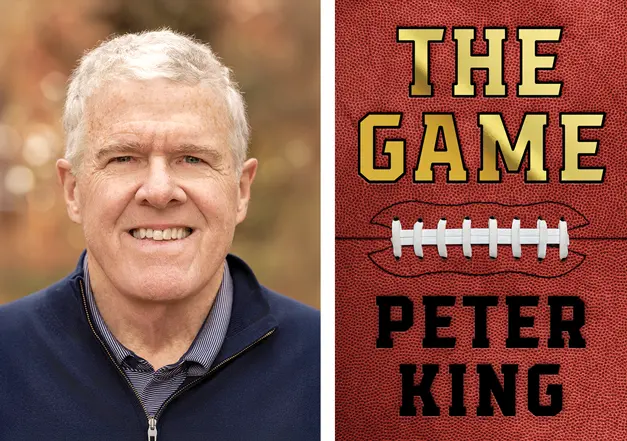
This profound evolution forms the bedrock of veteran sportswriter Peter King’s reflective work, The Game. Drawing upon more than forty years of direct sideline access, press box observations, and executive boardroom reporting, King chronicled the strategic maneuvers, institutional failures, and pivotal personalities that catapulted professional football to supreme cultural dominance.
However, this commercial ascent has not occurred in a vacuum. The league’s explosive financial growth and media expansion sit alongside complex governance challenges, historic labor disputes, and an ongoing public health reckoning surrounding Chronic Traumatic Encephalopathy (CTE) and head trauma. As the league navigates the modern era, executive leadership continues to balance relentless commercial expansion against the existential risks inherent in a collision sport, relying on a deeply rooted youth cultural affinity that promises to sustain the game for generations to come.
Detailed Chronology
  1980s: The Narrow Margin
  ├── 1982/1987: Major NFLPA labor strikes disrupt seasons.
  └── NFL holds a mere 1% popularity lead over Major League Baseball.
        │
  1990s: The Commercial & Media Explosion
  ├── Paul Tagliabue assumes premiership; shifts focus to corporate monetization.
  └── 1993: Epochal FOX broadcasting deal fundamentally shifts sports television economics.
        │
  2000s–2010s: Year-Round Calendar Capture & The CTE Reckoning
  ├── Roger Goodell becomes Commissioner; turns Offseason into prime-time events.
  ├── Public emergence of CTE research (Dr. Bennet Omalu, Boston University).
  └── 2013: NFL agrees to historic $765 million (later uncapped) concussion settlement.
        │
  2020s & Beyond: Unprecedented Global & Digital Hegemony
  └── Expansion into streaming (Amazon Prime, Netflix), international series, and Olympic flag football.
The 1980s: The Narrow Margin and Labor Instability
In the early 1980s, professional football was far from the unassailable titan it is today. When King began his coverage of the league, the NFL held a paper-thin lead in national popularity over Major League Baseball—a single percentage point separated the two pastimes. The sport operated largely as a seasonal programming block, occupying public consciousness strictly between September and January. Under the leadership of Commissioner Pete Rozelle, the league faced severe legal and operational turbulence, characterized by bitter court battles over franchise relocations and devastating player strikes in 1982 and 1987 that paralyzed standard operations and forced the use of replacement players.
The 1990s: Institutional Monetization and Broadcasting Revolutions
With the appointment of Paul Tagliabue as Commissioner in 1989, the league pivoted sharply toward long-term business optimization. The 1990s marked a decade of structural financial engineering. Tagliabue prioritized television rights fees, corporate sponsorships, and stadium construction financing. The landmark 1993 television contract with the newly formed FOX network shattered traditional broadcast paradigms, introducing billion-dollar rights allocations and establishing football as the ultimate driver of network television valuation. However, this period of immense economic growth was also marked by a critical institutional failing: the league’s slow, reactive stance toward emerging medical evidence regarding recurring head trauma and long-term neurological damage.
The 2000s–2010s: Calendar Capture and the Concussion Reckoning
Under Roger Goodell, who assumed the commissionership in 2006, the NFL executed a deliberate strategy to colonize the entire calendar year. Offseason operational markers—such as the NFL Scouting Combine, free agency, the NFL Draft, and schedule release days—were aggressively rebranded and transformed into prime-time television spectacles.
Simultaneously, the league faced an existential public health crisis. Scientific research led by independent neuropathologists revealed high rates of Chronic Traumatic Encephalopathy (CTE) in deceased former players. Following years of intense congressional scrutiny, media pressure, and class-action litigation filed by thousands of retired athletes, the NFL agreed to a landmark concussion settlement in 2013, eventually paying out over $1 billion to former players suffering from neurodegenerative illnesses.
The 2020s: Digital Sovereignty and Global Reach
Today, the NFL operates as an all-encompassing media property. The league has migrated key broadcasting assets to direct-to-consumer streaming giants, including Amazon Prime Video and Peacock, while expanding its regular-season footprint into international markets across Europe and South America. The game’s transition from a regional sporting event to a global, year-round media powerhouse stands as one of the most successful corporate maneuvers in modern entertainment history.
Supporting Context & Metrics
The Mechanics of Market Dominance
The NFL’s transformation into an 11.5-month media machine is best illustrated by its dominance over American television viewership. While linear television ratings across news and scripted entertainment have systematically declined over the past decade, the NFL’s broadcast footprint has compressed the media market, turning live sports into the primary remaining vehicle for real-time mass audience engagement.
| Metric / Dimension | Early 1980s Baseline | Contemporary Status (2020s) |
|---|---|---|
| Popularity Lead over Baseball | ~1 percentage point margin | Dominant; multi-fold engagement lead |
| Active Calendar Footprint | ~5–6 months (September to January) | ~11.5 months (Year-round event engineering) |
| Annual Broadcast Rights Value | ~$400 million annually (combined) | ~$11+ billion annually (across networks/streaming) |
| Top 100 TV Broadcasts Share | Shared dominance with MLB/NCAA | Consistently accounts for 80–90+ of top 100 broadcasts |
| Primary Media Revenue Strategy | Regional terrestrial television | Multi-platform (Linear TV, Streaming, Global Syndication) |
Head Trauma and the CTE Paradigm
The debate surrounding occupational health risks in professional football centers heavily on scientific discoveries regarding CTE—a progressive neurodegenerative disease associated with repeated impacts to the head.
- Diagnostic Realities: CTE currently remains diagnoses-confirmed primarily post-mortem through brain tissue analysis.
- Research Metrics: Studies published by institutions such as the Boston University CTE Center have identified high prevalence rates of the disease among retired NFL players who volunteered their brains for study.
- Institutional Response: In response to safety concerns, the NFL implemented dozens of rule changes designed to eliminate high-velocity head impacts, altered kickoff structures, introduced mandatory concussion protocols managed by independent neurotrauma consultants, and mandated advanced helmet technology.
Official Statements
Reflecting on his four decades of direct reporting in The Game, Peter King evaluated the shifting dynamics of the sport, the governing styles of its leadership, and the moral calculus required of those who cover and consume it.
On the Expansion of Football’s Cultural Footprint
King noted the dramatic expansion of the sport’s calendar dominance:
"The first year I covered the NFL, the sport was one percentage point more popular with Americans than baseball. It’s gone from being a five or six months a year semi-passion play to an obsession for 11 and a half months a year. I think they have become very cognizant of owning the sports calendar."
On Commissioner Legacies and Leadership Dynamics
Evaluating how the three modern NFL commissioners shaped the league’s corporate and social trajectory, King observed:
"Commissioners mainly should be seen and not heard. I think that in such a public-facing sport as the NFL, how they rule becomes hugely important to what exactly happens with that sport. Pete Rozelle basically had two strikes in his last seven years as commissioner. He was in court all the time. Paul Tagliabue was late to the party on head trauma, but he was all about the business of football. And I think Roger Goodell has tried to make sure that the game continues to grow, even if some elements of that growth might not be for the best."
On Navigating the Ethics of Head Trauma
Addressing the existential paradox between the game’s violent nature and its cultural appeal, King reflected on the personal framework required to cover the sport:
"I think everybody who loves football has to come to a kind of personal peace about loving the game. There are a lot of former football players who, after they die, get their brains tested and have CTE [chronic traumatic encephalopathy]. You have to justify your love of the game while still justifying the fact that it’s dangerous. And one of the reasons why I have come to my feeling about football is that players understand what they’re getting into."
On the Long-Term Viability of the Sport
Despite ongoing health concerns and shifting demographics in youth participation, King expressed strong confidence in the league’s structural durability over the coming decades:
"I don’t think football is going away. It is so popular in the United States and is such a driver of entertainment and leisure time for tens of millions of people. And there will not be a shortage of people who will want to play this game. There are kids right now who are four, five, or six years old who are going to watch TV and say, ‘I want to be Lamar Jackson. I want to be Patrick Mahomes. I want to be Ja’Marr Chase.’ So as for what happens in 100 years, I don’t know. But as for what happens in 30 years, I don’t think there’s any danger of football being significantly less popular than it is today."
Future Outlook
Structural Resilience Amidst Modern Challenges
As the NFL looks toward the mid-21st century, its institutional stability appears secure. While acute health risks and long-term neurological liabilities will remain a point of discussion, the league’s continuous investment in equipment technology, rule adjustments, and medical monitoring aims to mitigate the existential threat of player safety concerns.
Furthermore, the economic architecture of professional football—underpinned by long-term media contracts running into the 2030s and the rapid expansion of legalized sports gambling—provides a steady financial foundation that isolates the league from broader media fragmentation.
                  NFL Growth Horizon (Next 30 Years)
───────────────────────────────────────────────────────────────────────
[Youth Pipeline]     --> Iconic Stars (Mahomes, Jackson) Inspire Youth
[Global Markets]     --> Regular Season Games in Europe/South America
[Media Evolution]    --> Direct-to-Consumer Streaming Platforms
[Olympic Adoption]   --> Flag Football Integration (LA 2028)
Global Expansion and the Next Generation Pipeline
The league’s long-term strategy relies heavily on two main pillars: global market integration and early youth engagement.
- International Penetration: By staging regular-season games in key European and Latin American markets—and establishing local commercial marketing territories—the NFL is laying the groundwork for a permanently international fan base. The inclusion of flag football in the 2028 Los Angeles Olympic Games serves as a deliberate vehicle to lower entry barriers and expand non-contact versions of the sport globally.
- Youth Talent Pipeline: Crucially, the star-power pipeline remains robust. Modern dynamic athletes such as Patrick Mahomes, Lamar Jackson, and Ja’Marr Chase continue to capture the imaginations of youth audiences worldwide. This ongoing cultural immersion ensures that despite alternative entertainment options and parental health considerations, millions of young athletes will continue to pursue the sport.
The NFL’s transition from a simple autumn pastime to a multi-billion-dollar, year-round media empire represents a unique case study in corporate longevity. Barring unprecedented legal or cultural shifts, professional football is positioned to maintain its dominant seat at the center of American entertainment for decades to come.