

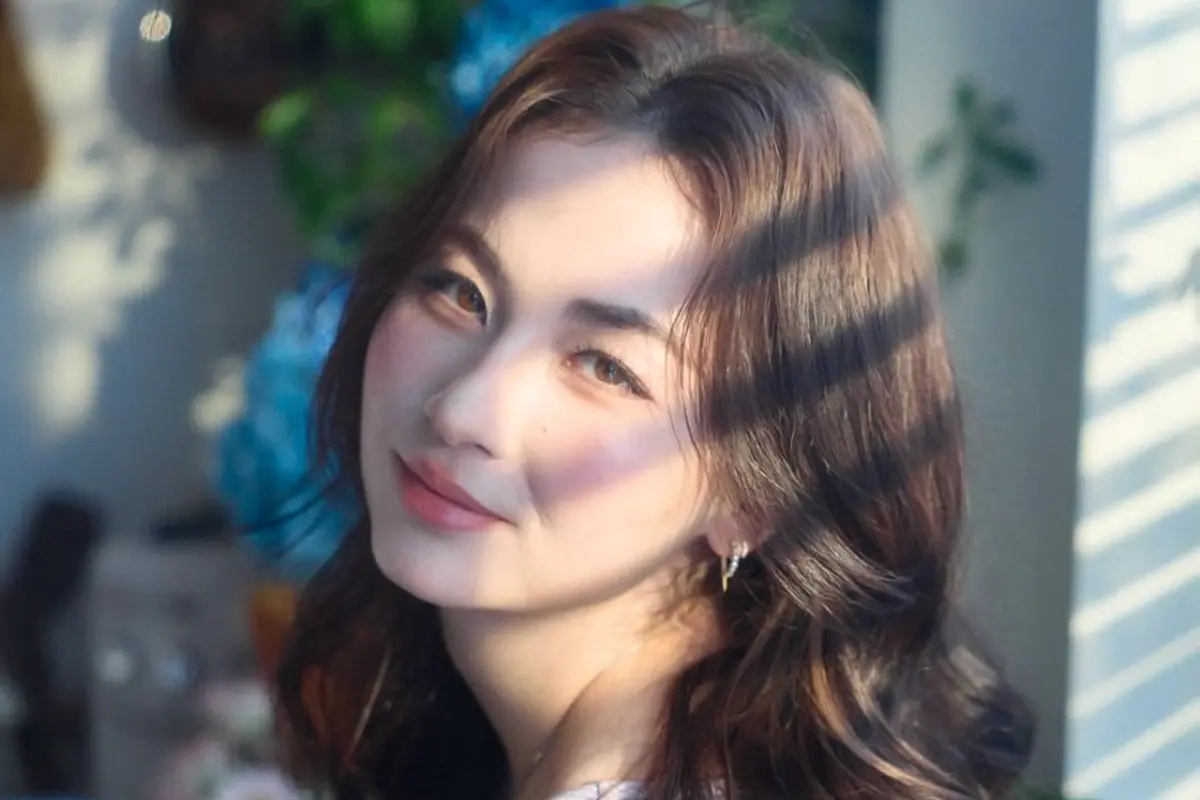
Executive Overview
In the high-stakes ecosystem of modern live-streaming, stepping away from the camera is frequently treated as a professional death sentence. For creators who have built their empires on the grueling economics of continuous output, algorithmic relevance is a jealous god. To stop streaming is to fade from memory, forfeit ad revenue, and surrender the hard-won real estate of the front page. Yet, in April 2025, one of Twitch’s most prominent female creators did just that.
Kyedae Shymko—globally recognized simply as Kyedae—went dark.
For 18 months, the 24-year-old Canadian creator retreated from the spotlight, leaving behind an audience accustomed to her daily presence. Her hiatus was not merely a planned sabbatical or an extended vacation; it was a desperate retreat forced by a compounding series of existential crises. Between weathering the brutal mechanics of male-dominated gaming spaces, surviving a harrowing battle with acute myeloid leukemia, undergoing major surgery for severe endometriosis, and enduring a high-profile public breakup amid vicious parasocial harassment, Kyedae’s digital life had completely eclipsed her physical one.
Now, after an unprecedented year-and-a-half detox from the internet’s relentless rat race, Kyedae is staging a carefully measured comeback. In an exclusive interview, she opens up about the terrifying "wake-up call" that forced her off the air, the toxicity of the parasocial economy, and why returning to the platform requires an entirely new philosophical framework. No longer willing to sacrifice her physical health or mental peace at the altar of metrics, Kyedae is stepping back into the fray on her own terms—redefining what it means to be a sustainable creator in an unsustainable industry.
Detailed Chronology: From Unknown Novice to Twitch Heavyweight
Kyedae’s trajectory into the upper echelons of live-streaming reads like a masterclass in organic digital growth, albeit one accompanied by a punishing learning curve. When she first booted up a broadcast in 2020, she was an unknown Canadian college student with virtually no background in video games. Her entry point into the medium was Valorant, Riot Games’ tactical 5v5 character-based first-person shooter.
In the hyper-competitive ecosystem of tactical shooters, starting with zero mechanical foundation is typically a recipe for instant irrelevance. New players are frequently met with steep learning curves, merciless lobbies, and immediate attrition. However, Kyedae carved out a distinct niche through radical transparency. Rather than attempting to project the untouchable aura of a seasoned esports professional, she leaned into her novice status. Fans became immediately captivated by the rare opportunity to watch a creator hone complex motor skills and tactical game sense in real-time.
"I don’t like to be half-assed with what I try," Kyedae reflects. "So when I started playing Valorant, I didn’t want to be mediocre. I started putting a lot more time into playing. I think that’s the main reason why a lot of people were interested in watching my journey."
That earnestness fueled an astronomical rise. In less than four years, Kyedae transformed from a total beginner into one of the most-watched female creators on Twitch, frequently pulling in upwards of 1.6 million views in a single month. Her streams became cultural touchpoints, defined by genuine emotional reactions—celebrating even the smallest in-game level-up with unbridled enthusiasm.
However, scaling a creator brand to these heights requires an immense human toll. To maintain momentum in a market driven by continuous engagement, Kyedae was soon broadcasting between eight and 14 hours every single day. The charming, organic spontaneity of her early streams was gradually replaced by the mechanical grind of maintaining top-tier metrics.
"With streaming, you’re constantly on," she explains. "You feel like you always have to be working, you always have to be uploading, because irrelevancy is what can kill your career. It can be really overwhelming at times. There’s no personal privacy. It gets to a point where it’s unhealthy."
The breaking point arrived not from the exhaustion of the grind alone, but from a collision of catastrophic health crises. In 2023, Kyedae received a devastating diagnosis: acute myeloid leukemia, a fast-moving cancer of the blood and bone marrow. Even as she underwent aggressive medical treatments, she attempted to maintain a modified streaming schedule, squeezing broadcasts between chemotherapy sessions and frequent physician appointments. "I was quite sick, but I was trying to stay on top of it," she recalls.
By 2025, she achieved a major victory, entering remission. But the respite was tragically short-lived. Early in 2025, she faced another severe medical emergency: an aggressive form of endometriosis that necessitated immediate, complex surgery.
"With the endometriosis, I was really upset," she admits. "After getting over such a big hurdle as cancer, and then for something else to pop up, I felt like my body was failing me. When my doctor told me it was looking pretty serious, it was a wake-up call."
Faced with mounting physical proof that her body could no longer sustain the pace, Kyedae pulled the plug on her career, initiating an indefinite hiatus.
Supporting Context & Metrics: The Anatomy of Digital Toxicity
Kyedae’s experience highlights broader, systemic pathologies within the live-streaming industry. Operating as a prominent female creator in a historically male-dominated vertical exposes individuals to an unrelenting undercurrent of misogyny, ridicule, and targeted harassment. For years, Kyedae managed this backdrop of digital hostility while balancing the rigorous demands of her content calendar.
However, the toxicity reached a fever pitch during her hiatus, triggered by developments in her personal life. When she and her long-term partner—fellow high-profile Valorant creator Tyson Van Ngo, known professionally as Tenz—announced their mutual separation, the internet’s darkest elements mobilized. Despite releasing a joint statement emphasizing that the breakup was amicable and mutual, parasocial fans weaponized the news. Vicious corners of the streaming community immediately sought a villain, casting blame squarely on Kyedae.
The intense scrutiny exposed the dark side of parasocial relationships—the one-sided psychological bonds viewers form with digital personalities. To certain segments of the audience, the dissolution of a public relationship felt like a personal betrayal, licensing them to flood her social media channels with abuse.
"So much has happened behind closed doors. Life happens before and after I stream," Kyedae notes. "I don’t care to pay attention to what people have to say because, at the end of the day, only the people in the relationship know what happened. I’m still really young, and that was a beautiful chapter to look back on."
Rather than engaging with the trolls, Kyedae adopted a philosophical detachment toward the harassment. She recognized that the vitriol directed her way was less a reflection of her actions and more an indicator of the commentators’ internal distress.
"Even at my lowest point in life, I have never thought to comment something nasty, to DM something weird, or send death threats," she reflects. "For people to be commenting these things just shows that they’re projecting their sadness onto my life. It’s background noise."
Official Statements & Industry Perspectives
The announcement of Kyedae’s return has sent ripples through the streaming ecosystem, sparking vital industry conversations about burnout, chronic illness management, and work-life balance for digital creators. In her interview with Rolling Stone, Kyedae offered profound reflections on her transformation during her 18 months away from the public eye.
"I let streaming consume every aspect of my life," Kyedae states candidly. "Pero after taking a step back, I no longer feel the need to keep up with people’s opinions of me. Life isn’t just work. And I think my community will see that I’m happier."
This shift in perspective represents a fundamental evolution in how she views her profession. The paralyzing fear of irrelevancy—the psychological whip that drives creators to stream through illness and emotional exhaustion—has been replaced by a grounded sense of self-preservation.
Her return was not spurred by a sudden urge for algorithmic relevance, but by a genuine, restored love for the craft, coupled with newfound stability in her health. "It took a bit of time to really detox from the rat race and really sit with myself to figure out what I wanted with my life," she explains. Once she successfully navigated the turbulent online backlash surrounding her personal life and emerged resilient on the other side, she knew her psychological armor was intact.
Industry analysts note that Kyedae’s high-profile return could serve as a powerful precedent for other creators battling chronic illness and burnout. By proving that a creator can step away for over a year, survive industry amnesia, and return on their own terms, she challenges the prevailing dogma that digital careers require endless self-sacrifice.
Future Outlook: A Sustainable Era of Content Creation
As Kyedae prepares to turn her camera back on, her approach to broadcasting looks radically different from the relentless 14-hour grind of her past. The primary operational hurdle involves constructing a broadcasting schedule that accommodates her ongoing medical needs and routine doctor’s appointments. Flexibility has replaced rigidity.
Furthermore, her content portfolio is expanding beyond the tactical shooter roots that initially defined her career. While Valorant will remain a fixture of her broadcasts, Kyedae is actively branching out into lifestyle verticals, including beauty and fashion content. This diversification allows her to explore alternative creative outlets that genuinely pique her interest, insulating her from the creative stagnation that plagues single-game streamers.
"It’s been over a year and a half since I’ve streamed," she acknowledges, reflecting on the psychological hurdle of re-entering the digital arena. "I’m stepping back into a space that I’m familiar with, but so much has changed within that time."
Despite the understandable nervousness accompanying her return, the dominant emotion is excitement. Armed with hard-won boundaries, a healthier psychological detachment from public opinion, and a renewed appreciation for her physical well-being, Kyedae is stepping back into the light.
"I’m nervous, but overall I’m really excited to get reconnected," she concludes. "I have so much life to live—personally and professionally. I’m just super excited for what’s ahead."
For an industry notorious for chewing up its biggest stars and spitting them out, Kyedae’s triumphant, boundaries-first comeback offers a rare and inspiring narrative: survival is possible, and life after burnout can be brighter than ever.