

Executive Overview
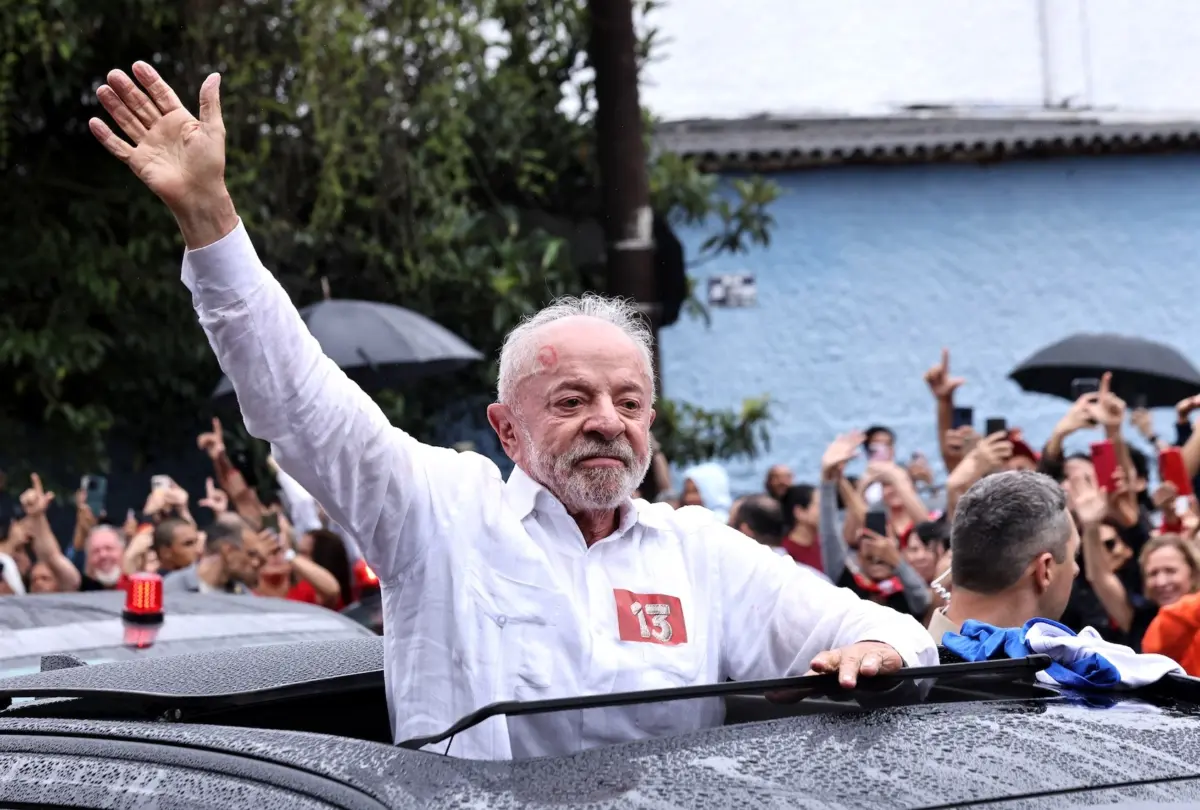
In what political scientists are already calling one of the most dramatic and unexpected comebacks in modern Latin American political history, Brazilian President Luiz Inácio Lula da Silva secured a hard-fought reelection victory on October 25, 2026. Defeating Senator Flávio Bolsonaro in a high-stakes second-round runoff, the incumbent leftist leader managed to shatter a remarkable regional trend: a consecutive streak of seven right-wing electoral victories across Central and South America over the preceding year and a half.
Yet, beneath the surface of Lula’s historic triumph lies a deeply polarized nation. While the executive branch remains under the stewardship of the veteran Workers’ Party (PT) founder, Brazil’s bicameral Congress has been heavily packed with conservative allies of the Bolsonaro family. This legislative realignment sets the stage for a turbulent second term, where governance will require unprecedented coalition-building, and where the enduring force of "Bolsonarism" remains a formidable roadblock to the progressive agenda.
Furthermore, the election has triggered international reverberations. World leaders from Paris to Moscow swiftly extended their congratulations, viewing Lula’s win as a stabilizing force for global climate policy—particularly given his administration’s success in drastically curbing Amazonian deforestation. Conversely, the result has deepened fractures among right-wing populists globally. U.S. President Donald Trump and Argentine President Javier Milei notably withheld their congratulations, with Trump echoing familiar, baseless rhetoric regarding the legitimacy of the democratic process. As Brazil navigates this delicate political equilibrium, the triumph of democracy is tempered by the reality of a fractured institutional landscape.
Detailed Chronology: A Campaign of Unprecedented Twists
The 2026 Brazilian general election cycle will be studied for decades as a masterclass in political volatility, mobilization, and institutional resilience.
The First-Round Shock and Runoff Reversal
The drama began on October 4, 2026, during the first round of voting. To the astonishment of pollsters and political insiders alike, Senator Flávio Bolsonaro—the eldest son of imprisoned former President Jair Bolsonaro—captured 47% of the vote, outpacing Lula, who trailed at 45%. For the right-wing opposition, the result was a powerful validation of their movement’s endurance, despite the legal tribulations facing the Bolsonaro family.
However, the second round on October 25 inverted the trajectory entirely. In a historic first since Brazil restored democratic elections in 1989, a candidate trailing in the initial phase mounted a successful runoff comeback. With nearly 97% of the ballots counted, Lula secured 51.79% of the vote, while Flávio Bolsonaro finished with 48.21%.
Observers attribute this stunning reversal to a massive, targeted get-out-the-vote campaign orchestrated by the Workers’ Party. In the first round, abstentions and uncast ballots had paralyzed a significant portion of the electorate. Lula’s campaign successfully galvanized millions of the roughly 33 million registered voters who had previously stayed home, converting apathy into decisive electoral momentum.
The Contestations and Concession
True to the playbook of modern populist right-wing politics, the defeat was met with immediate resistance. Flávio Bolsonaro initially refused to recognize the outcome, pointing to a controversial, late-Sunday decision by a Supreme Court justice—appointed by Lula—to extend voting hours by two hours in response to widespread public transportation irregularities. Bolsonaro and his legal team claimed the ruling compromised the integrity of the election and pushed for its total annulment.
International validation of Brazil’s robust electronic voting system, combined with a conspicuous silence from key international allies like Donald Trump regarding substantive fraud proof, ultimately deflated the challenge. Facing a deficit of approximately 4 million votes and an unfolding money-laundering investigation that prompted authorities to seize his passport, Flávio Bolsonaro effectively conceded defeat late Monday, October 26.
Supporting Context & Metrics: A History of Judicial Upheavals
To fully understand the gravity of the 2026 election, one must examine the tumultuous legal and political saga that has defined Brazil over the past decade.
The Judicial Rollercoaster of Luiz Inácio Lula da Silva
Lula’s political career is legendary, spanning decades of labor organizing, multiple presidential runs, and unprecedented imprisonment. After serving two successful terms from 2003 to 2010, Lula was engulfed in the sweeping 2014 anti-corruption investigation known as Operation Car Wash (Operação Lava Jato). Convicted of corruption and money laundering, he began serving a 12-year prison sentence in 2018, which effectively barred him from running in that year’s presidential election—an election ultimately won by Jair Bolsonaro.
The trajectory of Brazilian politics shifted dramatically in 2019 when investigative outlet The Intercept published leaked communications revealing apparent collusion between the presiding judge, Sergio Moro, and lead prosecutors, engineered to sideline Lula politically. Lula was released later that year, and his convictions were subsequently annulled on jurisdictional and procedural grounds. This paved the way for his 2022 presidential run, where he narrowly defeated the incumbent Jair Bolsonaro.
The Fall of the Bolsonaro Clan
The parallels between the legal battles of the nation’s leading political figures are striking. Following his 2022 defeat, Jair Bolsonaro refused to concede and stoked widespread distrust in the electoral framework. These actions culminated on January 8, 2023—almost precisely two years after the January 6 Capitol riots in Washington, D.C.—when a radicalized mob of Bolsonaro supporters stormed government buildings in Brasília in an attempted insurrection.
By late 2025, the legal reckoning caught up with the elder Bolsonaro. Convicted of orchestrating crimes related to the failed coup, he was sentenced to 27 years in prison. Due to declining health, he has been serving his sentence under strict house arrest. U.S. President Donald Trump drew immediate comparisons to his own legal battles at the time, remarking, "That’s very much like they tried to do with me. But they didn’t get away with it at all."
Official Statements and International Reactions
The global response to Lula’s reelection underscores the high stakes of Brazilian domestic politics for international diplomacy, human rights, and environmental governance.
Global Congratulatory Tributes vs. Populist Isolation
World leaders moved swiftly to cement diplomatic ties with the returning Brazilian president. Heads of state from France to Russia, along with newly elected right-wing South American leaders—such as Peruvian President Keiko Fujimori and Colombian President Abelardo de la Espriella—offered their congratulations, signaling a pragmatic approach to hemispheric relations.
Conversely, the populist right broke ranks. Argentina’s libertarian President Javier Milei and U.S. President Donald Trump notably withheld recognition. Trump cast doubt on the results during a pre-rally press conference in Mississippi, asserting without evidence:
"It looked like another rigged election, frankly. Elections have to be indisputable and it looked very bad to me."
Environmental Stewardship and the Amazon
Beyond geopolitical alliances, environmental organizations hailed the result as a monumental victory for global climate action. Greenpeace Brazil released a statement emphasizing that Lula’s victory "is a win for democracy and maintains the commitment to protecting the Amazon and fighting climate change."
These accolades are rooted in hard metrics: during Lula’s current administration, the rate of deforestation in the Amazon rainforest has plummeted by an astonishing 71%. For the international community, Lula’s survival at the helm of South America’s largest economy guarantees the continuation of vital carbon-sink conservation efforts that are critical to mitigating global temperature rises.
Future Outlook: Governing a Divided House
While Lula’s victory preserves the center-left’s grip on executive power and safeguards progressive environmental policies, the legislative branch tells a markedly different story.
The Rise of Congressional Bolsonarism
Political analysts note that while Flávio Bolsonaro’s presidential bid fell short, the broader conservative movement performed exceptionally well down-ballot. Driven by a surge of conservative sentiment during the first round of voting, Brazil’s Congress has been flooded with loyalists to the Bolsonaro family and allied right-wing parties.
Bruno Ronchi, a political science researcher at the University of Rennes, noted in an interview with France 24:
"Bolsonarism remains a major political force among conservative voters. Flávio Bolsonaro’s result was not exactly a humiliating defeat."
The Path Ahead for Lula’s Second Term
Lula now faces a formidable uphill battle to govern effectively. With a hostile and emboldened legislature, passing sweeping economic reforms, expanding social welfare initiatives, and maintaining robust environmental protections will require intensive parliamentary negotiation and political compromise.
The opposition, though bruised by legal investigations and the setbacks of its key figures, retains profound institutional leverage in Congress. For Brazil, the 2026 election has not resolved its deep ideological fractures; rather, it has institutionalized them. As Lula embarks on this unlikely second chapter, his legacy will be defined not merely by his historic electoral resilience, but by his capacity to navigate a bitterly divided nation where the specter of Bolsonarism continues to loom large over the halls of power.