

Executive Overview
In an era defined by media fragmentation and digital noise, modern marketers face an increasingly uphill battle. Consumers hop seamlessly across platforms, devices, and ecosystems, leaving a trail of disjointed touchpoints in their wake. For brands, keeping pace requires more than just high budgets or clever messaging; it demands architectural synergy.
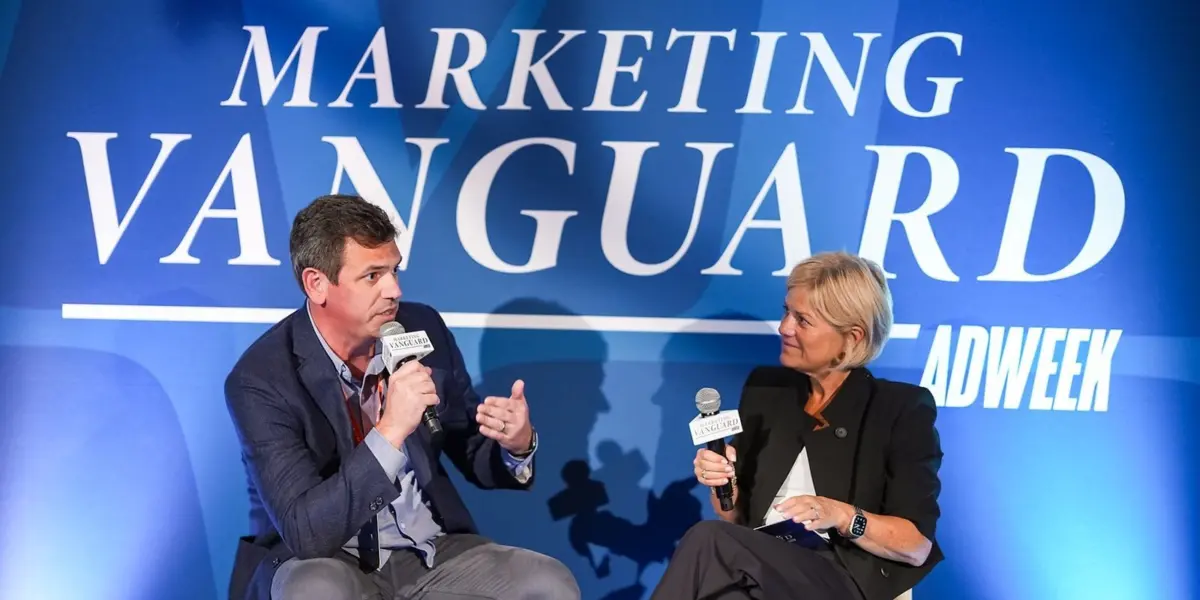
At ADWEEK’s Brandweek 2026 in Atlanta, Georgia, Bruce Williams, CEO of Dentsu X North America, took center stage to address this very challenge. Speaking during a pivotal session titled “Media As a Flywheel For Growth”—hosted by ADWEEK chief brand and community officer Jenny Rooney—Williams laid bare the structural inefficiencies plaguing modern marketing. He argued that traditional silos in media buying and brand experiences are no longer just inconvenient; they are actively eroding brand value.
The solution, according to Williams, is a fundamental shift in how organizations conceptualize campaigns. Brands must transition away from old-school "experience planning"—a patchwork approach that awkwardly staples together media, data, content, and technology within isolated departments. Instead, Williams advocates for "experience platforming": a unified, systematic framework where cross-functional teams and technical capabilities operate in tandem from the ground up.
By treating media not merely as a distribution channel, but as the central engine or "flywheel" driving consumer engagement, brands can foster deeper, more harmonious relationships with their audiences. Utilizing real-world case studies like global beverage giant Heineken, Williams illustrated how dismantling internal friction allows companies to harness competitive intelligence, store-level metrics, and local market insights at scale.
This in-depth report explores the core themes of Williams’s Brandweek address, examining the theoretical framework behind "experience platforming," the operational mechanics of media as a growth flywheel, and the future outlook for agencies and brands striving to remain agile in a hyper-connected landscape.
Detailed Chronology: Insights from Brandweek 2026
The discourse surrounding media fragmentation reached a boiling point at Brandweek 2026, where industry leaders gathered to dissect the shifting paradigms of consumer attention. The trajectory of the conversation during the “Media As a Flywheel For Growth” session mapped out a clear narrative of transformation, urgency, and strategic recalibration.
Setting the Stage: The Reality of Fragmentation
As Jenny Rooney opened the session, the discussion immediately zeroed in on the friction points defining contemporary advertising. Consumers today do not experience media in linear streams. A single customer journey might involve viewing a Connected TV (CTV) ad, interacting with a shoppable post on social media, reading a localized review on a mobile app, and finally making an in-store purchase.
However, the organizational structures behind these campaigns often remain rigidly divided. Media teams sit in one corner, creative agencies in another, data analysts elsewhere, and technology partners operating independently. This structural disconnect results in what Bruce Williams characterizes as fragmented brand experiences.
When media buying and brand messaging operate in silos, the consumer feels the disconnect. Messaging becomes repetitive or contradictory, and valuable data insights are lost in transit between departments. Williams emphasized that solving these structural issues is the primary mandate for modern agency leadership. Delivering connected marketing experiences is no longer an optional luxury; it is the baseline requirement for capturing consumer trust.
Moving Beyond "Experience Planning"
A cornerstone of Williams’s presentation was a critique of standard industry terminology and methodology. For years, agencies have lauded "experience planning" as the pinnacle of modern marketing strategy. Yet, Williams contends that the term has been co-opted to describe a deeply flawed process.
In traditional experience planning, strategists attempt to create holistic consumer experiences by stitching together disparate elements—media placements, consumer data sets, creative content, and technical platforms—after the fact. Because these components are developed in silos, the resulting campaigns often feel cobbled together rather than naturally cohesive.
Williams urged brands to abandon this backward methodology. A campaign cannot achieve true synergy if its foundational components are built in isolation and forced to integrate downstream. Instead, the entire apparatus of a campaign must be engineered to work together from its inception.
Embracing "Experience Platforming"
To replace the outdated model of experience planning, Williams introduced the concept of "experience platforming." This strategic shift moves away from temporary campaign stitching and toward permanent operational integration.
Experience platforming requires brands and agencies to meld teams, capabilities, and data systems so that they operate systematically together. Rather than departments handing off deliverables sequentially over a metaphorical wall, cross-functional teams collaborate dynamically to bring a campaign to life.
Under this model, data scientists, media planners, creative directors, and technologists share a unified vision and shared KPIs. The media plan informs the creative execution, the creative insights refine the data collection, and the technology scales the entire operation seamlessly. By building a robust platform rather than a transient campaign, brands can maintain consistency, relevance, and momentum across every consumer touchpoint.
Supporting Context & Metrics: The Heineken Case Study
To prove that experience platforming is more than just theoretical agency jargon, Williams provided a concrete real-world example: Dentsu X’s ongoing partnership with Heineken.
Bridging the Global-Local Divide
Global brands frequently struggle with a classic organizational dilemma: how to maintain a unified global brand identity while empowering local markets and individual storefronts to execute relevant, timely campaigns. For Heineken, this challenge involved coordinating across diverse geographical regions, distinct distribution networks, and various retail endpoints.
Dentsu X helped Heineken architect a connected ecosystem designed for bidirectional communication. Rather than information flowing strictly downward from the global brand to local entities, the new system enabled insights to travel fluidly in both directions—from agency to brand, market to headquarters, and store to strategy.
The Power of Integrated Data Streams
The success of Heineken’s go-to-market strategy hinged on the consolidation of three distinct data pillars:
- Competitive Data: Real-time intelligence regarding market share, competitor spending, and industry trends.
- Store-Level Data: Inventory metrics, foot traffic patterns, and point-of-sale transactions.
- Local Market Intelligence: Cultural nuances, regional preferences, and localized event timings.
By feeding these diverse data streams into a centralized decision-making framework, Heineken’s teams gained the unprecedented ability to activate campaigns at scale while maintaining hyper-local relevance. A promotional shift in a specific regional market could instantly inform broader media buying strategies, while global brand campaigns could be fine-tuned to reflect localized retail realities.
Distributing Outcomes Across the Ecosystem
The ultimate test of any marketing architecture is its ability to deliver measurable value across the entire enterprise. Under Dentsu X’s platformed approach, the benefits of the campaign did not just pool at the corporate headquarters.
Instead, positive outcomes were funneled back to multiple stakeholders:
- The Brand: Enhanced equity, higher return on ad spend (ROAS), and clearer audience insights.
- Franchisees & Local Stores: Increased foot traffic, localized promotional support, and direct sales lifts.
- Divisions & Partners: Streamlined operational workflows and reduced redundancy in media spending.
This multi-directional value distribution exemplifies why Williams refers to media as a "growth flywheel." When properly energized, the media ecosystem continuously feeds itself, generating momentum that propels every tier of the business forward.
Official Statements and Industry Perspectives
Bruce Williams’s remarks at Brandweek 2026 struck a chord with industry peers, highlighting a broader philosophical shift within the marketing and advertising sectors. As brands navigate economic uncertainties and rapidly evolving digital platforms, the demand for operational agility has never been higher.
Striking the Balance: Scale vs. Agility
During the session, Williams addressed the perpetual tension modern enterprises face: the desire for massive, efficient scale versus the need for scrappy, localized nimbleness. Too often, brands assume these two goals are mutually exclusive. Massive scale typically requires rigid corporate structures, while nimbleness is usually associated with small, decentralized teams.
Williams challenged this false dichotomy, noting that modern media platforms allow brands to achieve both simultaneously if their underlying architecture is sound.
"It’s just different ways in which we can think about using scale solutions and point ourselves to, ‘How are we building for that?’ But also be scrappier and nimbler," Williams stated.
This statement encapsulates the core philosophy of Dentsu X North America under his leadership. By building scalable technological and data platforms, brands create a solid foundation of efficiency. At the same time, because teams are integrated and data flows bidirectionally, individual markets retain the autonomy and speed required to pivot instantly in response to cultural moments or local market conditions.
The Role of Leadership in Dismantling Silos
Industry analysts attending the session noted that transitioning from experience planning to experience platforming requires a courageous rethinking of corporate culture and agency remuneration models. Silos persist in many organizations not because employees prefer working in isolation, but because performance metrics, budgeting incentives, and departmental KPIs are traditionally tied to isolated silos.
For instance, a digital media team might be incentivized strictly on click-through rates, while a brand equity team is measured on long-term sentiment. When these teams are forced into a unified "experience platform," leadership must redefine success metrics collectively. Williams’s insights at Brandweek serve as a strategic roadmap for executives willing to dismantle these legacy structures in pursuit of true consumer-centricity.
Future Outlook: The Next Evolution of Connected Marketing
As we look toward the horizon of the advertising industry, the principles articulated by Bruce Williams at Brandweek 2026 point toward several inevitable trends. The evolution from fragmented media buying to holistic ecosystem management will dictate which brands thrive and which ones fade into the background noise.
1. The Death of the Campaign-Centric Mindset
The traditional notion of a finite "campaign"—with a distinct beginning, middle, and end supported by temporary creative bursts—is rapidly giving way to perpetual brand storytelling. Consumers live in an always-on digital reality, and their expectations of brands mirror this constancy. Experience platforming provides the infrastructure necessary to maintain an always-on dialogue, shifting agencies from campaign-builders to ecosystem-maintainers.
2. AI and Automation as Integration Catalysts
Artificial intelligence, machine learning, and advanced automation will play a critical role in accelerating the shift toward experience platforming. As seen in the Heineken case study, processing competitive data, store-level metrics, and local market intelligence at scale requires immense computational power. Future marketing platforms will increasingly rely on AI to automate the feedback loops between local activations and global strategies, reducing human friction and accelerating decision-making cycles.
3. Redefining Agency-Client Partnerships
The traditional agency-client dynamic—characterized by transactional project briefs and rigid scopes of work—is evolving into a deeply integrated partnership model. Agencies can no longer afford to operate as external vendors delivering isolated media plans. To successfully implement experience platforming, agency teams must be woven directly into the operational fabric of the client’s business, sharing risks, data, and rewards.
Conclusion
Bruce Williams’s address at ADWEEK’s Brandweek 2026 served as both a critique of current industry inefficiencies and an inspiring vision for the future. By tearing down internal silos, moving past outdated experience planning, and embracing comprehensive experience platforming, brands can transform media from a costly expense into an unstoppable flywheel for growth. As Dentsu X continues to champion these connected strategies—proven by successful executions with global leaders like Heineken—the advertising landscape moves one step closer to a truly harmonious, consumer-first future.