

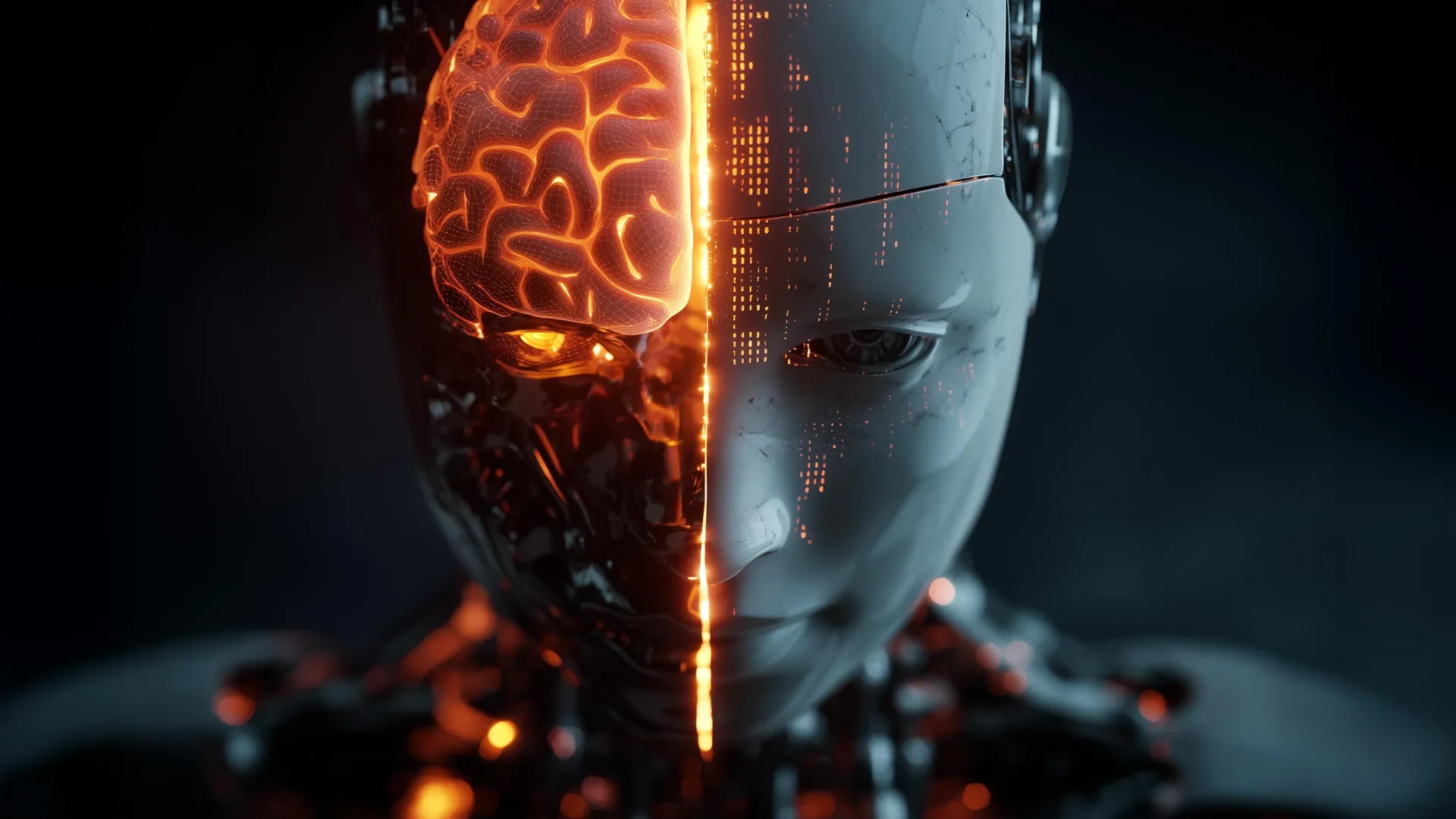
Executive Overview
For over a decade, computational neuroscientists have celebrated a seemingly monumental alignment between artificial intelligence and biological reality. Artificial neural networks (ANNs)—computer systems originally engineered to classify images and recognize objects—have increasingly become the gold standard for modeling the primate visual system. Because these algorithms can successfully mimic surface-level patterns of neural activity, researchers have leaned heavily on them to decode how the human brain processes visual stimuli, moves through space, and interprets the world.
However, a groundbreaking study published in Nature Machine Intelligence by a team of researchers at York University reveals a profound vulnerability in this foundational scientific assumption.
Led by Assistant Professor Kohitij Kar and postdoctoral fellow Sabine Muzellec, the York research team deployed a novel evaluative framework known as "reverse predictivity testing" to interrogate the true nature of brain-AI alignment. Their findings suggest a startling asymmetry: while artificial intelligence can readily predict the firing patterns of biological neurons, recorded brain activity fails to reliably predict many of the internal computational features of the AI models.
This critical discrepancy reveals that current AI architectures frequently arrive at correct visual conclusions by employing internal strategies and shortcuts that the biological brain simply does not use. Far from being a mere semantic debate over computational semantics, this illusion of similarity carries severe implications. As artificial intelligence becomes deeply embedded in neuroscience, clinical diagnostics, and experimental design, relying on models that only look brain-like on the surface risks leading researchers down a scientific blind alley. To course-correct, the York team has introduced a publicly available diagnostic toolkit designed to help neuroscientists and AI developers build models that more faithfully mirror genuine human cognition.
Detailed Chronology: The Journey to "Reverse Predictivity"
The Rise of the ANN Paradigm in Neuroscience
To understand the gravity of the York University discovery, one must first understand how artificial intelligence became a darling of contemporary neuroscience. For years, deciphering how the human brain processes visual information—such as tracking a moving object, identifying a predator in the brush, or recognizing a familiar face—has stood as one of science’s most formidable computational challenges.
As deep learning surged forward in the 2010s, neuroscientists realized that artificial neural networks trained on object-recognition tasks spontaneously developed internal hierarchies that mirrored the ventral stream of the primate visual cortex. When presented with images, the intermediate layers of these ANNs fired in patterns that bore a striking statistical resemblance to recorded neural populations in the brains of primates.
This breakthrough allowed researchers to use AI as a computational proxy. Instead of mapping every microscopic nuance of biological tissue, scientists could run simulations, test hypotheses, and predict neural responses using these artificial models. They became indispensable tools across vision research, cognitive science, and behavioral studies.
The Blind Spot in One-Way Testing
Despite their utility, these models harbored a fundamental vulnerability that went largely unchecked: the testing paradigm was strictly unidirectional.
For years, the scientific community evaluated "brain-like" AI by asking a single directional question: Can artificial intelligence models predict recorded brain activity? When an ANN successfully forecasted how a cluster of neurons would fire in response to a picture of a car or a bird, researchers checked the box, deeming the model a success.
Assistant Professor Kohitij Kar, the Canada Research Chair in Visual Neuroscience and a member of York’s Centre for Vision Research and Centre for Integrative and Applied Neuroscience, recognized that this one-way street was insufficient. True scientific validation requires reciprocity. If an artificial intelligence system operates by fundamentally the same biological rules as a brain, the relationship must hold true in reverse.
Developing the Reverse Predictivity Framework
To test this hypothesis, Kar, Muzellec, and their colleagues engineered a bidirectional diagnostic metric. Rather than just asking whether AI could forecast neural firing, they asked whether recorded biological neural activity could successfully predict the internal features and hidden layers of the AI models.
To rigorously evaluate this, the team curated a diverse, highly controlled visual dataset. The testing suite incorporated 1,320 natural photographs and realistic synthetic images featuring 10 distinct, familiar subjects:
- A bear
- An elephant
- A face
- An apple
- A car
- A dog
- A chair
- An aeroplane
- A bird
- A zebra
These subjects were embedded across varied natural, indoor, and outdoor backgrounds to test how context affected processing. Furthermore, to push the boundaries of shape and abstraction, the researchers introduced 300 additional images depicting the same subjects in alternative visual styles, including stark outlines, hand-drawn sketches, simplified representations, and artistic interpretations.
When the researchers ran their reverse predictivity tests using neural responses gathered from biological subjects, the illusion of seamless AI-brain equivalence shattered.
Supporting Context & Metrics: The Biological Disconnect
The empirical results of the York University study laid bare a stark structural disconnect between artificial intelligence and biological vision systems.
The Asymmetry of Prediction
When the researchers fed their image datasets into the ANNs, the models performed precisely as expected: they successfully predicted the responses of recorded neurons—the specialized biological cells responsible for transmitting electrochemical information throughout the brain.
However, when the process was reversed, the biological neuronal responses proved significantly less effective at predicting the internal mechanics and feature maps of the AI models. The information flowed efficiently from artificial models to biological tissue, but stalled or degraded when moving from biological tissue back into the computational models.
To ensure this asymmetry wasn’t just an artifact of noisy biological data, the team ran control comparisons. When they compared neuronal activity from one biological brain against another biological brain, the predictive symmetry held strong. Different brains operated on fundamentally compatible internal architectures. It was only when biological brains were compared against artificial intelligence models that the asymmetric breakdown occurred.
What Lies Beneath the Hood
This revelation points to a sobering reality: matching the brain’s output does not mean matching its mechanisms.
Current artificial neural networks are brilliant curve-fitters. They are optimized through massive computational brute force (backpropagation) to achieve high accuracy on classification tasks. In doing so, they frequently exploit mathematical shortcuts, statistical artifacts, and pixel-level correlations that the human brain—shaped by millions of years of evolutionary biology, embodiment, and environmental interaction—does not use.
As Sabine Muzellec, a York postdoctoral fellow and trainee with the university’s Connected Minds program, notes, the implications strike at the heart of computer vision and neuroscience alike:
"Our findings challenge how similar current AI systems really are with the primate brain. We show that models that were previously thought to be brain-like rely on internal components that the brain does not appear to use. We provide a well-vetted diagnostic metric for the field."
If these divergent internal strategies are allowed to compound as AI models grow larger and more complex, future models could drift even further from biological reality while maintaining the illusion of cognitive equivalence on the surface.
Official Statements & Expert Perspectives
The publication of these findings in Nature Machine Intelligence has sparked urgent conversations across the intersections of artificial intelligence research, neurobiology, and clinical science.
The Danger of Scientific Drift
Reflecting on the study’s broader consequences, Kohitij Kar emphasized that neuroscience relies on computational models to explain the unobservable mechanical truths of perception. If those models are built on false equivalencies, the entire foundational edifice risks destabilization.
"Artificial intelligence systems are often described as ‘brain-like’ because they can predict activity in parts of the brain that help us recognize objects," Kar explains. "Until now, scientists mostly tested this in one direction. They asked whether AI models can predict brain activity."
Kar points out that while current ANNs excel at prediction, their underlying methodologies diverge from evolutionary neurology in ways that could skew decades of research.
"Ultimately, we need computational models to truly understand the underlying neural mechanisms of how we recognize objects. How do we see objects move? While it’s a very easy task that we do every day, computationally, though, it’s a very challenging problem."
The Behavioral Paradox
Interestingly, the York team uncovered a nuanced caveat within their data: the specific components of AI models that do align with biological neural activity are also the ones better at predicting real human behavior. This suggests that while the whole of modern AI is heavily flawed as a brain proxy, fragments of its architecture genuinely capture aspects of human perception.
The challenge for the scientific community, therefore, is not to throw the artificial neural network out with the bathwater, but to surgically isolate those genuinely brain-like features from the artificial artifacts.
Future Outlook: Building the Next Generation of Brain-AI Models
Far from signaling a dead end for computational neuroscience, the York University study charts a clear, constructive path forward. By shining a light on the hidden discrepancies between artificial and biological processing, the research opens the door for a new generation of genuinely trustworthy computational tools.
Transforming Clinical and Psychological Research
The stakes extend far beyond basic visual neuroscience. Today, artificial intelligence models are increasingly deployed to model human behavior, guide experimental designs, and investigate complex psychological and neurological conditions.
Consider the fields of clinical psychology and neurodivergence research. For instance, Kar’s ongoing research program relies heavily on models of the neurotypical brain as a baseline to understand conditions like autism—where perception, sensory integration, and information processing may diverge from the norm. A "neurotypical brain" refers to one whose neurological development and functioning follow patterns generally considered typical within a given population.
If researchers build autism models using flawed AI baselines that rely on artificial computational shortcuts rather than biological mechanisms, clinical insights could be fundamentally compromised. Conversely, refining these models to match true biological mechanics could unlock unprecedented diagnostic clarity for conditions ranging from autism spectrum disorder to post-traumatic stress disorder (PTSD).
Beyond Vision: A Paradigm Shift for Neuroscience
The warning sounded by Kar and Muzellec likely extends well beyond the visual system. Similar artificial neural network architectures are currently being deployed across auditory processing, language comprehension, and motor control research. If auditory or linguistic AI models similarly rely on internal mechanisms foreign to the human nervous system, neuroscientists across disciplines may need to re-evaluate what their models are actually teaching them.
Practical Tools for the Scientific Community
To ensure these insights lead to immediate, practical improvements, the York University research team has taken an open-science approach. They have released a publicly available testing toolkit via PyPI.
This toolkit allows AI developers, computational neuroscientists, and machine learning engineers to run reverse predictivity tests on their own models. By evaluating whether their systems pass the bidirectional test, researchers can pinpoint precisely where their architectures diverge from biological reality and adjust their training parameters accordingly.
Conclusion: Toward True Bio-Mimicry
Artificial intelligence has irrevocably transformed our ability to model complex systems, but the York University study serves as an essential reality check. The human brain remains the most sophisticated computational instrument in the known universe—a product of biological evolution that cannot be entirely replicated by brute-force curve-fitting and algorithmic shortcuts.
By embracing rigorous diagnostic standards like reverse predictivity testing, the scientific community can move past the illusion of similarity. The result will be a new generation of artificial intelligence that not only recognizes the world with breathtaking accuracy, but genuinely mirrors the elegant, intricate ways the human mind makes sense of what it sees.
