

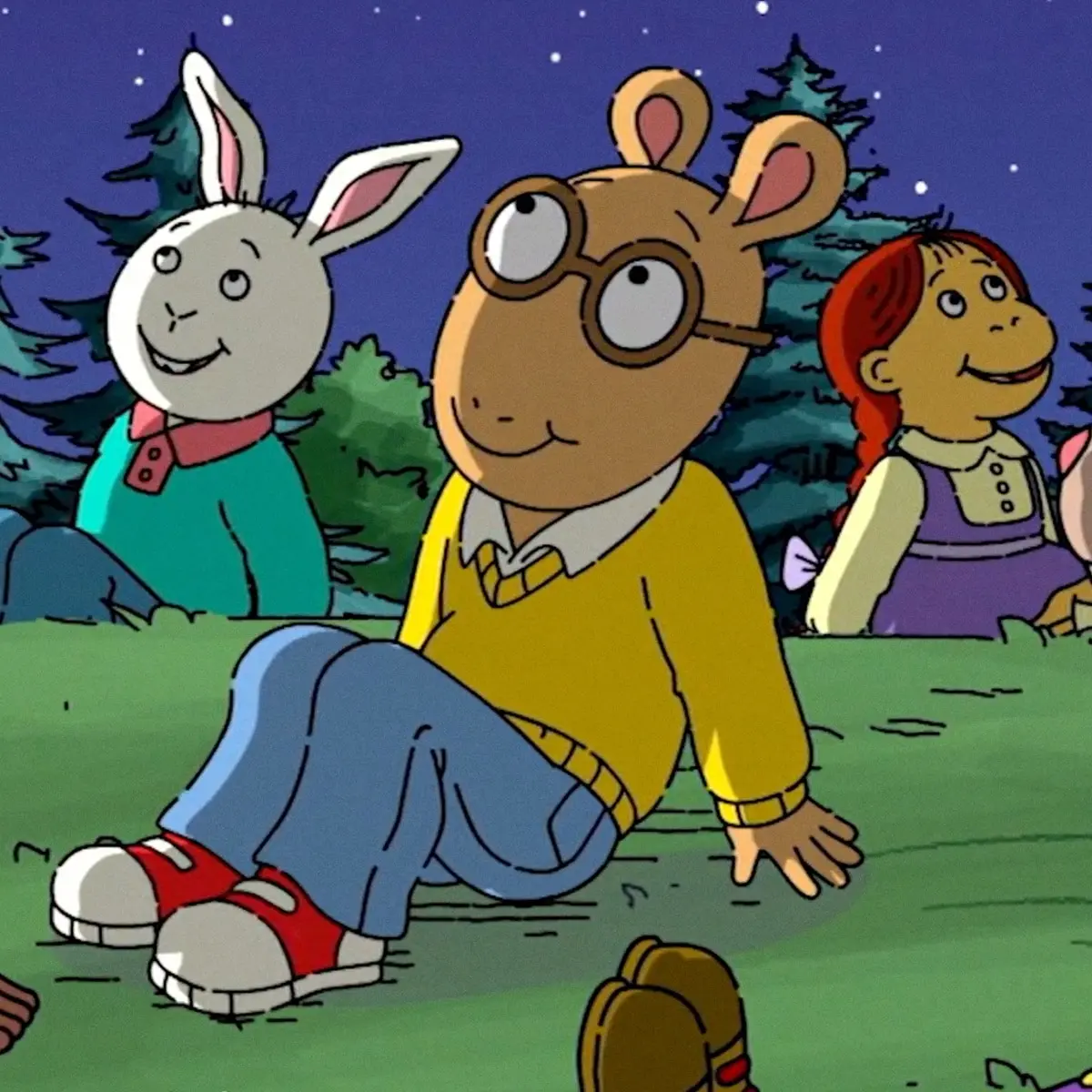
Overview
Three decades after first making its way onto television screens across the United States, the beloved animated children’s series Arthur continues to resonate deeply within contemporary popular culture. Based on the acclaimed Arthur Adventure children’s book series by Marc Brown, the PBS Kids staple officially celebrates its 30th anniversary this year. Premiering in October 1996, the landmark program redefined what educational children’s television could achieve, balancing whimsical anthropomorphic characters with authentic emotional depth. To honor this milestone, PBS Kids has announced a special weekend-long broadcast marathon scheduled for November 7 and 8, showcasing fan-favorite episodes that defined an era of television.
For 25 seasons and more than 250 episodes, the inhabitants of Elwood City welcomed viewers into their homes, addressing not only the everyday trials of childhood—such as homework, sibling rivalries, and playground politics—but also complex social issues. From navigating family dynamics and mental health conditions to championing the fundamental importance of obtaining a library card, Arthur treated its young audience with profound intellectual and emotional respect. When the series finally signed off in 2022, it held the prestigious title of the longest-running children’s animated series in U.S. history.
This retrospective examines the monumental legacy of Arthur, detailing its historical chronology, examining the cultural metrics of its unprecedented run, analyzing official statements from its creator, and exploring how a simple aardvark evolved into an enduring cultural touchstone through internet memes and a deeply satisfying, meta-narrative finale.
Detailed Chronology: From Book to Broadcast and Beyond
The journey of Arthur Read began long before his iconic yellow sweater and round glasses graced television monitors. Understanding the cultural phenomenon requires a careful review of the timeline that transformed a printed page into an international television institution.
The Genesis: Marc Brown’s Original Vision (1976)
Two decades prior to the television premiere, author and illustrator Marc Brown published Arthur’s Nose in 1976. The book introduced readers to Arthur Read, an insecure, bespectacled young aardvark who was deeply unhappy with his snout. Created originally as a bedtime story for Brown’s son, Tolon, the book struck a chord with young readers. Encouraged by the reception, Brown expanded the universe over the next twenty years, publishing a series of Arthur Adventure books that explored various milestones of childhood development, friendship, and self-acceptance.
The PBS Kids Premiere and Golden Era (1996–2010s)
By the mid-1990s, CineGroupe and WGBH Boston recognized the potential to adapt Brown’s rich literary world into a serialized animated television format. In October 1996, Arthur officially debuted on PBS Kids. Backed by an instantly recognizable, upbeat theme song performed by Ziggy Marley and the Melody Makers ("And I say, hey! What a wonderful kind of day…"), the show was an instant critical and commercial success.
Throughout the late 1990s and 2000s, the series maintained a rigorous production schedule, introducing generations of viewers to an eclectic cast of characters: Arthur’s mischievous little sister D.W., his loyal best friend Buster Baxter, the wealthy and ambitious Muffy Crosswire, the athletic and tough Francine Frensky, the gentle giant Binky Barnes, and cerebral brainiac Fern Walters.
Breaking Records and Saying Goodbye (2012–2022)
As television transitioned from traditional broadcast to streaming, Arthur remained a steadfast anchor of public broadcasting. In 2019, it was confirmed that the series would wrap up its historic run. On February 21, 2022, PBS broadcast the final episodes of the series, culminating in a four-episode event that brought a definitive, yet emotionally resonant, close to the quarter-century run.
The finale, titled "All Grown Up," utilized a brilliant narrative device: it fast-forwarded twenty years into the future, revealing the adult lives of Elwood City’s residents and ultimately establishing that the entire television series was actually a graphic novel memoir written by an adult, bespectacled Arthur Read.
Supporting Context & Metrics: The Scale of Elwood City
To fully comprehend the magnitude of Arthur’s 30th anniversary, one must analyze the statistical and cultural footprint left by the series across its unprecedented 25-season lifecycle.
Milestone Metrics of the Series
- Total Seasons: 25 broadcast seasons, making it the longest-running children’s animated series in American television history.
- Episode Count: Over 250 distinct episodes, many of which contained two separate eleven-minute stories, doubling the narrative output.
- Awards Recognition: The series earned four Daytime Emmy Awards for Outstanding Children’s Animated Program, a testament to its exceptional writing, voice acting, and animation quality.
- Global Reach: Broadcast in more than 80 countries worldwide, translated and dubbed into numerous languages, cementing Arthur Read as a globally recognized icon of youth development.
Groundbreaking Social and Educational Themes
Unlike many contemporary children’s programs that relied on simplistic moral lectures, Arthur was built on a foundation of educational research and emotional intelligence. Executive producers and writers tackled topics that were rarely, if ever, seen in 1990s children’s television:
- Inclusivity and Representation: In 2019, the show made headlines globally with the season 22 premiere episode "Mr. Ratburn and the Special Someone," in which Arthur’s beloved teacher, Mr. Ratburn, marries his partner, Patrick, addressing LGBTQ+ representation in an organic, age-appropriate manner.
- Health and Disability: Episodes thoughtfully explored medical conditions such as asthma (through Buster), dyslexia (through George Lundgren), and cancer (through recurring character Mrs. McGrady).
- Economic Diversity: The show routinely addressed socioeconomic differences, particularly through the friendship between middle-class Arthur and wealthy Muffy, teaching empathy and perspective regarding financial disparity.
Official Statements and Creator Reflections
The longevity of Arthur is mirrored in the heartfelt reflections of its creators, producers, and the man who brought the aardvark to life, Marc Brown.
Reflections from the Official Production Team
In celebration of the 30th anniversary, the show’s official Instagram account shared a poignant retrospective statement acknowledging the deep bond shared between the series and its audience:
"30 years ago, we premiered on @PBSKIDS, and it’s been a wonderful kind of time since. Thank you for letting us into your homes and communities. Here’s to future generations learning to believe in themselves, work together, and make things better!"
This statement underscores the foundational ethos of the series: empowering young viewers to navigate their world with kindness, collaboration, and resilience.
Marc Brown on the Meme Economy and Cultural Legacy
In a 2022 interview with E! News following the series finale, creator Marc Brown discussed his initial surprise and ultimate delight regarding how the series transcended traditional television to become a permanent fixture of digital meme culture—most notably, the ubiquitous "Arthur’s Fist" meme used globally to express frustration.
"I am amazed that these young people who grew up with Arthur, that these characters have stayed with them and made an impression on how they think," Brown shared. "The fact that they’re using a character’s personality as a reference point in their social media, I find that very interesting. And it makes me pleased that these characters have become that iconic that other people understand what they’re saying."
Future Outlook: The Adult Lives of Elwood City and Cultural Immortality
Though production on new episodes ceased in 2022, the legacy of Elwood City continues to expand through nostalgic rediscovery, the upcoming PBS Kids anniversary marathon, and the enduring fascination with the series’ definitive epilogue.
For millennials and older Gen Z viewers who grew up watching the series, the "All Grown Up" finale offered rare closure. The flash-forward provided a comforting roadmap for where beloved characters ultimately landed two decades later:
- Arthur Read: Sporting a 2010s-style hair swoosh and light stubble, Arthur successfully fulfilled his creative ambitions, publishing a retrospective graphic novel titled Arthur—the very memoir viewers had been watching all along.
- Buster Baxter: True to his inquisitive, gentle nature, Buster transitioned into a career as a school teacher, though his characteristic wide-eyed fatigue suggests teaching young minds remains an honorable challenge.
- D.W. Read: Perhaps the most fitting career trajectory in the entire canon, the former tyrannical younger sister matured into a no-nonsense police officer—a professional path that longtime fans agreed "checks out" entirely.
- Muffy Crosswire: Leveraging her lifelong entrepreneurial spirit, leadership drive, and penchant for luxury, Muffy set her sights on local politics, running for mayor of Elwood City.
- Francine Frensky: Trading her tomboy athletic jerseys for a fresh, sophisticated hairstyle and large gold hoops, Francine rose to become the powerhouse head of a prominent athletic apparel company.
- Binky Barnes: Expanding beyond his tough-guy childhood persona and artistic sensitivities, Binky found his stride on local television screens as a trusted neighborhood weather forecaster.
As PBS Kids prepares its special November broadcast blocks, and as internet users continue to share classic clips and memes, it is clear that Arthur has achieved cultural immortality. The aardvark with the round glasses proved that growing up is messy, complicated, and occasionally heartbreaking—but with the right friends, a supportive family, and a reliable library card, it is always a wonderful kind of day.