

Executive Overview
Three decades after it first revolutionized the Great White Way, Jonathan Larson’s Pulitzer Prize- and Tony Award-winning rock musical Rent is preparing for a monumental milestone. On October 26, the legendary Richard Rodgers Theatre—currently home to Hamilton—will host a once-in-a-lifetime, star-studded benefit concert celebrating the 30th anniversary of the cultural touchstone.
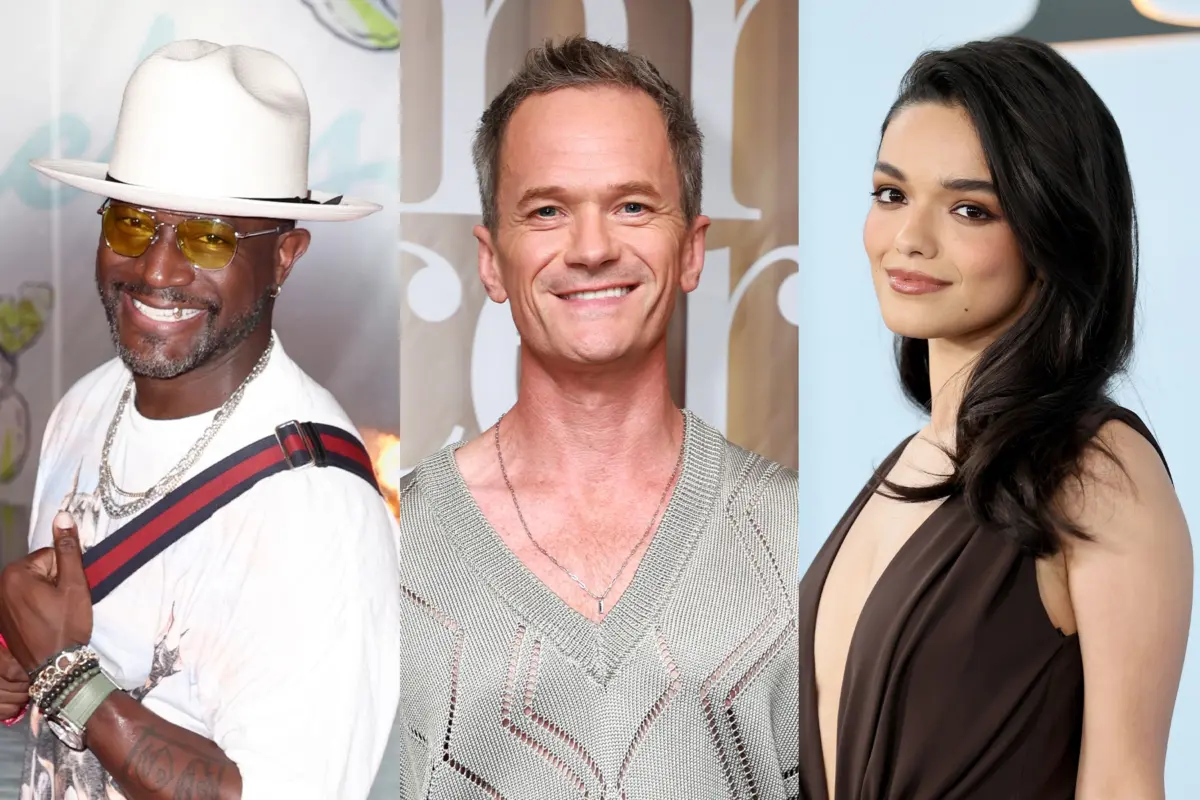
The evening, organized to support Broadway Cares/Equity Fights AIDS, has expanded its already formidable lineup. Joining original Broadway icons Idina Menzel, Adam Pascal, Anthony Rapp, and Daphne Rubin-Vega are a slew of heavy hitters from stage and screen. Most notably, original cast member Taye Diggs, who originated the role of landlord-turned-sellout Benjamin Coffin III, has officially signed on to the roster. He will be joined by fellow stage and screen luminaries Neil Patrick Harris, Rachel Zegler, and Norbert Leo Butz, alongside a massive ensemble of over 60 Broadway stars, original understudies, and ensemble members.
While tickets for the live, one-night-only performance sold out almost instantly, producers have ensured that the production remains true to Rent’s historic ethos of accessibility. A global livestream has been made available for $30, and a dedicated digital lottery via Broadway Direct is offering 24 lucky fans the chance to secure in-person seats—a direct nod to the revolutionary rush-ticket system that Rent pioneered in the mid-1990s.
Beyond the star wattage and nostalgic curtain calls, this anniversary event serves as a poignant reminder of art’s capacity for social mobilization. By partnering with Broadway Cares/Equity Fights AIDS, the production returns to its foundational roots: healing a community, honoring those lost to the HIV/AIDS epidemic, and celebrating the enduring spirit of bohemia in an increasingly commercialized world.
Detailed Chronology: From the East Village to Global Phenomenon
To understand the magnitude of the upcoming 30th-anniversary concert, one must trace the rocky, miraculous trajectory of Rent itself—a journey marked by sudden tragedy, artistic triumph, and a complete rewriting of the rules of modern musical theater.
The Genesis and the Tragedy (1989–1996)
Conceived in the late 1980s by a struggling young composer and writer named Jonathan Larson, Rent was loosely inspired by Giacomo Puccini’s 1896 opera La bohème. Larson sought to translate the romanticized tuberculosis-riddled garrets of 19th-century Paris into the gritty, drug-addled, gentrifying reality of New York City’s East Village. The characters—artists, musicians, filmmakers, and outcasts—were wrestling not only with poverty and the pressures of late-stage capitalism but with the terrifying, indiscriminate reality of the HIV/AIDS epidemic.
Larson spent years workshopping the show off-Broadway at the New York Theatre Workshop. Tragically, on January 25, 1996—just hours before the show’s first off-Broadway preview performance—Larson suffered an aortic dissection and died suddenly at the age of 35. He never lived to witness the seismic cultural earthquake his creation would unleash.
The Broadway Explosion and Cultural Legacy (1996–2005)
Propelled by rave reviews and an immediate, fervent grassroots following, Rent transferred to Broadway’s Nederlander Theatre on April 29, 1996. It instantly transformed the theatrical landscape. It proved that a rock score could thrive on Broadway, that younger audiences would line up around the block for theater, and that stories about queer love, addiction, and systemic illness deserved a mainstream spotlight.
The show swept the 1996 Tony Awards, winning four trophies, including Best Musical, Best Book of a Musical, and Best Original Score, alongside the 1996 Pulitzer Prize for Drama. It ran for 5,123 performances over 12 years, closing on September 7, 2008, making it at the time one of the longest-running shows in Broadway history.
In 2005, six of the eight original principal cast members—Adam Pascal, Anthony Rapp, Taye Diggs, Idina Menzel, Daphne Rubin-Vega, and Jesse L. Martin—reprises their roles for a feature film adaptation directed by Chris Columbus. While polarizing among purists, the film cemented the original cast’s performances in cinematic history.
The 30th Anniversary Re-Assembly (Present Day)
The October 26 benefit concert represents the first time in over a decade that such a vast contingent of the original creative ecosystem has gathered under one roof. The casting has steadily ballooned into a massive reunion. Original understudies and ensemble members—including Yassmin Alers, Gilles Chiasson, Shelley Dickinson, David Driver, Darius de Haas, and Rodney Hicks—will share the stage with contemporary Broadway heavyweights.

The full ensemble reads like a who’s who of musical theater royalty: Natalie Venetia Belcon, Adam Chanler-Berat, Nicholas Christopher, Merle Dandridge, Trey Ellett, Jordan Fisher, Renée Elise Goldsberry, Jose Llana, John Eric Parker, Jai Rodriguez, Antonique Smith, Ephraim Sykes, and Aaron Tveit round out the monumental roster.
Supporting Context & Metrics: The Economics and Social Impact of ‘Rent’
The cultural footprint of Rent extends far beyond its emotional resonance; it fundamentally re-engineered the business model of Broadway marketing, ticket distribution, and philanthropic engagement.
Revolutionizing Ticketing: The Birth of the Rush System
Before 1996, securing affordable Broadway tickets usually meant waiting in long lines at the TKTS booth in Times Square for same-day, half-price seats, or paying full freight. Recognizing that Rent’s core demographic—young people, students, and struggling artists—could not afford standard orchestra prices, producers instituted a radical policy: the first two rows of the orchestra would be sold for $20 each on the day of the performance, available on a first-come, first-served basis.
This spawned the modern "rush ticket" phenomenon. Lines wrapped around the block of the Nederlander Theatre for years, creating a vibrant, tailgate-like community known colloquially as "Rentheads." Today, nearly every major Broadway and West End production utilizes digital or physical rush and lottery systems, a direct legacy of Larson’s populist vision.
Box Office and Philanthropic Metrics
- The Pulitzer Prestige: Rent remains one of only ten musicals in history to win the Pulitzer Prize for Drama, placing it in the elite company of works like Of Thee I Sing, South Pacific, A Chorus Line, Sunday in the Park with George, Rent, Next to Normal, Hamilton, and A Strange Loop.
- Broadway Cares Partnership: The 30th-anniversary concert is deeply tied to the mission of Broadway Cares/Equity Fights AIDS, an organization that has raised over $300 million since its inception to provide essential medication, health care, and emergency financial support to individuals facing life-altering illnesses. Given that Rent was born during the height of government apathy toward the AIDS crisis, raising funds for this cause serves as a direct continuation of the musical’s activist heartbeat.
- The Livestream Economy: With the live performance at the Richard Rodgers Theatre restricted by physical capacity, the decision to offer a $30 global livestream acknowledges the borderless, international devotion of the Rent fandom. It democratizes access for fans across continents who cannot afford travel to New York City.
Official Statements and Artistic Vision
The gravity of this 30th-anniversary reunion has elicited deeply emotional responses from the creative minds who brought Larson’s vision to life three decades ago.
Michael Greif, the original director of Rent who guided the production from its humble workshops to its Broadway triumph, reflected on the milestone in an official statement:
"Jonathan wrote Rent in honor of the people he knew who were living and struggling with HIV, and in honor of the many friends and contemporaries he lost to AIDS. I know he’d be proud and honored to join forces with Broadway Cares/Equity Fights AIDS to celebrate the 30th anniversary of his milestone musical."
The inclusion of original cast members alongside newer additions like Rachel Zegler and Neil Patrick Harris highlights the generational bridge that Rent has built. The musical no longer belongs exclusively to the 1990s; it has entered the classical canon of American musical theater, interpreted and re-interpreted by successive waves of performers who view Larson’s score as foundational text.
Future Outlook: The Everlasting Flame of Bohemia
As the curtain rises on October 26 at the Richard Rodgers Theatre, the resonance of Rent will reverberate far beyond the velvet ropes and the glow of the stage lights.
In an era defined by hyper-digital isolation, economic anxiety, and recurring public health crises, the central themes of Rent—community resilience, the insistence on making art in the face of despair, and the simple, defiant act of loving one another—feel just as urgent today as they did in the winter of 1996.
The 30th-anniversary concert is not merely a nostalgic exercise in looking backward. It is a living, breathing testament to a generation of artists who stared down mortality and chose to sing. As the ensemble raises their voices to ask, "How do you measure a year?" the answer provided by this monumental benefit concert is clear: through generosity, remembrance, and the enduring power of musical theater to heal a broken world.