

Executive Overview
In the modern landscape of corporate marketing, authenticity has become the ultimate currency. Consumers—increasingly skeptical of hyper-polished, synthetic advertising—gravitate toward brands that can prove a genuine, lived-in connection to their products. Few partnerships embody this shift quite like the recent collaboration between The Honey Baked Ham Company and social media powerhouse Kylie Kelce.
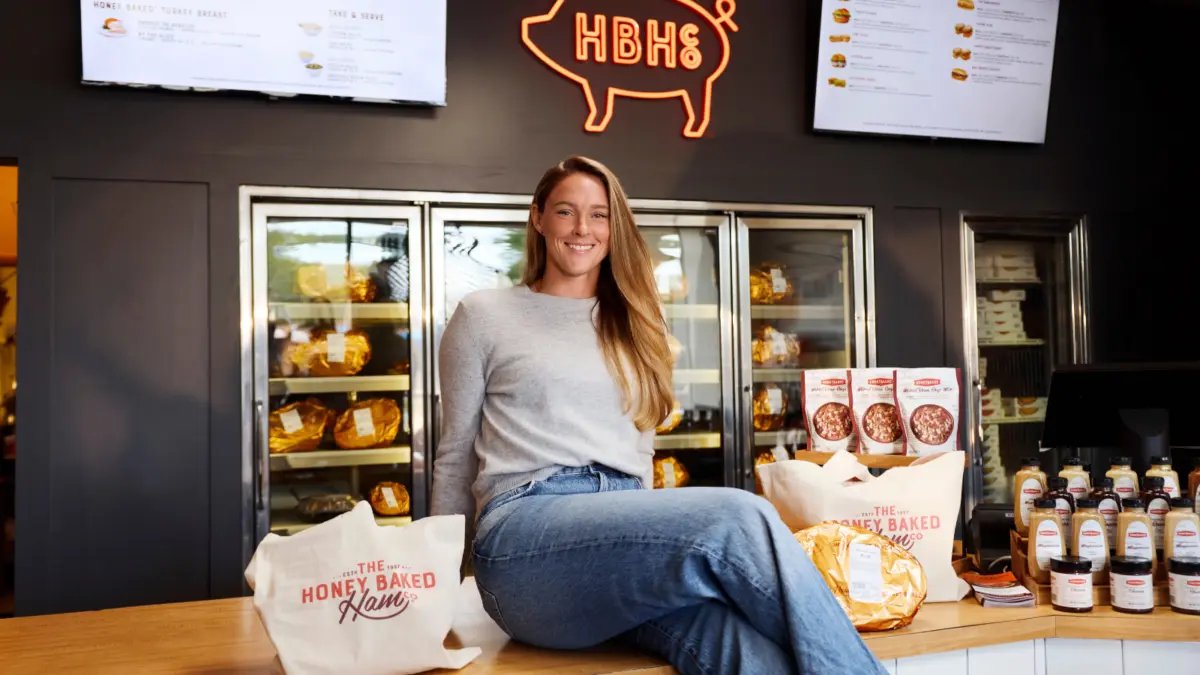
At first glance, the Honey Baked Ham franchise situated in a suburban Philadelphia strip mall in Broomall—flanked by a Wawa convenience store, a local dry cleaner, and a bustling nail salon—is entirely unremarkable. Visually, it blends seamlessly into the architectural monotony of American commercial strip real estate. Yet, this unassuming storefront occupies a central, sacred space in the corporate mythology and personal history of one of America’s most beloved public figures.
It was within these modest walls that a young Kylie Kelce (then Kylie McDevitt) forged a formative holiday tradition, visiting the store alongside her grandmother, affectionately known as Mimi, to select the centerpiece for their family celebrations. When the time came for Kelce to lend her considerable cultural influence to Honey Baked Ham’s upcoming seasonal campaign, she did not pitch a sleek, high-concept studio shoot in Los Angeles or New York. Instead, she insisted on returning to the roots of her childhood: the Broomall strip mall.
Debuting on October 19, this new holiday campaign marks a strategic pivot for the iconic heritage brand. By anchoring its national marketing narrative in a deeply personal, localized childhood memory, Honey Baked Ham—under the leadership of Chief Commercial Officer Maegan Markee—has successfully bridged the gap between heritage comfort food and contemporary influencer-driven marketing. This comprehensive report examines the genesis of this unique collaboration, the anatomy of the campaign, the strategic calculus behind influencer marketing in the food and beverage sector, and what this partnership signals for the future of holiday retail advertising.
Detailed Chronology: From Broomall Childhood to National Spotlight
The Broomall Roots: A Tradition Takes Shape
Long before she captured the national spotlight as a cultural icon, a philanthropist, and the fiercely authentic wife of retired Philadelphia Eagles center Jason Kelce, Kylie McDevitt was growing up in the western suburbs of Philadelphia. Like countless families across the Delaware Valley, the McDevitts turned to time-tested culinary traditions to anchor their holiday celebrations.
Central to these gatherings was the iconic spiral-sliced, sweet-glazed ham from The Honey Baked Ham Company. For young Kylie, acquiring this holiday staple was not merely a grocery run; it was an experiential tradition shared with her grandmother, Mimi. The destination was the local franchise in Broomall, Pennsylvania—a neighborhood fixture nestled in a standard suburban strip mall.
The sensory details of these visits left an indelible mark: the chime of the door as they stepped inside, the rich, savory aroma of curing meats and warm glaze, and the meticulous selection process overseen by Mimi. These early encounters instilled a lifelong brand affinity that transcended transactional consumerism, transforming a commercial product into a vessel of familial warmth and nostalgia.
The Rise of Kylie Kelce: Authenticity as a Brand Asset
As Kylie McDevitt transitioned into adulthood, attended Cabrini University, and eventually married Jason Kelce during his storied career with the Philadelphia Eagles, her public profile steadily grew. However, it was during the 2023–2024 NFL season—against the backdrop of the cultural phenomenon surrounding her brother-in-law Travis Kelce and pop superstar Taylor Swift—that Kylie truly emerged as a national archetype of down-to-earth relatability.
Refusing to conform to the traditional, ultra-glamorous stereotypes often associated with professional athletes’ spouses, Kelce won over millions with her unapologetic blue-collar Philadelphia ethos, her dedication to grassroots field hockey coaching, and her tireless work with the Eagles Autism Foundation. Industry analysts quickly recognized her unique market power: unlike traditional influencers who endorse products purely for financial compensation, Kelce possessed an unshakeable aura of authenticity. Consumers trusted her because her public persona was entirely congruent with her private values.
The Genesis of the Campaign: A Personal Pitch
When executives at The Honey Baked Ham Company began mapping out their Q4 holiday marketing strategy earlier this year, they understood they needed a voice that could cut through the cacophony of seasonal advertising. The brand approached Kelce, recognizing her natural alignment with a company synonymous with traditional family gatherings.
However, the collaboration took an unexpected turn during initial creative development meetings. According to internal sources, when brand leadership pitched various high-concept narrative arcs, Kelce intervened with a pitch of her own. She informed executives that if she was going to partner with Honey Baked Ham, the campaign had to be rooted in absolute truth. She specifically requested that the production team abandon soundstages in favor of the exact Broomall strip mall where she and Mimi used to shop.
Chief Commercial Officer Maegan Markee, recognizing the goldmine of genuine emotional resonance embedded in Kelce’s request, immediately greenlit the pivot. The decision transformed a standard celebrity endorsement into an autobiographical documentary-style campaign that honors the quiet, unglamorous spaces where real family traditions are born.
Supporting Context & Metrics: The Business of Holiday Food Marketing
To fully appreciate the strategic weight of the Broomall campaign, one must examine the broader economic and cultural landscape of the holiday food and beverage sector, as well as the evolving metrics of modern influencer marketing.
The High Stakes of Q4 for Heritage Brands
For legacy brands like The Honey Baked Ham Company—founded in 1957 by Harry J. Hoenen, who pioneered the patented spiral-slicing machine—the fourth-quarter holiday season accounts for an outsized percentage of annual revenue. Thanksgiving, Christmas, and New Year’s Eve represent the critical window during which heritage food brands must capture market share against surging competition from artisanal butcher shops, grocery store private labels, and direct-to-consumer meal delivery services.
In a crowded marketplace, emotional differentiation is critical. According to retail consumer insights data, shoppers planning large family holiday meals consistently rank "nostalgia" and "tradition" as their primary purchasing drivers. By leaning into Kelce’s authentic childhood memories, Honey Baked Ham bypasses generic appetite appeal advertising and taps directly into the psychological comfort of holiday nostalgia.
The Evolution of Influencer Marketing: Moving Past the "Sponsorship" Stigma
For years, influencer marketing suffered from diminishing returns as consumers grew fatigued by sponsored content that felt transactional, hollow, and staged. Modern audiences demand radical transparency.
| Marketing Era | Primary Focus | Consumer Perception | Key Trust Driver |
|---|---|---|---|
| Traditional Advertising | Broad-scale reach, product features, mass media | Skeptical, detached | Repetition and visual appeal |
| Early Influencer Era | Product placement, high-gloss imagery | Increasingly cynical | Celebrity association |
| Authenticity-Driven Era | Lived experience, shared values, local roots | High trust, highly engaging | Proven personal history with the brand |
Kelce’s partnership with Honey Baked Ham serves as a masterclass in the modern authenticity era. By grounding the campaign in a specific, verifiable geographical location—the Broomall strip mall—the brand inoculates itself against accusations of manufactured corporate marketing. The presence of the neighboring Wawa, dry cleaner, and nail salon anchors the narrative in tangible reality, validating Kelce’s story for anyone familiar with suburban Philadelphia commerce.
Official Statements and Industry Analysis
Leadership Perspectives: Maegan Markee on Creative Flexibility
In discussions surrounding the campaign’s development, Honey Baked Ham leadership emphasized the importance of listening to their talent. Maegan Markee, Chief Commercial Officer, noted that consumer trust is fragile and can only be maintained when brands relinquish rigid creative control in favor of genuine storytelling.
"When you find a partner whose personal history intersects so seamlessly with the DNA of your brand, your job as a marketer is simply to step out of the way and let the truth of that story shine," Markee remarked during early promotional rollouts. "Kylie didn’t just want to sell hams for the holidays; she wanted to take our audience back to where her own family traditions started. That kind of emotional authenticity cannot be scripted in a corporate boardroom."
Advertising Industry Reception
Advertising trade publications and marketing analysts have universally praised the campaign for its subversive approach to celebrity endorsements. Rather than dressing Kelce in high fashion or placing her in an immaculate, professionally designed suburban kitchen, the campaign embraces the grit and realism of everyday American commerce.
Media strategists point out that the inclusion of mundane neighboring businesses—the Wawa, the dry cleaner, and the nail salon—creates a powerful psychological effect. It humanizes the celebrity while validating the everyday consumer’s routine. It sends a clear message: Kylie Kelce grew up shopping in the exact same kind of strip mall that you do.
Future Outlook: What Broomall Signifies for the Future of Brand Storytelling
As we look toward the future of retail marketing, the Honey Baked Ham and Kylie Kelce collaboration offers a blueprint for how legacy brands can successfully modernize without alienating their core consumer base. Several key takeaways emerge for industry professionals looking ahead to future marketing cycles:
1. Hyper-Local Specificity Over Broad Generalizations
National marketing campaigns have historically trended toward homogenized messaging designed to appeal to the widest possible demographic. However, consumer data increasingly shows that hyper-local specificity creates broader emotional resonance. By focusing on a single, specific strip mall in Broomall, Pennsylvania, Honey Baked Ham achieved national relevance precisely because it refused to water down the story with generic suburban tropes.
2. Co-Creation as a Trust-Building Mechanism
Brands that view influencers as mere distribution channels will increasingly struggle to capture Gen Z and Millennial purchasing power. True co-creation—where talent is empowered to shape the narrative arc based on their lived experiences—yields significantly higher engagement rates and long-term brand equity. Kelce’s insistence on returning to her roots transformed a standard holiday ad buy into a culturally resonant storytelling moment.
3. The Enduring Power of Tactile Nostalgia
In an increasingly digital, screen-dominated world, physical traditions carry immense psychological weight. Whether it is a shared trip to a local strip mall or gathering around a dining room table for a spiral-sliced ham, consumers are actively seeking tangible anchors for their lives. Brands that position themselves not merely as commodities, but as active participants in family heritage, will continue to dominate the seasonal retail landscape.
Conclusion
The story of the unassuming Honey Baked Ham store in Broomall, Pennsylvania, is a testament to the fact that cultural impact is rarely born in boardroom executive suites. It is forged in everyday places, through ordinary moments shared between grandmothers and granddaughters, built on a foundation of genuine tradition.
By trusting Kylie Kelce’s vision and returning to the strip mall next to the Wawa, Honey Baked Ham has done more than launch a successful holiday campaign; they have reaffirmed a timeless marketing truth: authenticity cannot be bought, but when honored, it becomes the most powerful asset a brand can possess.