In the rapidly evolving landscape of digital marketing, organic search visibility remains a critical pillar for sustainable enterprise growth, customer acquisition, and long-term brand equity. However, as search engine algorithms grow increasingly sophisticated, the scattershot approach to keyword targeting is no longer viable. Modern search engine optimization (SEO) requires surgical precision, a deep understanding of user intent, and a data-backed architecture that aligns content creation with buyer journeys.
At the center of this paradigm shift is Semrush, an industry-leading all-in-one digital marketing suite utilized by marketers, agencies, and Fortune 500 companies alike. With a database boasting over 24 billion keywords, Semrush provides an extensive suite of interconnected tools designed to demystify search volume, analyze competitor positioning, uncover traffic gaps, and streamline content clustering.
This comprehensive guide serves as an authoritative masterclass for leveraging Semrush’s powerful ecosystem—specifically its Keyword Manager, Keyword Magic Tool, and Keyword Gap analytics. Designed for both seasoned SEO professionals and business owners looking to scale their digital footprint, this manual explores actionable workflows for identifying quick-win organic opportunities, executing sophisticated competitor subfolder analyses, and building high-intent topical authority maps.
Detailed Chronology: The Evolution and Application of Semrush Keyword Methodologies
To fully harness the capabilities of Semrush, digital marketers must understand the chronological workflow required to audit an existing digital footprint, dissect competitor strategies, and scale a content pipeline. Historically, keyword research was viewed as a static, front-loaded task performed only during website launches. Today, it is recognized as a dynamic, continuous cycle of discovery, optimization, and measurement.
Phase 1: Auditing and Uncovering Existing Opportunities
For websites with an established content footprint, the most lucrative starting point is not inventing new keywords, but optimizing what is already working. Search engines frequently test existing pages for a wide array of secondary and tertiary terms, often leaving valuable queries stranded on pages two, three, or four of the Search Engine Results Pages (SERPs).
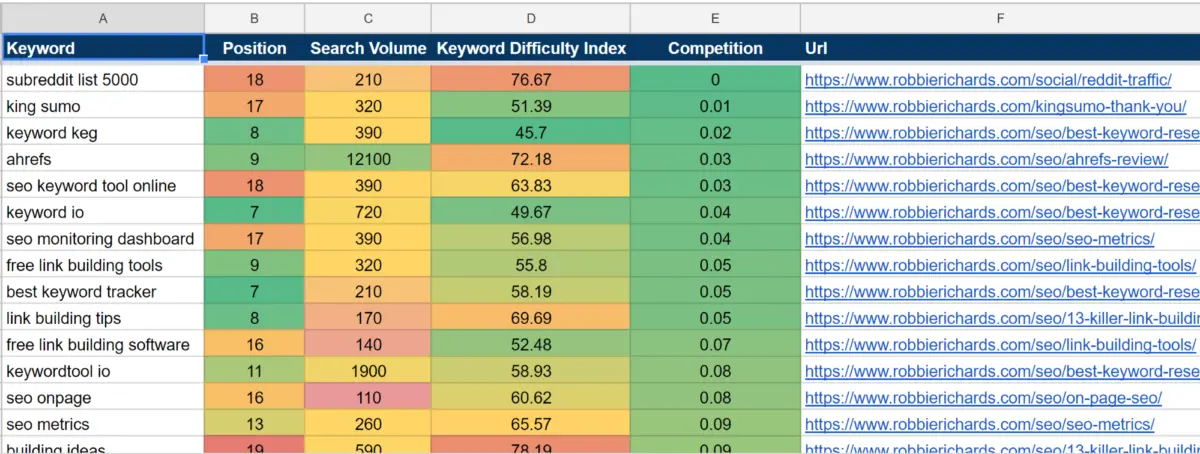
By navigating to the Organic Research >> Positions report within the Semrush SEO Toolkit, users can instantly access a comprehensive inventory of every keyword their domain ranks for within the top 100 positions. To extract immediate value, advanced filtering parameters must be applied:
Position Filter: Narrow the scope to positions 4 through 15. These represent "striking distance" keywords residing on page one or the top half of page two, which require minimal optimization to break into the top three spots.
Search Volume Filter: Establish a minimum search demand threshold tailored to the specific industry or niche to ensure efforts yield meaningful traffic.
Keyword Difficulty (KD) Filter: Cap the maximum difficulty score to filter out hyper-competitive queries that outpace the domain’s current authority profile.
Once filtered, these high-potential keywords can be segmented into targeted lists—differentiating between Existing and New opportunities—or exported into external tracking templates for automated sorting, descending volume analysis, and color-coded SERP competition evaluation.
Phase 2: Dissecting Competitor Strategies and Subfolders
When organic search footprints are limited or entirely new markets are being targeted, competitor reverse-engineering is the fastest route to high-intent traffic. Semrush revolutionizes this process through granular traffic attribution and subfolder analysis.
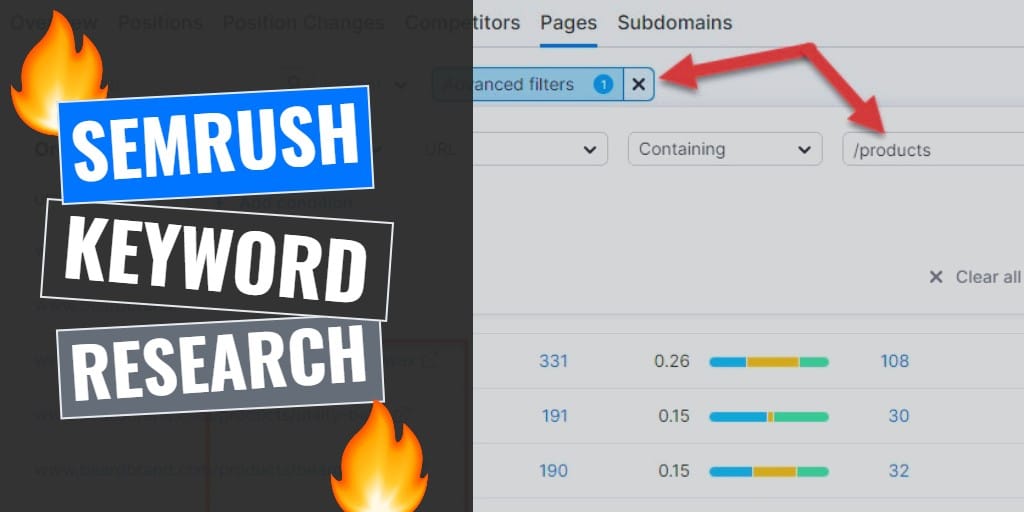
Using the Organic Research >> Pages report, marketers can examine a competitor’s top-performing URLs. For e-commerce businesses, applying a URL filter such as /products isolates direct monetization targets. Similarly, service-based businesses—such as regional law firms or SaaS providers—can analyze dedicated structural folders like /legal-services/ or /features/ to pinpoint precisely which service pages are driving the highest-quality organic traffic.
When competitors do not utilize clean subfolder architectures, keyword modifiers act as structural replacements. By filtering competitor keywords for commercial or transactional intent terms (e.g., "software," "best," "pricing," "vs"), marketers can instantly isolate bottom-of-the-funnel traffic drivers ready for immediate capture.
Phase 3: Executing Comprehensive Gap Analyses
Once direct and indirect competitors are mapped via the Organic Competitors Map, the Semrush Keyword Gap Tool allows digital strategists to compare multiple domains simultaneously. This tool illuminates blind spots across three critical vectors:
Missing Keywords: Terms that one or more competitors rank for, but the target domain completely misses.
Weak Keywords: Terms where the target domain currently ranks, but trails behind the competitor’s position.
PPC vs. Organic Gaps: High-value search terms that competitors are aggressively bidding on in paid search (PPC), indicating high conversion intent and immediate commercial viability.
Through rigorous application of intent filters, maximum keyword difficulty caps, and subfolder-level segmentation, marketers can transform thousands of raw competitor keywords into a prioritized, actionable content backlog.
Phase 4: Scaling Topical Authority via the Keyword Magic Tool and Clusters
Scaling an organic strategy requires moving beyond isolated keyword targets into comprehensive topical clusters. The Keyword Magic Tool allows users to seed broad category terms and apply advanced behavioral modifiers that target specific stages of the buyer journey—particularly the consideration stage, where users evaluate alternative solutions and product comparisons (e.g., "Competitor A vs. Competitor B").
Finally, the Semrush Keyword Manager allows teams to automate topical clustering from scratch or upload massive, raw keyword exports. Semrush’s proprietary clustering algorithm groups keywords by semantic relevance, search volume, and intent, highlighting "high ranking potential" clusters. Marketers can then cross-reference these clusters against existing content inventories to decide whether to optimize legacy pages or deploy fresh, dedicated landing pages.
Supporting Context & Metrics: The Quantitative Advantage
Understanding the scale and reliability of the data powering these strategies is vital for enterprise decision-making. Semrush’s data architecture is built upon several foundational metrics and quantitative pillars that separate speculative SEO from predictable, scalable growth.
Data Scale: Semrush houses a database of over 24 billion keywords spanning multiple international markets and search engines. This massive data collection ensures that even ultra-niche long-tail queries maintain reliable search volume estimates.
Keyword Difficulty (KD%): Ranging from 0% to 100%, the KD metric calculates the relative authority required to rank in the top 10 organic positions for a given keyword. By filtering out high-KD queries during the initial research phase, smaller domains can avoid wasting resources on unattainable SERPs.
Search Intent Categorization: Semrush automatically categorizes keywords into four distinct intent buckets—Informational, Navigational, Commercial, and Transactional. Quantitative filtering by intent ensures that content strategies align perfectly with user expectations, driving higher conversion rates and reduced bounce rates.
Integrated Workflow Metrics: By centralizing keyword research, position tracking (via the Position Tracking tool), and on-page optimization (via the SEO Writing Assistant), Semrush eliminates the data degradation and latency typically associated with exporting data across disparate third-party tools.
Official Statements and Industry Perspective
Industry experts and digital marketing thought leaders consistently emphasize the necessity of integrated toolsets and intent-driven keyword research in modern search engine optimization.
"The days of targeting isolated, high-volume head terms are long gone. Modern SEO is about establishing undeniable topical authority across entire semantic ecosystems," notes leading SEO strategist Robbie Richards. "By utilizing integrated platforms like Semrush, marketers can bridge the gap between high-level competitor analysis and granular content execution without losing data fidelity."
Furthermore, enterprise SEO architects highlight the critical importance of aligning organic content strategy with paid search intelligence.
"When competitors are putting ad dollars behind a specific keyword, they are voting with their wallets regarding that term’s conversion value," industry analysts observe. "Leveraging PPC-organic gap analysis allows organic search teams to piggyback off paid intelligence, securing high-intent traffic long before organic rankings reach the top three positions."
Future Outlook: The Next Generation of Keyword Research
As artificial intelligence, semantic search, and generative engine optimization (GEO) continue to reshape the digital landscape, the function of keyword research is undergoing a profound transformation. Search engines are no longer merely matching strings of text; they are interpreting complex contexts, user intent signals, and multi-layered topical relationships.
Looking ahead, platforms like Semrush are positioned to integrate deeper predictive analytics, AI-driven content generation assistants, and real-time SERP volatility tracking. Marketers who master foundational keyword research methodologies today—specifically competitor subfolder dissection, intent filtering, and automated topical clustering—will be uniquely equipped to adapt to algorithmic shifts.
By transitioning from a tactical, keyword-by-keyword mentality to a holistic, cluster-based organic strategy, businesses can future-proof their digital marketing operations, secure resilient organic visibility, and drive predictable, high-intent revenue growth for years to come.