

Executive Overview
The intersection of politics, corporate media, and public discourse has reached a volatile flashpoint. In an era defined by high-stakes political friction, shifting broadcast paradigms, and the relentless demands of a 24-hour content cycle, the foundational norms of journalism are being severely tested. From federal courtroom battles over White House press credentials to executive-level shakeups at heritage broadcasting institutions and high-profile controversies on sports talk networks, the media ecosystem is undergoing a profound transformation.
At the center of this turbulence is an escalating legal and political war of attrition between the Trump administration and major news organizations. Simultaneously, structural changes in legacy outlets, public reckonings over mental health coverage by prominent commentators, and the hollowing out of local journalism paint a sobering picture of an industry in transition. This report provides a comprehensive examination of the week’s defining media events, analyzing the legal precedents, institutional shifts, and ethical dilemmas shaping the modern press.
Detailed Chronology: The White House Press Ban and Federal Court Proceedings
The Genesis of the Ban
The antagonism between President Donald Trump and mainstream media organizations entered uncharted territory two weeks ago when the administration enacted a sweeping prohibition, barring reporters from CNN, MS NOW, and Politico from accessing White House grounds. The unprecedented move effectively severed the physical pipeline between the executive branch and three of the nation’s most influential newsrooms, instantly sparking a constitutional crisis regarding executive overreach and viewpoint discrimination.
Recognizing the existential threat to their reporting capabilities and First Amendment protections, the affected outlets immediately filed suit in federal court. Their swift legal maneuver yielded an initial victory: a federal judge granted a 14-day temporary restraining order (TRO), forcing the administration to temporarily restore the outlets’ White House press credentials while the substantive issues of the case were litigated.
The Thursday Hearing and Restraining Order Extension
As the initial 14-day window drew to a close, legal teams for both the media conglomerates and the federal government converged in a U.S. District courtroom for a high-stakes injunction hearing. The central question before the court was whether to let the emergency protections lapse or to extend them into a more permanent injunction.
Presiding over the case is Judge Timothy J. Kelly of the U.S. District Court for the District of Columbia. During Thursday’s proceedings, Judge Kelly signaled that he was actively considering a more durable, long-term injunction that could govern press access over the course of several months of anticipated litigation. Consequently, Judge Kelly extended the temporary restraining order until next Tuesday, setting the stage for a potentially landmark ruling on whether the emergency order will be converted into a preliminary injunction.
Constitutional Hurdles: First vs. Fifth Amendment
While media attorneys have centered their arguments heavily on violations of the First Amendment—asserting that the administration is unconstitutionally punishing outlets for unfavorable coverage—Judge Kelly has steered the legal debate toward more nuanced territory. During the hearing, the judge probed both sides on the applicability of the Fifth Amendment’s due process protections.
"That’s probably the biggest hurdle you all have," Judge Kelly remarked to government lawyers, signaling that the mechanics of how the ban was implemented without formal notice or an appeals process may provide a cleaner judicial off-ramp than parsing the President’s political motivations.
Nevertheless, Judge Kelly expressed clear skepticism regarding the administration’s core defense: that the banned outlets’ coverage posed an active threat to national security. Legal representatives for CNN, MS NOW, and Politico countered that the administration’s justifications are entirely pretextual, arguing that the ban stems purely from presidential animus toward critical reporting.
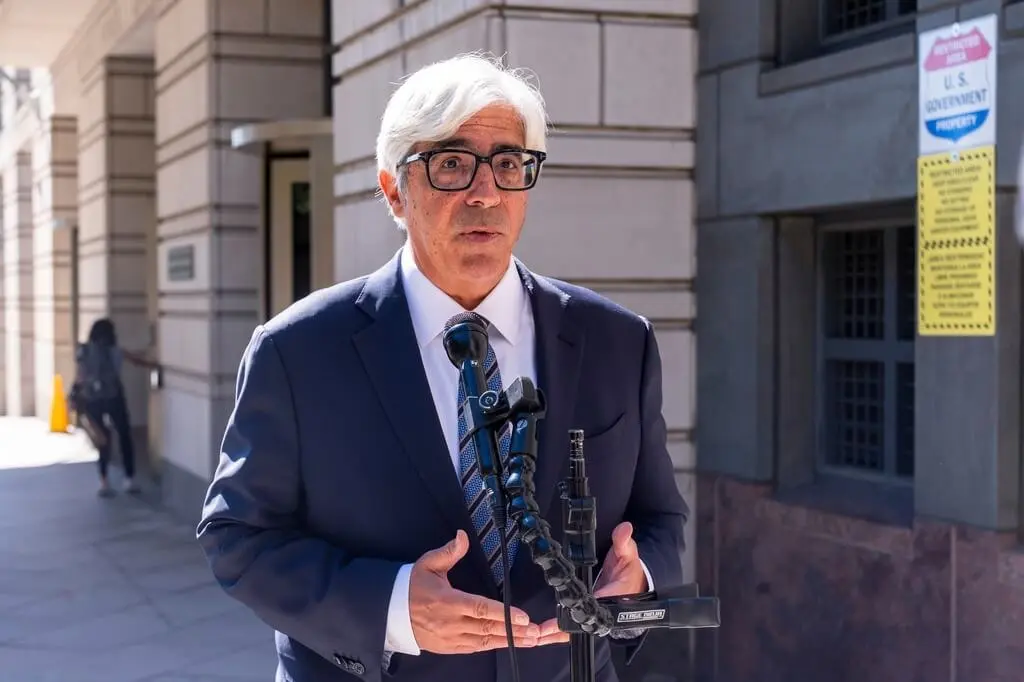
To cement this argument, media attorney Theodore J. Boutrous Jr. pointed directly to a recent, highly publicized interview between President Trump and Time magazine. When pressed by the publication on why he barred the specific outlets, Trump offered a blunt rationale: "Well, it’s just bad story after bad story."
At Thursday’s hearing, Boutrous presented this quote as the decisive blow in the litigation. "That interview really is the coup de grace," Boutrous argued, framing the President’s own words as an admission of viewpoint-based retaliation.
Legal analysts following the docket note that the case increasingly points toward a decisive victory for the media coalitions and a significant legal setback for the executive branch—though definitive answers await next week’s rulings.
The Air Force One Exception
Despite the impending defeat over White House grounds access, the administration successfully maintained one facet of its restriction. The ban prohibiting reporters from CNN, MS NOW, and Politico from boarding Air Force One remains fully operational. As media scholar Erik Wemple detailed in The New York Times, the specific jurisdictional parameters governing travel aboard presidential aircraft left a distinct legal loophole, allowing the executive branch to maintain travel restrictions even as its ground-access restrictions crumble under judicial scrutiny.
Institutional Shifts: Ross Douthat’s Dual Role at ‘60 Minutes’ and ‘The Free Press’
A Surprising Broadcasting Appointment
The institutional instability plaguing traditional journalism is not limited to political beat reporting. Over the summer, CBS News’ flagship investigative program 60 Minutes endured a tumultuous period marked by the departure of its executive producer and several veteran, highly respected correspondents.
In a move that stunned media circles, CBS News Editor-in-Chief Bari Weiss announced the hiring of New York Times opinion columnist Ross Douthat as a program correspondent. The appointment raised eyebrows across the industry given Douthat’s lack of traditional television news reporting experience, signaling a deliberate pivot toward distinct intellectual voices over seasoned broadcast lifers.
The Migration to The Free Press
On Thursday, Weiss followed up with a second announcement regarding Douthat—this one far more predictable. Douthat is officially joining Weiss’s independent digital media venture, The Free Press, as a columnist. The two previously collaborated closely within the opinion section of The New York Times.
"A dream come true," Weiss posted on social media, celebrating the reunion.
Douthat inaugurated his new gig with a straightforwardly titled debut column: "I’m Writing a Column for The Free Press."
In the essay, Douthat revealed the origins of the publication, recalling a conversation he shared with Weiss shortly after her departure from the Times in 2020. "She was in an entrepreneurial mood, making calls and soliciting opinions," Douthat wrote, "and I told her that I thought there was a potential market for a new general-interest publication that was politically independent, competitive with The Atlantic and The New Yorker, free from the ideological strictures of wokeness and the loyalty tests of MAGA."
That vision has since materialized into The Free Press, which began as a Substack titled Common Sense in 2021 before rebranding in 2022.
Balancing Print and Broadcast
Addressing potential conflicts regarding his sprawling portfolio, Douthat clarified the boundaries of his dual professional life. "This is not my day job," he emphasized. "I am a newly minted correspondent for 60 Minutes, where the goal is to ask probing questions, not sling political hot takes. If all goes well, this column will complement that work, staying a little bit above the partisan fray while giving readers useful frameworks (or, sometimes, truly eccentric frameworks) through which to understand our strange-and-getting-stranger century."
Thus far, Douthat has maintained an active presence in the early episodes of the current 60 Minutes season, having delivered two major investigative and profile pieces: a gripping interview with Patrick Clancy, the ex-husband of a woman accused of murdering their three children, and an in-depth profile of North Carolina Republican Senator Thom Tillis.
Ethical Controversies in Sports Media: Stephen A. Smith’s Apology
The On-Air Miscalculation
While hard-news and investigative desks grapple with constitutional and institutional shifts, the sports commentary ecosystem faced its own reckoning over ethics, empathy, and the boundaries of debate.
Earlier in the week, ESPN’s prominent commentator Stephen A. Smith drew severe public backlash following comments made on First Take regarding the sudden retirement of Philadelphia Eagles offensive lineman Lane Johnson. Johnson had explicitly cited mental health struggles as the primary catalyst for stepping away from the game. During the broadcast, Smith appeared to minimize Johnson’s stated reasons, suggesting instead that the retirement was performance-driven due to the Eagles’ on-field struggles.
Guest panelist Kimberly A. Martin immediately challenged Smith in real time, confronting him on air: "I feel like you’re making light of the situation."
A Botched Apology and Escalating Backlash
Seeking to defuse the growing controversy, Smith addressed the remarks later that day on his SiriusXM radio program. However, his defense exacerbated the situation. Smith claimed his initial commentary had been "misconstrued," adding that he would "never" make light of mental health and briefly chronicling his own historical struggles with mental wellness.
The backtrack failed to appease critics. Writing in The Athletic, media columnist Andrew Marchand published a scathing critique asserting that Smith had thoroughly embarrassed himself and urging him to issue a clean, unvarnished apology.
The Unconditional Retraction
Heeding the advice, Smith opened Thursday’s edition of First Take with an extensive, unscripted retraction.
"Here’s the reality of the situation. I was wrong," Smith stated directly to the camera. "I messed up."
He extended direct apologies to Lane Johnson, the Philadelphia Eagles organization, and anyone navigating mental health challenges. Visibly remorseful, Smith noted, "The biggest regret that I have for all of this is the fact that it may have given people that wanted to open the door to seek help a reason to pause and hesitate and not do so. And I can’t emphasize enough how sorry I am about that because it is a real issue." He further praised the "courage" required for athletes like Johnson to publicly address their psychological well-being.
According to Smith, the statement was entirely self-directed and unprompted by ESPN executives.
The Cost of 24/7 Provocation
The episode catalyzed a broader industry conversation regarding the structural hazards of modern sports debate shows. Commentators are locked into generating hours of provocative, daily content, often forced to speak authoritatively on complex, sensitive topics far outside traditional athletic analysis.
As Marchand summarized in his follow-up analysis: "Talk show hosts mostly don’t know anything, but have to pretend they know everything. Smith and others are on your screen to entertain, not inform. If it is debating LeBron versus MJ or the Dallas Cowboys defense or who should be ranked No. 1, it really is no harm, no foul. But when you are talking about a serious topic, like mental health issues, don’t mock someone… Life is not a show."
Local Journalism Under Siege: The Amarillo Globe-News Layoffs
While national media battles command headlines, the structural collapse of local reporting continues unabated across regional markets.
In Amarillo, Texas—a municipality of roughly 205,000 residents—the historic paper of record is now operating with a skeleton crew. Following a devastating round of cuts last week, the Amarillo Globe-News, owned by the USA Today Co. (Gannett), laid off the entirety of its editorial staff "without warning," as first reported by the independent Amarillo Tribune.
The sweeping layoffs occurred mere days after the parent company terminated multiple sports reporters across its nationwide publishing network. These reductions follow a previous wave of corporate restructuring in September aimed at streamlining the company’s audience development teams. USA Today Co. has declined multiple requests for comment from industry observers regarding the long-term viability of its regional newsrooms. With the latest cuts, the Globe-News is left with a solitary high-school sports reporter to cover a major Texan city—underscoring the deepening crisis of news deserts in local communities across the United States.
Future Outlook
As the media landscape navigates these colliding pressures, the coming weeks will establish critical legal and cultural precedents.
- The White House Press Corps: All eyes are fixed on Judge Timothy J. Kelly’s upcoming decision regarding the extension of the temporary restraining order into a preliminary injunction. A definitive ruling against the administration will reinforce the judiciary’s role as a check on executive retaliation against the press, though the lingering Air Force One ban demonstrates that logistical battles over access will persist.
- The Hybrid Commentary Model: Figures like Ross Douthat represent a growing hybridization of old and new media, balancing elite legacy journalism, deep investigative reporting on programs like 60 Minutes, and independent digital commentary through platforms like The Free Press.
- The Ethics of Entertainment Media: Stephen A. Smith’s public reckoning serves as an acute reminder to high-volume talk networks that the demand for continuous, provocative commentary must be balanced against basic journalistic and human empathy, particularly when addressing public health crises.
- The Local News Crisis: The silent erosion of regional newsrooms, exemplified by the gutting of the Amarillo Globe-News, highlights an ongoing democratic deficit that corporate consolidation and digital pivots have thus far failed to resolve.
The institutional resilience of the press is being tested on every front—from the federal courthouse steps to the broadcast studio and the local newsroom. How these battles resolve will define the contours of public information for years to come.