

Executive Overview
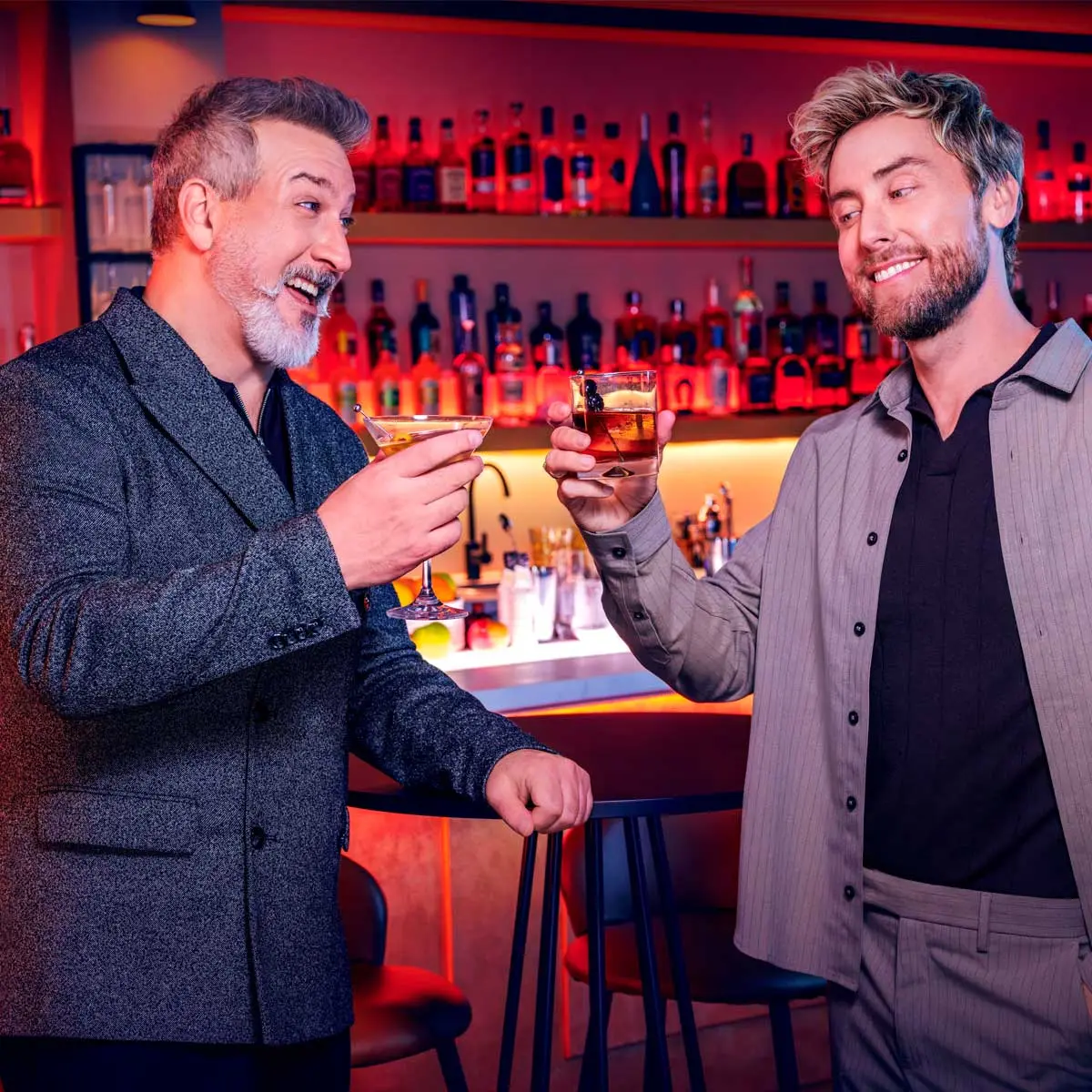
The intersection of reality television entertainment and millennial nostalgia reached a fever pitch this August with the high-profile premiere of E!’s new mixology competition series, Cocktail Wars. Co-hosted by beloved NSYNC alumni Joey Fatone and Lance Bass, the show injects a fresh, high-energy dynamic into the culinary competition genre. Featuring a rotating panel of industry experts and celebrity judges—including mixology authority Melissa Brooke, E!’s Justin Sylvester, and The Real Housewives of New Jersey* star Melissa Gorga—the series sets a high bar for televised bartending.
Yet, for legions of pop culture enthusiasts, the launch of Cocktail Wars serves as more than just a showcase for top-tier spirits and craft cocktails; it acts as a cultural bridge. As Fatone and Bass grace television screens together once again, public fascination with the legendary boy band era they helped define has been reignited. From the clandestine formation of the group under the watchful, predatory eye of disgraced mogul Lou Pearlman to multi-million-dollar lawsuits, hidden rivalries, and global superstardom, the history of *NSYNC remains one of the most compelling narratives in modern pop music history.
This report provides an exhaustive, authoritative look at the premiere of Cocktail Wars, alongside a deep chronological dive into the untold stories, corporate exploitation, and defining milestones that shaped NSYNC’s meteoric rise and ultimate fragmentation.
Detailed Chronology: The Rise, Fall, and Legacy of *NSYNC
1. The Genesis: Assembling the Ultimate Boy Band (1995)
The blueprint for *NSYNC was born out of rejection. In 1995, 23-year-old singer Chris Kirkpatrick auditioned for the Backstreet Boys—the initial triumph of shady impresario Lou Pearlman, who sought to capture lightning in a bottle twice with a manufactured vocal harmony group. When Kirkpatrick was passed over, he approached Pearlman with a proposition: he was still intensely eager to front a group.
Pearlman agreed to bankroll the venture on the condition that Kirkpatrick handle the heavy lifting of talent scouting. Kirkpatrick dove into hours of audition tapes and demo reels, eventually discovering a 14-year-old All-New Mickey Mouse Club alum named Justin Timberlake. Timberlake immediately recommended his 19-year-old former Mouseketeer peer, JC Chasez.
The search shifted to Orlando, Florida, where Kirkpatrick recruited Joey Fatone, then 18, whom he knew from performing at Universal Studios. To round out the group with a deep bass register, Timberlake’s vocal coach pointed them toward Mississippi native Lance Bass. On October 1, 1995, a 16-year-old Bass flew down to Florida, where Pearlman and Timberlake famously picked him up at the airport in a sleek black Rolls Royce.
Curiously, Bass was not the original fifth member. That distinction belonged to Jason Galasso, a high school choir peer of Fatone’s who auditioned with a rendition of Boyz II Men’s "End of the Road." However, upon discovering that Pearlman had written himself into the *NSYNC contract as a sixth member entitled to a percentage of profits—creating a document "thick as a phone book"—Galasso opted to walk away, leaving the door wide open for Bass.
2. European Breakthrough and the Disney Channel Catalyst (1996–1998)
Before achieving household-name status in the United States, *NSYNC found its initial stronghold overseas. Guided by the Max Martin-penned pop anthems "I Want You Back" and "Tearin’ Up My Heart," the group dominated European music charts and magazine covers.
Their American breakthrough, however, was a matter of pure serendipity. The Backstreet Boys famously turned down a "Disney Channel in Concert" television special opportunity. Capitalizing on the vacancy, NSYNC stepped in. NSYNC in Concert* debuted in 1998, and through relentless, highly syndicated broadcasts on the Disney Channel, the group captured the American youth market, laying the foundation for unprecedented commercial success.
3. The Pearlman Betrayal and the Jive Records Exodus (1998–1999)
While the public perceived the group as living a life of endless luxury, the reality behind closed doors was starkly different. In 1998, Lou Pearlman flew the band and their families to Los Angeles for a high-profile check-presentation party, handing them a paltry $10,000 apiece.
"I was in the biggest band in the world and selling millions of records… but I can’t even afford my apartment in Orlando," Lance Bass recalled to ABC News’ 20/20.
Realizing that Pearlman’s exploitative contracts legally positioned him as a sixth member of the group—skimming massive management fees alongside an equal slice of profits—NSYNC executed a daring corporate escape. They abandoned TransContinental Records and signed with Jive Records. The move triggered a ferocious $150 million lawsuit from Pearlman and RCA parent BMG Entertainment, primarily aimed at stripping the group of their moniker. NSYNC countersued for $25 million, ultimately settling out of court in 1999 with their name and artistic independence intact.
4. Global Domination and the No Strings Attached Era (2000–2001)
Emancipated from their former management, the group channeled their frustrations into their sophomore studio album, No Strings Attached (2000). The title served as an intentional battle cry, signaling their newfound independence.
The album broke historical records, selling an astonishing 2.4 million copies in its first week alone, including 1.1 million on its first day. During this peak era, the group navigated intense public scrutiny, massive merchandising empires, and high-profile relationships, such as Justin Timberlake’s heavily publicized romance with pop icon Britney Spears.
Their cultural footprint expanded further in 2001 with the release of their third studio album, Celebrity, and the record-breaking PopOdyssey tour, which grossed an estimated $2.5 million per night.
5. The Silent Hiatus and the Post-Boy Band Diaspora (2002–Present)
Following the conclusion of the Celebrity Tour in 2002, NSYNC entered what was publicly framed as a "temporary hiatus" to allow Justin Timberlake to pursue a solo career. In reality, the split was permanent. While Timberlake ascended to global solo superstardom with his 2002 debut Justified*, bandmates like Lance Bass were left in the dark. Bass later revealed that management and label executives were aware the band was finished years before informing the rest of the members.
Despite the abrupt end of the group, the members have maintained a complex web of shared history, punctuated by rare reunions—most notably at the 2013 MTV Video Music Awards and subsequent musical collaborations—solidifying their enduring legacy in pop culture history.
Supporting Context & Metrics
The commercial metrics of *NSYNC’s peak years underscore their massive economic footprint:
- No Strings Attached First-Week Sales: 2.4 million copies (a milestone record at the time).
- PopOdyssey Tour Gross: Approximately $2.5 million per performance.
- Diamond Certification: Recognized by the RIAA for selling over 10 million copies of their 1997 debut album, ’N Sync.
- Lawsuit Stakes: Involved in a high-stakes $150 million legal battle against Lou Pearlman in 1998–1999 before settling.
Official Statements and Industry Insights
Reflecting on the grueling realities of unprecedented fame and corporate mismanagement, group members have frequently offered raw, unfiltered perspectives:
"With all the success you would think that we were making hand-over-fist money and we were printing money and whatever, and it just wasn’t the case."
— Chris Kirkpatrick, reflecting on the financial exploitation under Lou Pearlman."We started out as best friends, and you know, I think it shows… The chemistry we have is unreal. I can’t tell you, you know even with this tour last summer, I could just look at Chris and it could say 10 things at the same time."
— Justin Timberlake, discussing group synergy during a 2001 interview on Larry King Live.
Future Outlook
As Cocktail Wars continues its weekly broadcasts on E!—airing Tuesdays at 10 p.m.—fans are treated not only to top-tier mixology challenges and winning recipes like Jon Schott’s "Staycation" and Tyler Kent’s "Almond Sail Away," but also to the effortless on-screen chemistry of Joey Fatone and Lance Bass.
The seamless transition of these pop icons into television hosting proves that their marketability extends far beyond stadium stages. Whether audiences are tuning in to master craft cocktails or reliving the golden era of late-90s pop culture, Fatone and Bass continue to prove that true showmanship never goes out of style. Stay tuned each week for further updates on winning recipes, behind-the-scenes insights, and the ongoing legacy of television’s favorite musical duo turned mixology hosts.